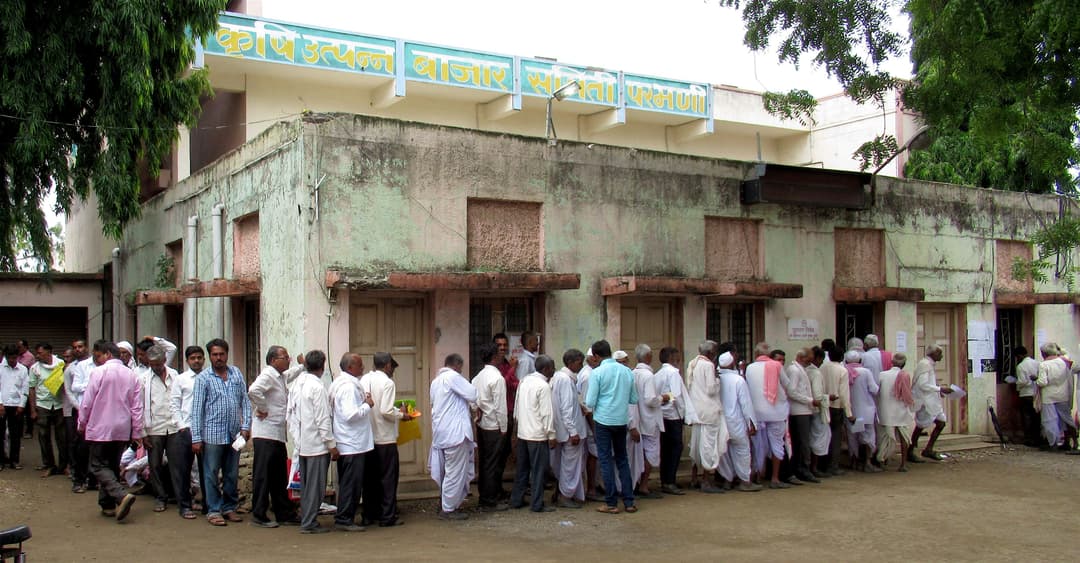

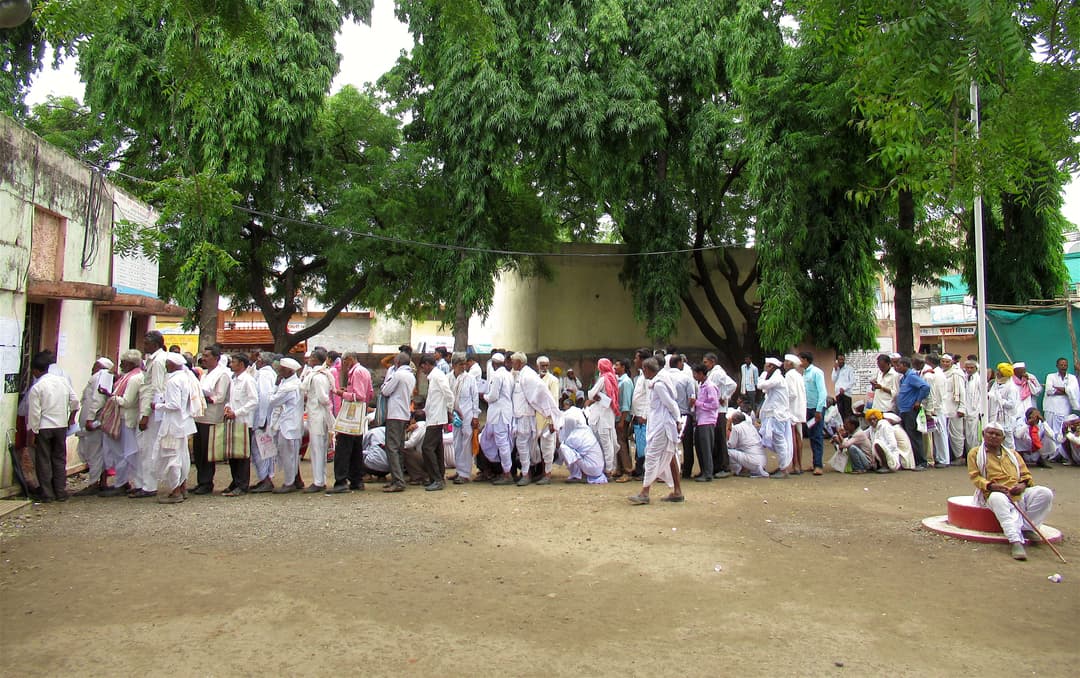
Limbaji Lokhande has spent more than Rs. 1,000 in pursuit of 10,000. “The autorickshaw takes 20 rupees for a one-way trip,” the 42-year-old farmer explains, to go from his village Borwand to the Agriculture Produce Marketing Committee (APMC) in Parbhani town, 15 kilometres away. “That makes it 40 rupees a day. Plus, you spend on tea and lunch. I have been coming here for 15 days. It has been a struggle.”
The Rs. 10,000 is a stopgap outcome of a state-wide farm strike that began on June 1 in Maharashtra. Chief minister Devendra Fadnavis announced this measure on June 14. While the modalities of a loan waiver were being worked out, he said, farmers would get Rs. 10,000 as immediate relief to cover inputs costs for the kharif sowing season.
During the June strike, the farmers’ most important demand was the enforcement of the Swaminathan Commission’s recommendations that they must get a minimum support price that covers the cost of production, plus 50 per cent, along with a blanket loan waiver. The detailed report of the Commission – headed by M.S. Swaminathan to study agrarian distress – has been lying with the central government since 2007.
The strike was suspended when Fadnavis eventually met farm representatives and assured them of a loan waiver, and said he will consider the cost of production demand by speaking to the prime minister. The state came up with Rs. 10,000 as temporary assistance because banks had been rejecting applications for new loans by farmers who had not cleared previous debts.