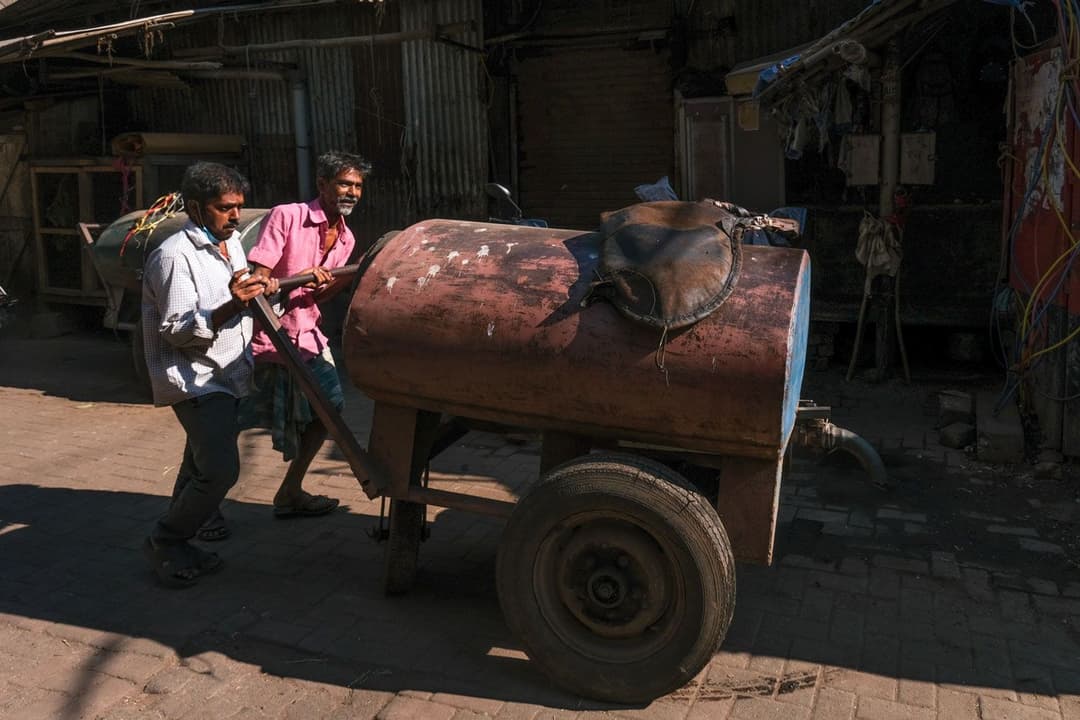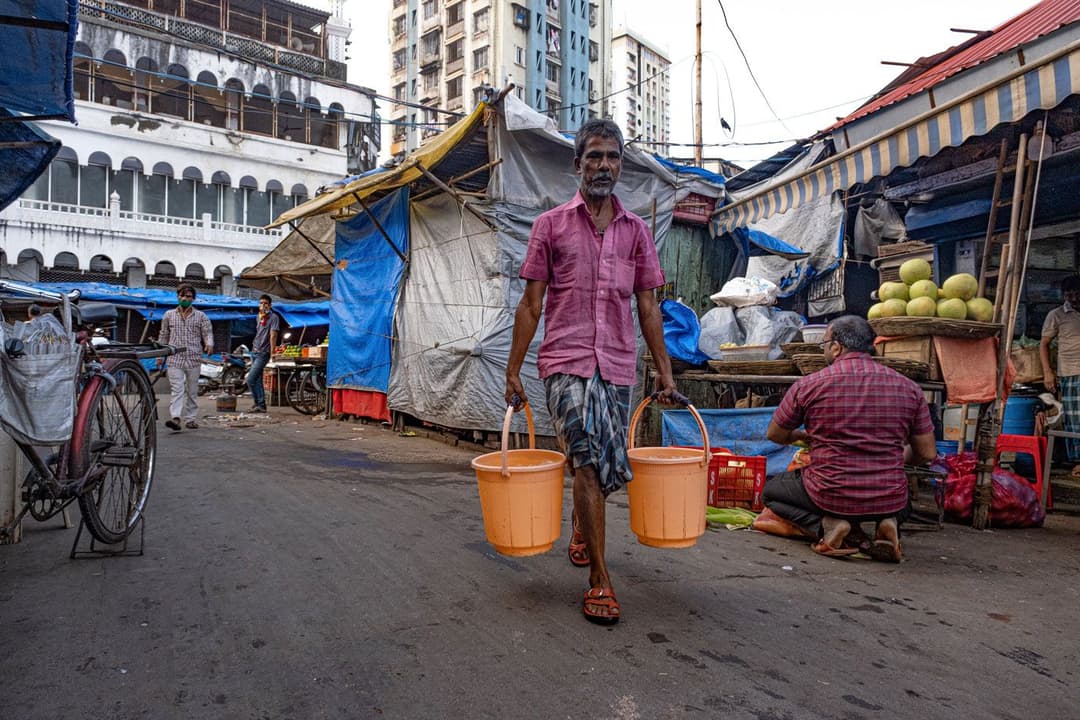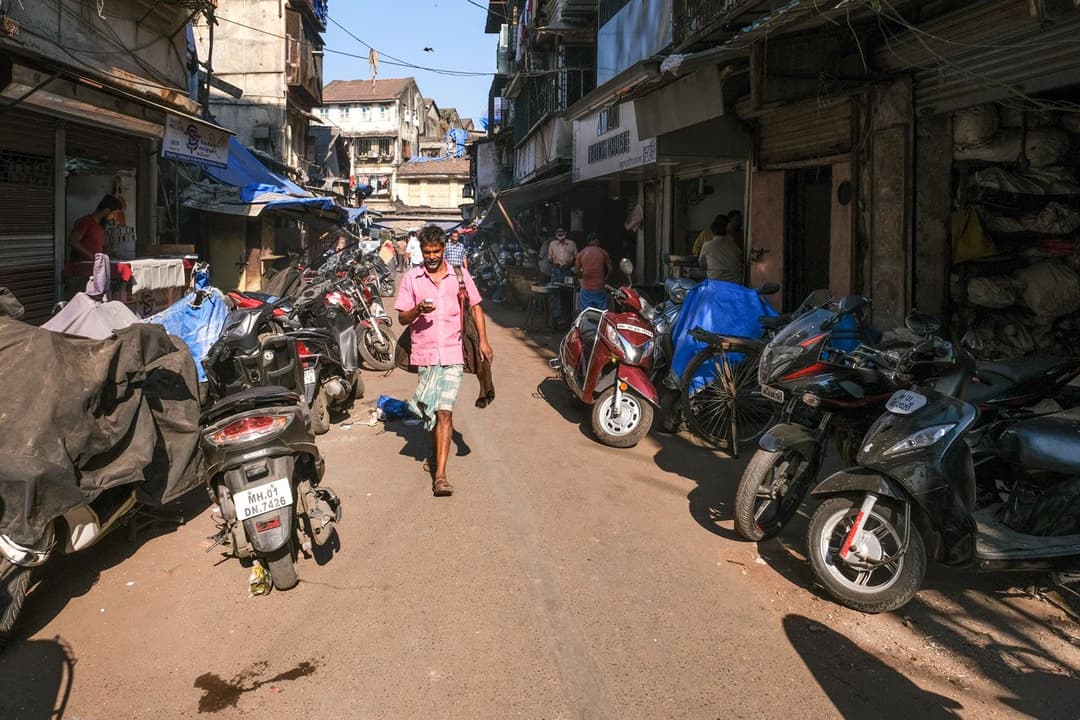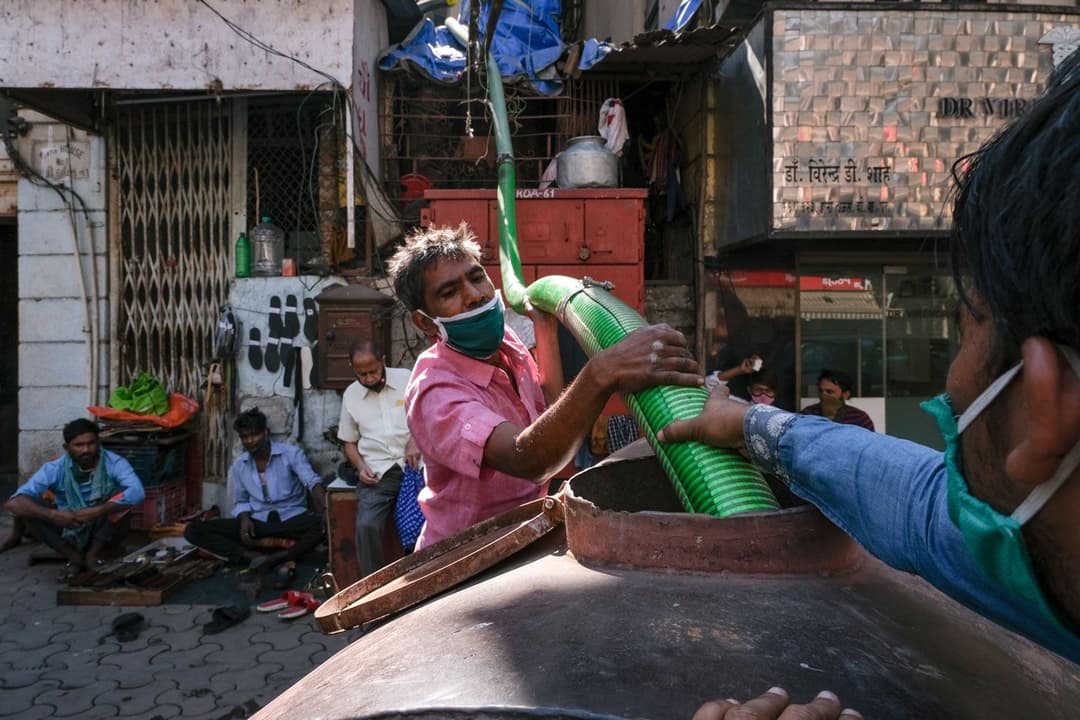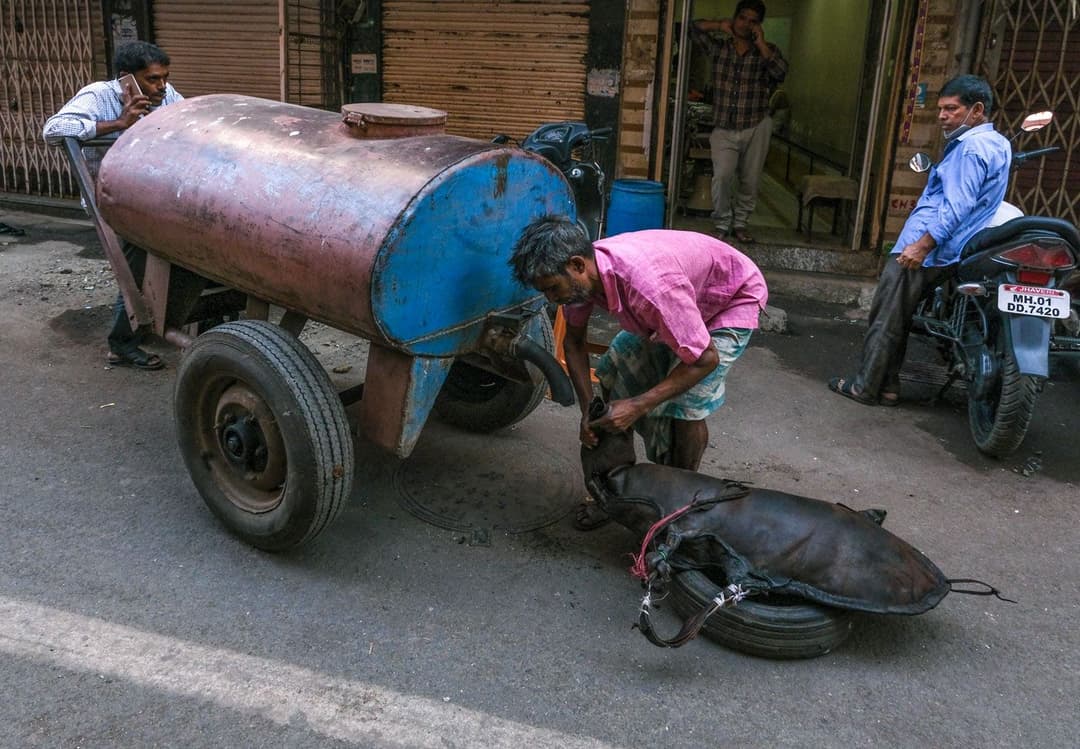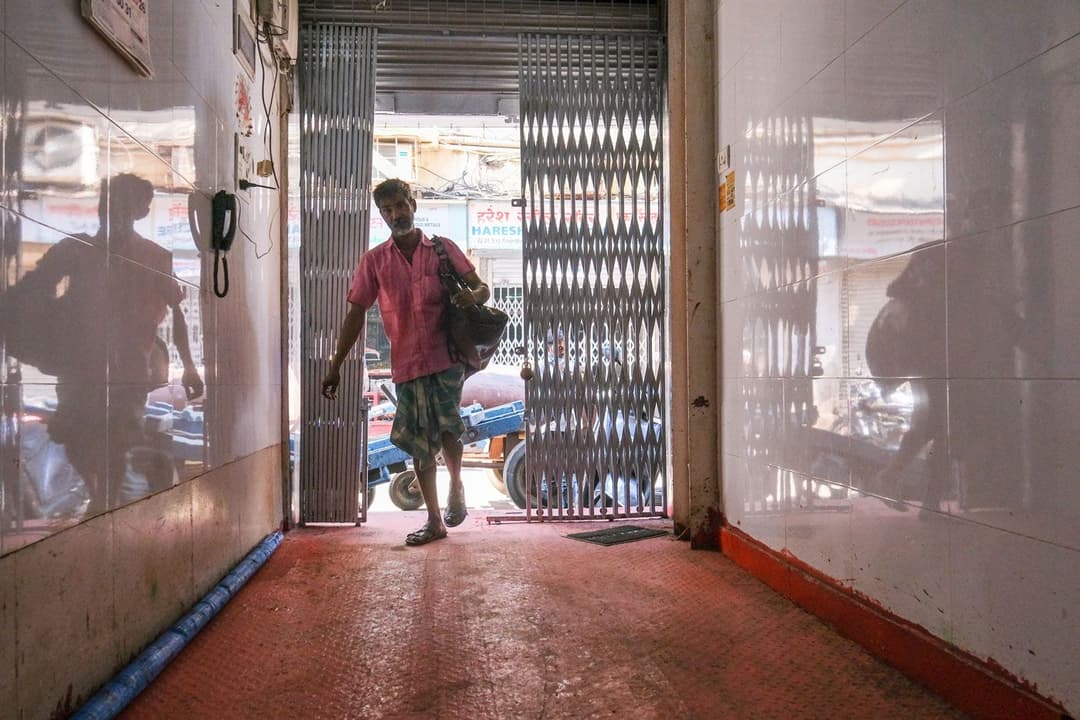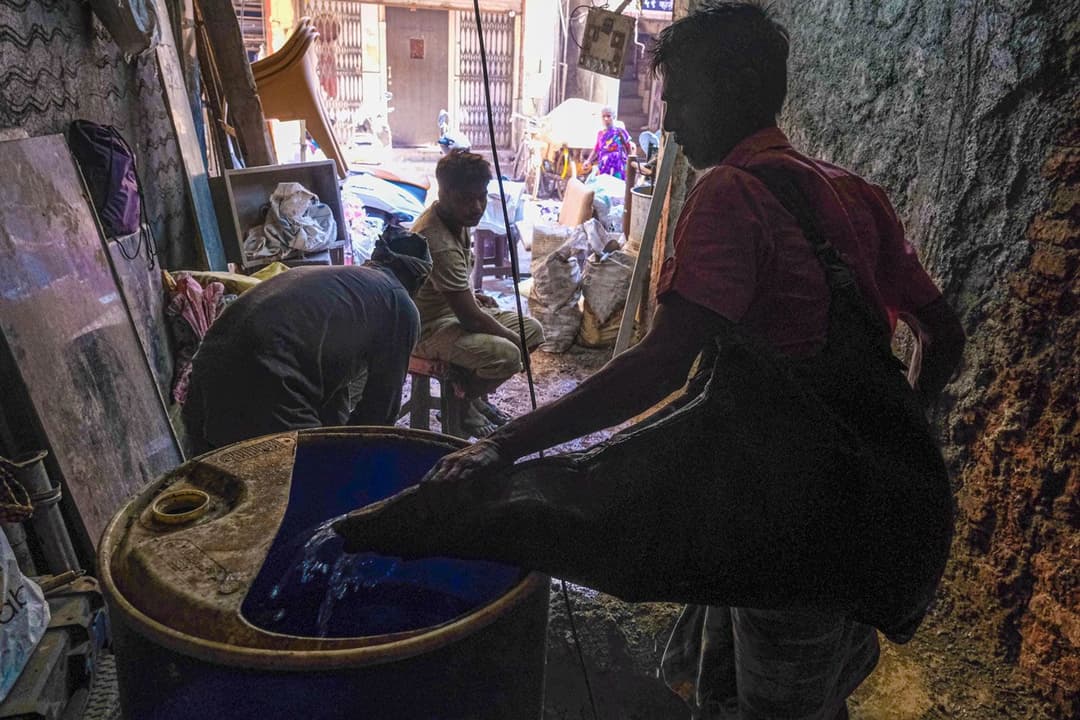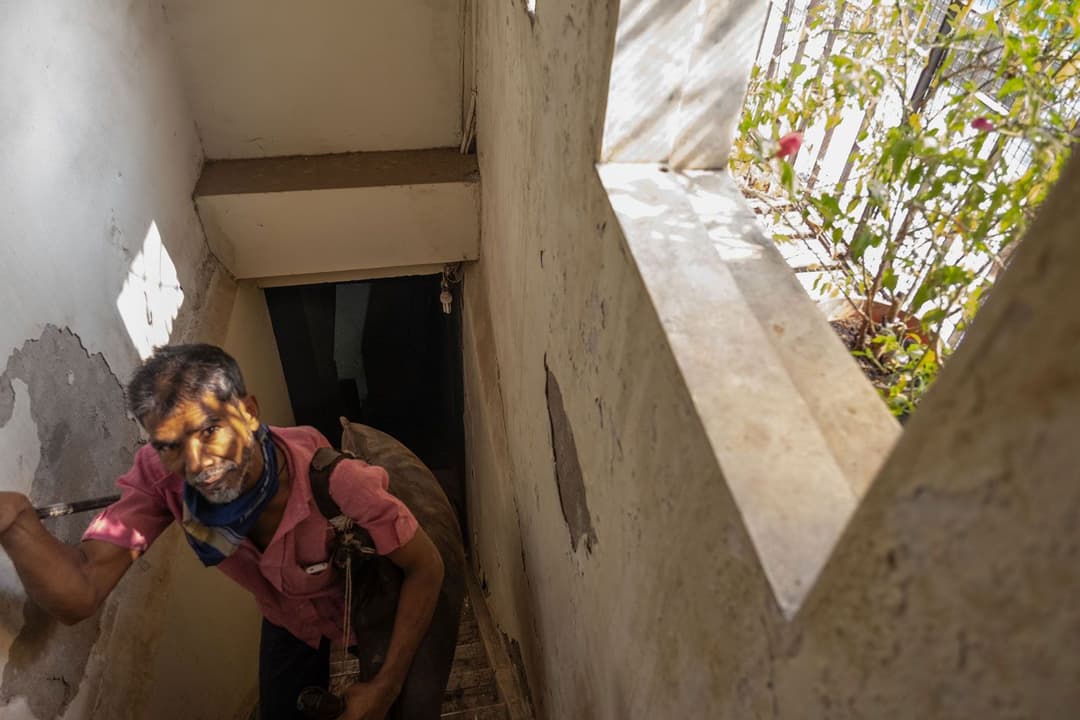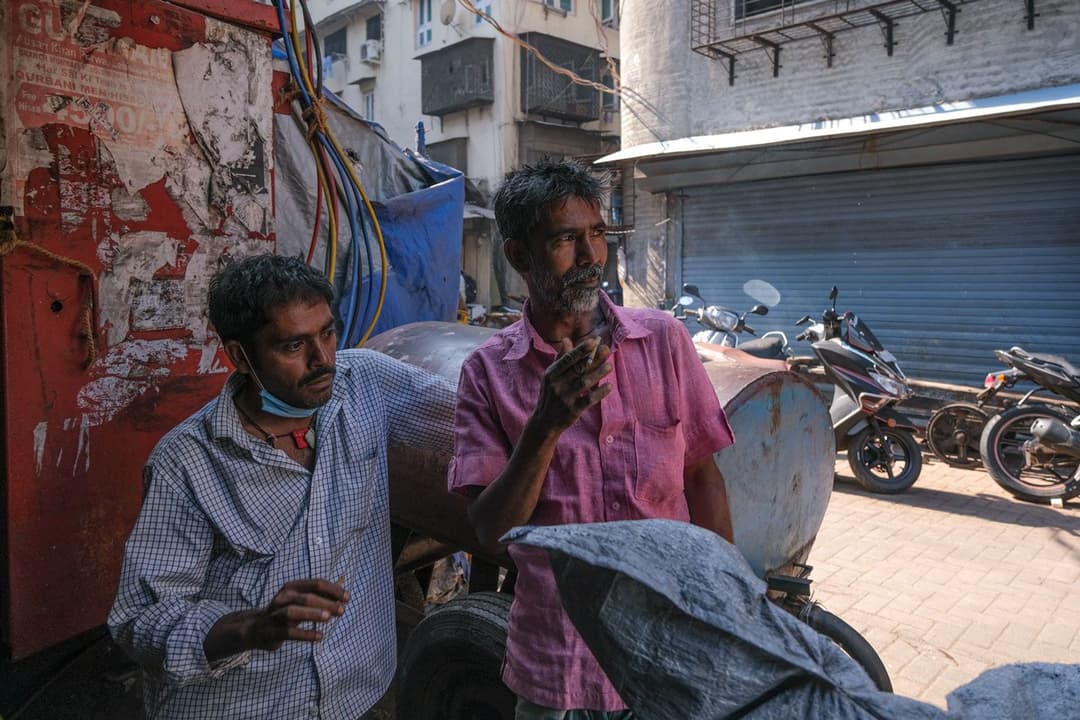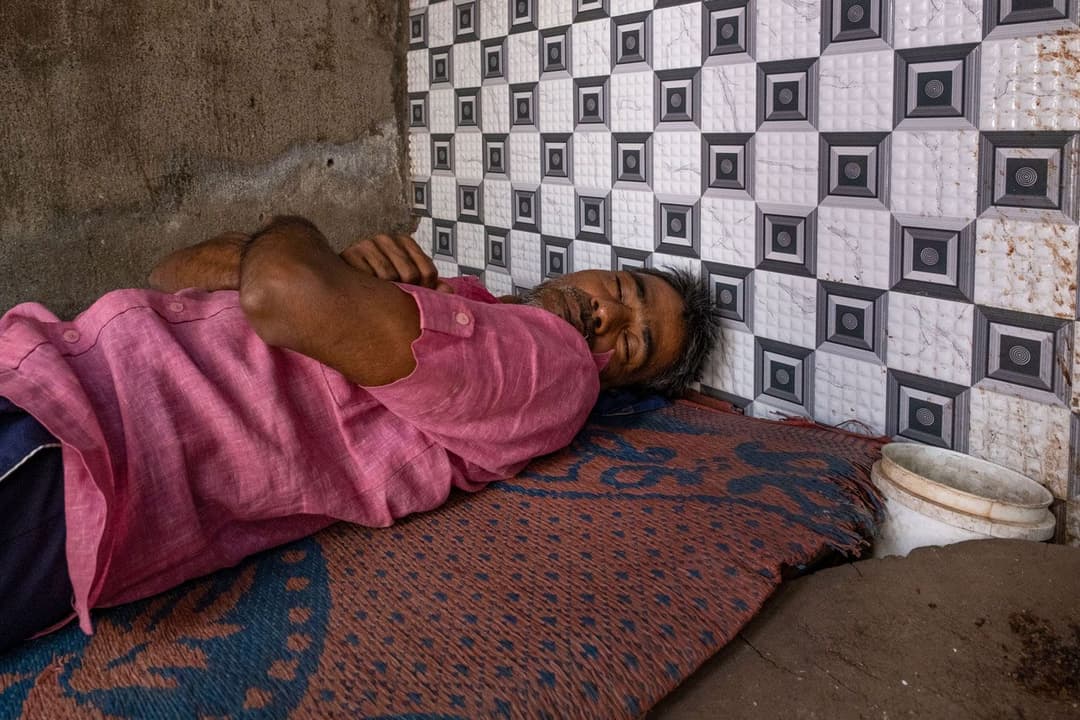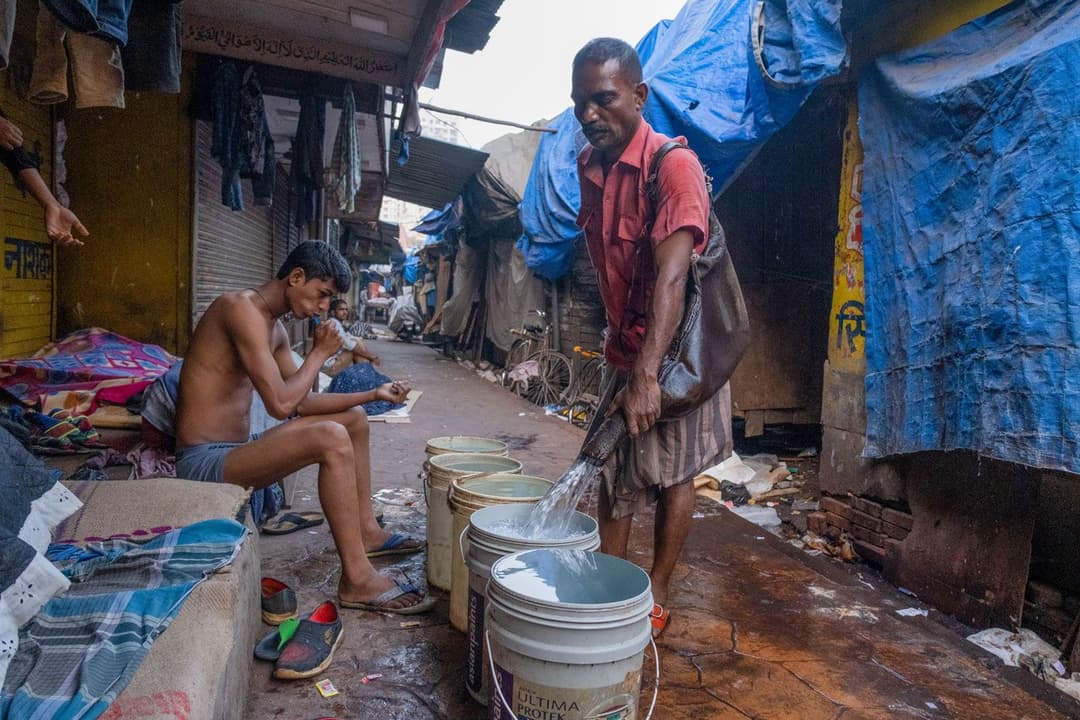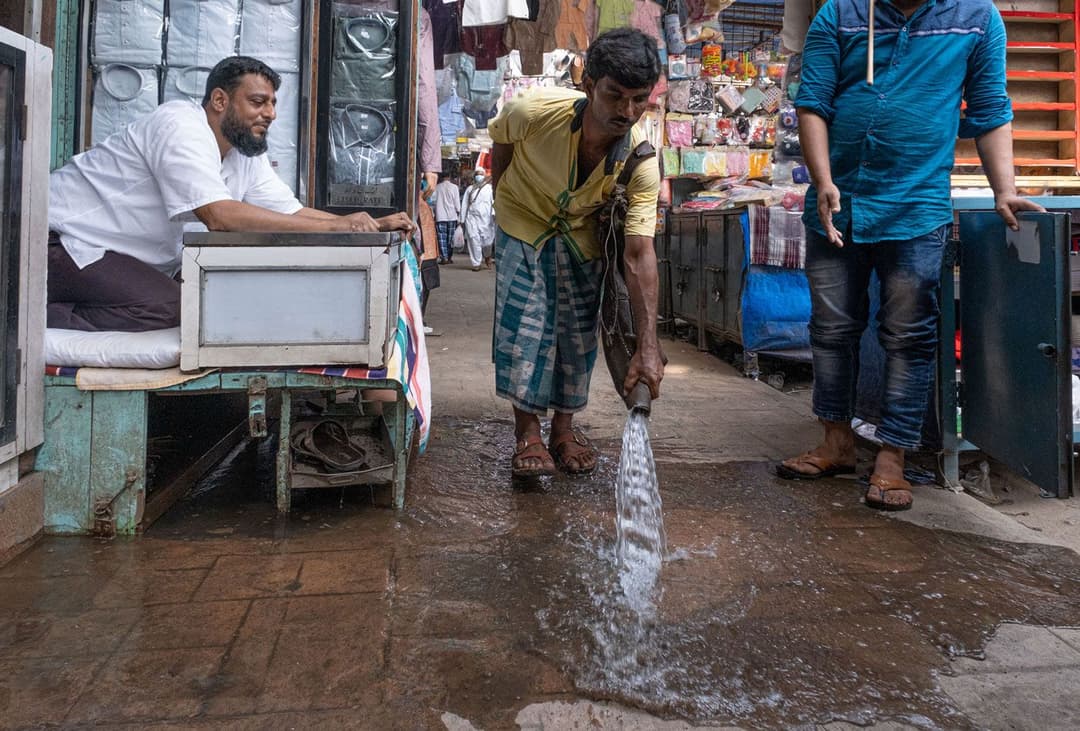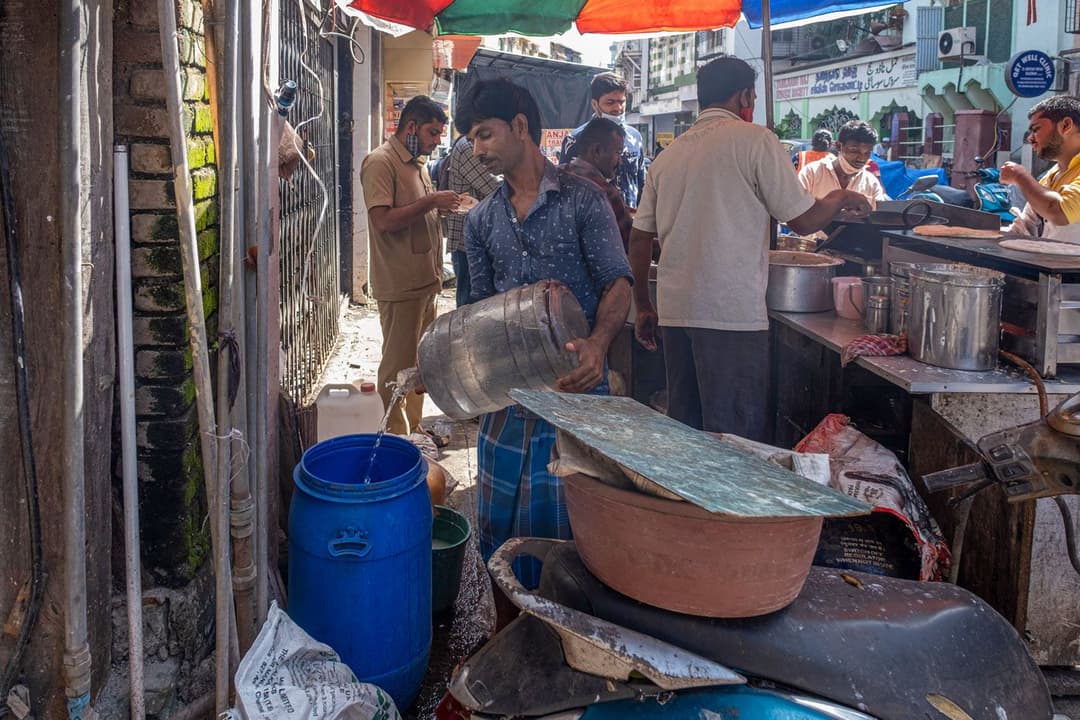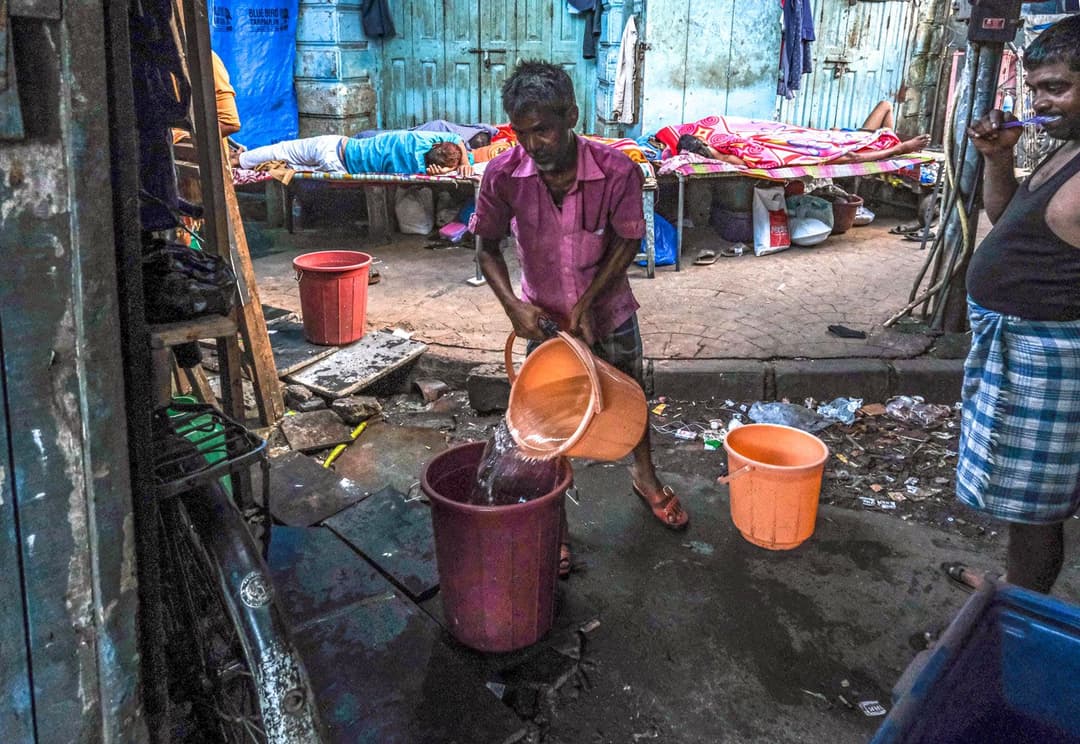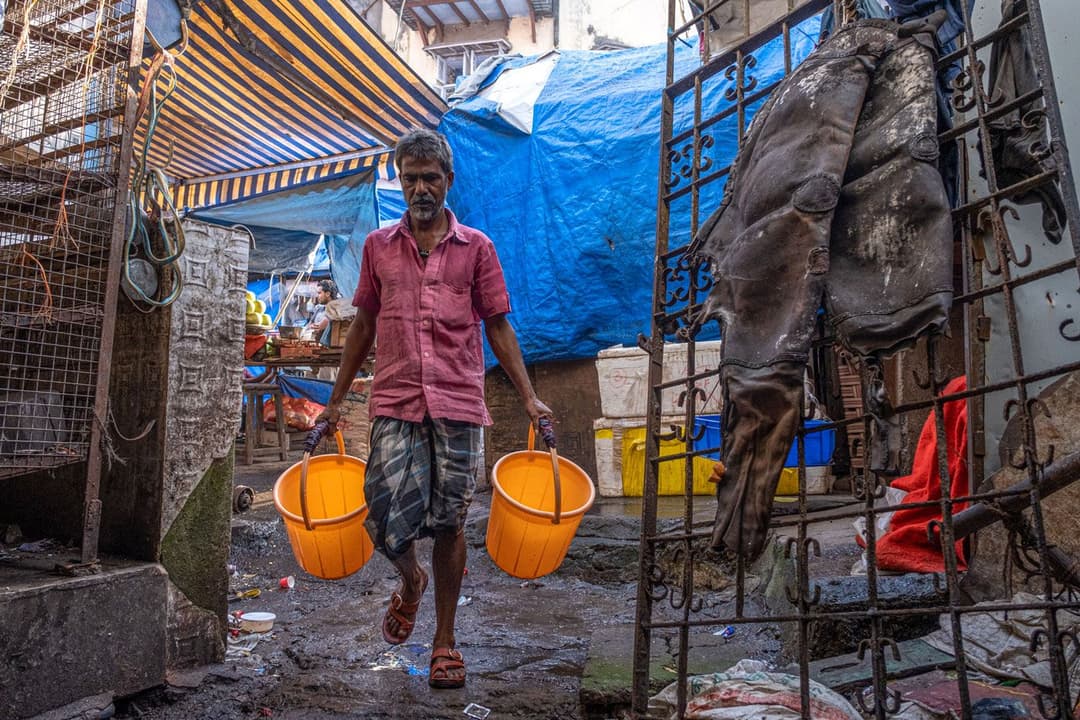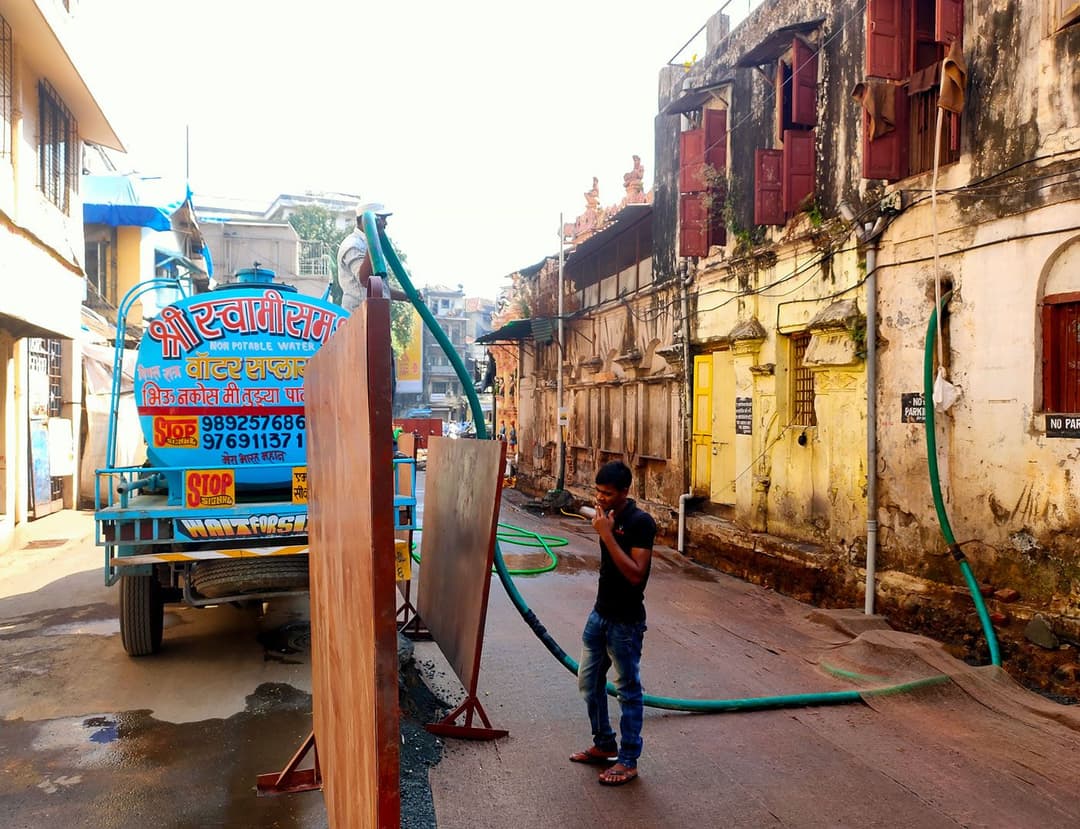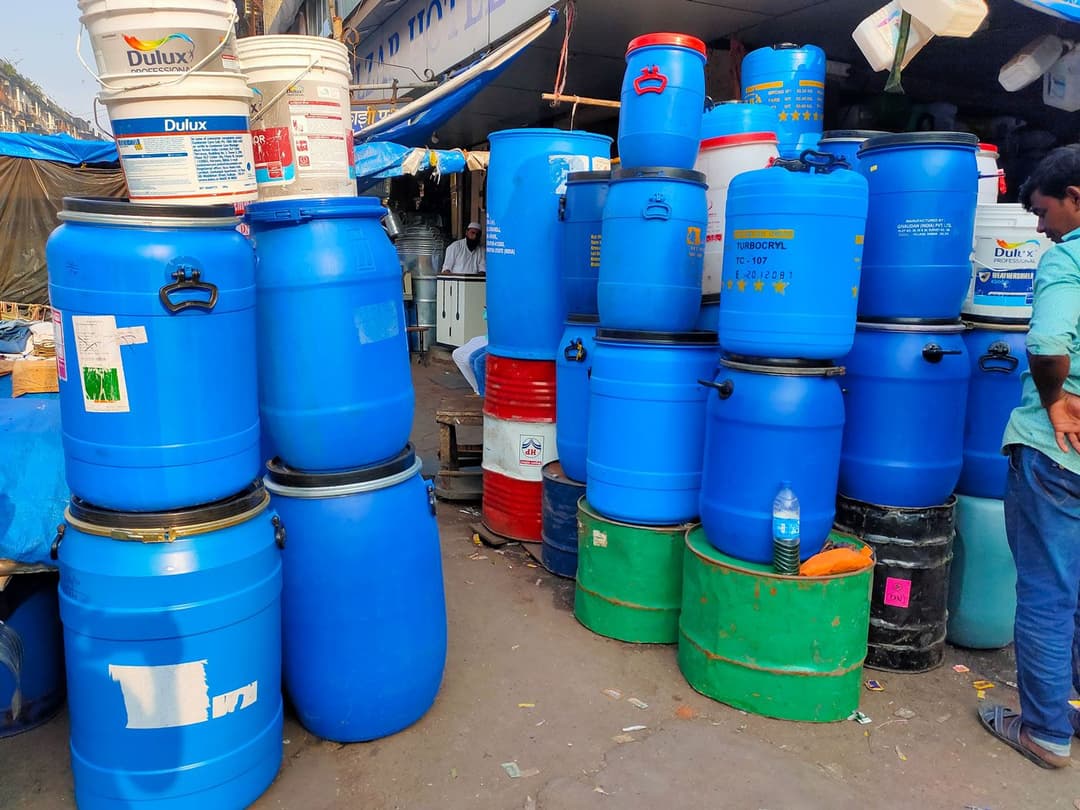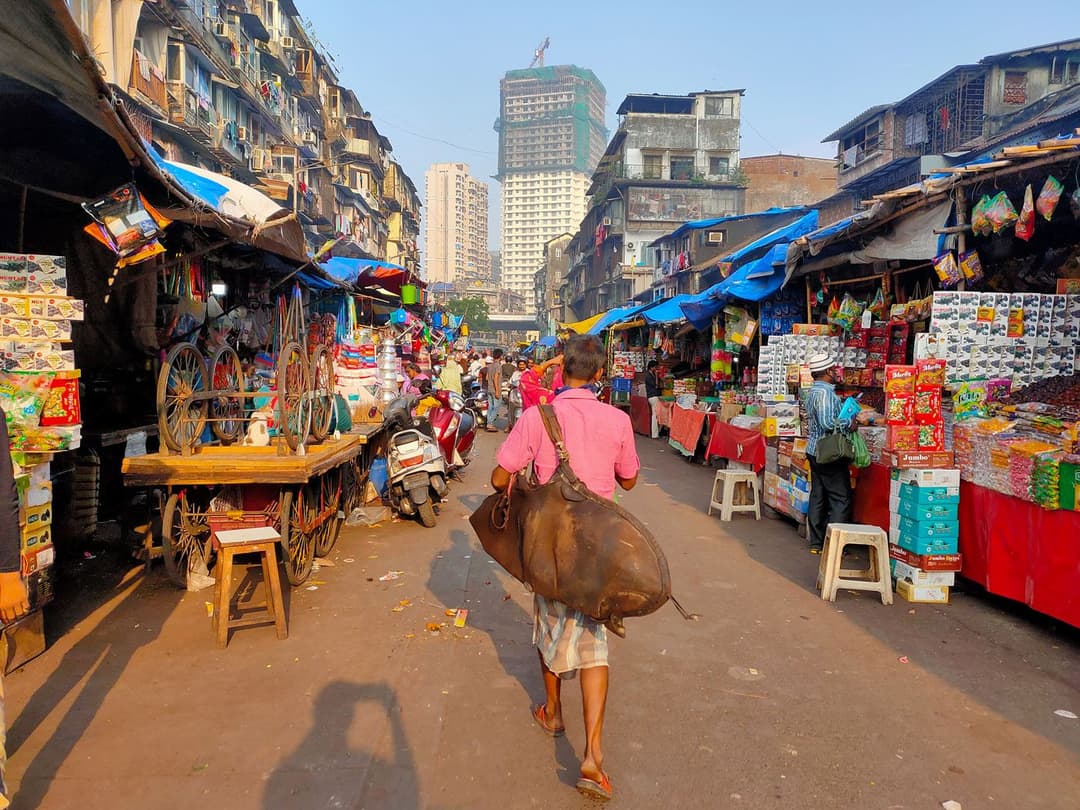

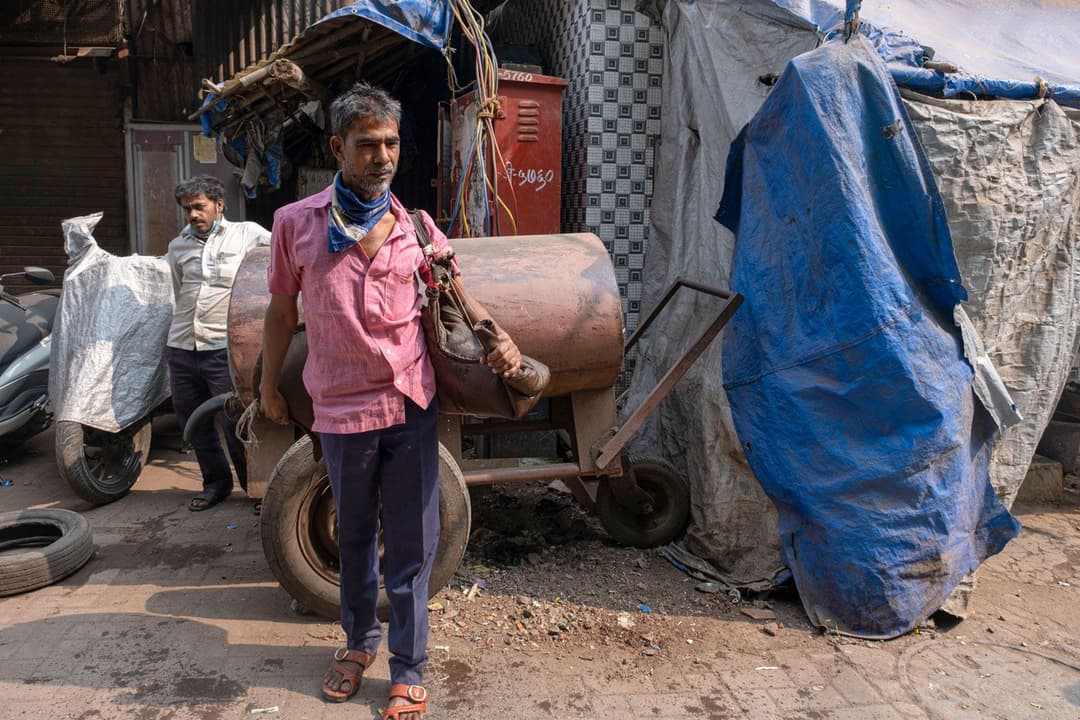
Deep in the maze of the narrow lanes of Bhuleshwar in south Mumbai, Manzur Alam Shaikh wakes up by 5 a.m. every day and gets to work. Lanky, and often clad in a checked lungi, he pushes his rented 550-litre metal cart towards Cowasji Patel Tank to fill it up with water. The area is about a kilometre from where he lives – out in the open, at the corner of a public toilet in Dudh Bazar, near Mirza Ghalib Market. He returns to Dudh Bazar with his cart, picks a spot to park it, and starts delivering water to his customers in shops and households nearby.
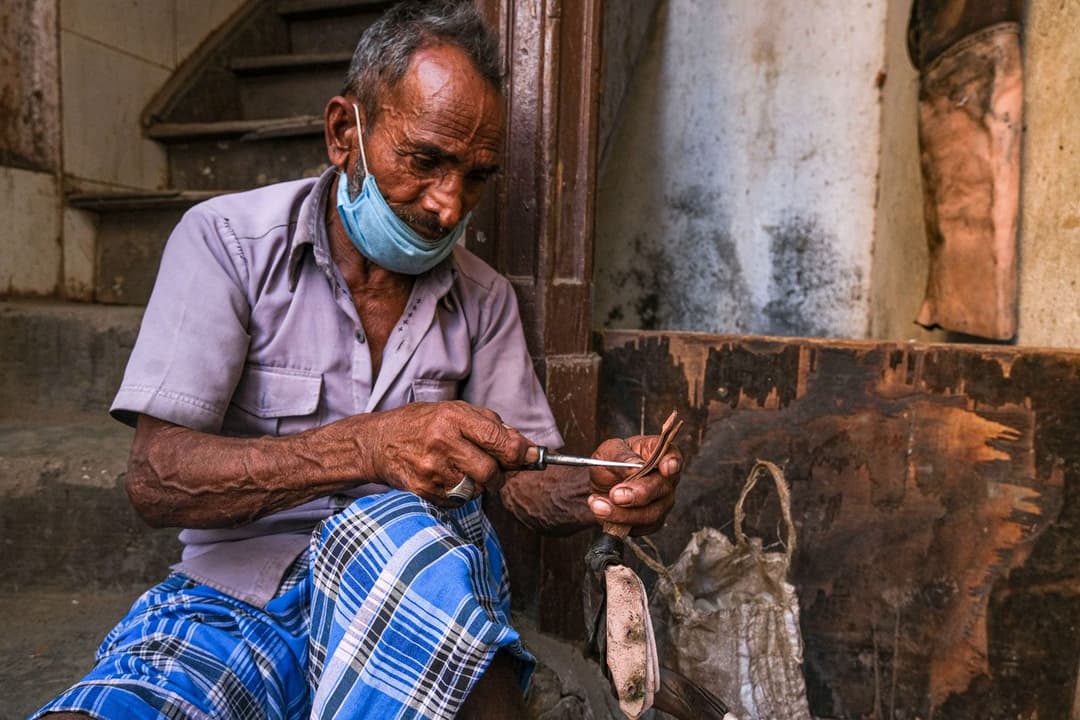
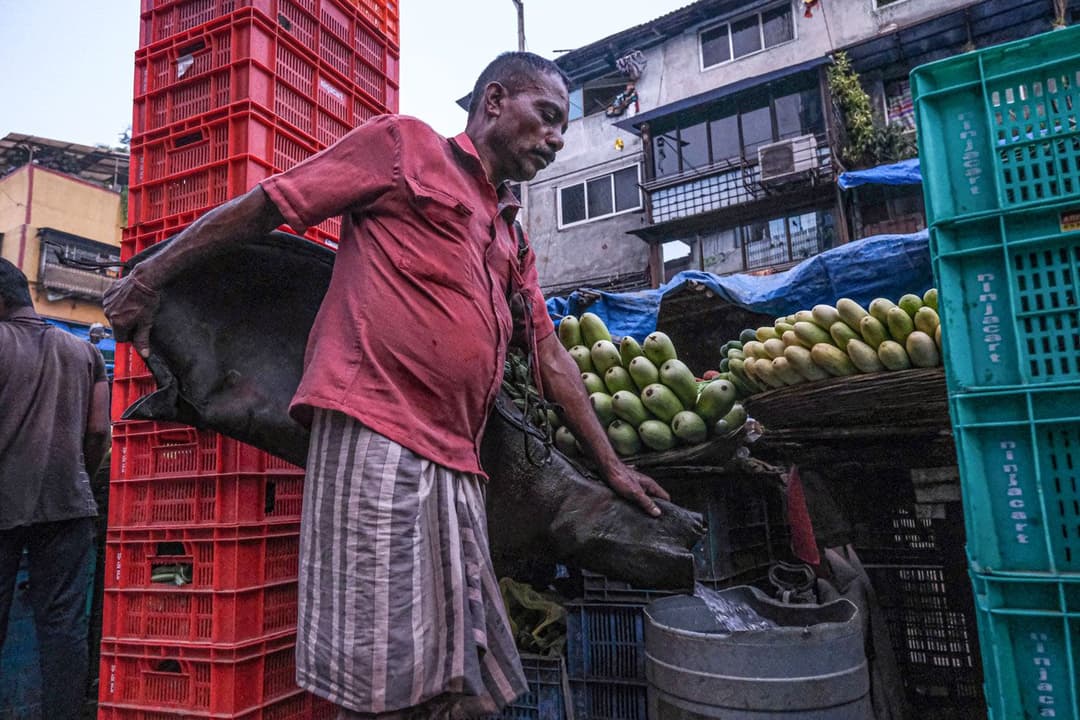
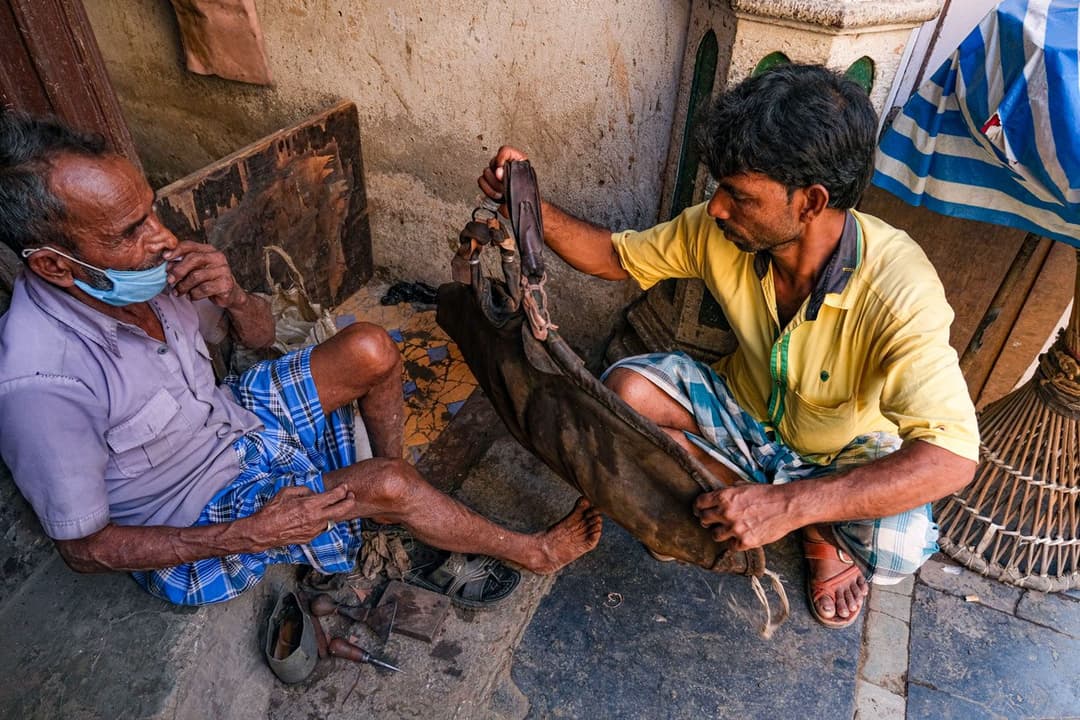
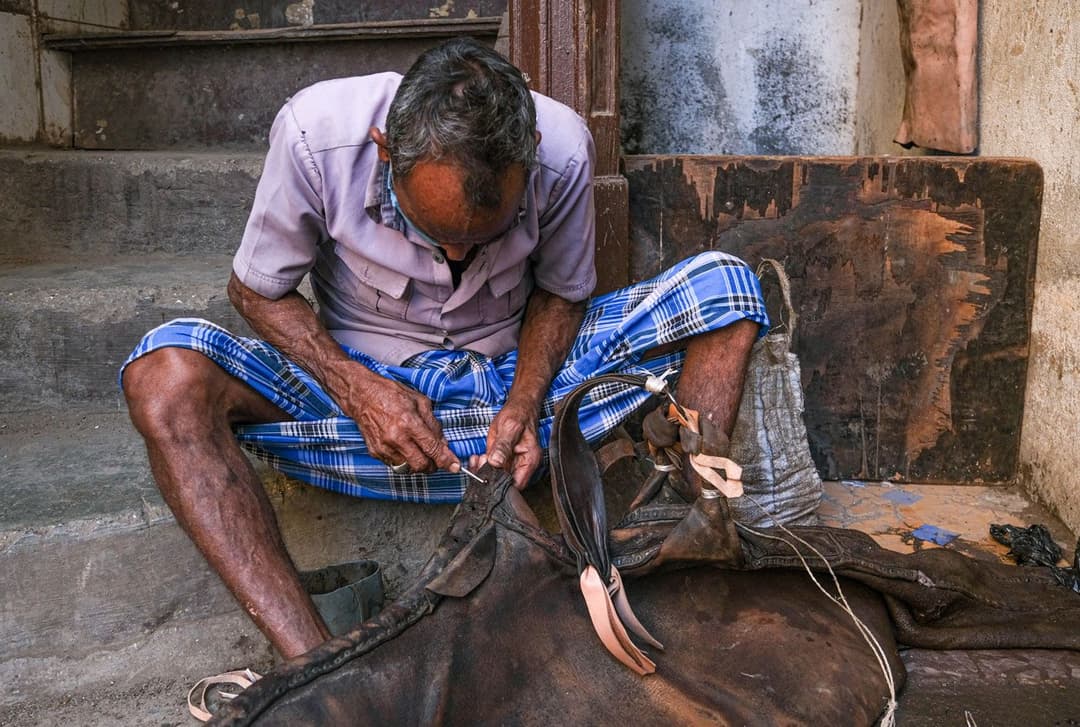
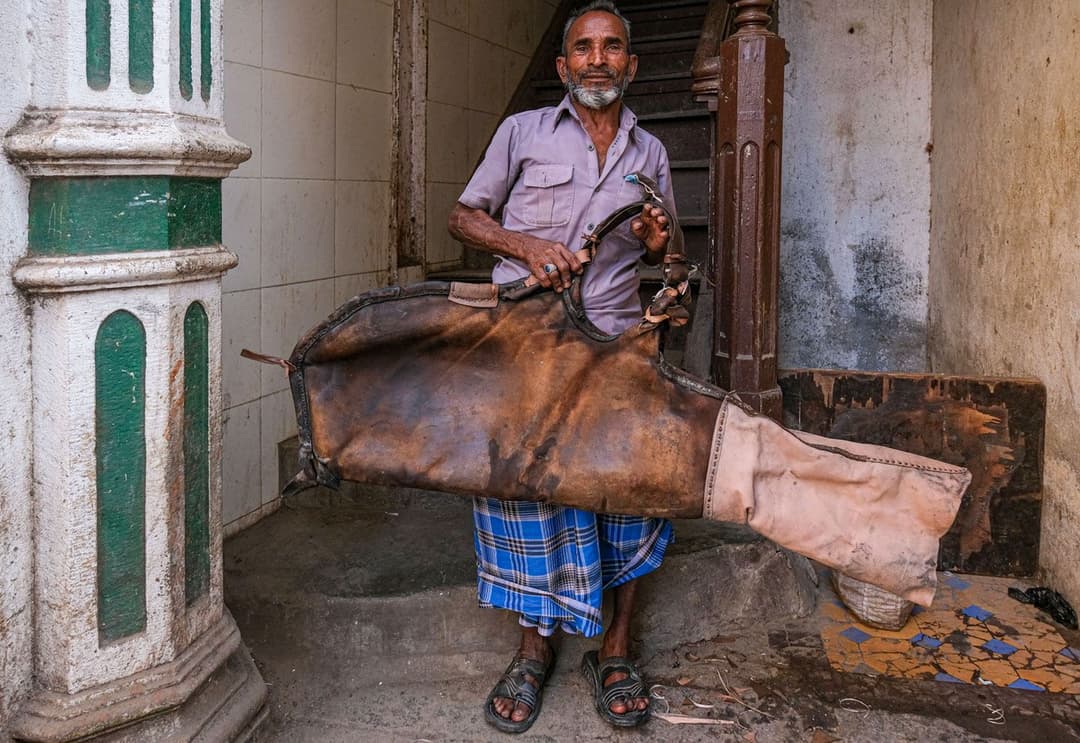
Manzur, 50, is one of the last remaining bhistis, who earn a livelihood doing this work. He’s been supplying water, for drinking, cleaning and washing, to residents in this part of Mumbai's historical inner city for about three decades. Until the Covid-19 pandemic disrupted the bhistis’ occupation, Manzur was among the few mashakwalas in Bhuleshwar who carted water in a mashak (also spelled as ‘mashaq’), a leather bag designed to carry about 30 litres of water.
But the tradition of supplying water from a mashak “is dead now”, says Manzur, who switched to plastic buckets in 2021. “Older bhistis will have to go back to their villages, and the younger ones will have to find new jobs,” he says. The bhistis’ work is a remnant of the traditional occupation of the Bhisti, a Muslim community in north India. The word ‘bhisti’ is of Persian origin and means ‘water carrier’. The community is also known by the name Saqqa, an Arabic word for ‘water carrier’ or ‘cup bearer’. The Bhisti are categorised as Other Backward Class (OBC) in Rajasthan, Uttar Pradesh, Haryana, Delhi, Madhya Pradesh, and Gujarat (where the community is known as Pakhaali).