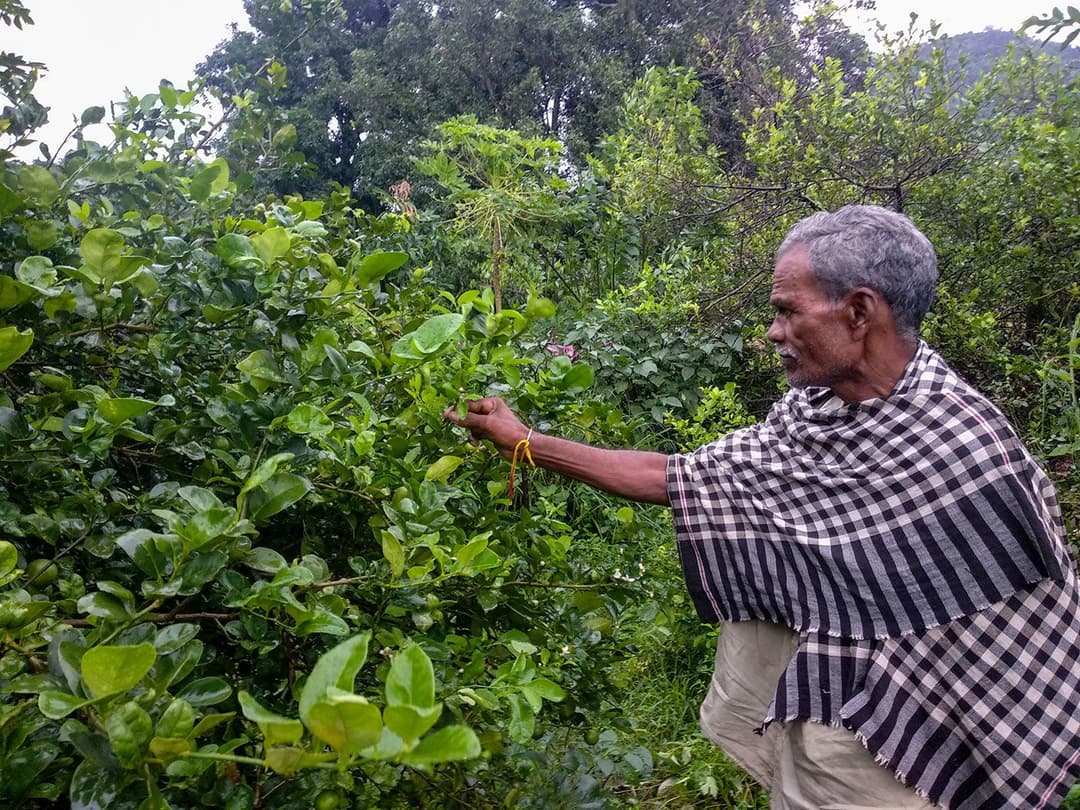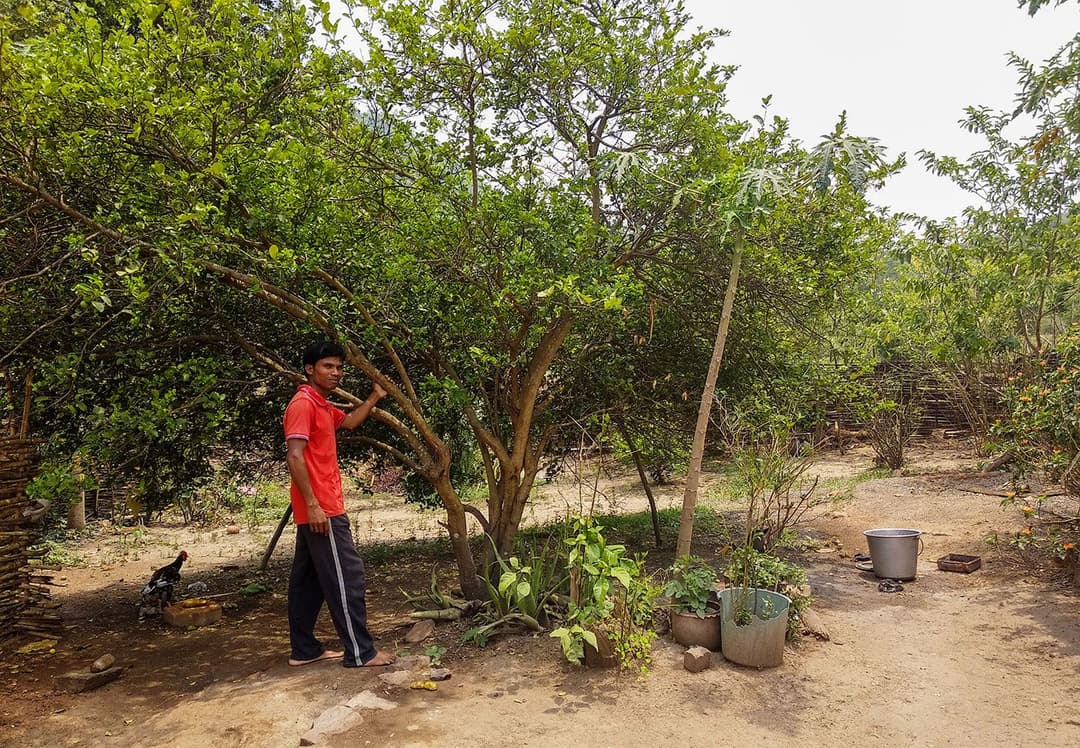

"We don’t use chemicals in our soil. The soil does not need poison to kill pests. If the health of the soil is good, it takes care of everything,” says Mahendra Nauri, whose farm is located around 1.5 kilometres to the east of the Niyamgiri hills. “What you need is a mahua or a sahaj tree on the field bund that provides shelter to the birds, lizards and frogs. They will take care of the pests and insects that harm our crops."
Mahendra’s two-acre land is in Kerandiguda, a village of around 100 people in Bishamakatak block of Rayagada district in southwest Odisha. Most of the families here belong to the Kondh Adivasi community, though the Nauri family is from the Dora community.
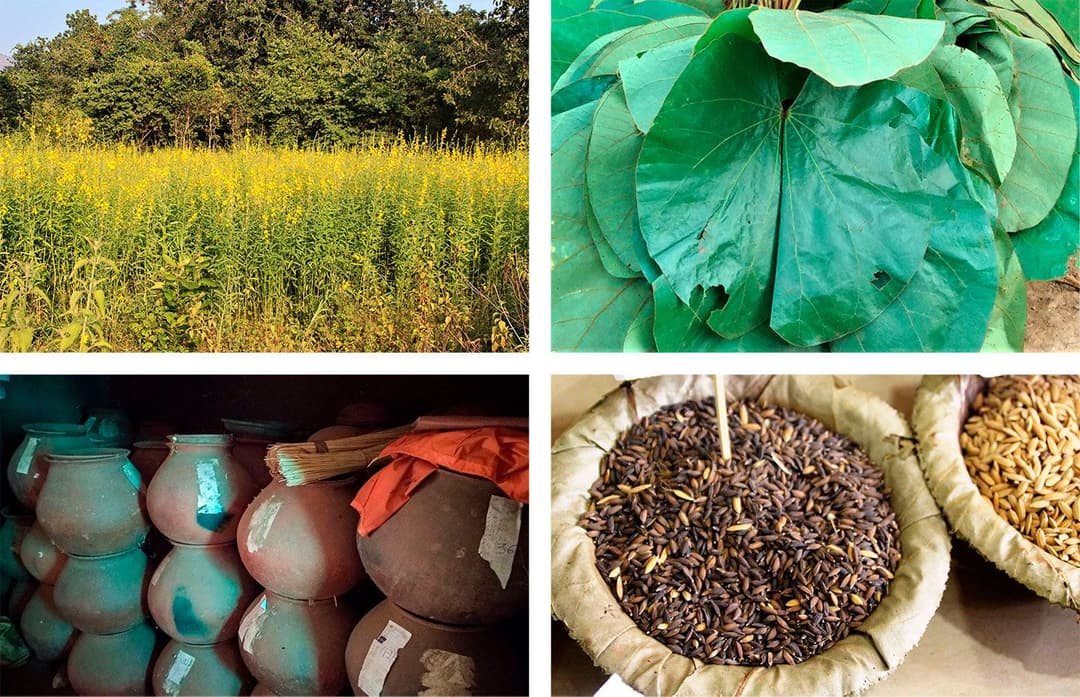
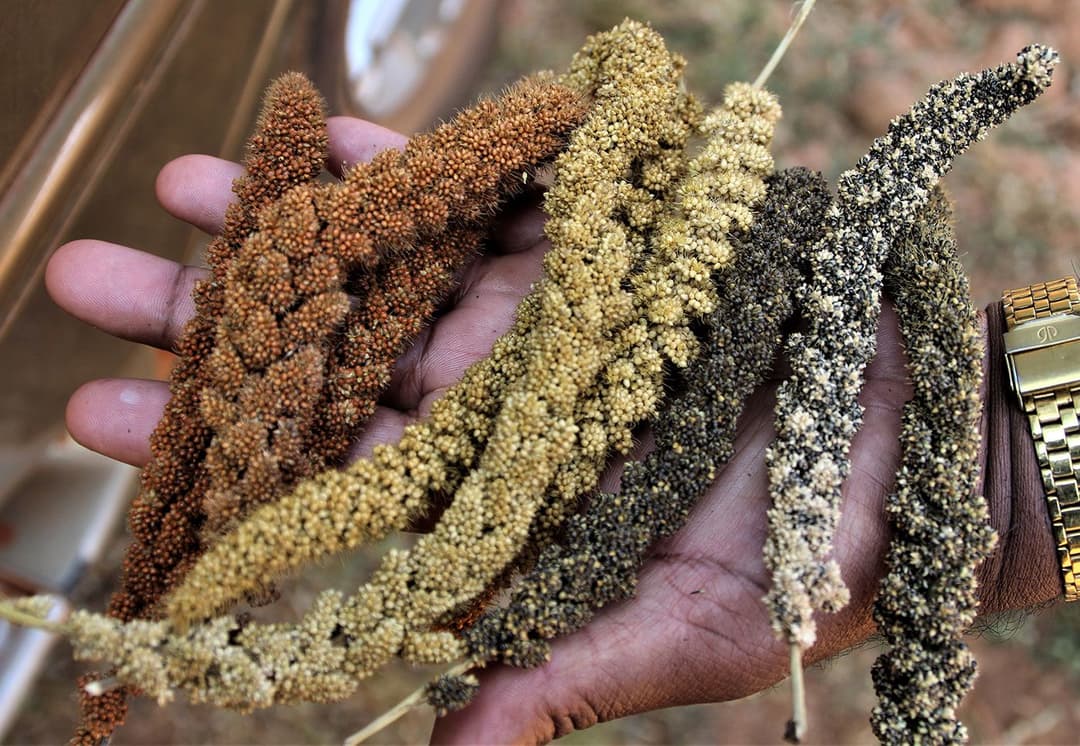
On their land, 30-year-old Mahendra and his father, 62-year-old Lokanath, cultivate 34 varieties of crop – and an incredible 72 sub-varieties in total. They do this in rotation on different patches of their farm, and their harvests include little millets (such as suan and sikra), pulses (including arhar and green gram), oilseeds (such as alsi, sunflower and groundnut), tubers, turmeric, ginger, green vegetables, tomatoes, brinjals and more. “We never depend on the market for food," Mahendra says.
The villagers use water from streams flowing from the Niyamgiri hill. They construct stone bunds to divert water to their fields. “The climate conditions have been adverse here in the past four years,” says Lokanath, “but our crops have sustained us through all adversities. I have never taken a loan from anyone. It is only because of our traditional farming system.” The family is sustained by their own harvests and they sell their surplus produce in the weekly haats at Muniguda and Bishamakatak.