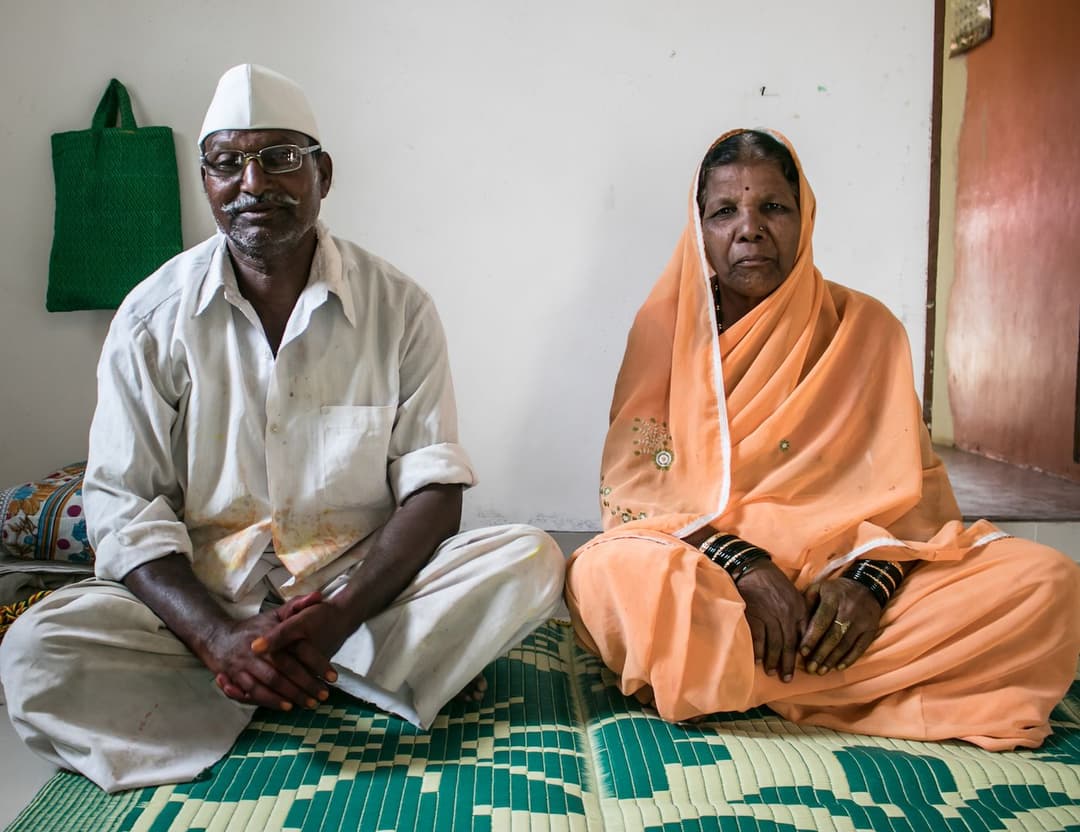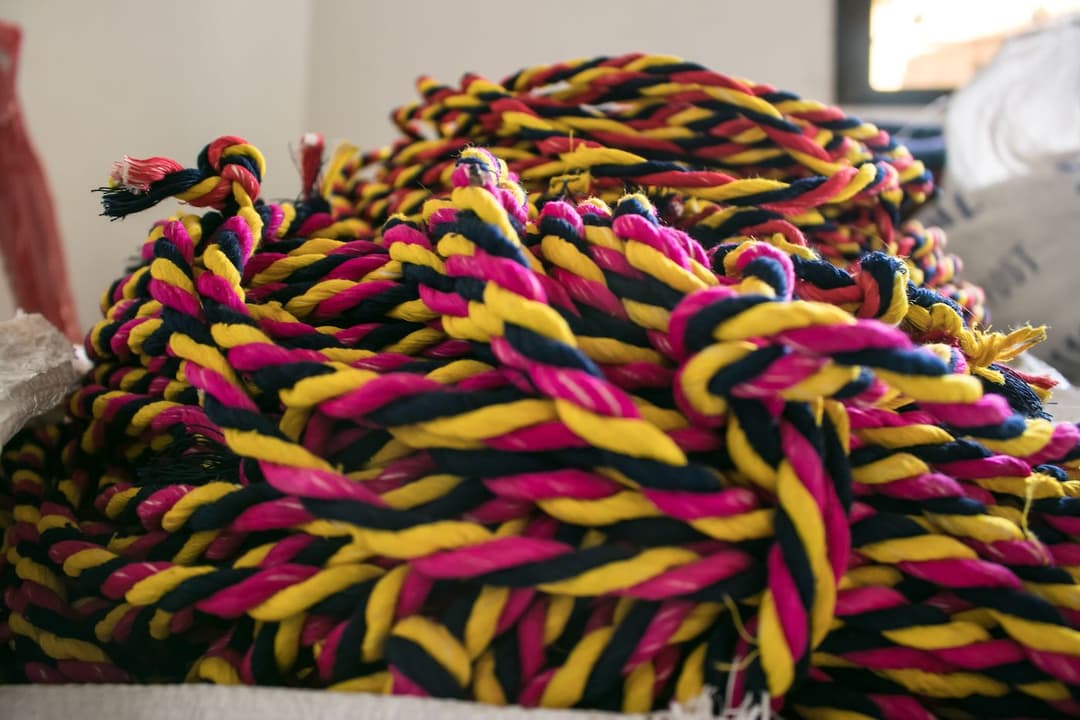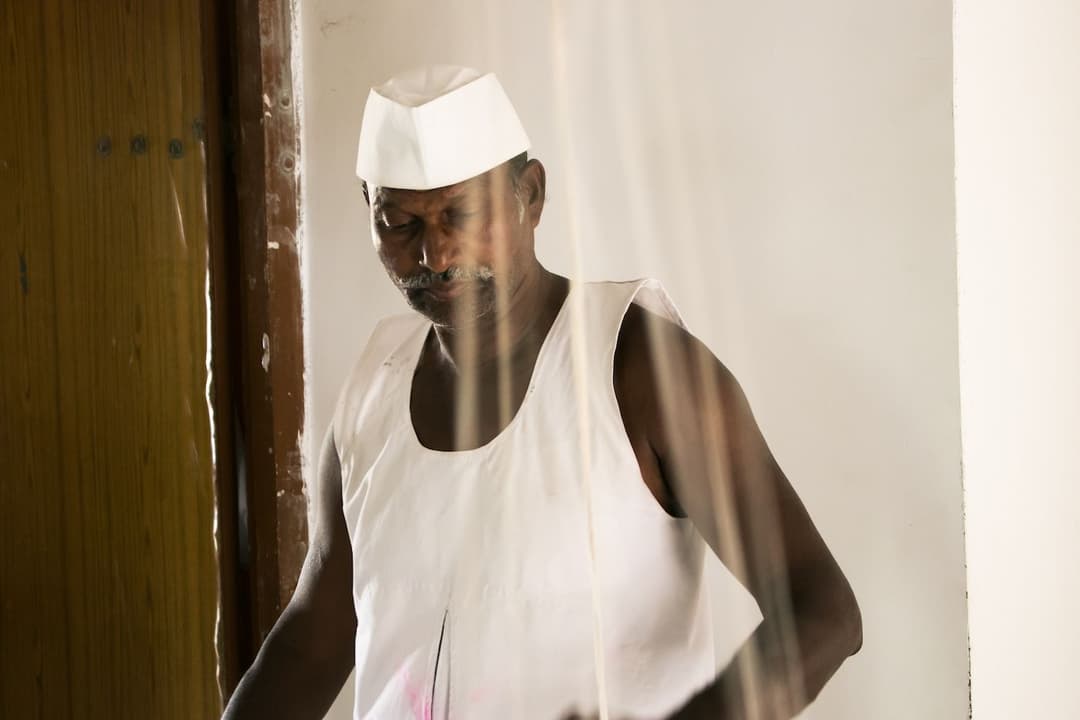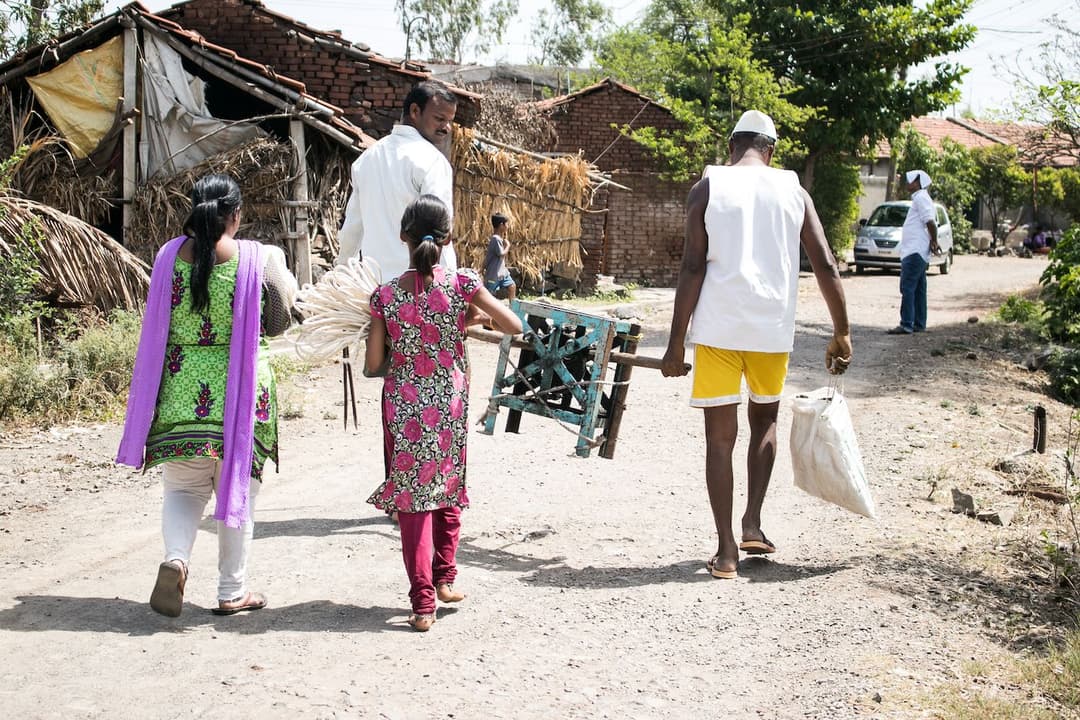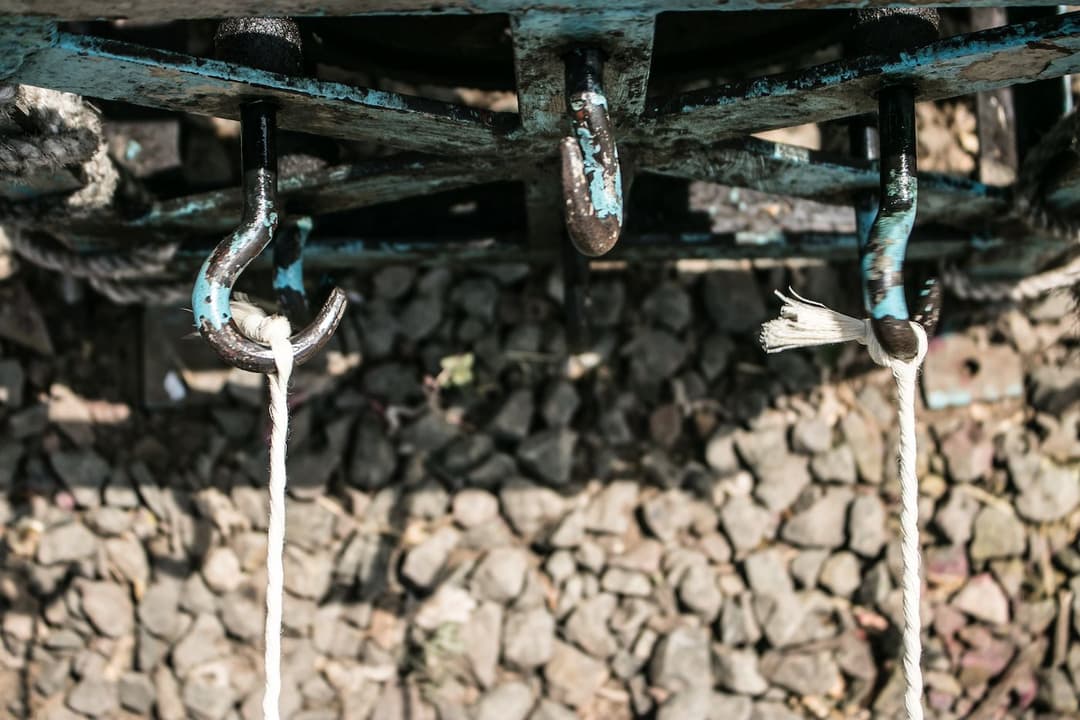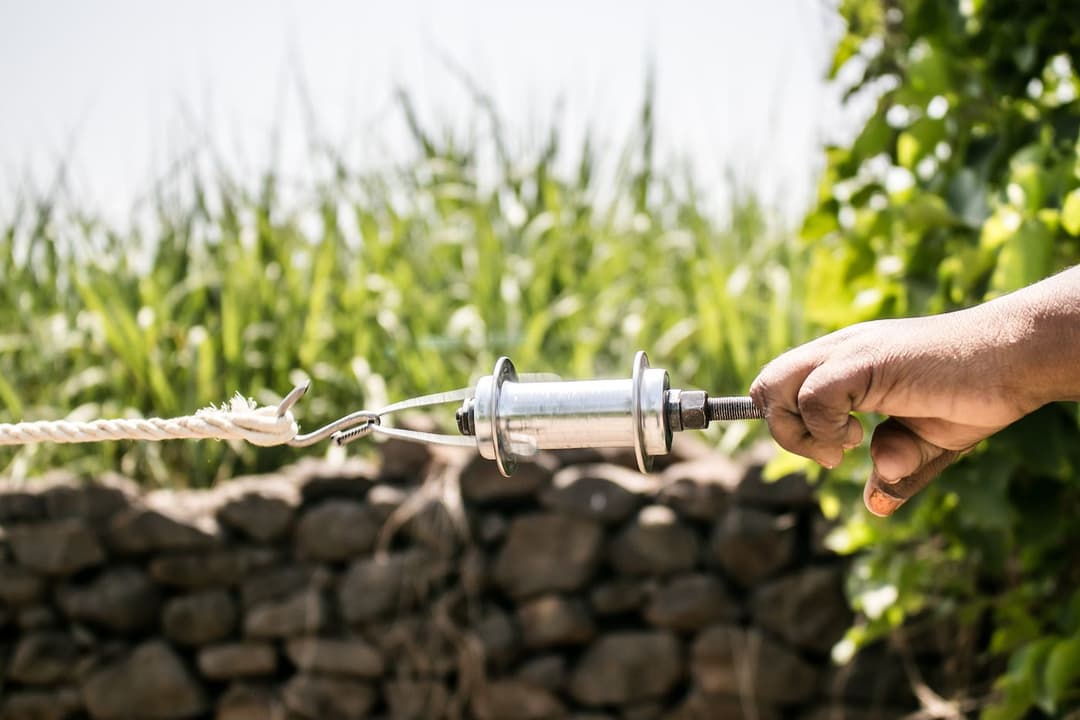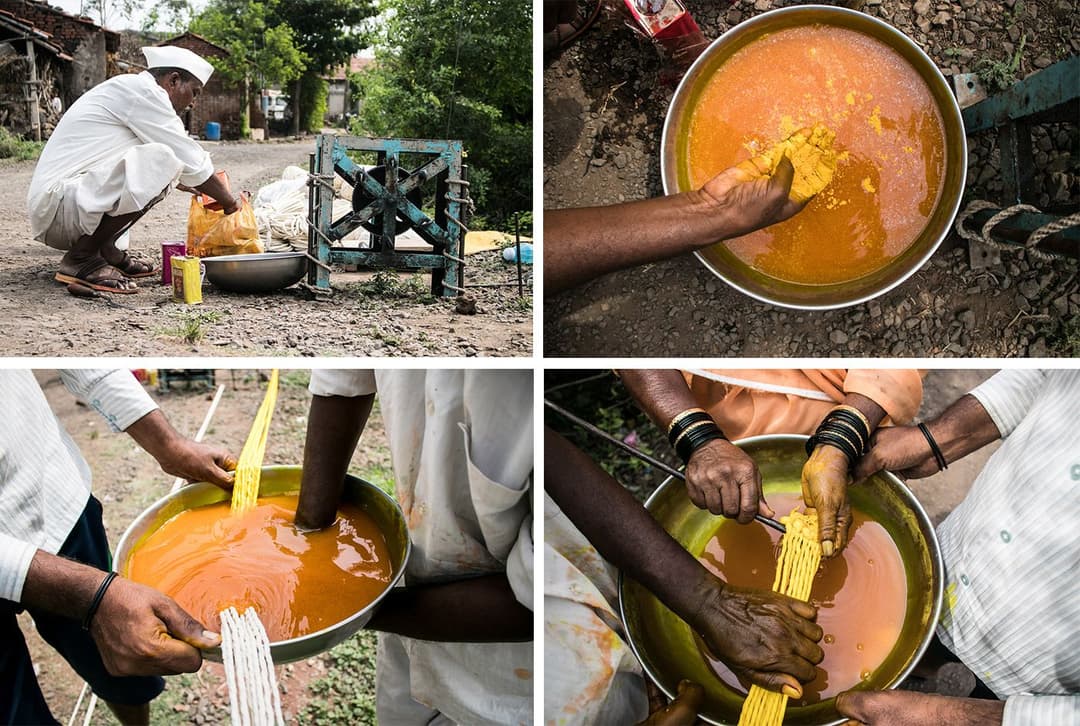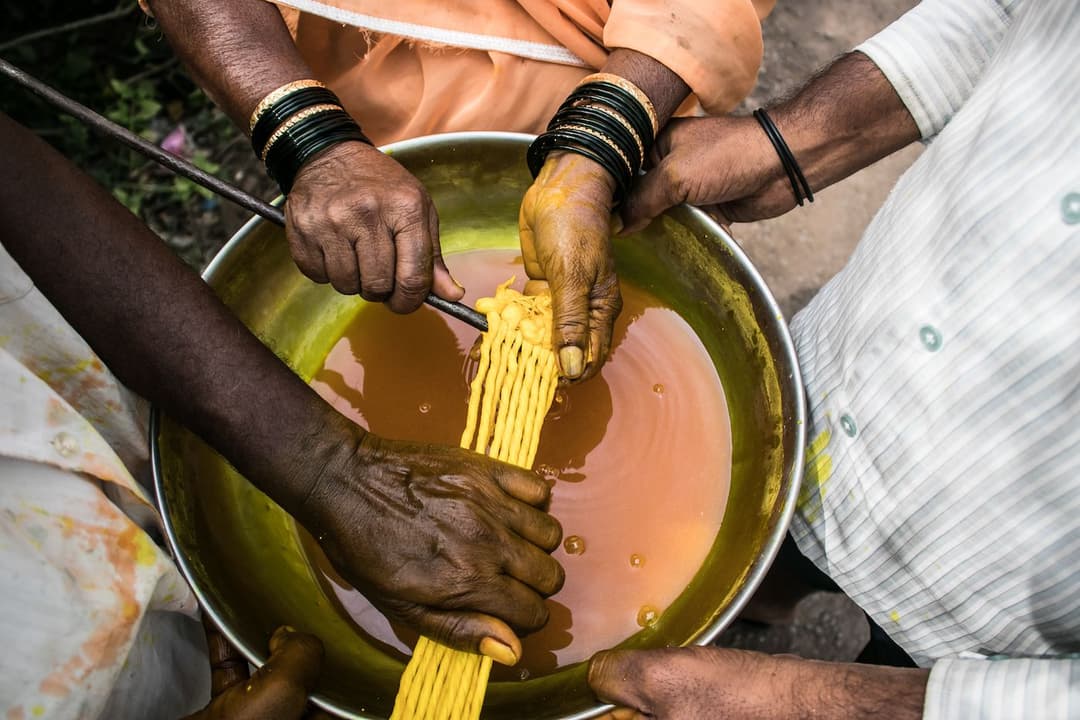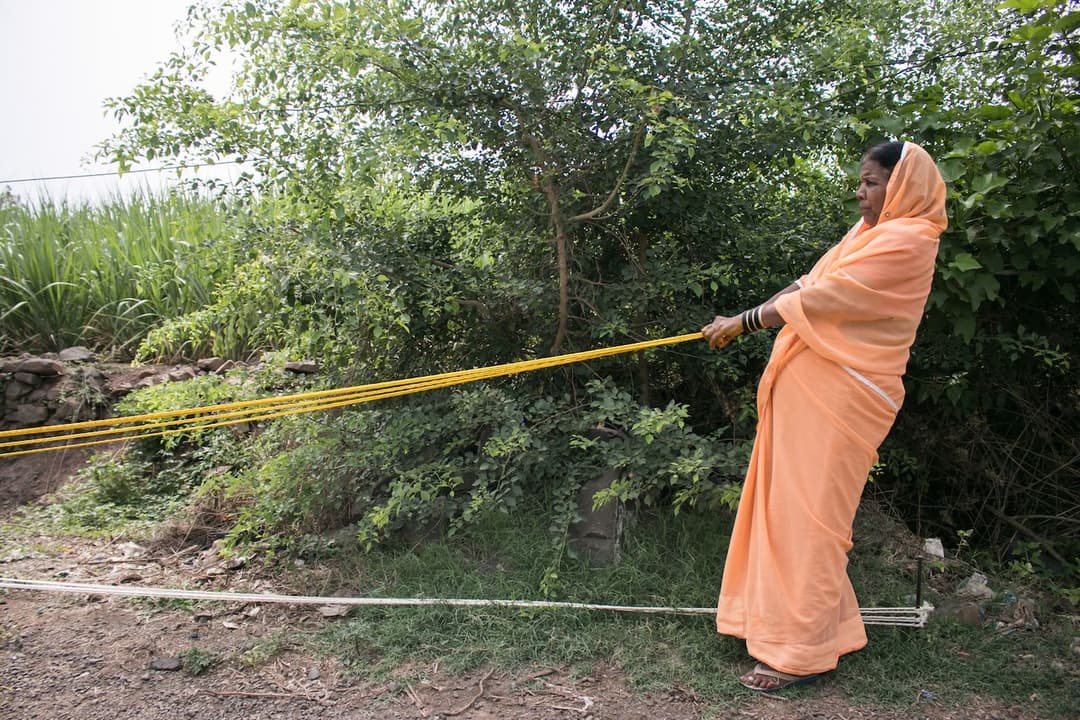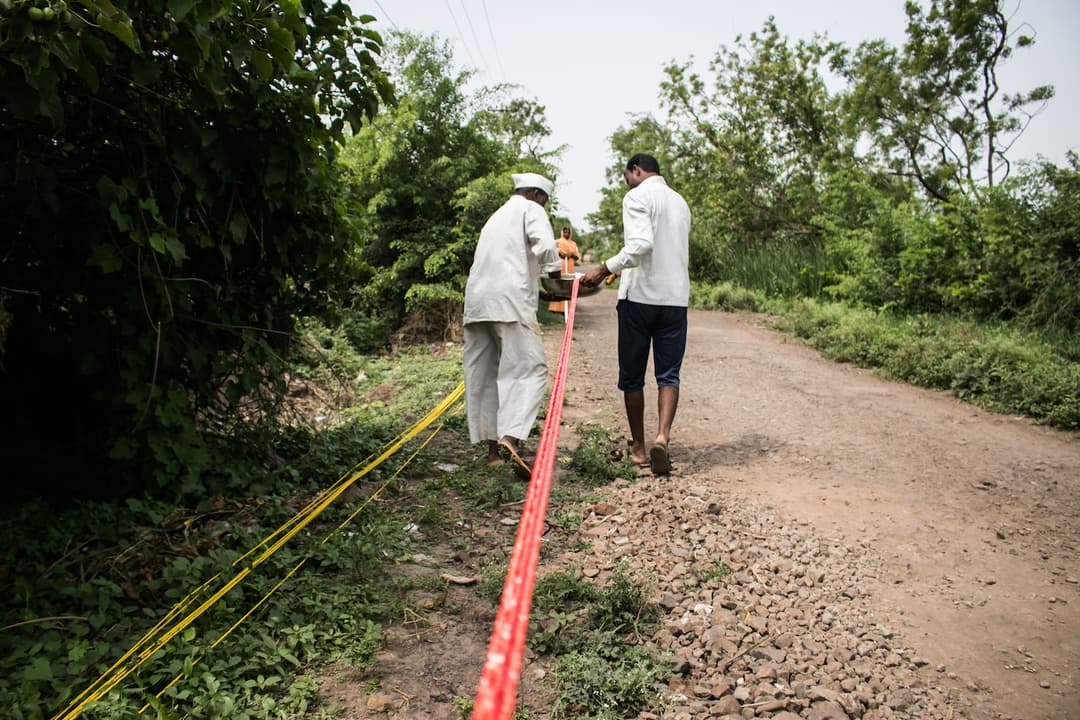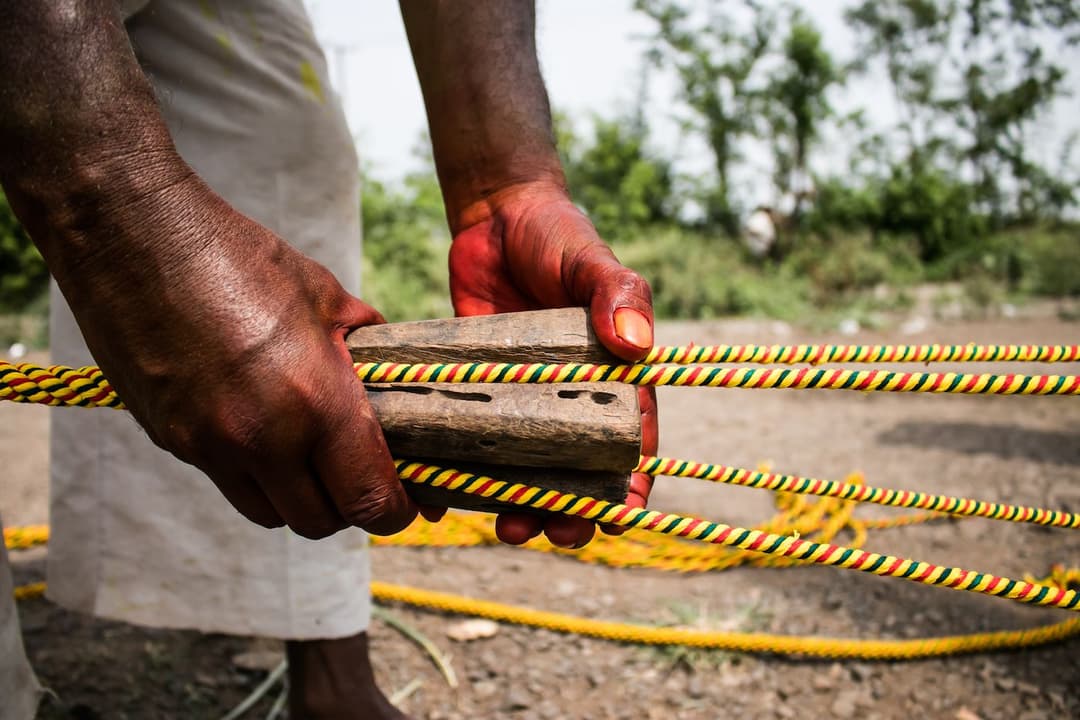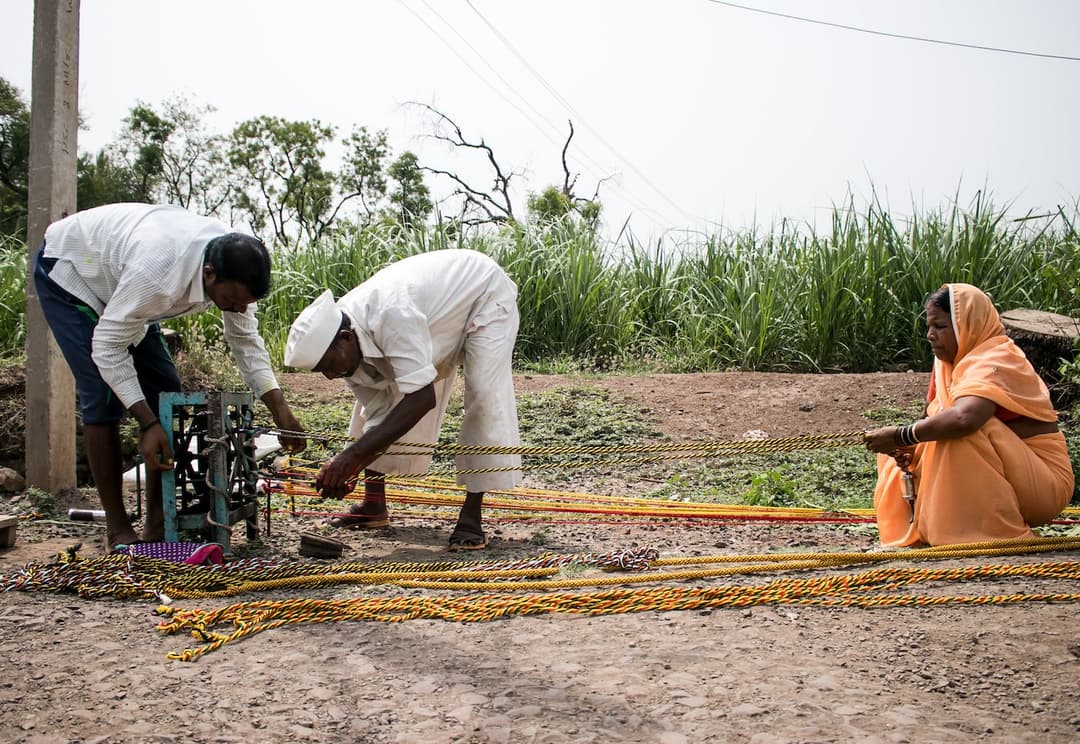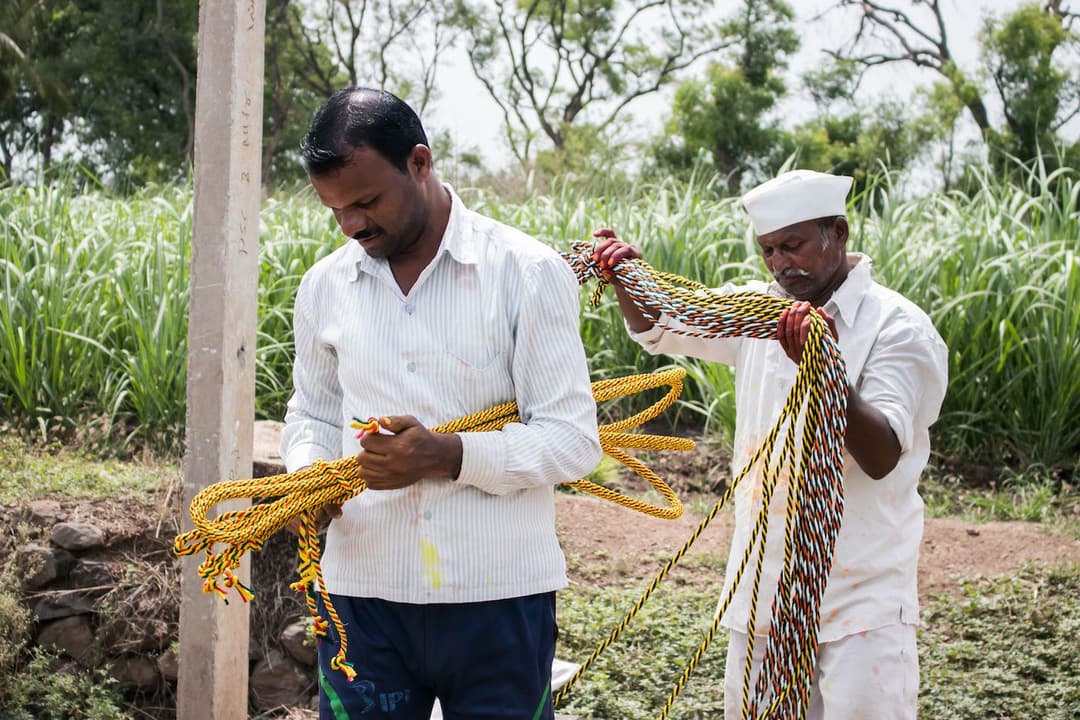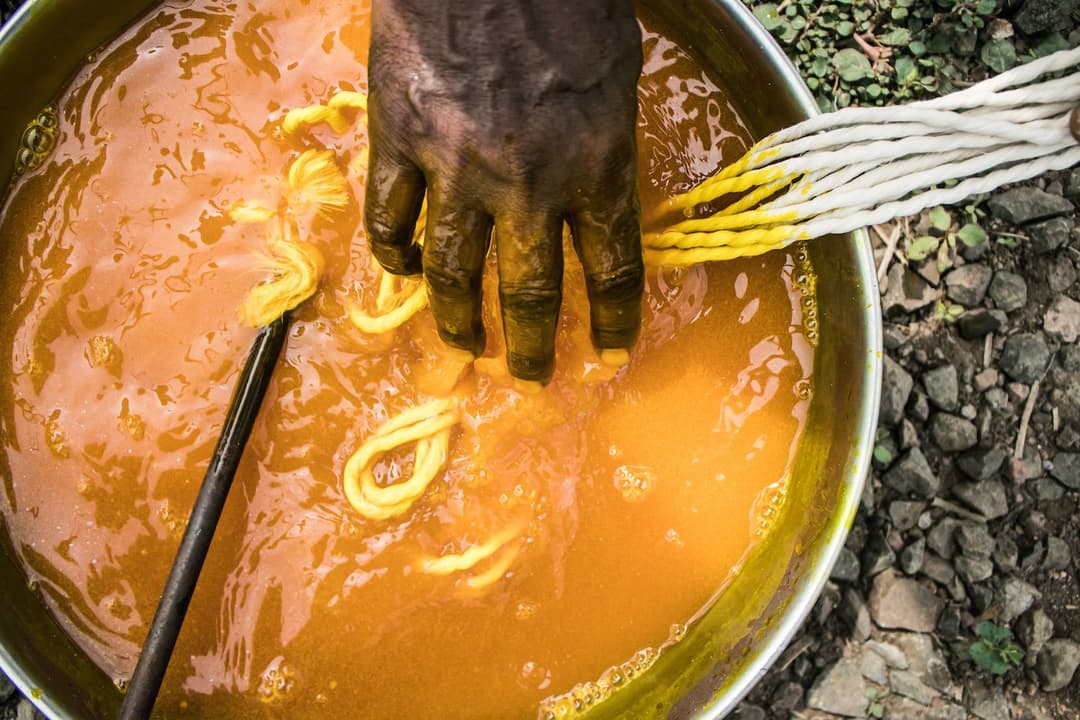
Devu Bhore has been making ropes for 30 years. Separating the weaker cotton strands from the more tensile threads. Stretching the tensile lot from the floor of his home to a hook in the ceiling around nine feet high to make bundles of yarn that weigh 1.5-2 kg each. Making 10 such bundles in seven hours three times a week.
Cotton though is a late entrant to the family business. For generations, his family had made ropes from the agave plant. When that became unsustainable, they switched to cotton. And now that too is a fraying occupation with the proliferation of nylon ropes.
When Devu was a young boy, his father would walk 10 kilometres to the forests near the Maharashtra-Karnataka border villages to collect the agave plant, called ghaypat in Marathi and locally also known as phad. He would bring back around 15 kilos. After removing the thorny edges of the leaves, he would soak them in water for a week and dry them for two days. This process would yield two kilos of fibre for making rope. Devu’s mother Mainabai would do this work too, and 10-year-old Devu would chip in.
In the early 1990s, the Bhores and other families started using cotton yarn instead of agave fibres – the cotton lasted longer. Besides, Devu says, “people have cut down the forests. And it’s easier to use yarn than phad [due to the long soaking and drying process of the agave plant].”
Till the late 1990s, close to 100 families in his village crafted ropes, estimates Devu. He lives in Boragaon village of Chikodi taluka in Belgaum district. When the returns started falling with the arrival of cheaper nylon ropes, many turned to agricultural work in nearby villages, or went to work at the powerlooms or auto part workshops and other factories in nearby Ichalkaranji and Kagal towns.