
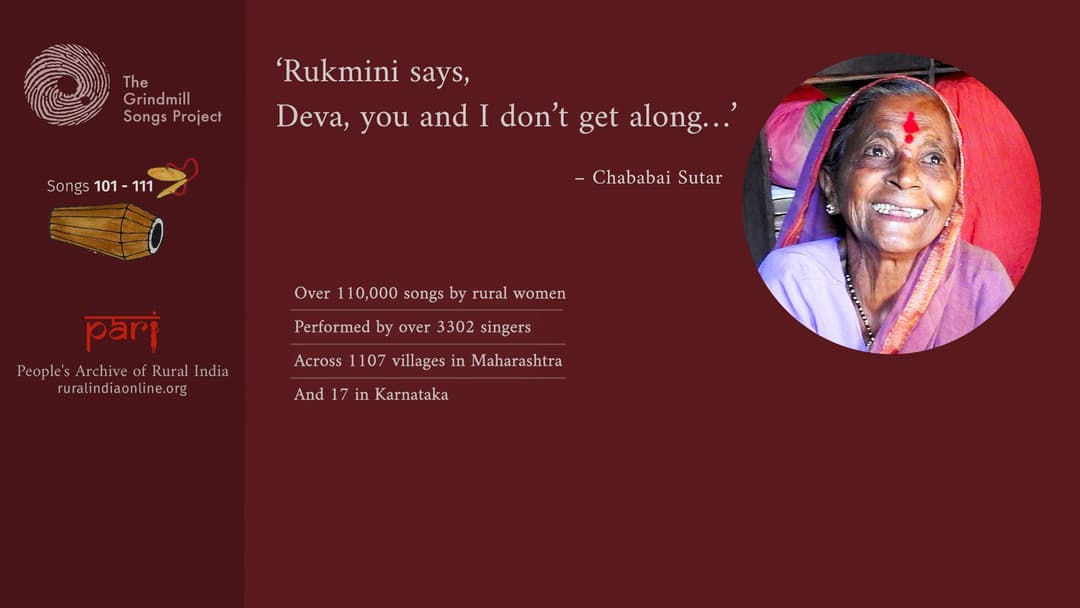
Hausabai Mandekar on audio and Chababai Sutar on video, both from Pune district, sing couplets about the relationship between Vitthal and Rukmini, the deities at Pandharpur, in this edition of the Grindmill Songs Project on PARI. The bi-annual procession of devotees to the temple town is underway this week
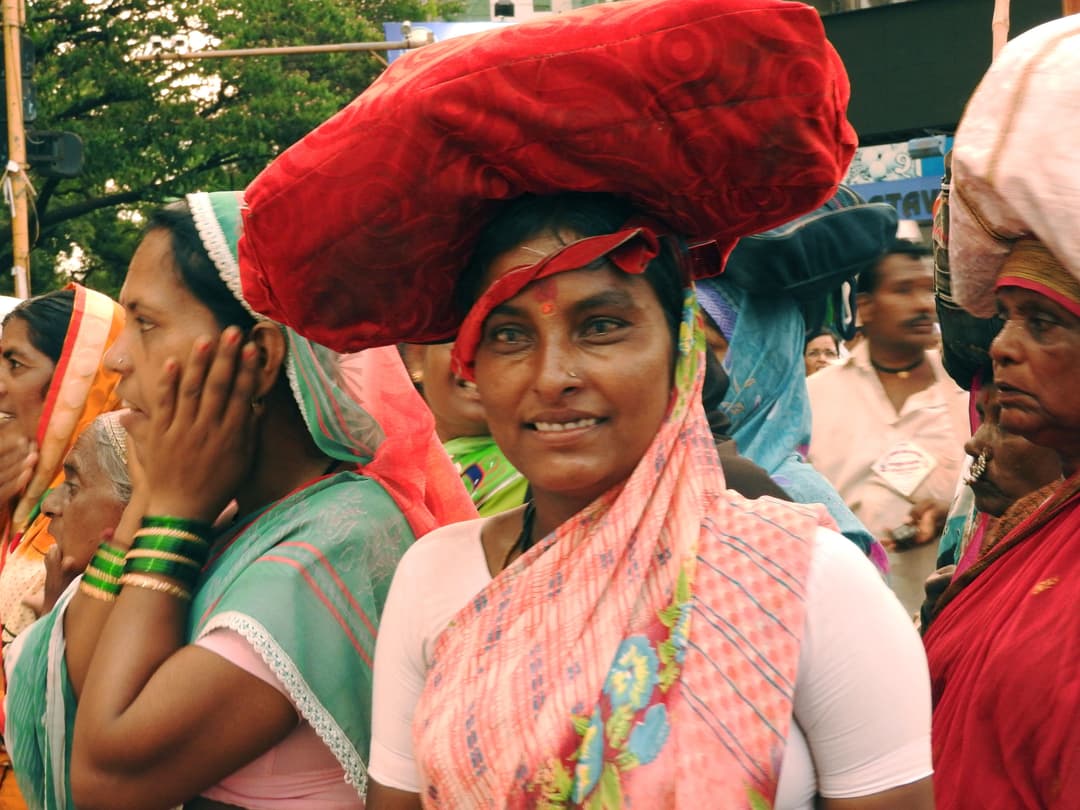
Every year in the month of Ashadh (June/ July), a 21-day procession – a wari – starts from Alandi and Dehu in Pune district to go to Pandharpur, the temple town of Vitthal and Rukmini (or Rakhumai – mai means mother), in Solapur district. A person who goes on this journey year after year is called a warkari, and families across all castes belong to this tradition.
Read more about this journey in PARI’s The pilgrims’ progress and about the poet-saints revered by the warkaris , Dnyaneshwar and Tukaram, in The enduring pull of people’s poets .
Folklore tells us that Vitthal was a pastoral deity. But despite being a people’s god the worship and rituals were in control of the Brahmins and devotees from the underprivileged castes were kept out for many years by the upper castes from the temple in Pandharpur. This changed in 1947 after teacher and writer Pandurang Sane (popularly known as Sane Guruji) went on a 11-day fast to end this discrimination.
Some of the couplets in this edition of the Grindmill Songs Project have elements of devotion, and some describe the temple at Pandharpur. But there are also songs handed down through generations about the conjugal life of Vitthal and Rukmini as they lived with each other – in the imagination of the singers.
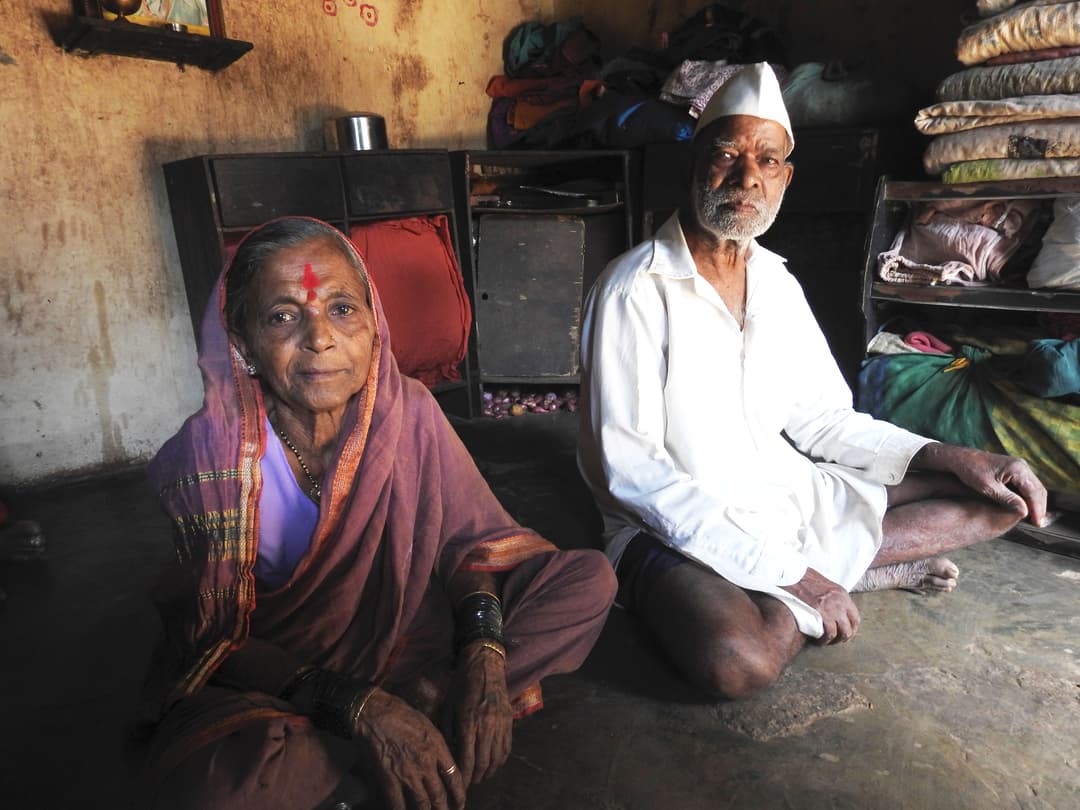
When the Grindmill Songs Project Team from PARI visited Lawarde village on April 30, 2017, in Mulshi taluka of Pune district, Chababai Sutar sang songs about the love as well as discord between Vitthal and Rukmini.