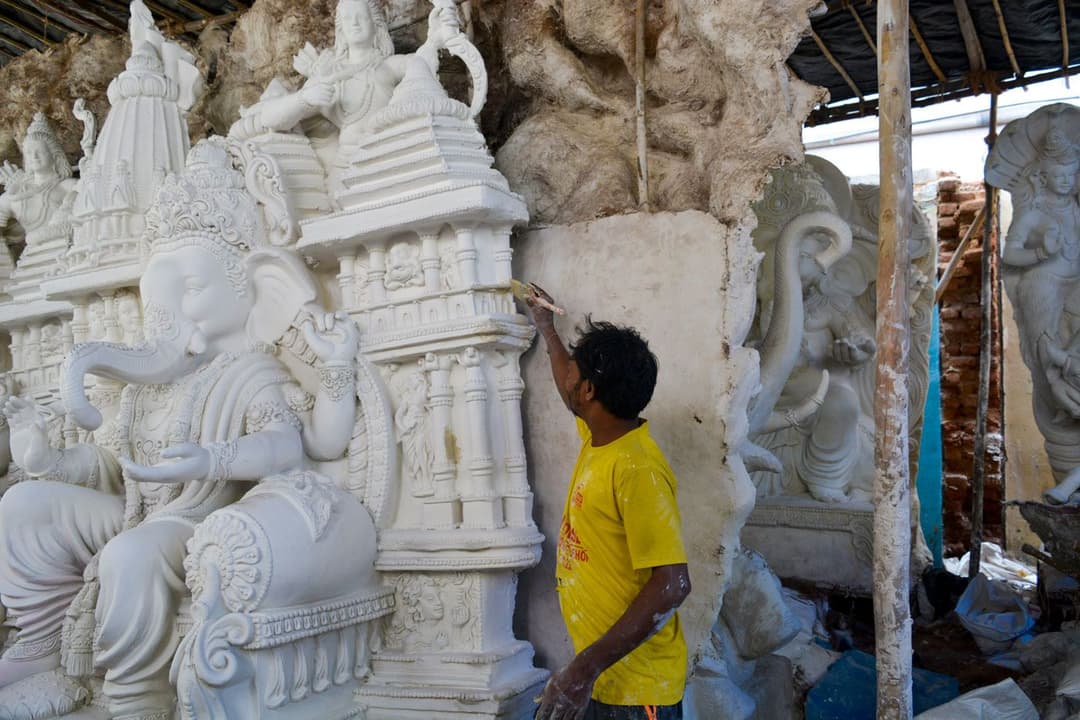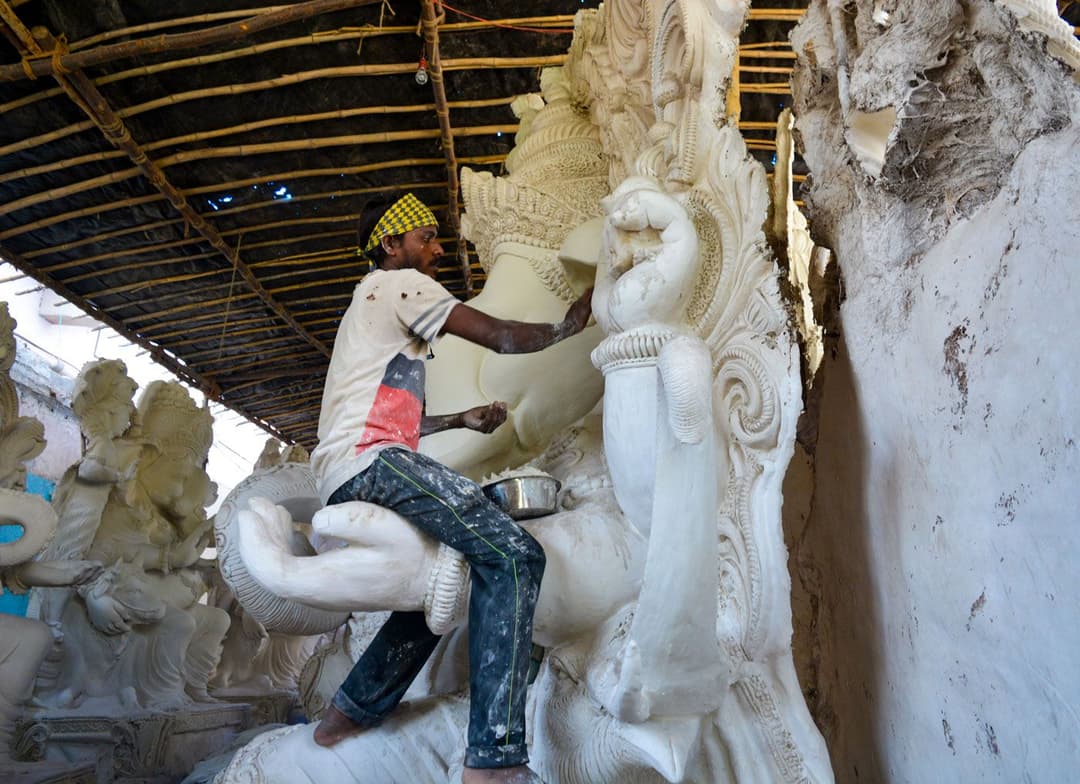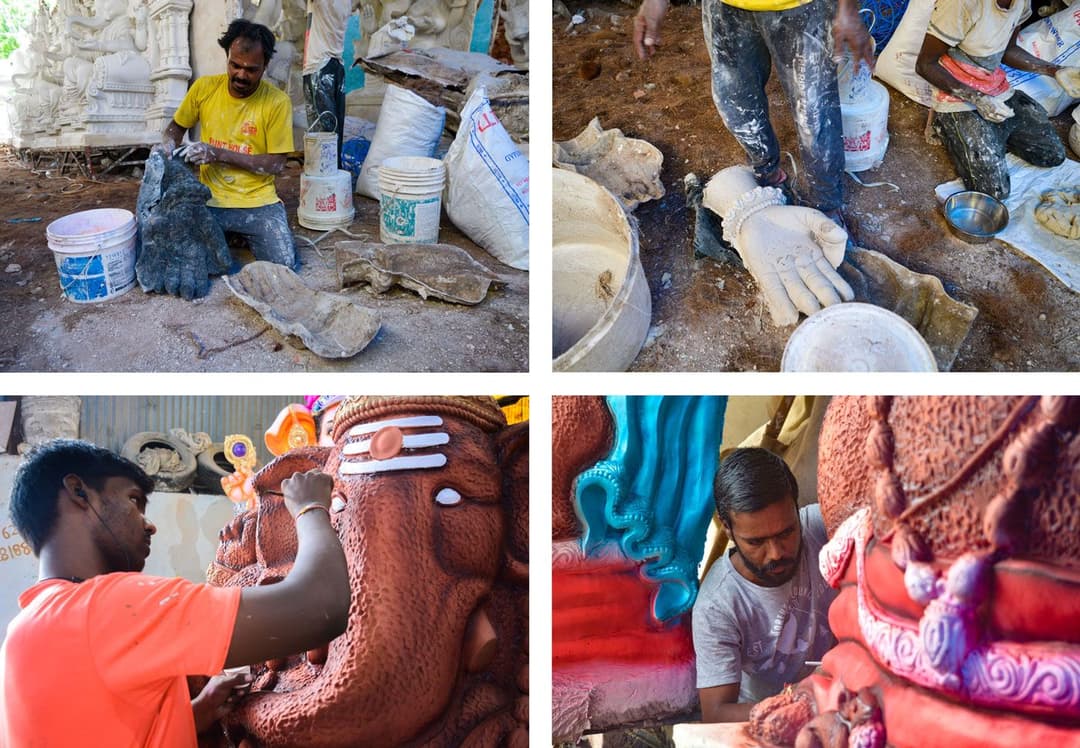

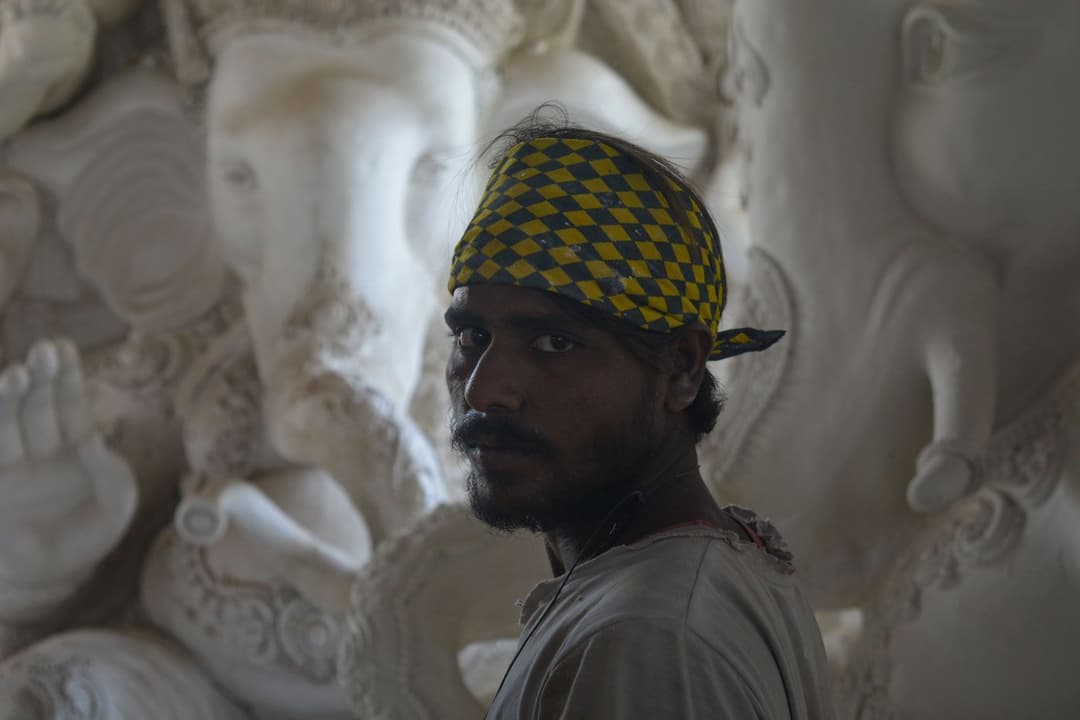
Holding onto the trunk of a 10-foot idol of Lord Ganesha seated on a throne, one arm raised in blessing, Shankar Mirdwad is adding the final touches to it with clay. Coconut husk and sacks full of plaster are strewn around, next to paint bottles, containers of rubber dye and idol frames. "The POP is missing from some portions,” Shankar says. “After that, the idol is ready to be painted."
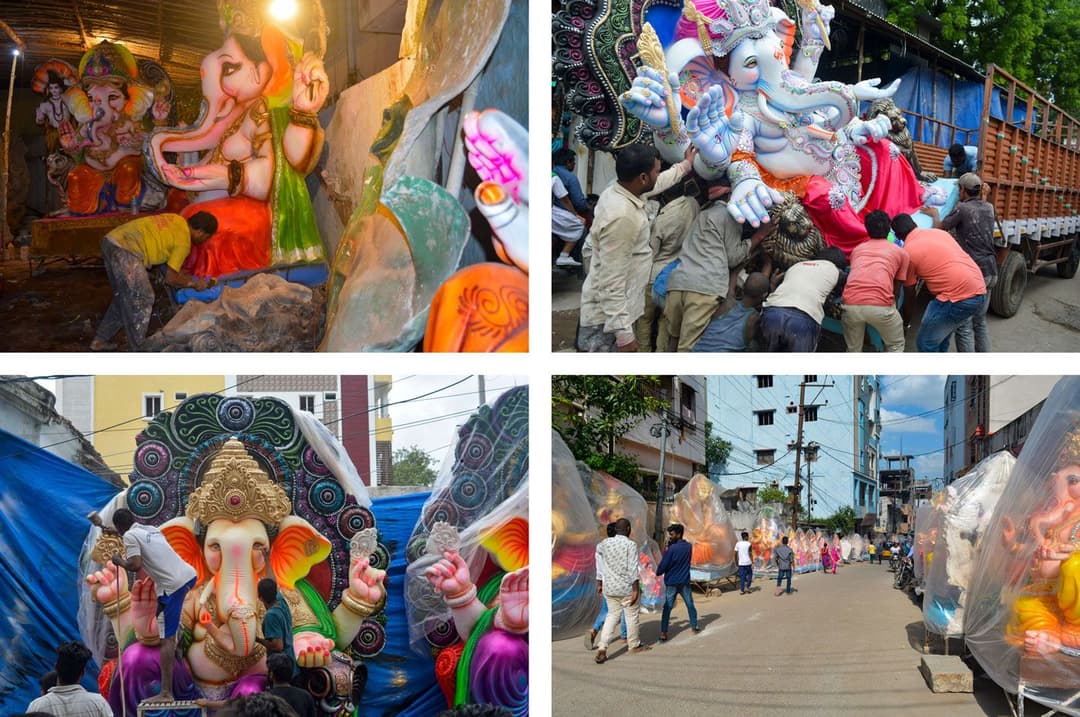
The tarpaulin and bamboo shed where he is working is barely visible behind an array of ready and in-progress idols on Mangalhat road in the bustling Dhoolpet locality of the old city of Hyderabad. Trucks and tempos are moving like snails along the narrow lanes ferrying big and small Ganesh idols – the biggest ones made here are 21 feet – covered in tarpaulin and accompanied by cheering crowds of men, on their way to community pandals and homes.
Shankar has been working at this shed since the last week of June. The owner, who is out of town, runs three more such workshops, he says. In each, when I visited in the last week of August, 2-3 artisans were busy readying the idols for the Ganesh Chaturthi festival in the first week of September this year.
Another batch – the sculptors – had come to Dhoolpet’s worksheds around January and left by April, as they do every year, Shankar explains. “In our shop we call a Kolkata-based murtikar,” he says. “He makes the idol with chini mitti [fine-grained soil]. It takes around 25 days for the murtikar to complete a [big] idol.”