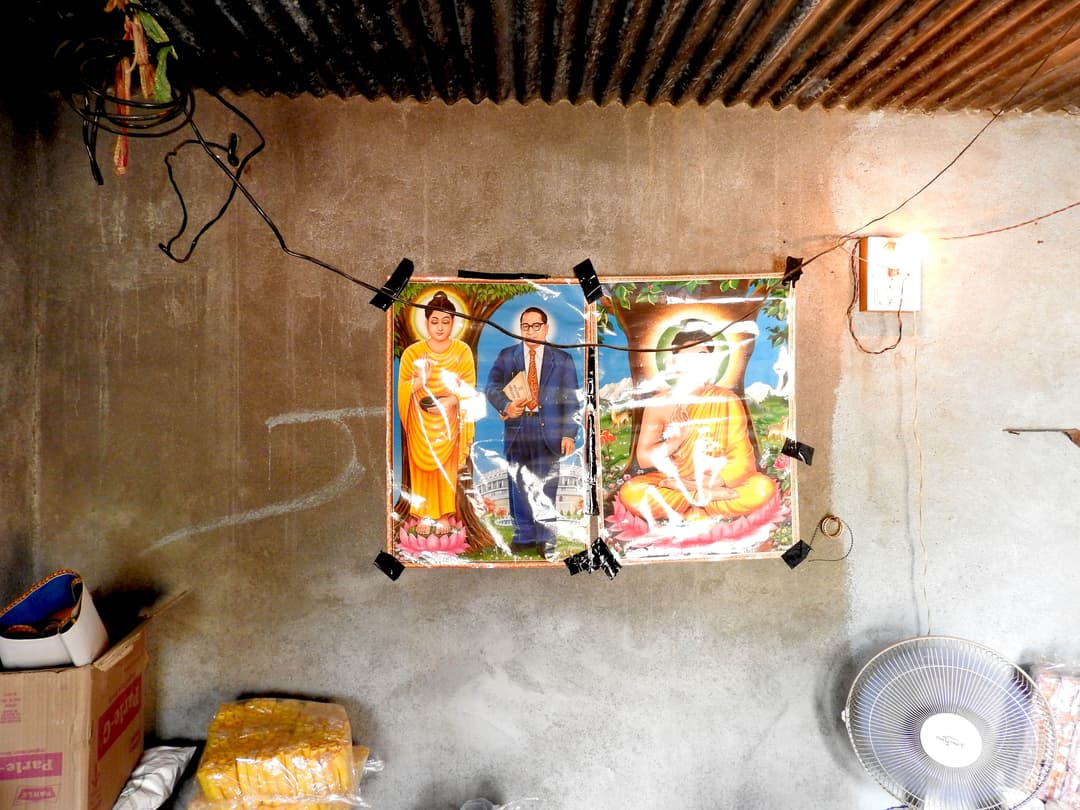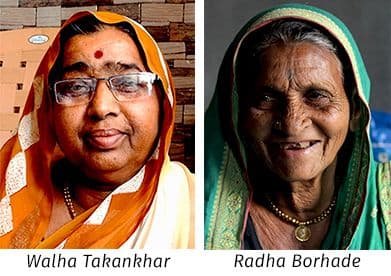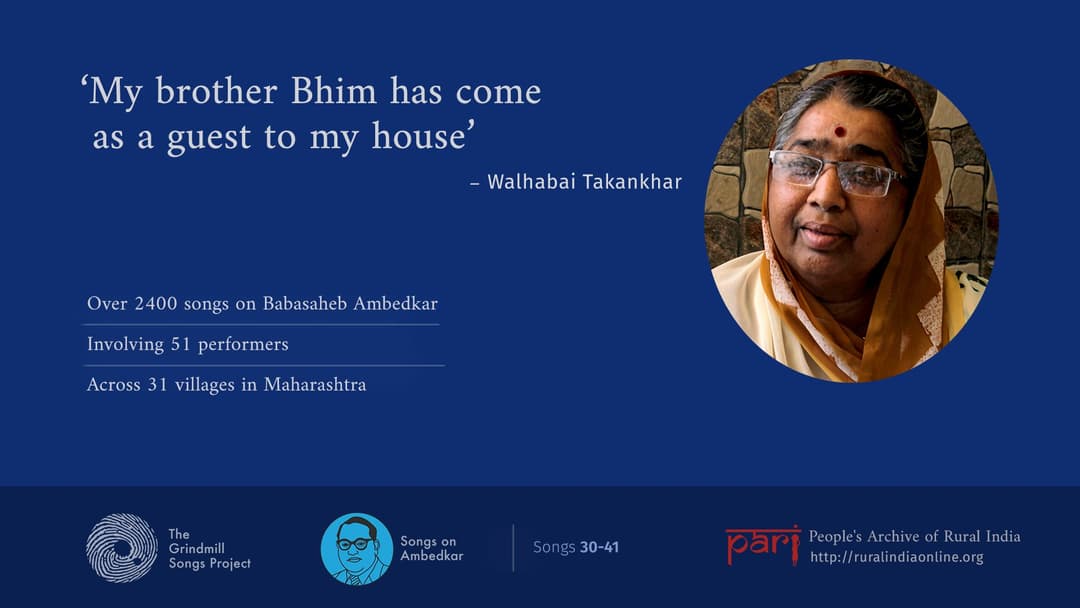
Today, on the birth anniversary of Babasaheb Ambedkar, PARI features two sets of grindmill songs by Walhabai Takankhar and Radhabai Borhade of Majalgaon in Beed district. These songs of pride, of affection for their leader, of riches and joy, are a part of an April series of couplets on Dr. Ambedkar and caste issues
When we visited Walhabai Takankhar’s house in Majalgaon in early April, she could barely remember the songs she sang when the Grindmill Songs Project team first visited her 21 years ago, in 1996. Rotating a grindmill again, she said, might bring back the forgotten melodies.
So her daughter-in-law brought a plateful of wheat grains and reassembled an old grindmill – two stones, one on top of the other, with a stout wooden handle in the middle. Walhabai sat down at the mill, poured in a handful of the grain and started to grind – and with the circular movement, some of the melodies did come back.
Her ovi – or grindmill songs – are featured here, along with songs by Radhabai Borhade. These songs speak of significant events in Dr. Babasaheb Ambedkar’s life. When they were recorded in 1996, both Walhabai and Radhabai lived in Bhim Nagar (Radhabai now lives in Savargaon village of the same taluka).
Bhim Nagar is a predominantly Dalit hamlet in Majalgaon, a taluka village. For the Grindmill Songs Project, it has been a wellspring of ovi about Babasaheb Ambedkar, the revered national leader and statesman, voice of the oppressed and the marginalised, and architect of India’s Constitution. To observe his birth anniversary on April 14, PARI is featuring grindmill songs about Dr. Ambedkar and caste issues throughout this month.