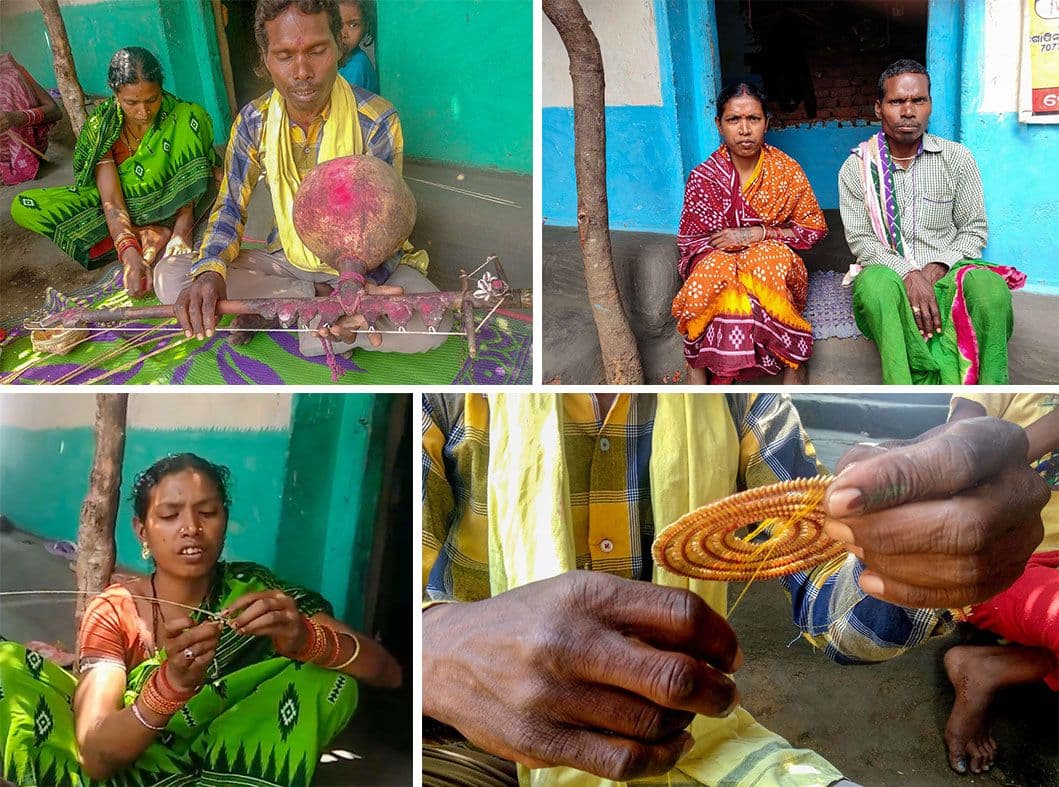
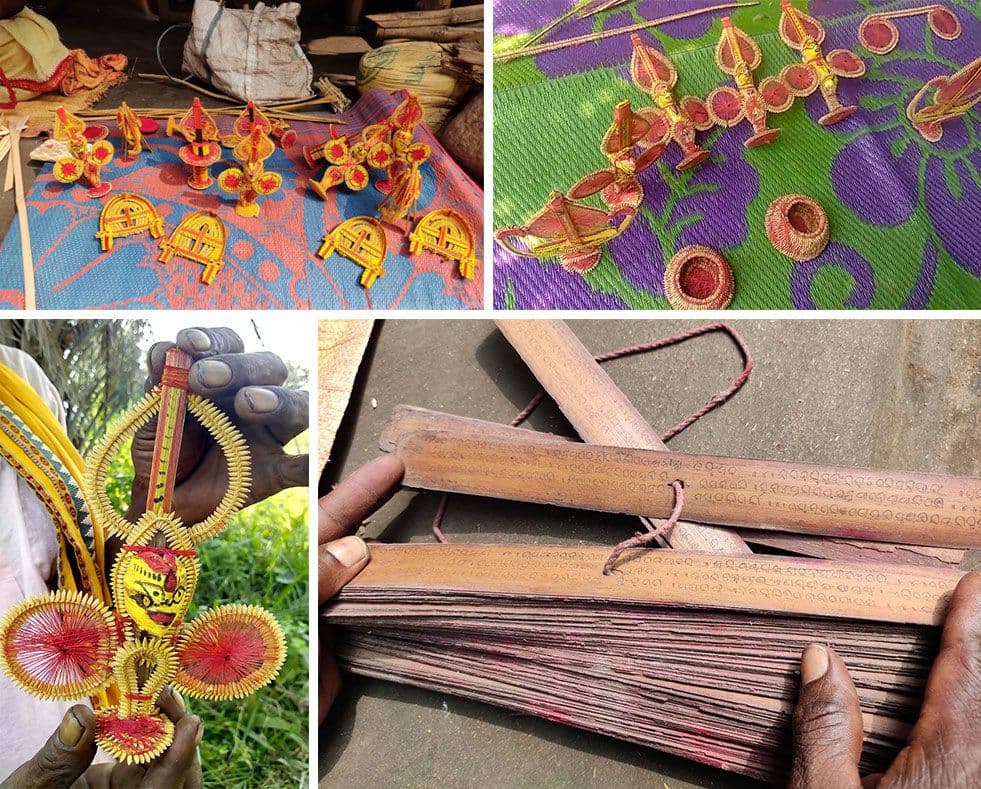
Sitting on a mat in the doorway of their two-room mud house, Kanti Debguru and her daughter Dhanmati are engrossed in knitting unhusked rice grains with red yarn. They then fasten it on a sliver of bamboo and stitch together garlands. These will be used by Kanti’s husband, Gopinath Debguru, to craft an idol of Goddess Laxmi.
Gopinath comes out from the house holding a string instrument. As Kanti and Dhanmati continue making paddy garlands, he plucks at the string and sings verses from the Laxmi Purana. “We practice the tradition of making paddy figures of Goddess Laxmi, the goddess of grains, and sing her glory,” explains 35-year-old Kanti. She and her family belong to the Debguru or Devgunia community of traditional bards, and live in Khudpeja village of Nuapada district in Odisha.
The Debgurus learn the Laxmi Purana from their forefathers, says 41-year-old Gopinath, showing me a palm-leaf manuscript of the text. TheLaxmi Purana is a 15th-century poem composed by Balarama Dasa. It revolves around the mythology of Goddess Laxmi and her marriage to Lord Jagannath, and describes the rituals and fasts she observed. Gopinath sings the poem while strumming the single-stringed Laxmi veena (also known as the Brahma veena or Debguru bana). The Debgurus craft the instrument, which is nearly three feet long, from bottle gourd and bamboo.