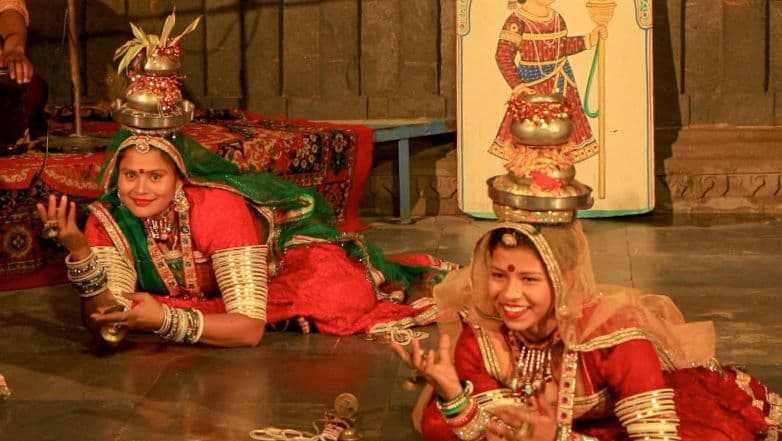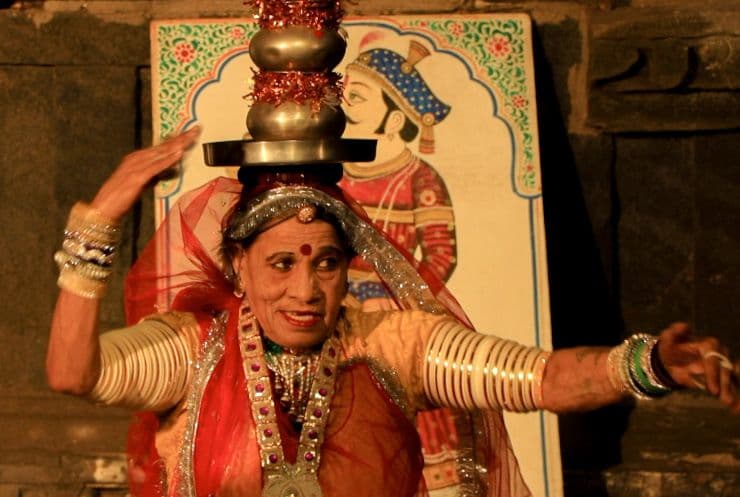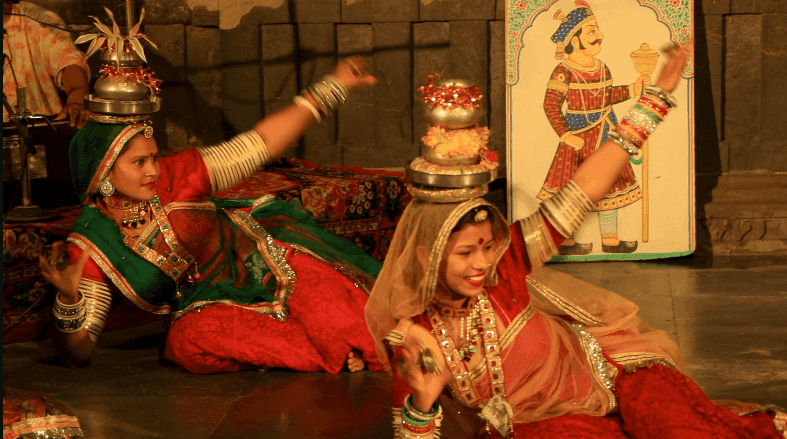
At around 7 p.m., holding a ghagra embedded with silver-gold lace and glass pieces, Nirmala Devi ascends the stage in Udaipur’s Bagore ki Haveli. There, along with her daughter Tara and around eight other women – all related to each other – she starts performing the Chari dance, Ghoomar, Bhavai and other sequences.
“Dancing every day with the same energy is not easy,” she says. More so when carrying swords between your teeth or a lit oil lamp atop a metal vessel placed on the head, or dancing on pieces of glass or while balancing earthen pots on the head. And yet, Nirmala and the members of her troupe – including her sister-in-law Seema Devi and mother-in-law Bhamri Bai – do this every evening. “My sister-in-law carries 11 vessels on her head and by the end of it, she is sweating from head to toe,” Nirmala says. “Still, she keeps smiling on stage and goes back to the changing room to get ready for the next dance.”
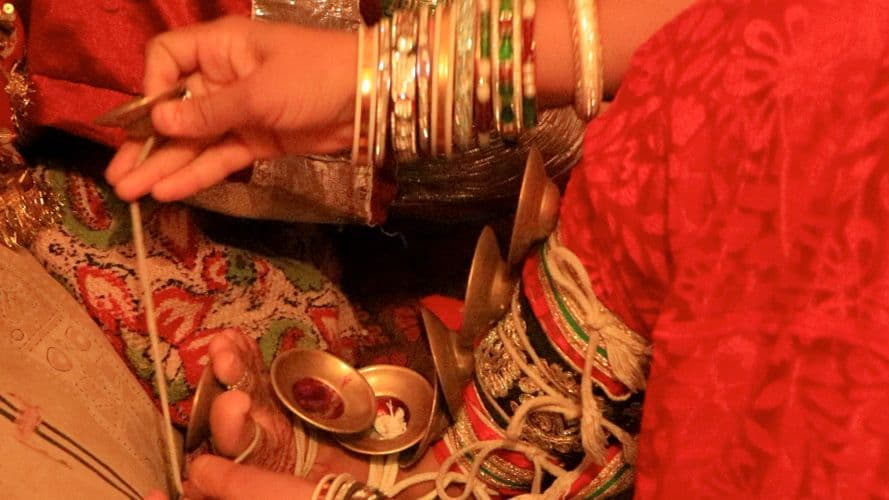
But it’s the Terah Taali that the dancers’ community, Kamad (listed as a Scheduled Caste), is most known for. This 10-15 minute sequence, part of the one-hour performance at the Haveli, is a tribute to a local folk hero, a Baba Ramdev. Community legend says he devoted his life to helping the oppressed.