
Thirst is Marathwada’s greatest crop this season. Forget sugarcane. Thirst, human and industrial, eclipses anything else. Those harvesting it reap tens of millions of rupees each day across the region. The van loads of dried-out cane you see on the roads could end up at cattle camps as fodder. The countless “tankers” you see on the same roads are making it to the towns, villages and industries for profit. Water markets are the biggest things around. Tankers are their symbol.
Thousands of them criss-cross Marathwada daily, collecting, transporting and selling water. Those contracted by the government are a minority and some of them exist only on paper. It’s the privately-operated ones that are crucial to rapidly expanding water markets.
MLAs and corporators-turned-contractors and contractors-turned-corporators and MLAs are vital to the tanker economy. Bureaucrats, too. Many own tankers directly or benami .
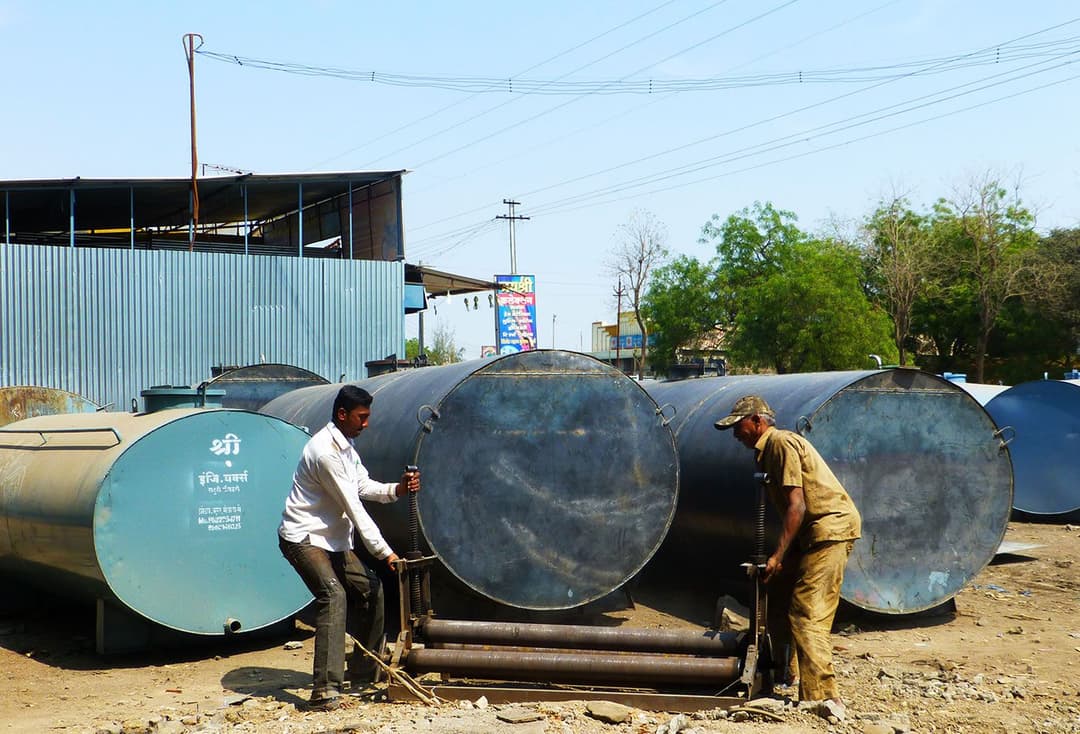
So what is a tanker? Really, just sheets of mild steel plate rolled into big drums. A 10,000-litre water tanker consists of three sheets of 5 feet x 18 feet, each weighing 198 kilograms. The rolled drums are welded together. These can be carried by trucks, lorries and other large vehicles, mounted on them in different ways. Smaller carriers transport cylinders of lower capacity. A 5,000 litre container can go onto the trailer of a big van. It comes all the way down to 1,000 and 500-litre drums that move on mini-tractors, opened-up auto rickshaws and bullock carts.
As the water crisis deepens, hundreds of these are fabricated across the state each day. In Jalna town of Jalna district, there are about 1,200 tankers, trucks, tractors, and auto rickshaws flitting about with containers of different sizes. They shuttle between their water sources and desperate sections of the public. The drivers bargain with clients on cell phones. However, the largest amount of water goes to industries that buy in bulk. “The tanker owners transact between Rs. 6 million to Rs. 7.5 million in sales each day ,” says Laxman Raut of the Marathi daily Loksatta . “That’s what this single sector of the water market is worth – in this single town." Raut and his fellow reporters have tracked this region’s commerce in water for years.
Container sizes vary. But in this town, Raut says, “their average capacity works out to around 5,000 litres. Each of these 1,200 does at least three trips a day. So they carry in all some 18 million litres of water in 24 hours. At the going rate of Rs. 350 per thousand litres, that works out to over Rs. 6 million a day. The costs can go up depending on whether the use is domestic, or for livestock, or industry.”
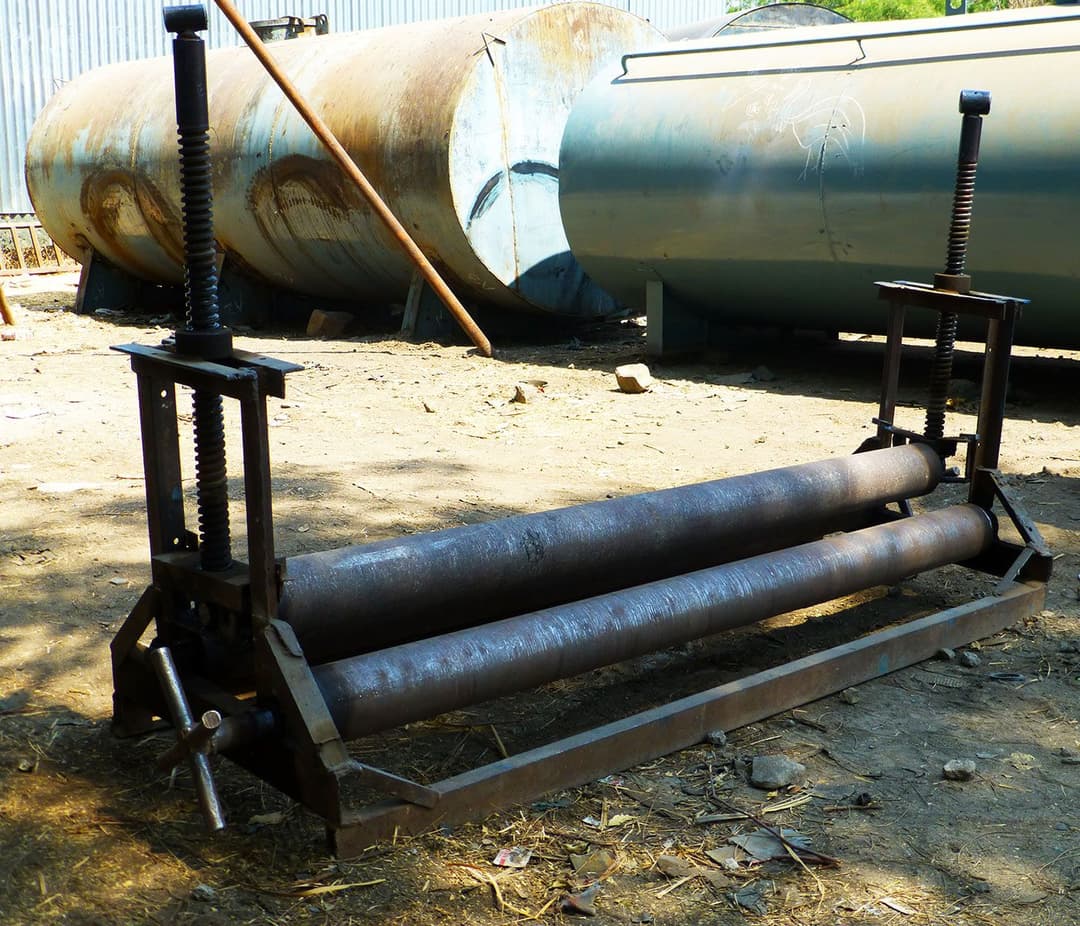
Scarcity drives the tanker economy. Tankers are being made, repaired, rented, sold and bought. One busy spot we hit en route to Jalna is Rahuri in neighbouring Ahmednagar district. It costs roughly Rs. 30,000 to make a 10,000-litre tanker body here. It sells for twice that sum. In Rahuri Factory, a small industries area, we get a crash course in tanker tech. “Each 5 feet x 18 feet sheet of MS Plate is 3.5 mm thick (called Gauge 10),” explains Shrikant Melawane, who owns a fabricating unit. He shows us the “rolling machine” on which each plate has to be manually rolled.