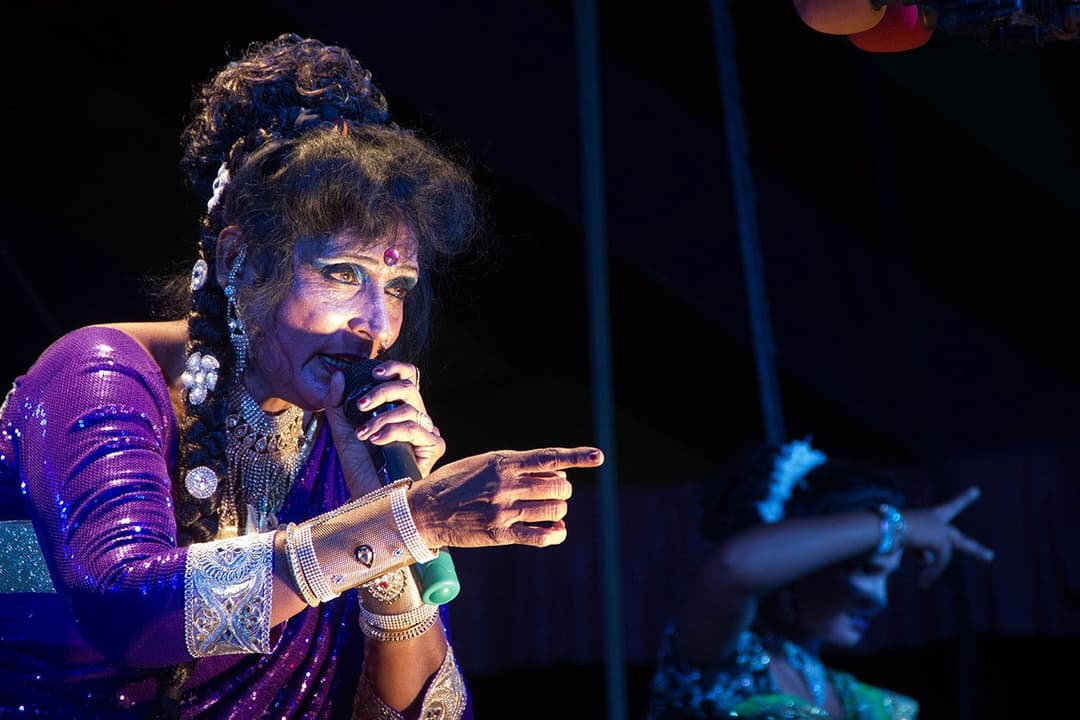
The female dancers – this troupe has around 16 – are paid the most in any tamasha troupe, says Anil Bansode, 45, Mangalatai’s older son and manager of the phad. “In the 2016-17 season, the highest salary is Rs. 30,000 for a female dancer,” he says. They draw the largest crowds and receive the loudest appreciation from the audience. But, Anil says, finding dancers who will commit to travelling for eight months is not easy. “Higher salaries are the only way to retain them.”
This season, Sushma Mali was the lead dancer in several songs. She started her tamasha career at the age of 12-13, and grew up watching her mother dance in a phad. Her mother was initially unhappy with Sushma’s decision to become a tamasha artist, not wanting her to face the same hardships. But Sushma persisted because she liked the financial independence. “My husband [a farmer] also doesn’t want me to work in the phad, but I have an eight-year-old brother and a three-year-old daughter to take care of,” she says. Sushma too doesn’t want her daughter to enter this field and has not told her that she is a tamasha dancer.
Many join the tamasha because of parents or older siblings who work in the troupe. It is seen as a more stable form of livelihood than agricultural labour. They also believe that being in the phad will give them recognition as artists, and a higher social status.
The tamasha is also home to families like Sharda Khade’s, from Dubal Dhulgaon village in Sangli district. Sharda is a dancer and performer in the vag natya (folk drama). One son is a percussionist, the other is a wireman, and her husband is an actor. The tamasha business is their best option. As agricultural labourers, her relatives barely get Rs. 200 per day and daily work is uncertain.
But the steady income from the tamasha comes at a cost. Pitching a tent in a new village every day is hardly a means of comfort, Sharda says. And then there are the erratic schedules, late night work, irregular meals, and often insanitary living conditions.