
This story is part of the PARI series on climate change that won the Ramnath Goenka Award for 2019 in the Environment Reporting category.
Kajal Lata Biswas is still haunted by memories of the cyclone. Though it’s been 10 years since Aila hit the Sundarbans, she still clearly recalls May 25, 2009.
It was just before noon. “The [Kalindi] river water rushed into the village and flooded all the houses,” says Kajal Lata. She was at a relative’s house in Kumirmari village that day, around seven kilometres from her own village, Gobindakati. “Some 40-50 of us took shelter in a boat where we stayed the whole day and night. We watched trees, boats, cattle and paddy being swept away. At night, we could not see a thing. Even the matchsticks were soaked. We could see only when lightning flashed across the sky.”
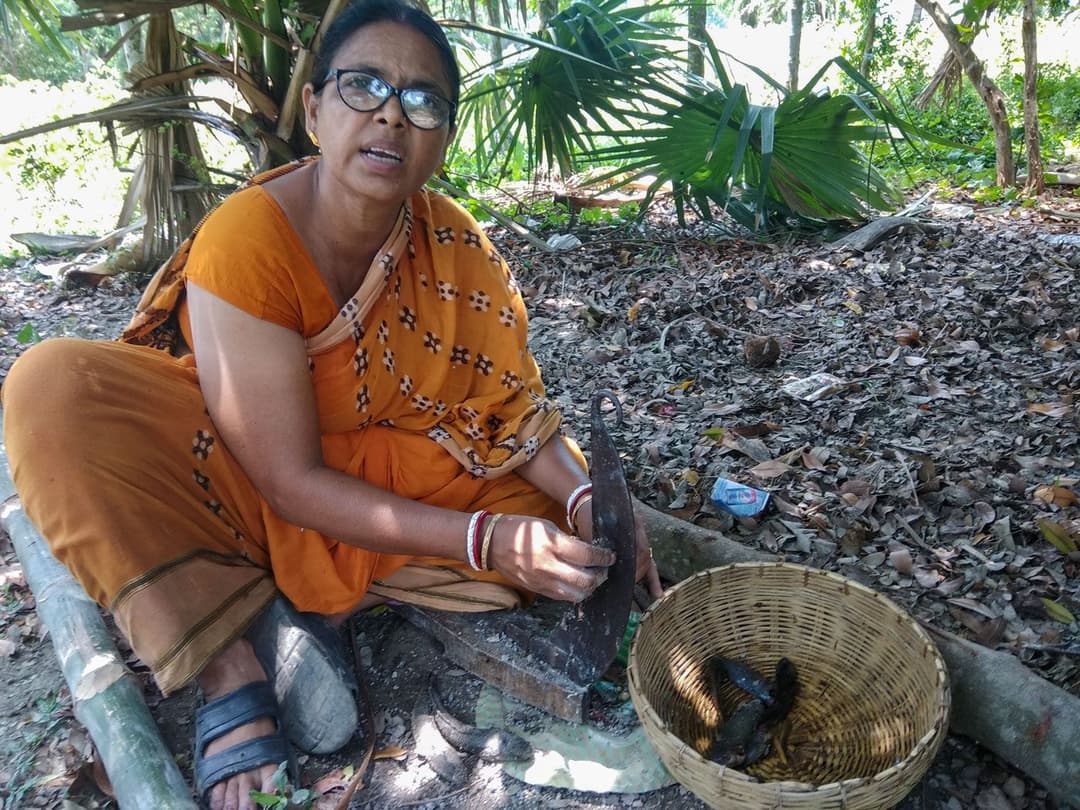
Sitting outside her house and cleaning fish for lunch, 48-year-old Kajal Lata, a farmer, continues, “That night can never be forgotten. There wasn’t a drop of drinking water. Somehow, I collected a few raindrops in a plastic bag, which I used to wet the lips of my two daughters and niece, who were very thirsty.” Her voice shakes with the memory.
The next morning, they used a boat to to reach their village. Then waded through flood water to reach home. “Tanushree, my elder daughter, then 17, almost drowned where the water was very high. Luckily, she grabbed her aunt’s saree pallu which had come loose,” Kajal Lata says, her eyes relaying the fear she felt.
In May 2019, her fear returned with cyclone Fani, its arrival coinciding with the wedding of her younger daughter, 25-year-old Anushree.