

“We struggle for our survival every day in the Sundarbans. Though the coronavirus has created a temporary deadlock, we know that we will survive. Our fields are full of potatoes, onions, bitter gourds, snake gourds and drumsticks. There is no dearth of paddy either. Our ponds are full of fish. So there is no question of us dying of starvation,” says Saral Das, speaking on the phone from Mousani.
While the nationwide lockdown is disrupting food supplies across the country, it is no cause for concern in Mousani – a small island spread over 24 square kilometres on the western side of the Indian Sundarbans. “Due to the lockdown, the vegetables and produce that used to go from here to Namkhana or Kakdwip markets on boats every day cannot be sent that way now,” Das says.
The ‘special boats’ meant for emergencies still ferry some vegetables from Mousani to the wholsesale markets in Namkhana and Kakdwip, located between 20 and 30 kilometres away. The journey takes around 30 minutes by boat, but from there the trains and trucks that usually carry the produce to Kolkata are barely operational now.
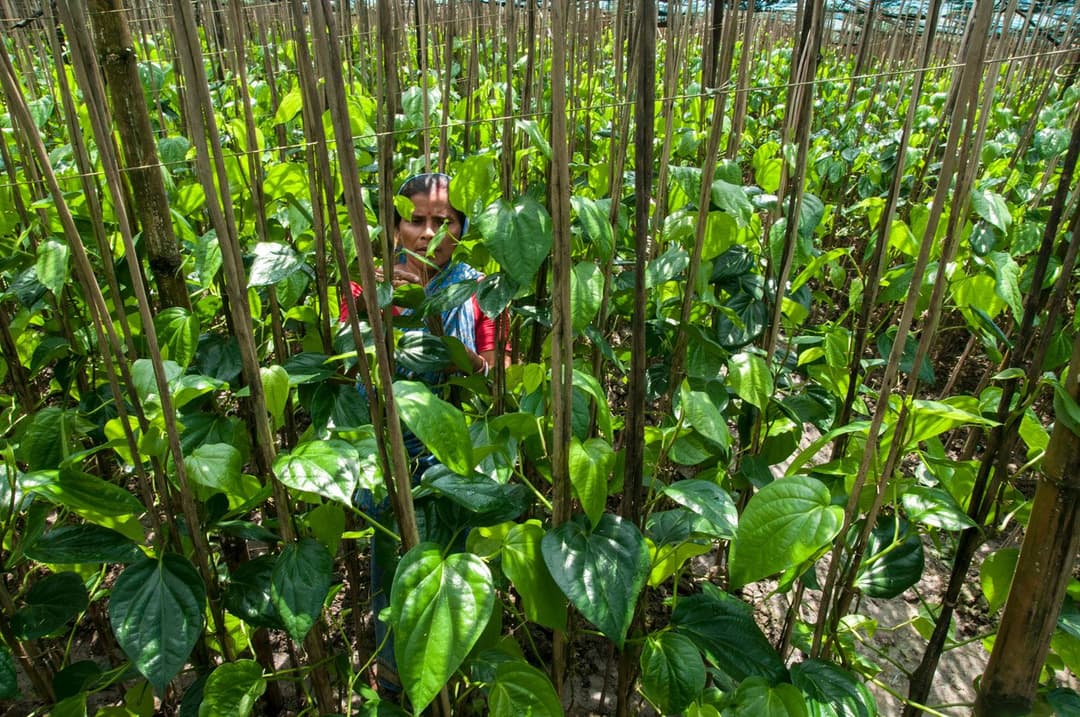
Mousani’s three main crops – paddy, bitter gourd and betel leaves – are in great demand in Kolkata’s markets. “Therefore, it is a matter of concern for the city as to where it will get its sustenance from,”says Das, 51, who works as a clerk in the Bagdanga Cooperative School on Mousani island. He owns five acres, which he rents out to tenant farmers, in Bagdanga village.


