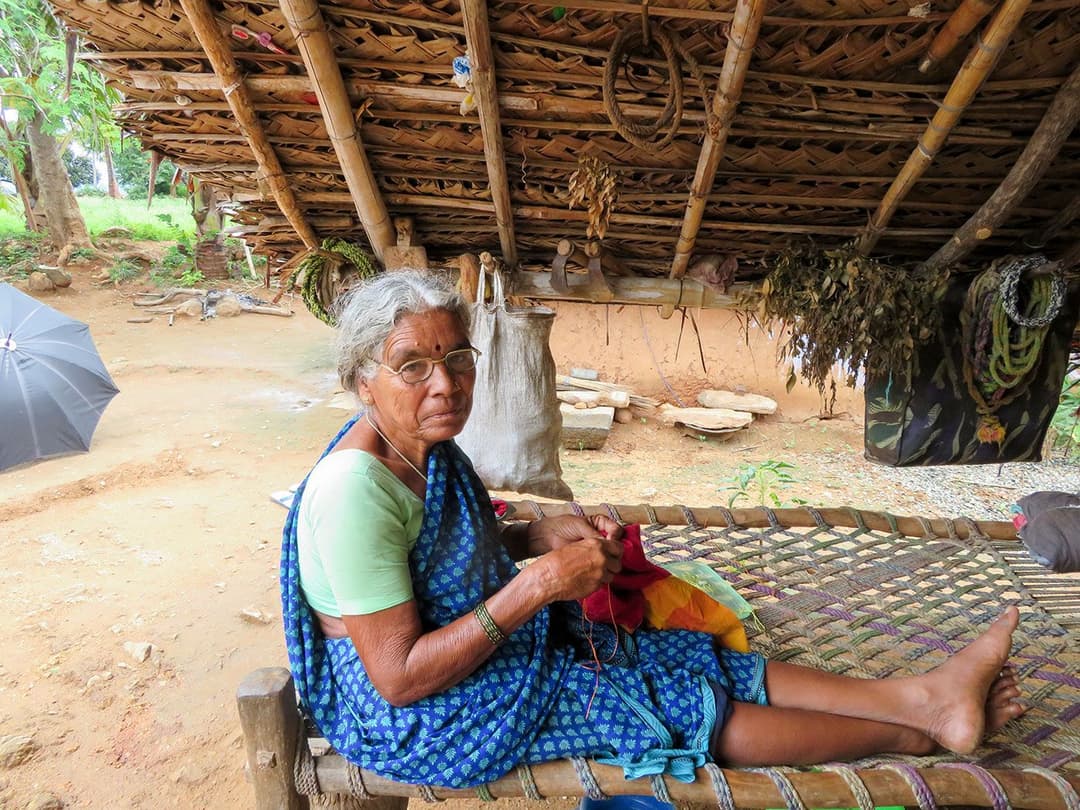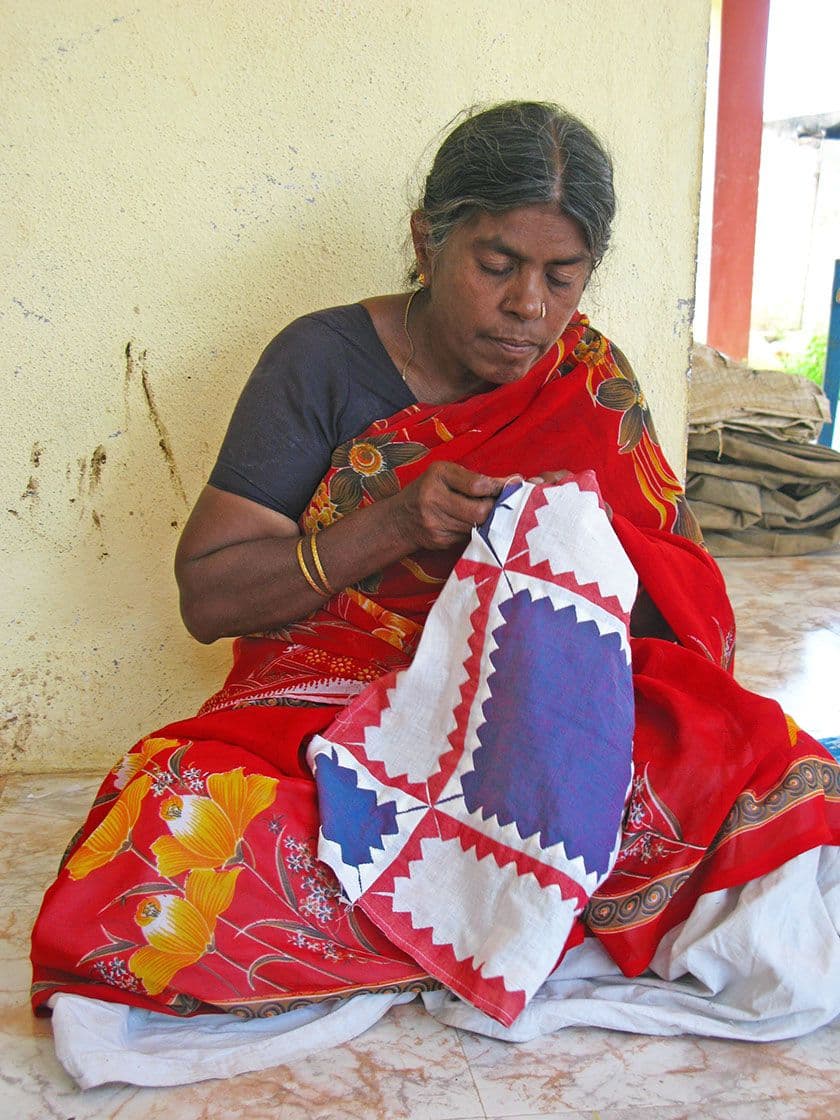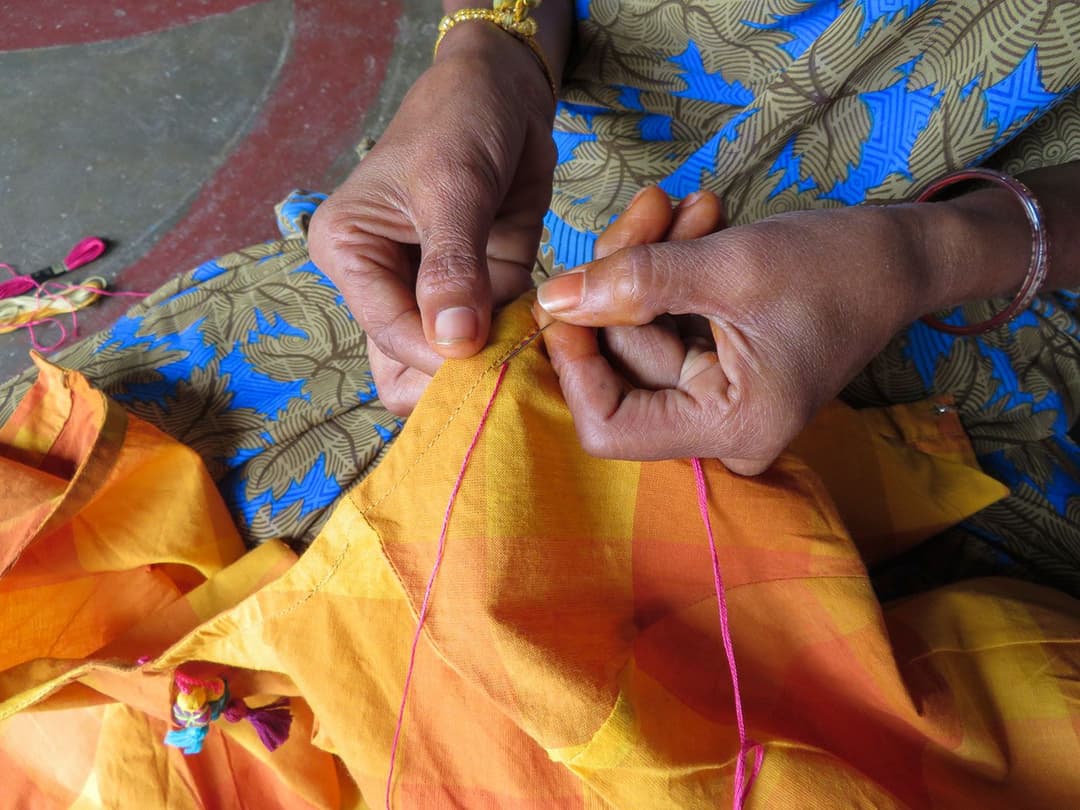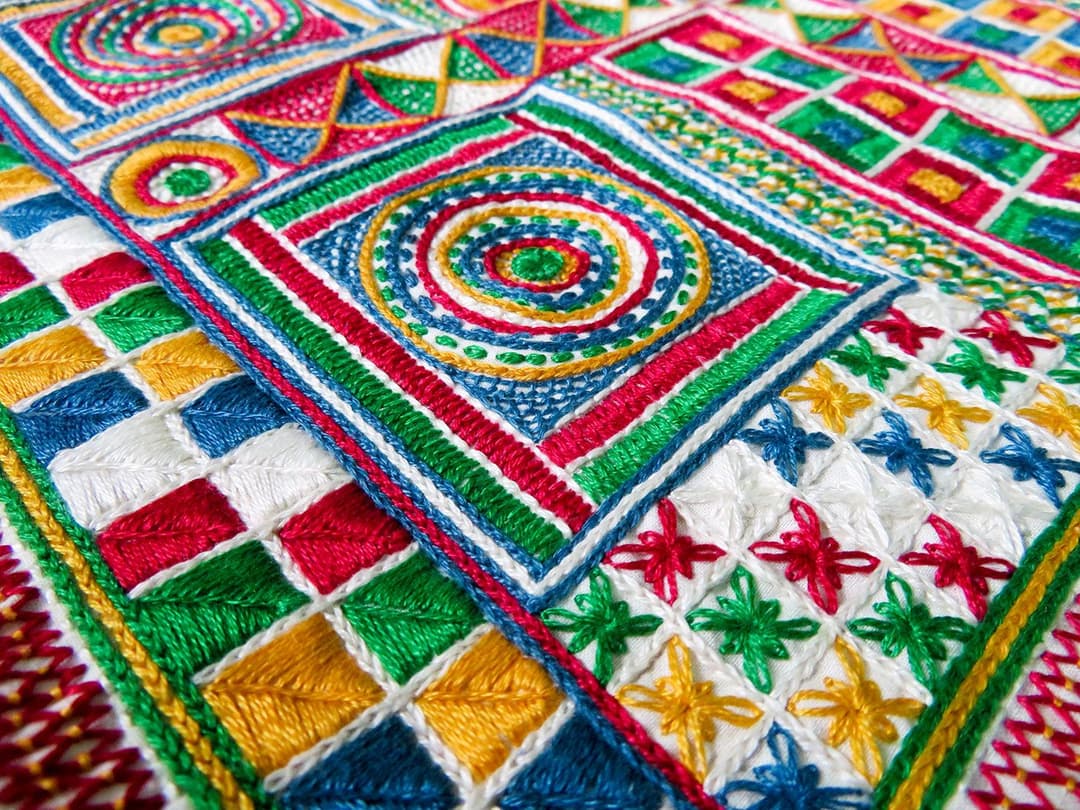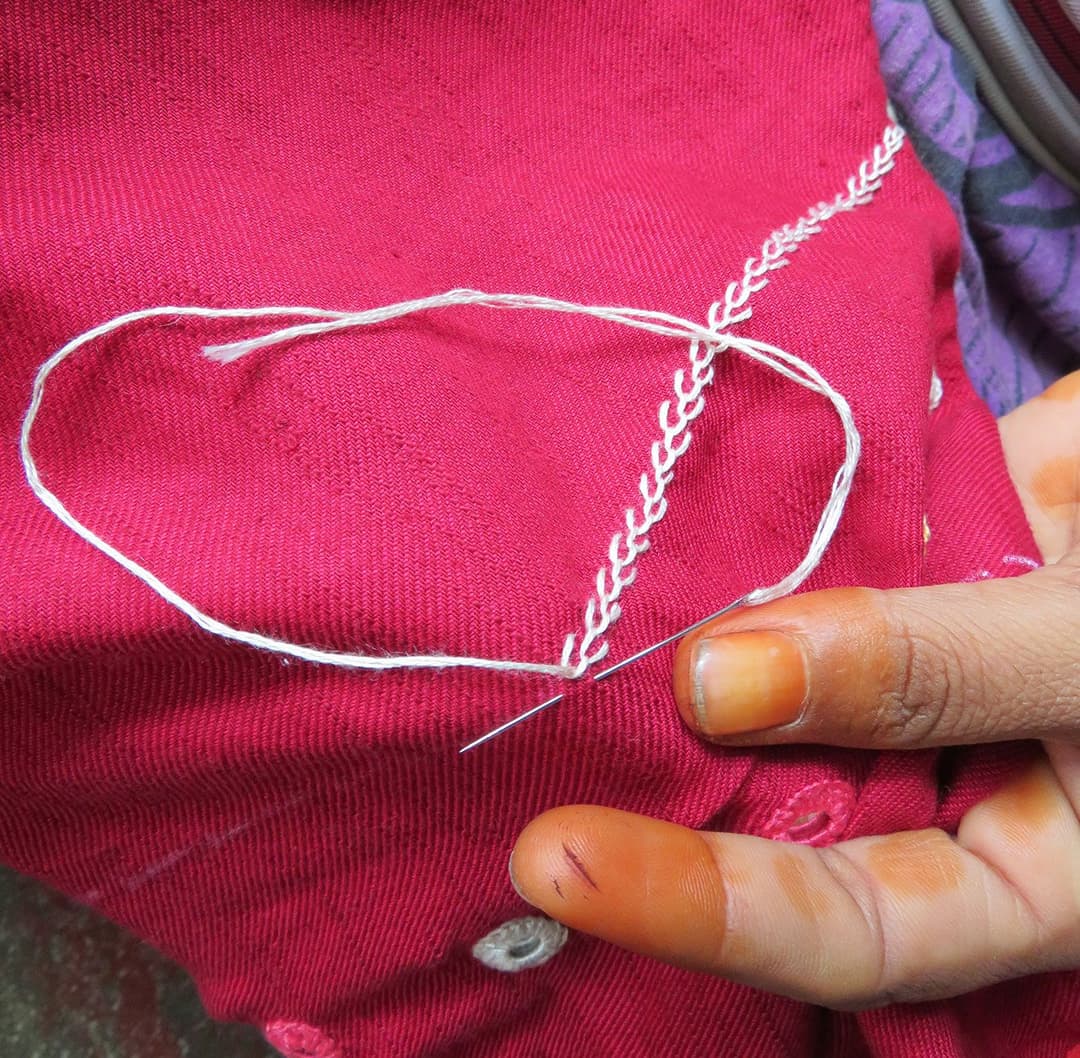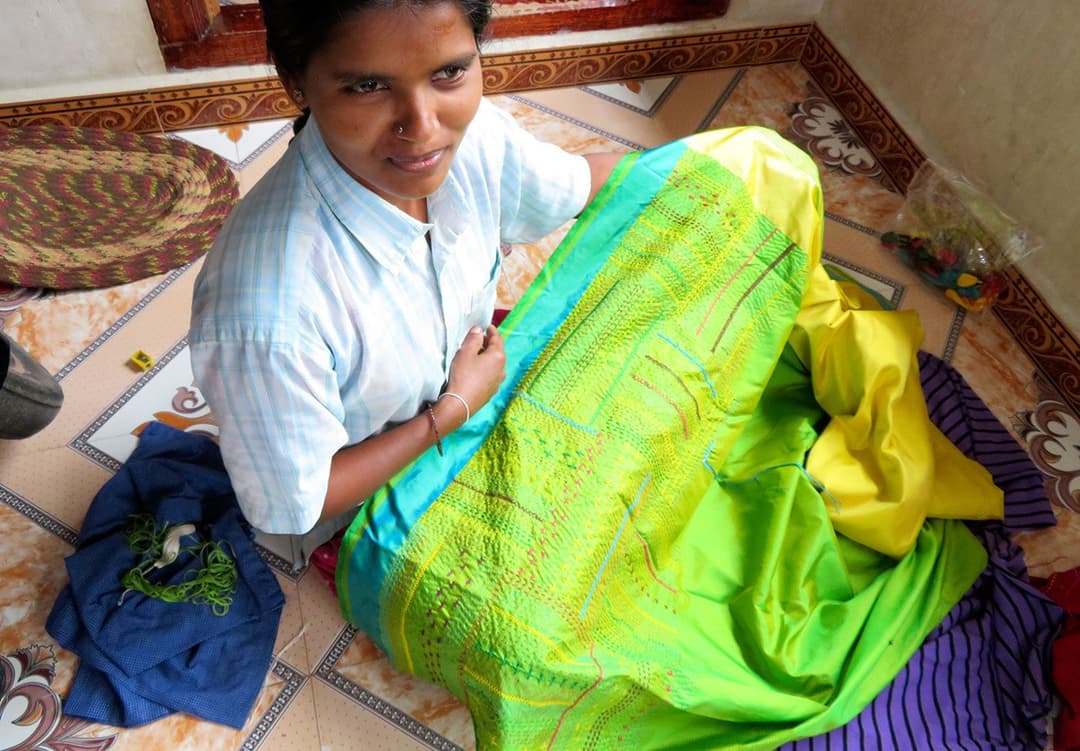

Tammigamal Kasimiya peers through her spectacles as she fixes a tiny circular mirror onto a piece of cloth. “This sangli stitch is the most difficult because you have to stop the mirror from sliding,” she tells me in her home in Akkare Kaattu Tanda, one of the two Lambadi hamlets in Sittilingi valley of Dharmapuri district in Tamil Nadu.
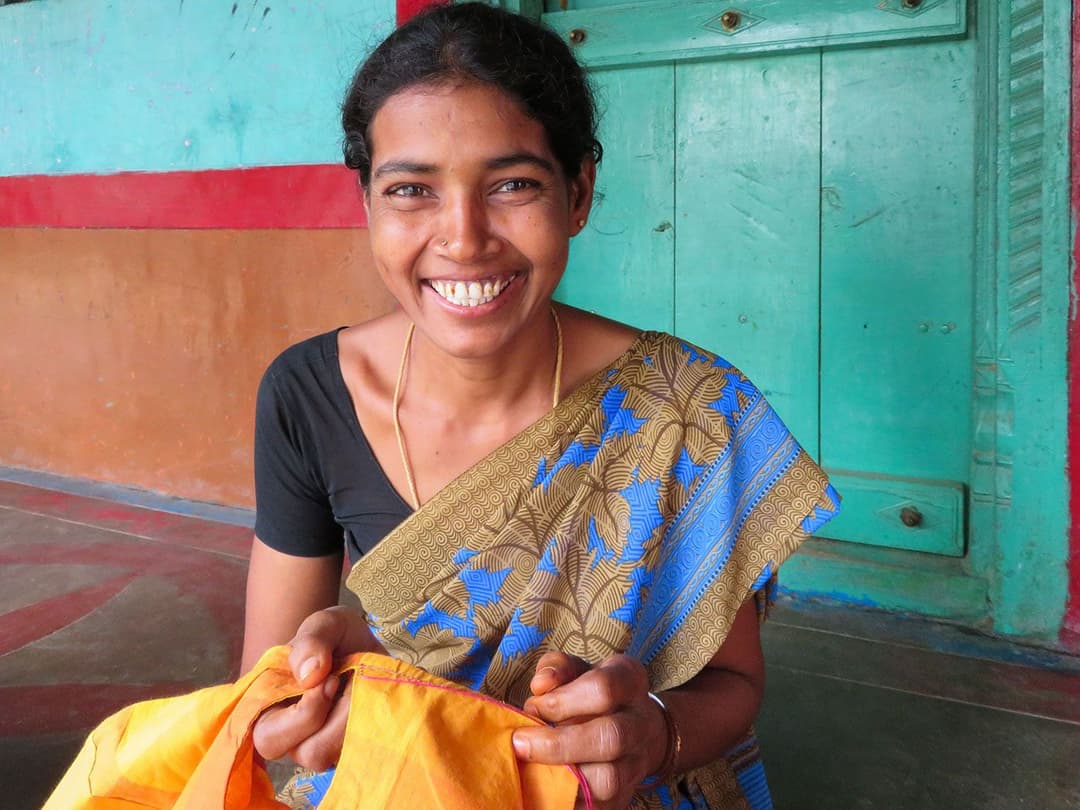
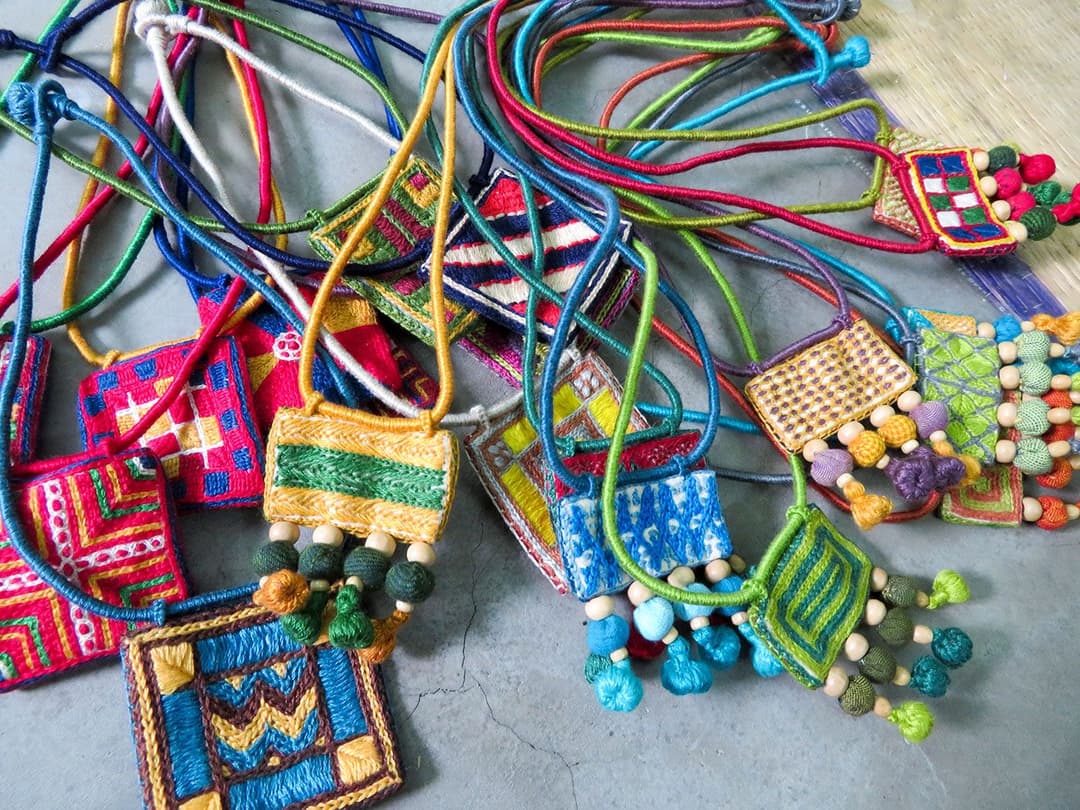
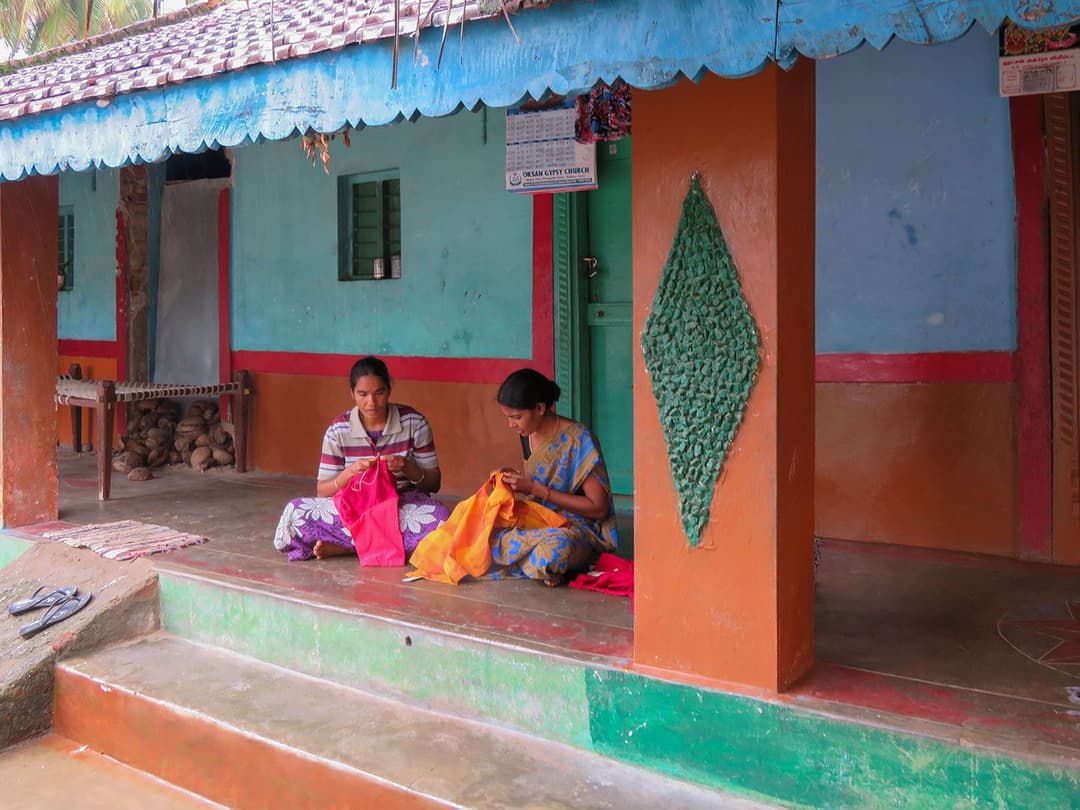
For 12 years now, Tammigamal or ‘Gammi’, who is in her 60s, has helped avert another slide, a far more serious one. Along with her friend R. Neela, she has taught young women of their community ghater – Lambadi embroidery – to try and prevent this skill from sliding out of collective memory. What’s more, the steady, additional income earned from doing the embroidery has curbed the women’s need for migration.
Lambadi women usually migrate to the textile mills of Tiruppur, 200 kilometres south of Sittilingi, or to construction sites. The men in the community mostly seek employment in Kerala for construction and tree-cutting. On average, the earnings of the migrant workers, men as well as women, range from Rs. 7,000 to Rs. 15,000 a month.
In Tamil Nadu, the Lambadis (listed as a Backward Caste in the state) mainly live in villages in Dharmapuri and Tiruvannamalai districts. In Sittilingi, the village panchayat officer says there are 924 Lambadis (also known as Banjaras in other states). Most Lambadis in Sittilingi have one or two acres of land, where their subsistence farming depends on rainfall. Over the last 30 years, a growing shift towards water-intensive cash crops like sugarcane and paddy, and inadequate rain, have created an increasing need for cash, forcing migration for periods ranging from 15 days to a year.
“Migration is a fact of life here, but at least in those homes where the women earn from ghater, it has stopped,” points out 35-year-old Thaikulam.