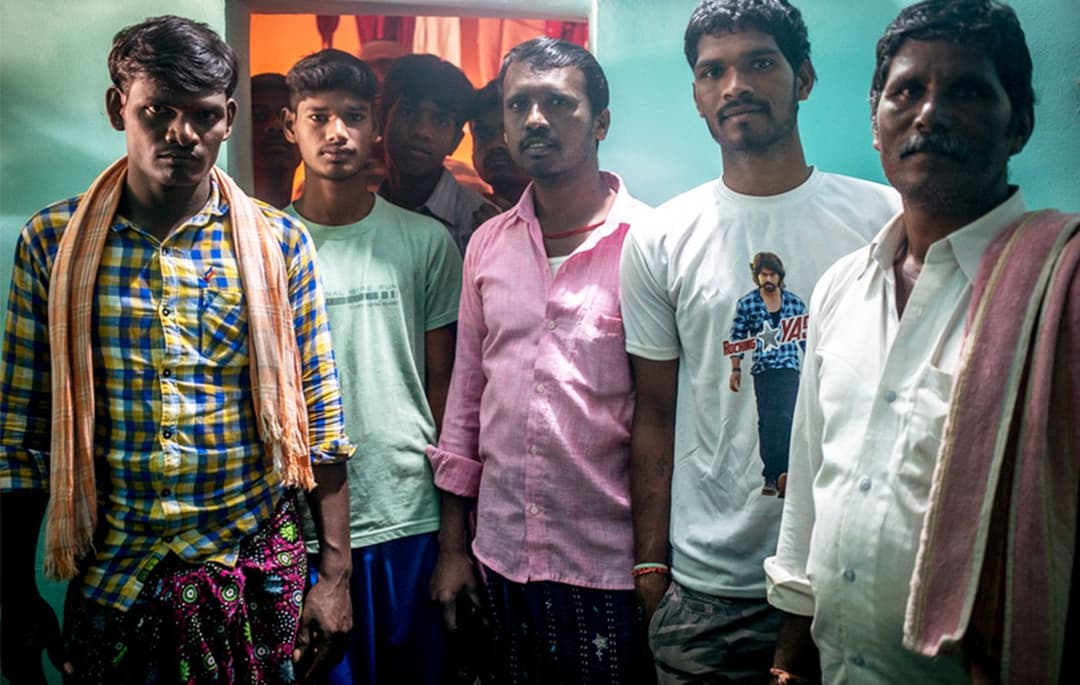
The people of the Dalit colony aren’t new to scarcity. Many of the men here were bonded labourers in various villages in the region before the 1990s. For them, the present situation evokes memories of that period. But, they say, it is less severe this time. “This scarcity [due to demonetisation] is better than the other drought we had around 30 years ago,” Narayanappa, now 49, says, “In my 20s, we used to starve for three or four days in a row. We would soak tamarind seeds in water and eat them, or eat the rhizomes from palm trees to survive. At that time, I had been a jeethagadu [a bonded labourer] for 14 years.”
Now, the former bonded labourers migrate for many months every year looking for work, more so after agricultural options in the village have decreased. Most of Narayanappa’s family migrates to Bengaluru, returning home for a few days once in 3-4 months. They usually work on construction sites in the city, and live on the top of the buildings they work in, or in crammed rooms by the roadside. But they manage to eat full meals paid for by their strenuous work. “We make sure we eat meat two times during a week,” Narayanappa says. This has changed after demonetisation.
After Narayanappa’s family returned to Bucharla in the first week of November, finding no work on the farms, they have had to stretch their savings to meet all expenses. People from the other castes in the village are coping slightly better by sharing stocked grains or borrowing saved money from each other. The people from Narayanappa’s caste have meagre stocks and can’t easily borrow from others in the village.
“We are Ambedkar’s people,” Narayanappa says, to explain why they are unable to borrow money informally, or share stocks with others in the village. He is trying to not mention his caste name (Madiga), which is sometimes used as a pejorative in Telugu. Besides, he does not want to appear needy. “Now we have prestige,” he says. “Even if someone offers us food, we won’t take it. We might eat very little. But we tell them that we have eaten well.”