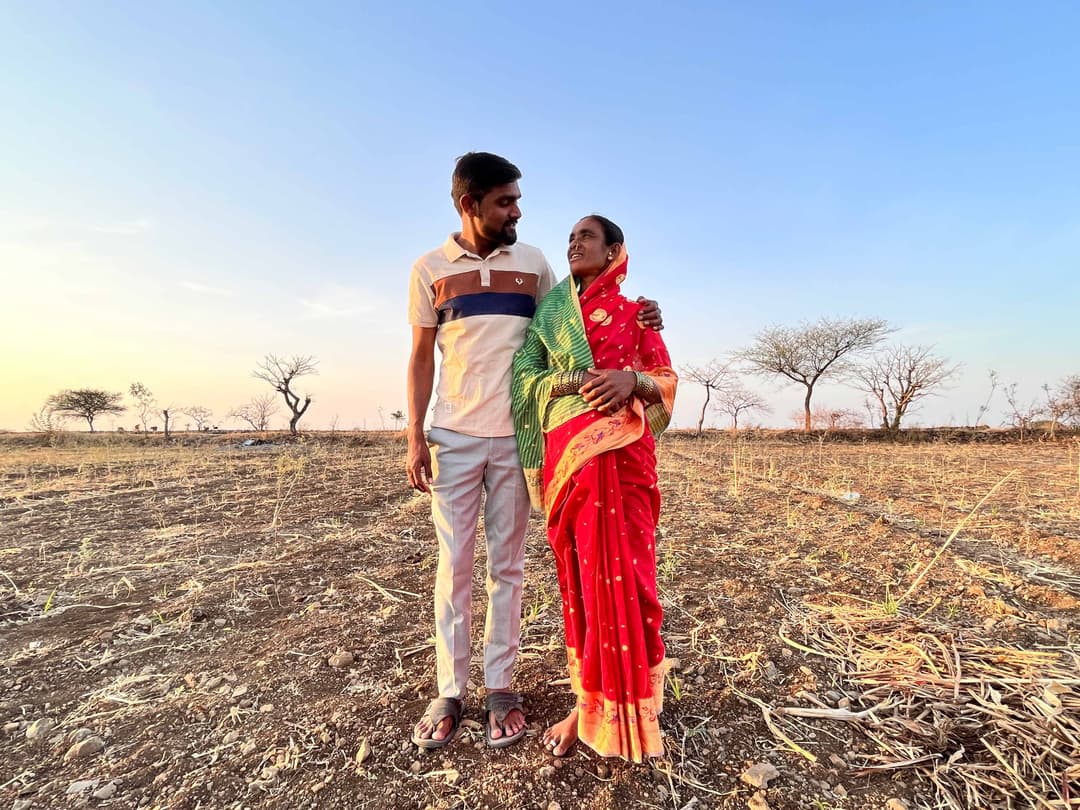
Hours after he knew he had cleared the entrance exams for the Maharashtra Public Services Commission (MPSC), Santosh Khade requested a friend to drive him from Beed to Solapur, about 180 kilometres away. On reaching the lush sugarcane fields he looked for the khop – a makeshift home of bamboo, straw and a tarpaulin sheet. In minutes, the 25-year-old tore down the home where his parents had lived for more than 30 years as harvest labourers during the six-month sugarcane season.
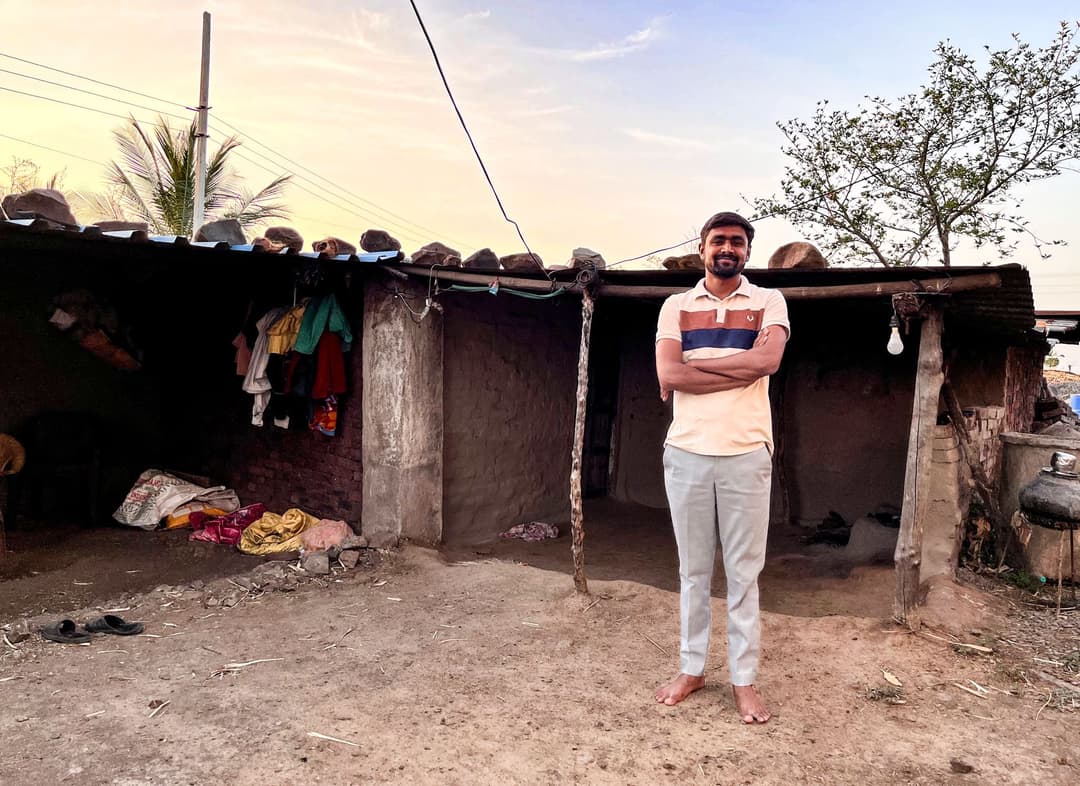
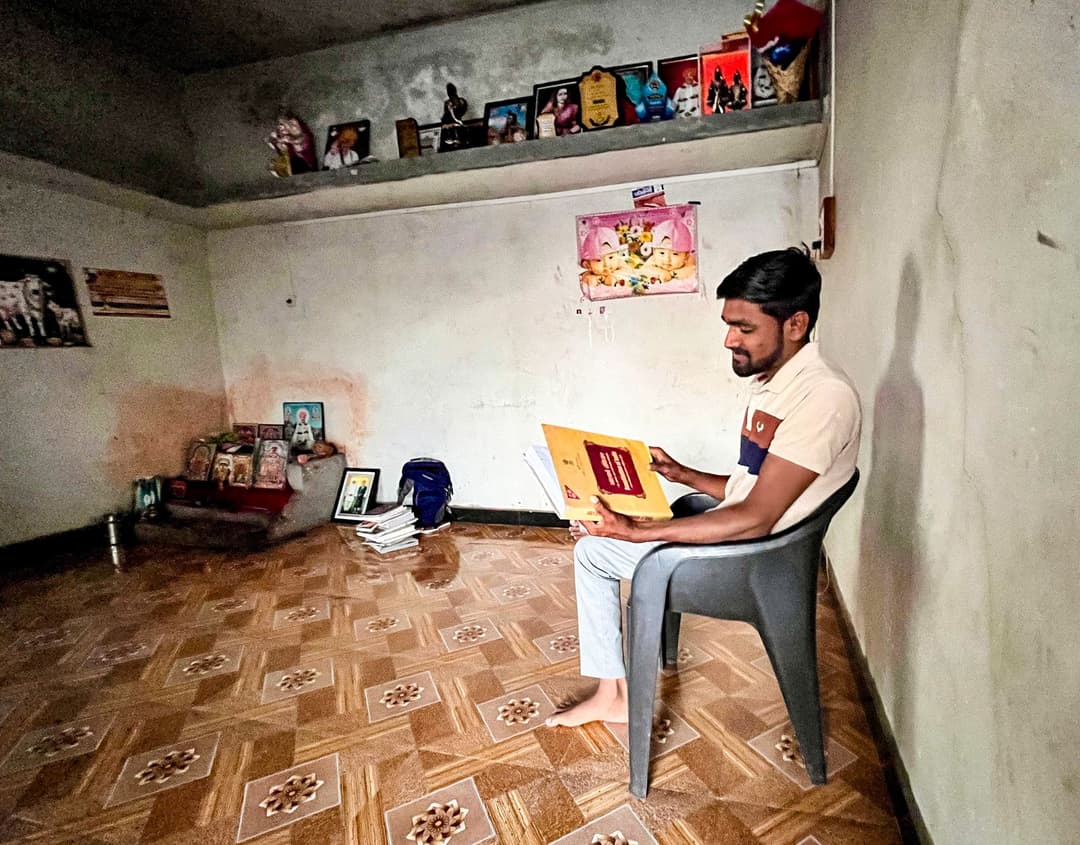
“The joy of ensuring that my mother and father will never again work as sugarcane harvest labourers was much greater than my joy later at finding out that I had topped the NT-D (a sub-category among nomadic tribes),” Khade said, seated on a plastic chair in the wide verandah of his home abutting the family’s 3-acre rainfed farm.
Tears and peals of laughter had earlier greeted his news. Khade is the son of labourers who annually migrated from drought-prone Patoda to Solapur district for more than three decades. He said, 90 per cent of families like his from Sawargaon Ghat migrate to cane-growing areas in western Maharashtra and Karnataka for the annual harvest.
A member of the Vanjari community, Khade cleared the 2021 MPSC exams with an impressive performance – he ranked 16th statewide in the general list and topped the NT-D category.
“It was the outcome of my parents’ years and years of my struggle. Jo janwar ka jeena hota hai, wohi inka jeena hota hai [Their life is similar to that of animals],” he said, describing cane workers’ lives during the harvest season. “My first target was to stop that, to find a good enough job that they would no longer have to migrate for the cane harvest.”