
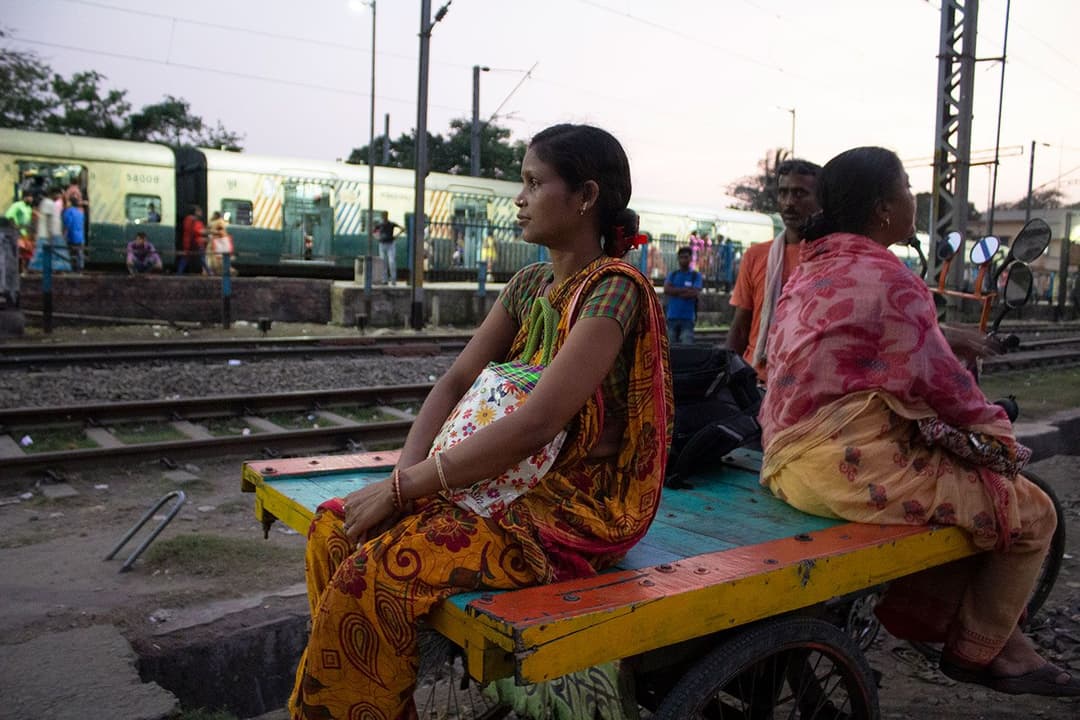
“Do you think, there will be a place to sit inside the train today?” yells Breshpati Sardar, standing on a crowded platform at Jadavpur railway station in south Kolkata. The women waiting next to her shake their heads in disappointment and laugh at the question.
Breshpati is waiting for the 4:35 p.m. train to Canning. The train rushes into Jadavpur station. The women brace themselves in the crowd, pushing to enter one of the two already-full ladies compartments.
The train has come from Sealdah station in north Kolkata, stopping at Park Circus, Ballygunge Junction and Dhakuria. After Jadavpur, it will halt at Bagha Jatin, New Garia and Garia – all predominantly middle class and affluent areas of South Kolkata. The women waiting at Jadavpur – as well as at the other stations along the route – work as domestic helpers in these south Kolkata localities.
Many of them take the 45-kilometres Sealdah-Canning route, which covers 16 stations, and the 65-kilometres Sealdah-Lakshmikantapur train that halts at 25 stations, or the Sealdah-Namkhana line, which goes even further south. So some in Kolkata call these Eastern Railways trains the ‘jhi special’. Jhi is a disparaging term in Bengali for female domestic workers.


