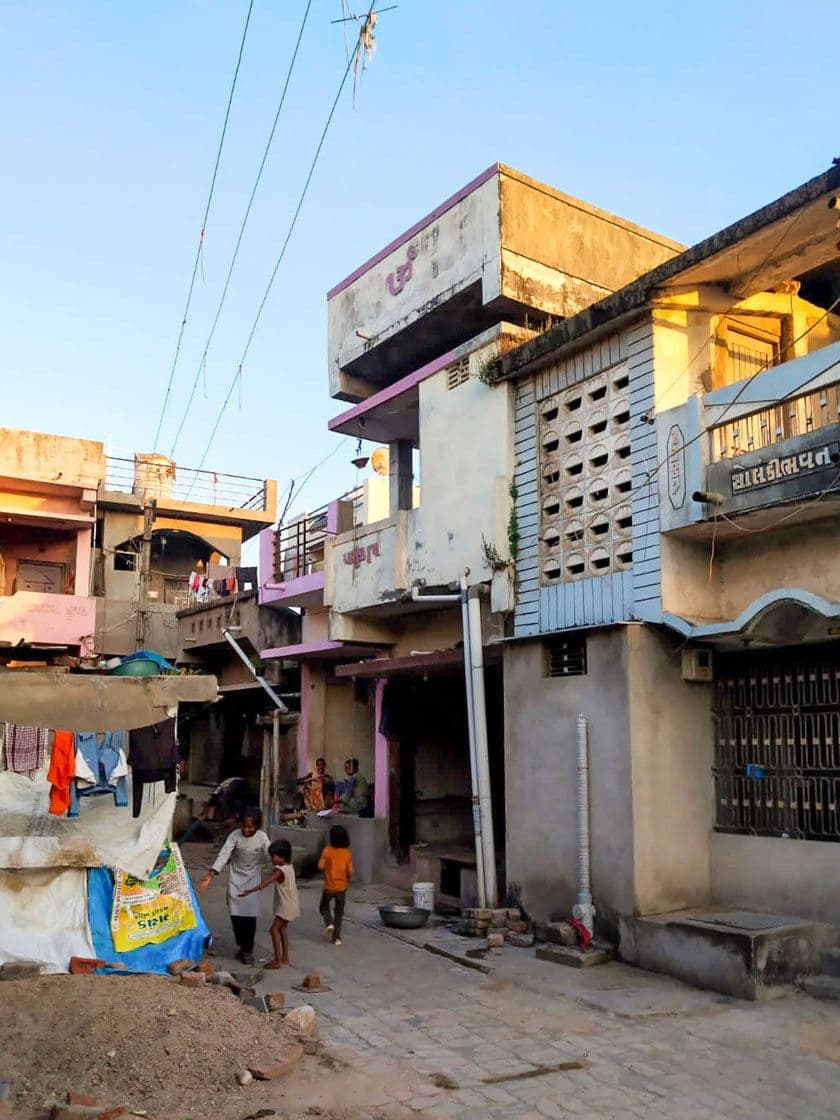

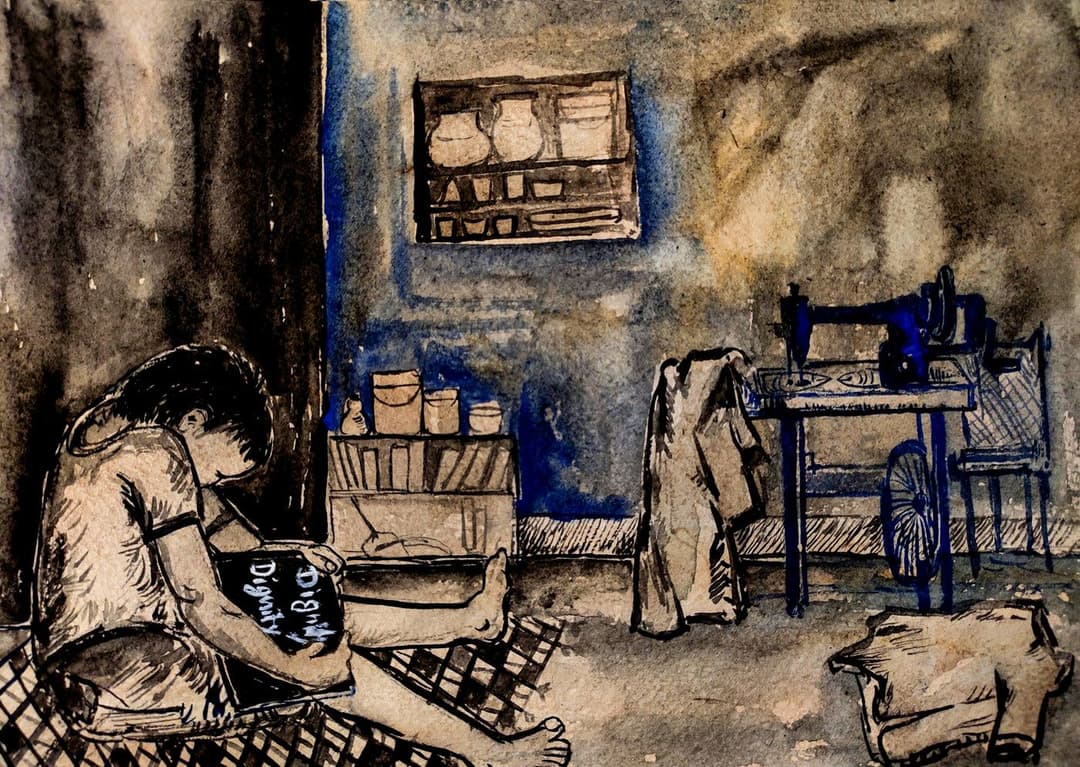
Shantilal, Shantu, Tinyo: three names – same person. But maybe we go with a fourth one. In the dialect of Vadali village in Sabarkantha district, his name would become ‘Shontu’. So, let’s call him that.
Shontu is an exceptional character. Not in terms of adjectives like extraordinary, unique, famous. Rather, by virtue of being righteous, poor, downtrodden or Dalit – and thereby a character seen as enduring, suffering, disoriented. At times Shontu would seem completely non-existent. At other times, he would seem to be there as little as appropriate for a very ordinary human being.
He grew up with six of them – parents, an older brother and two sisters (one of them younger to him) – in dire poverty. The growing wants of the family had to be forever curtailed. Parents and elder siblings together made enough for two square meals. Father drove a matador ferrying goods, but took no extra passengers, and so brought no additional money. Mother was a daily wage labourer, who sometimes found work and sometimes didn’t. The fact that father was not a drunkard and there wasn’t much turbulence in the house was a blessing. But Shontu was to realise that only much later.
When Shontu was in Class 9 in Sharda High School in Vadali, a circus came to the village. But tickets were expensive. The school students, however, were offered tickets for five rupees each. Shontu didn’t have any money that he could take to school. “Stand up,” the teacher ordered. “Why haven’t you got the money, child?” She sounded affectionate. “Ma’am, my father is ill, and Ma has not got her wages yet from the cotton gin,” Shontu started weeping.
Next day his classmate Kusum Pathan gave him 10 rupees as a way ‘to seek blessings during Ramzan’. The following day she asked him, “What did you do with the money I gave you?” Shontu was earnest: “Five rupees I spent on the circus and five I lent at home to help with the expenses.” Kusum, Ramzan, Shontu and the circus – a benign world.
He was in Class 11 when their mud house had to be redone with bricks and cement, without the plaster though. That, they couldn’t afford. A single mason was hired on daily wages, and the rest of the work was done by his family. All this took a lot of time and before Shontu knew it, the final exams were upon him. He fell short in attendance. After pleading and explaining his situation to the headmaster, Shontu was allowed to take the exam.
He made it to Class 12 and pledged to do better. Shontu started working hard, but just then, mother fell ill. Her illness progressed rapidly, and she passed away just before his final exams. The loss, the pain, was all too much for the 18-year-old boy. He felt the pressure of the approaching exams, but no matter how hard he worked, it didn’t help. He got 65 per cent. Shontu began to give up on the idea of studying further.
He loved to read, and so he started going to the public library and bringing books home. Seeing his interest, a friend coaxed him into seeking admission in the Vadali Arts College for a bachelor’s degree in History. “You would get to read some great books,” he said. Shontu joined the course but went to the college only to pick up and return books from its library. The rest of the day he worked at the cotton gin. In the evening he read the books, and yes, loafed around. He scored 63 per cent in BA first year.
When his professor saw his results, he requested him to attend college regularly, and Shontu started enjoying his studies. It was his third year. The Arts College of Vadali decided to award a merit certificate to a student with excellent reading skills. Shontu claimed it. “When do you get the time, Shantilal, to go the library and pick up books?” his professor asked in bewilderment. Shontu passed his third year BA with 66 per cent in 2003.