When Srirangan returns home, he first picks off the hardened latex that has dried on his hands. The 55-year-old has been tapping rubber trees since he was a teenager and is familiar with the milky latex that turns hard and brown as it dries. Getting it off his hands once home is an important chore.
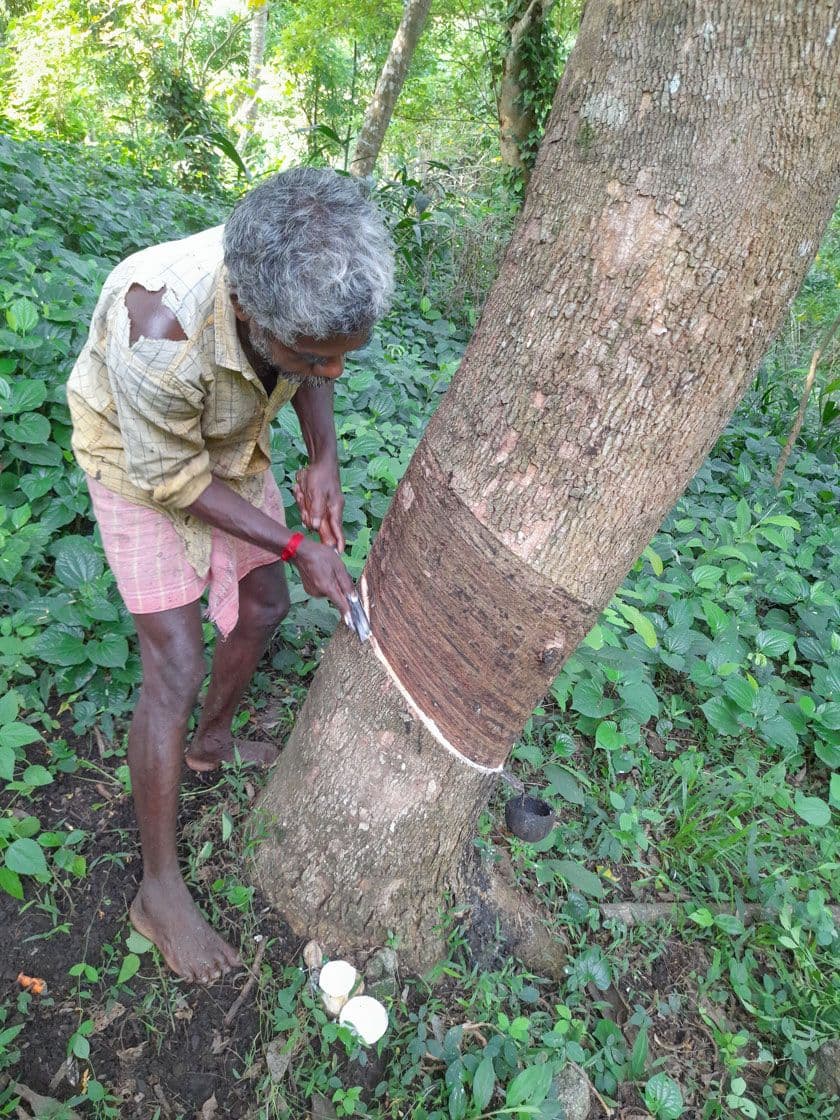
His day begins at six a.m. when he walks across to his rubber plantation in Surulacode village armed with a hook-shaped paal veetura kathi (rubber tapping knife), six-seven inches long. The five-acre farmland, allotted to his father by the government, is a five minute walk from his home and he grows rubber, pepper and cloves on it.
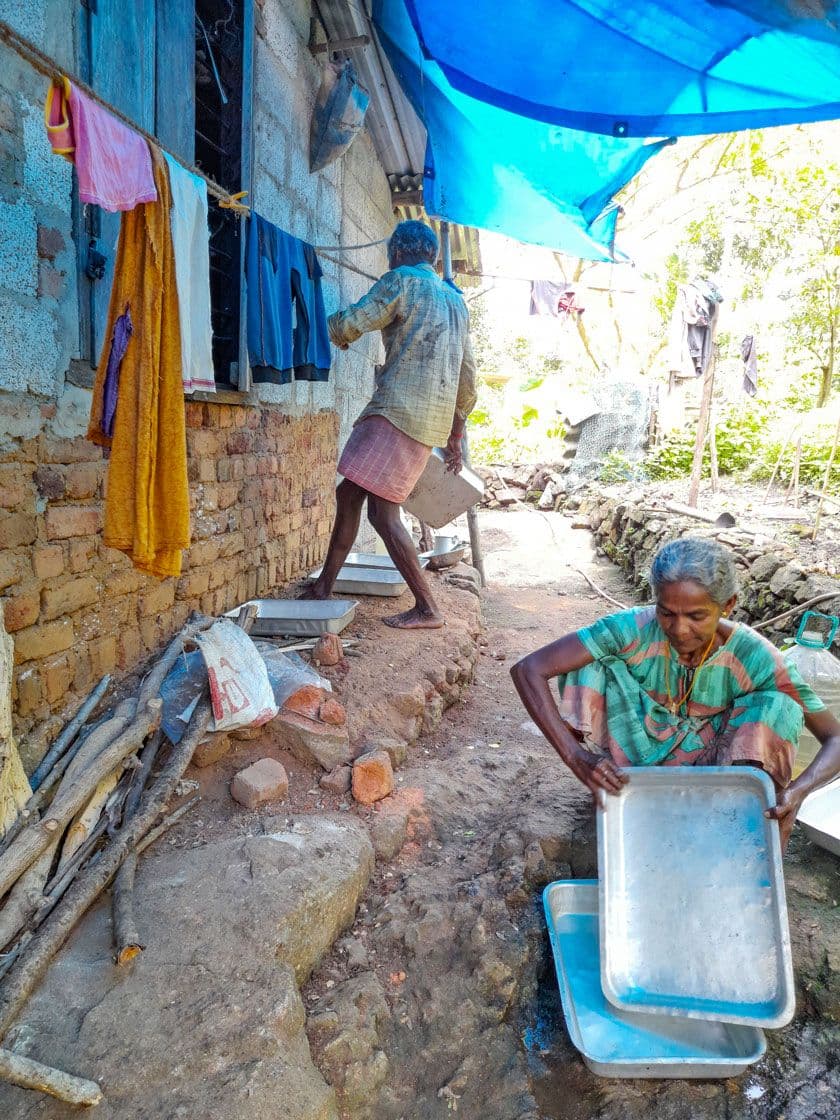
Both he and his wife, Leela Srirangan who he married 27 years ago, work on the rubber trees. They belong to the Kanikaran Adivasi community.
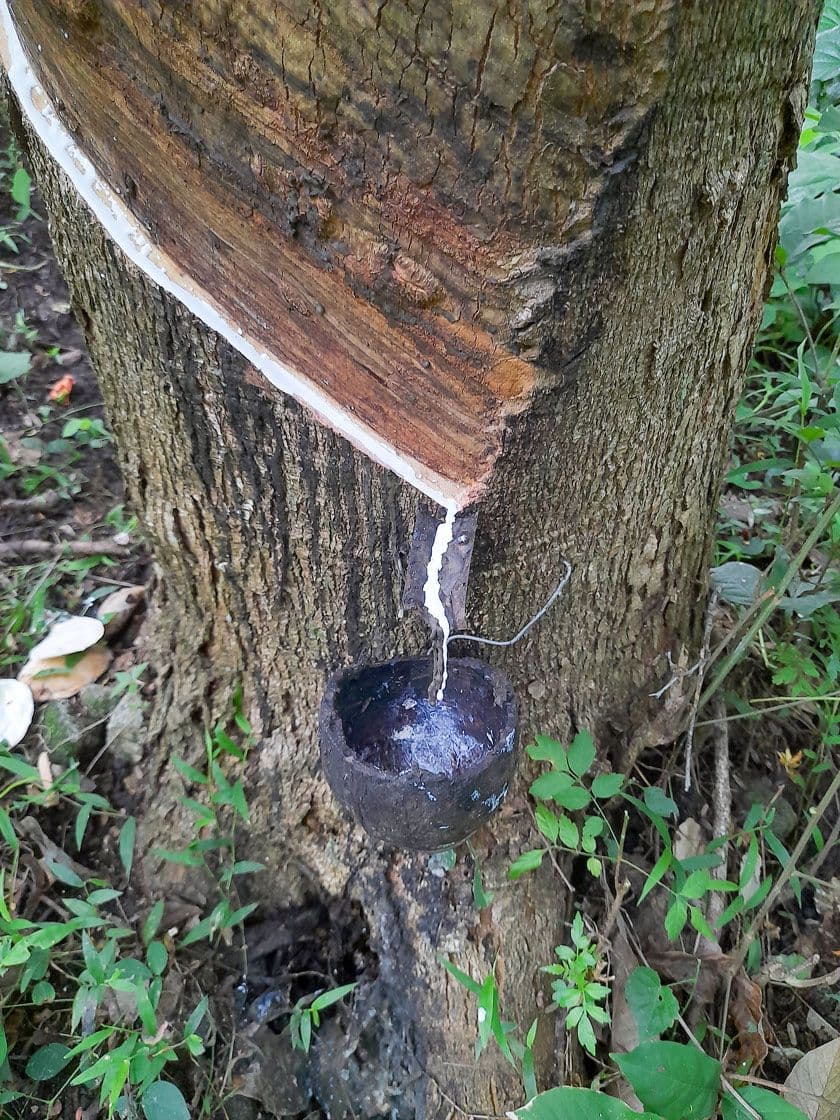
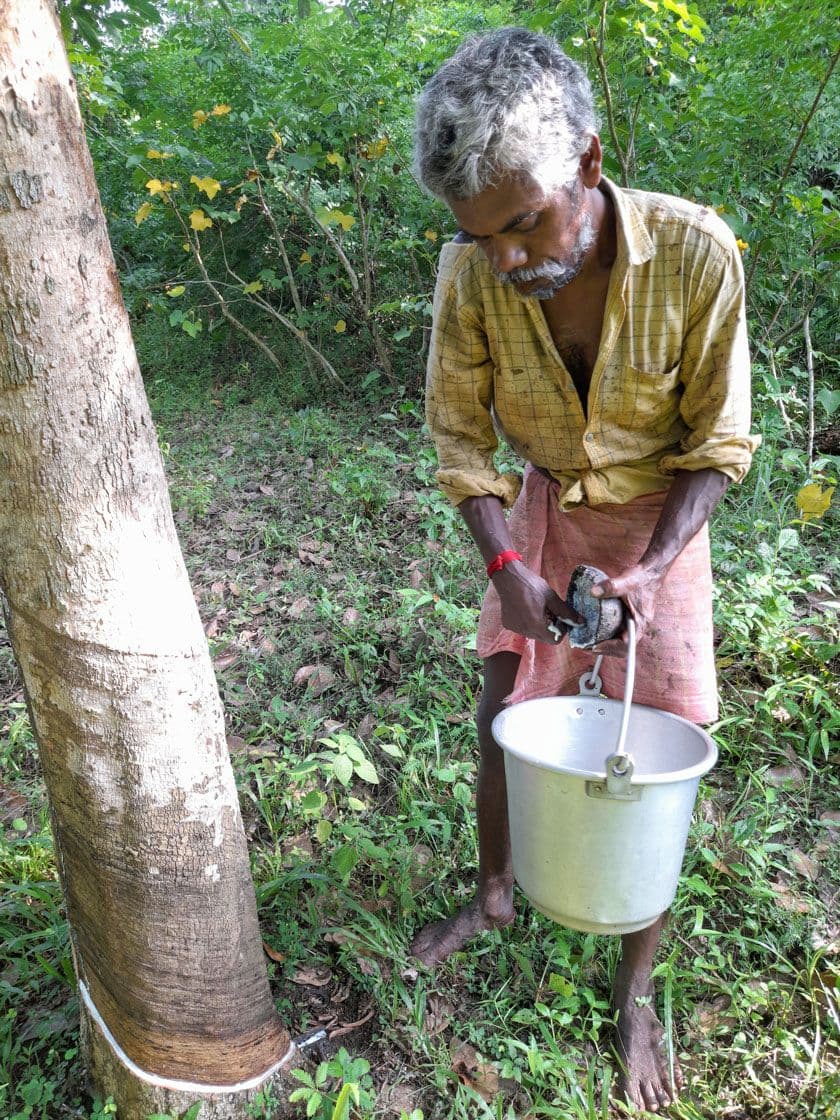
Srirangan (who only uses his first name) starts by collecting the dry latex that has drained into a black cup he had tied to the tree the earlier day. “This is ottukara,” he says, explaining that, “it is the leftover latex that flows into the cup after we collect that day’s fresh latex. It dries overnight.”
Selling dried latex is an added income which gets them anywhere between Rs. 60-80 per kilo. They sell the ottukara in the market after collecting it for two weeks.
Once he has emptied the cups, he cuts an inch-long strip into the bark of the tree for fresh latex to flow into the cup. He repeats this process for the remaining 299 trees on his land.