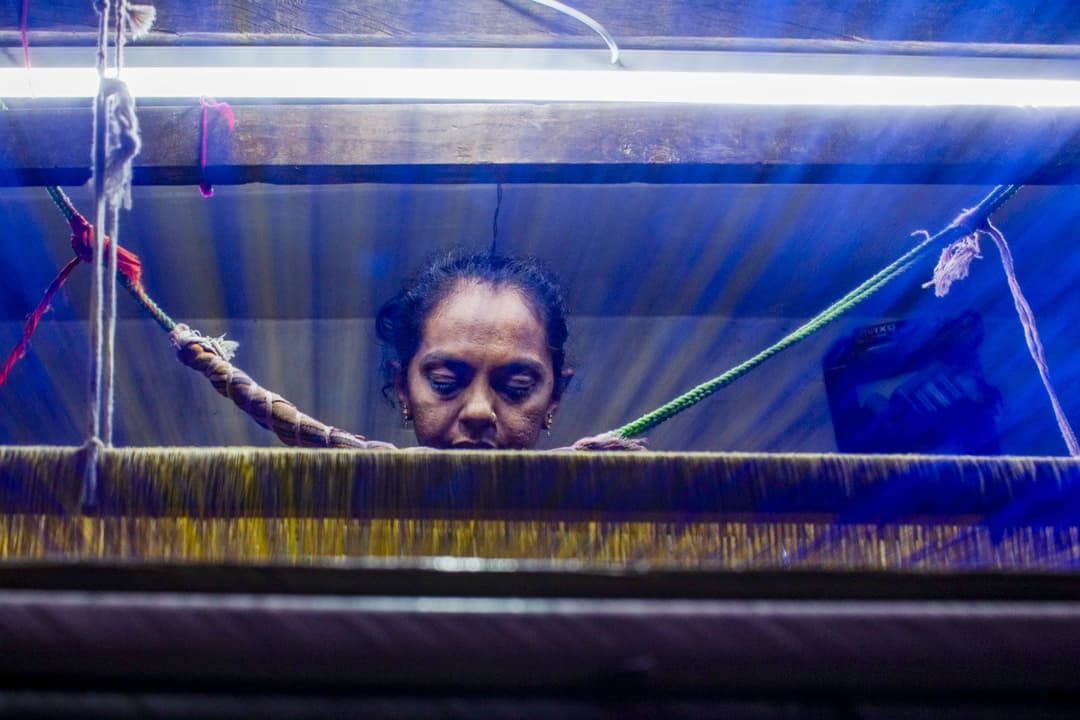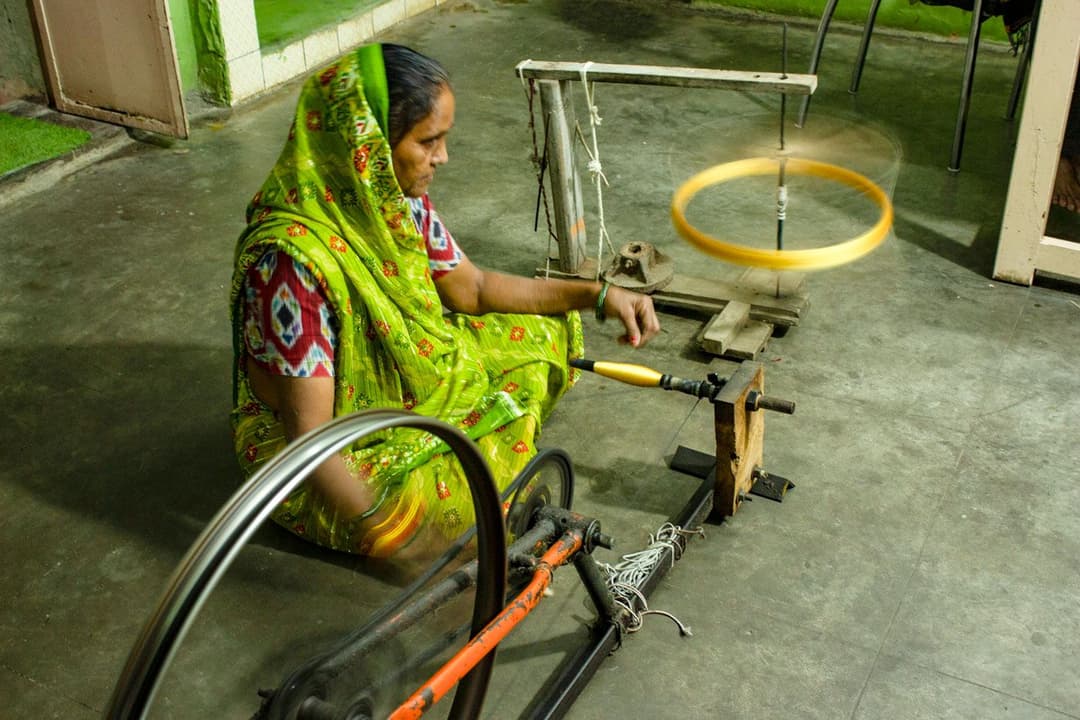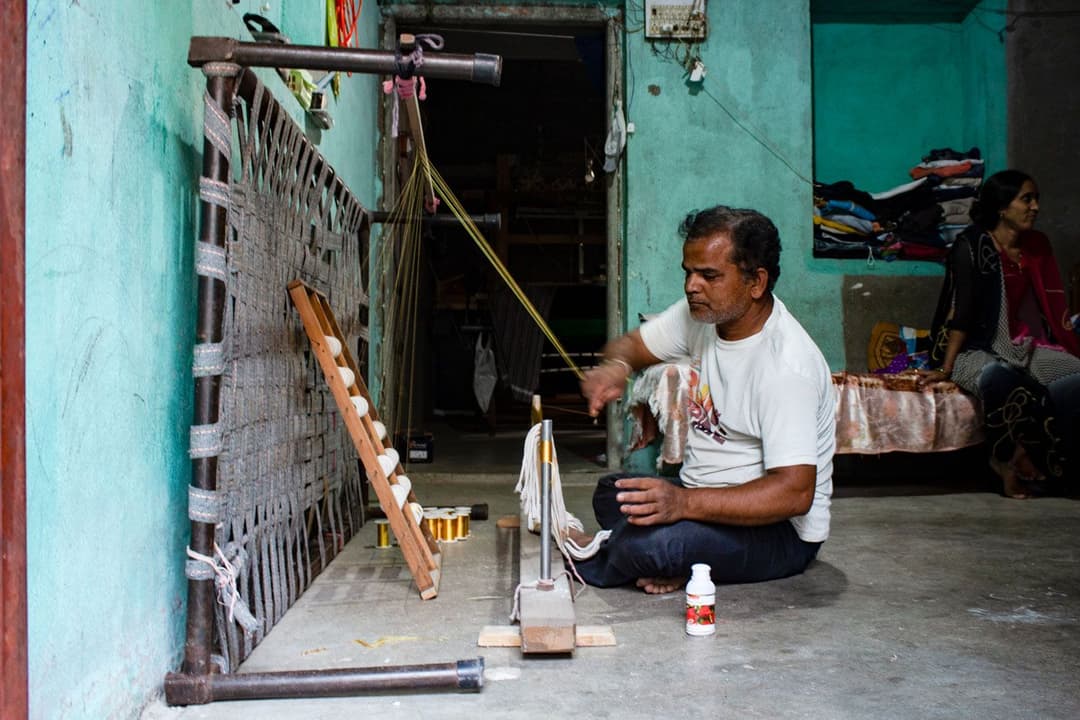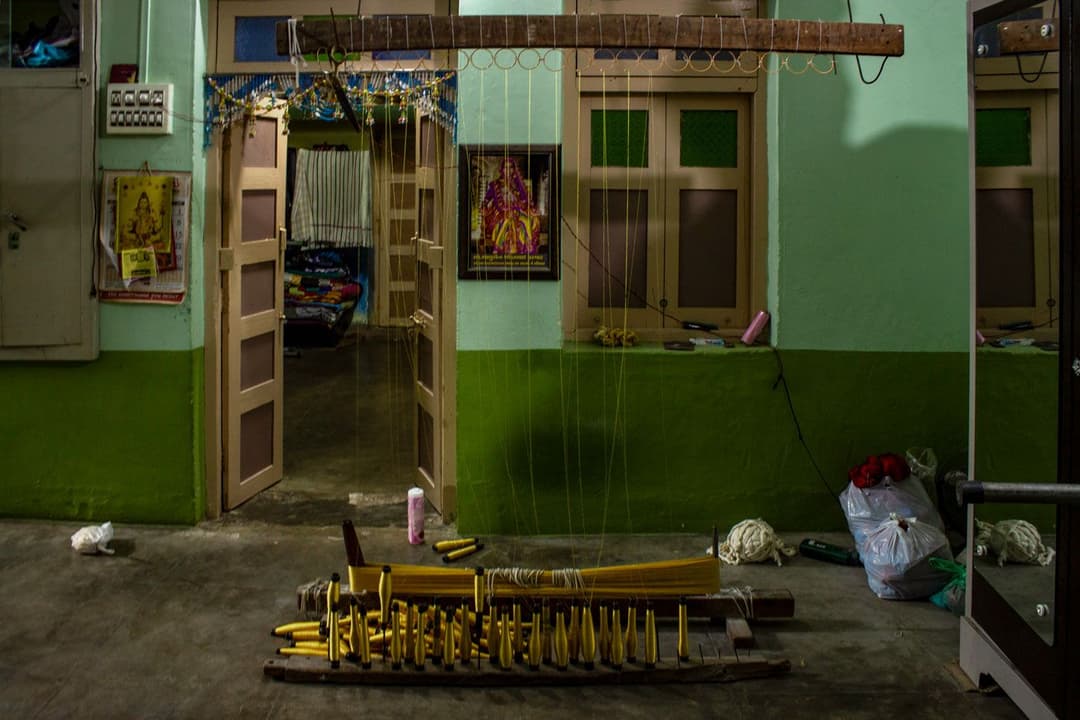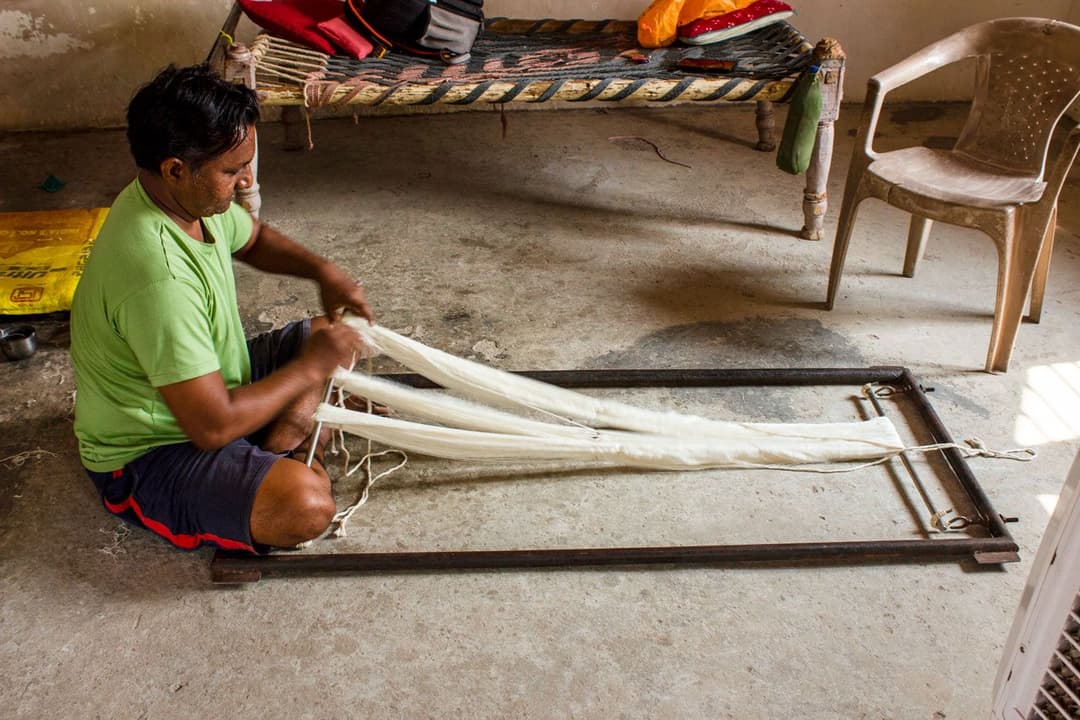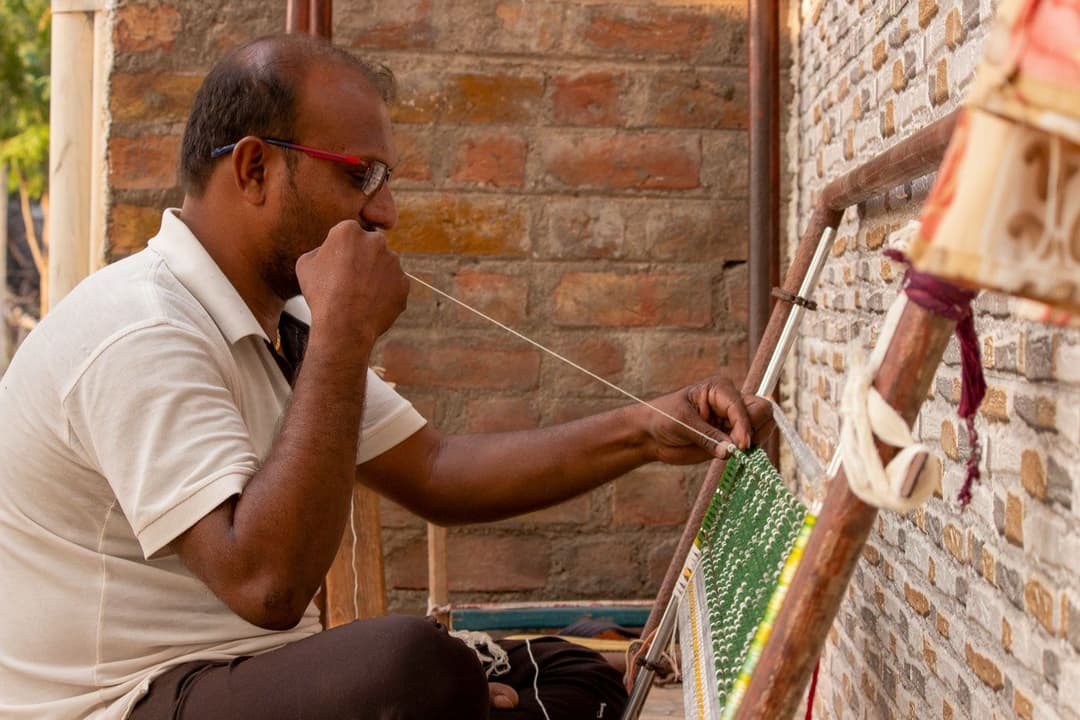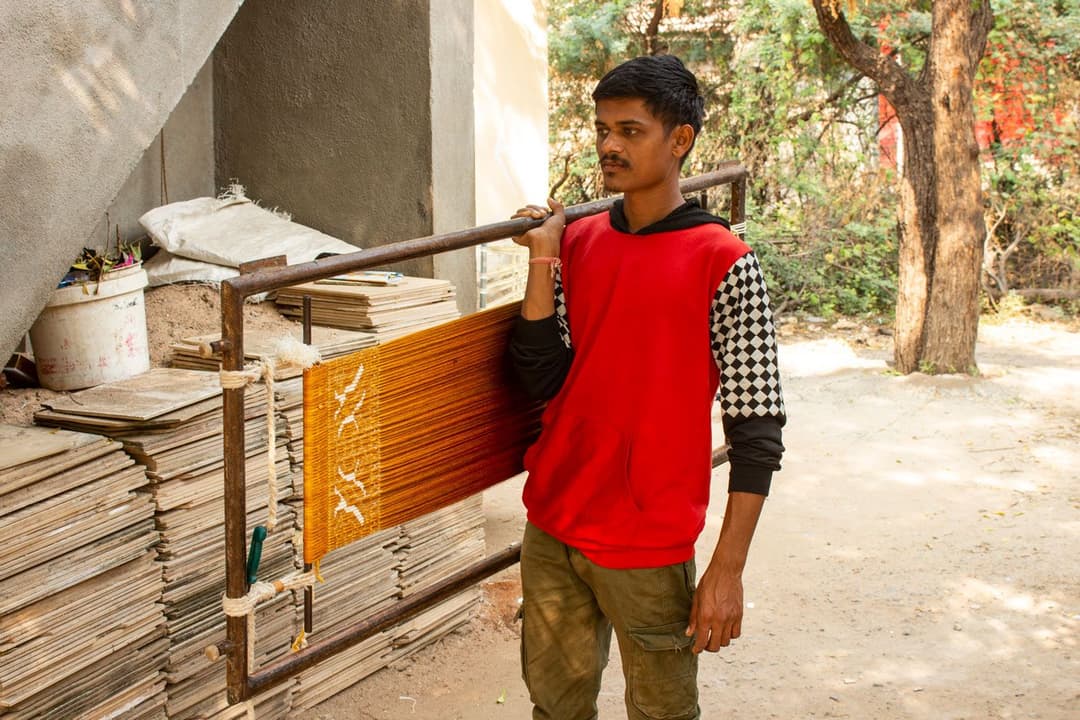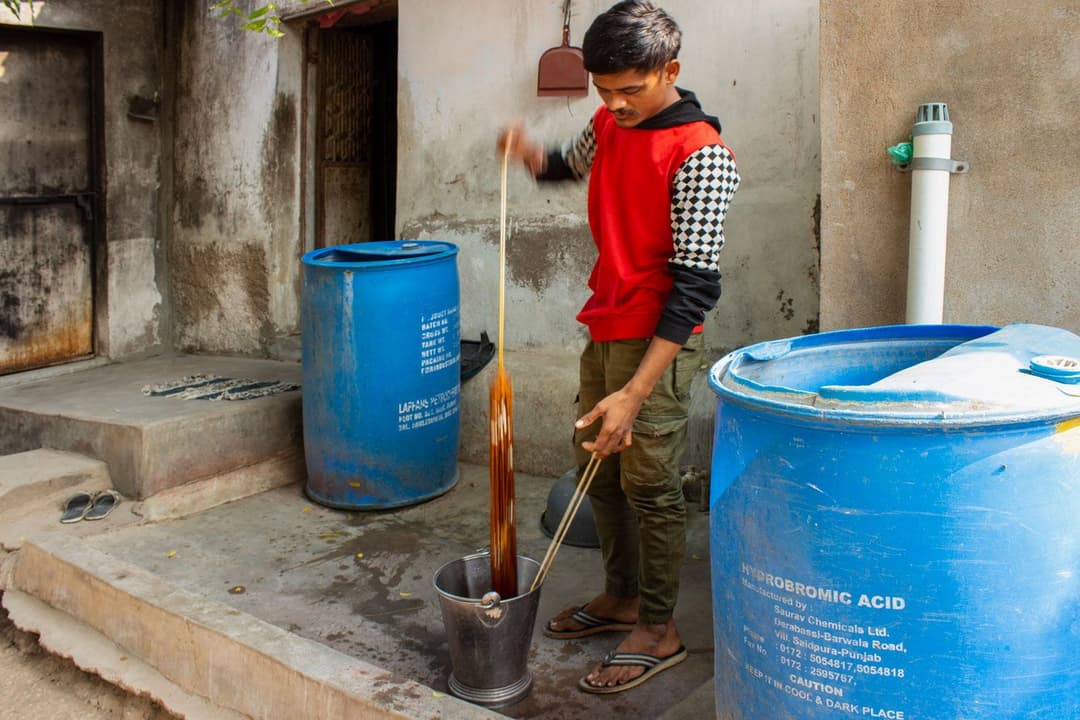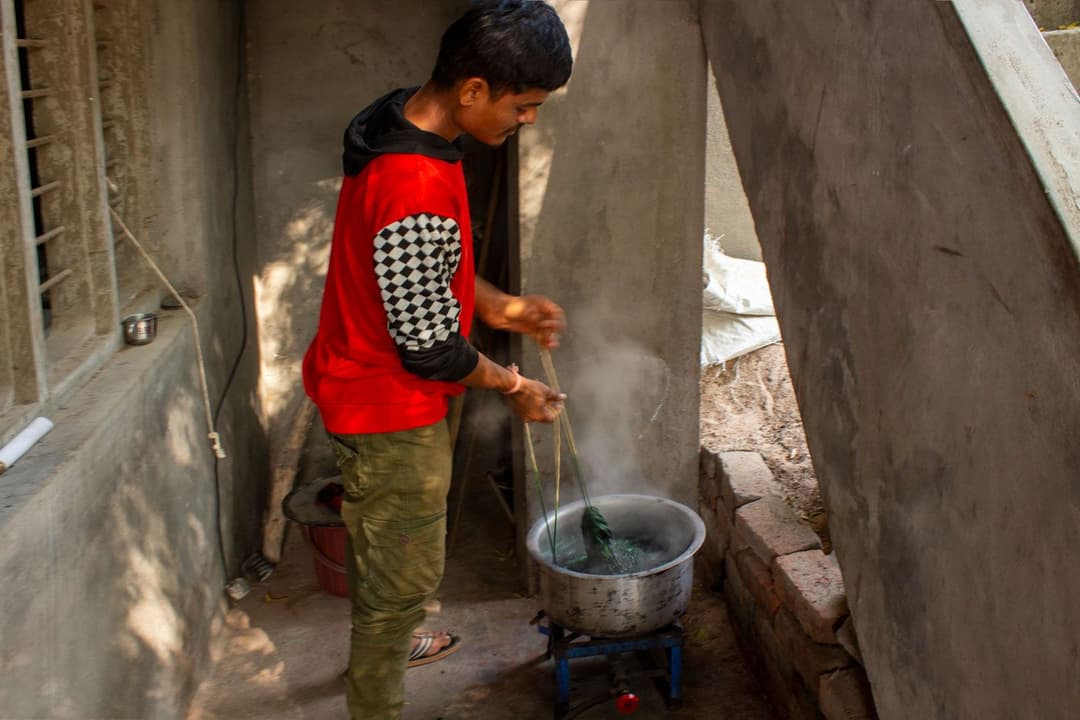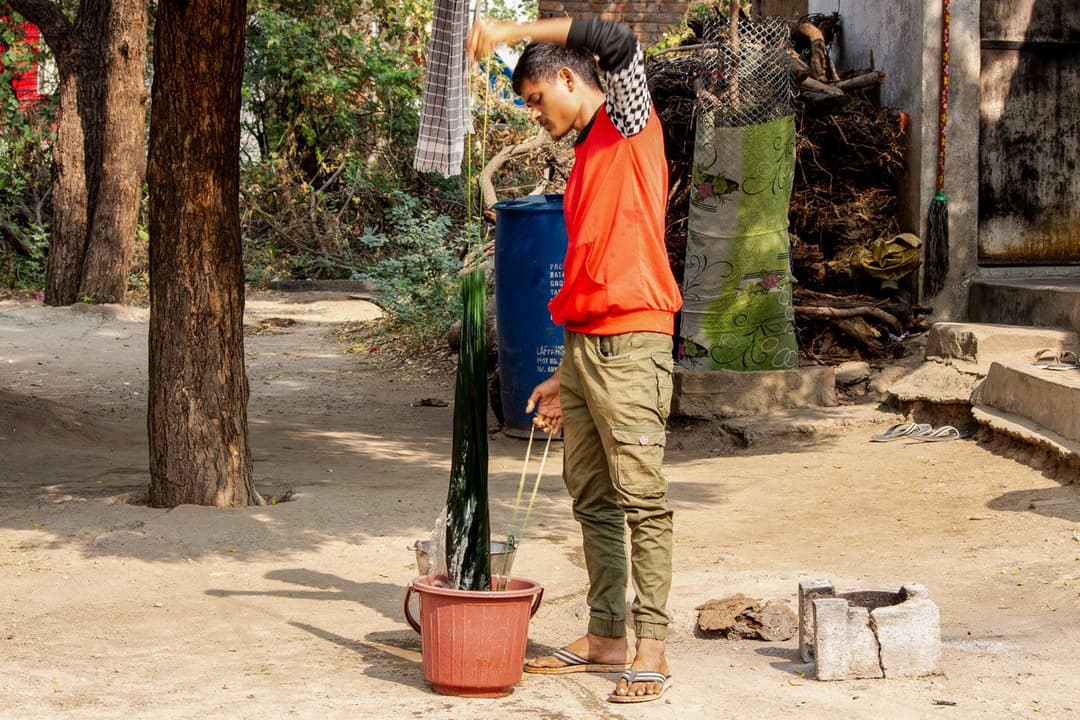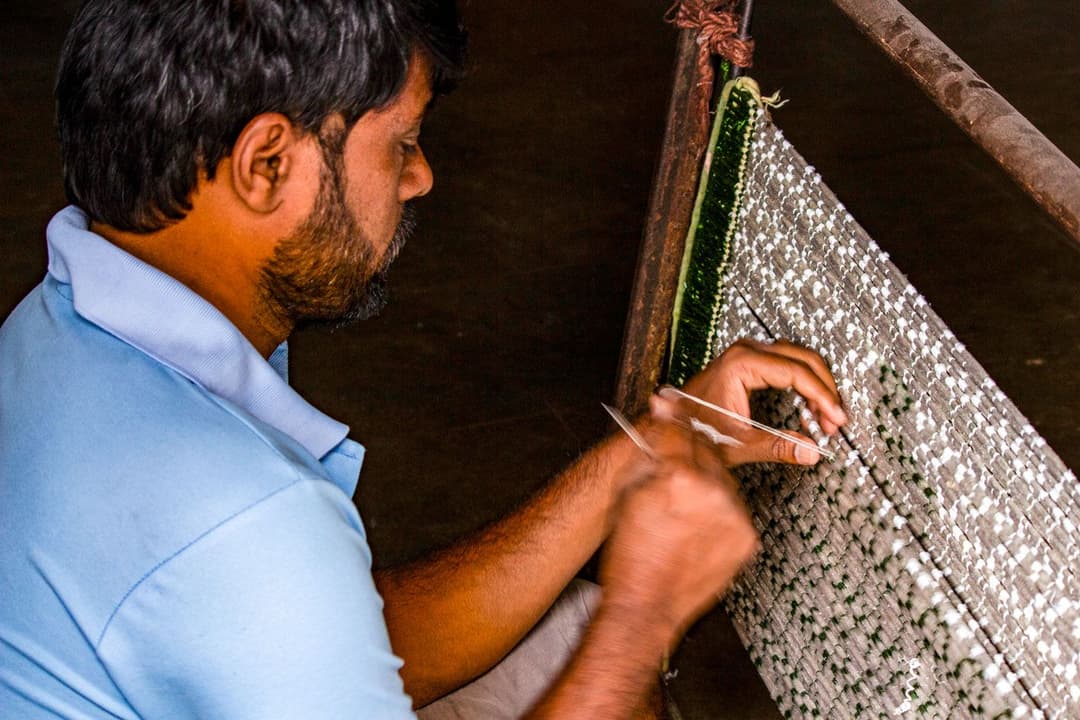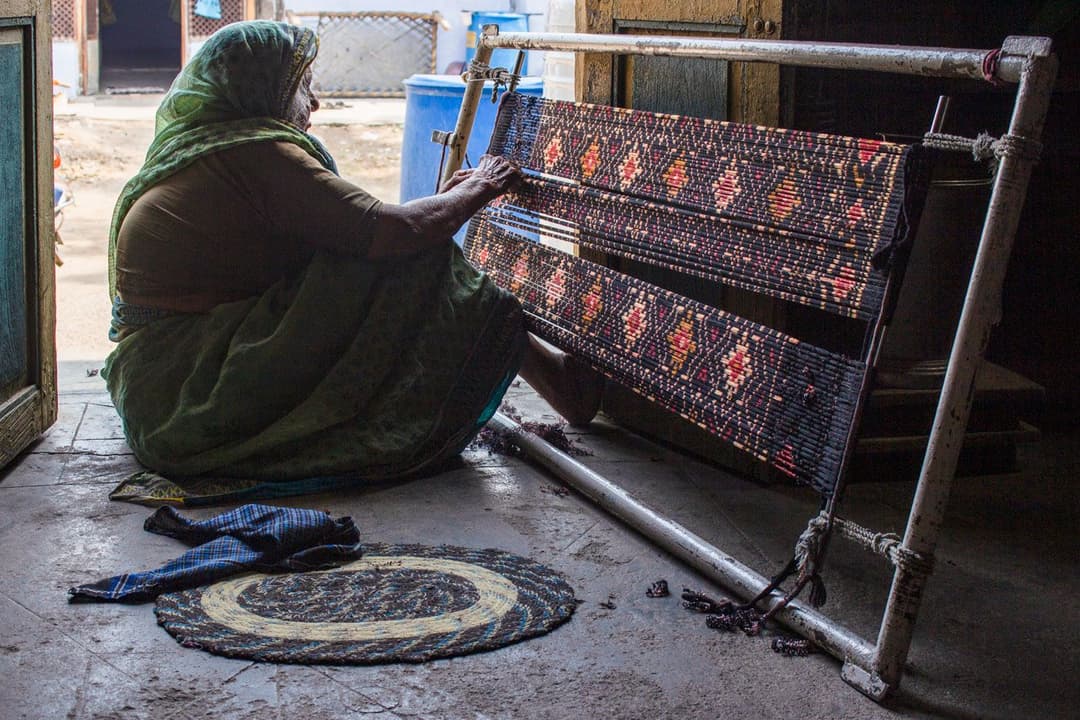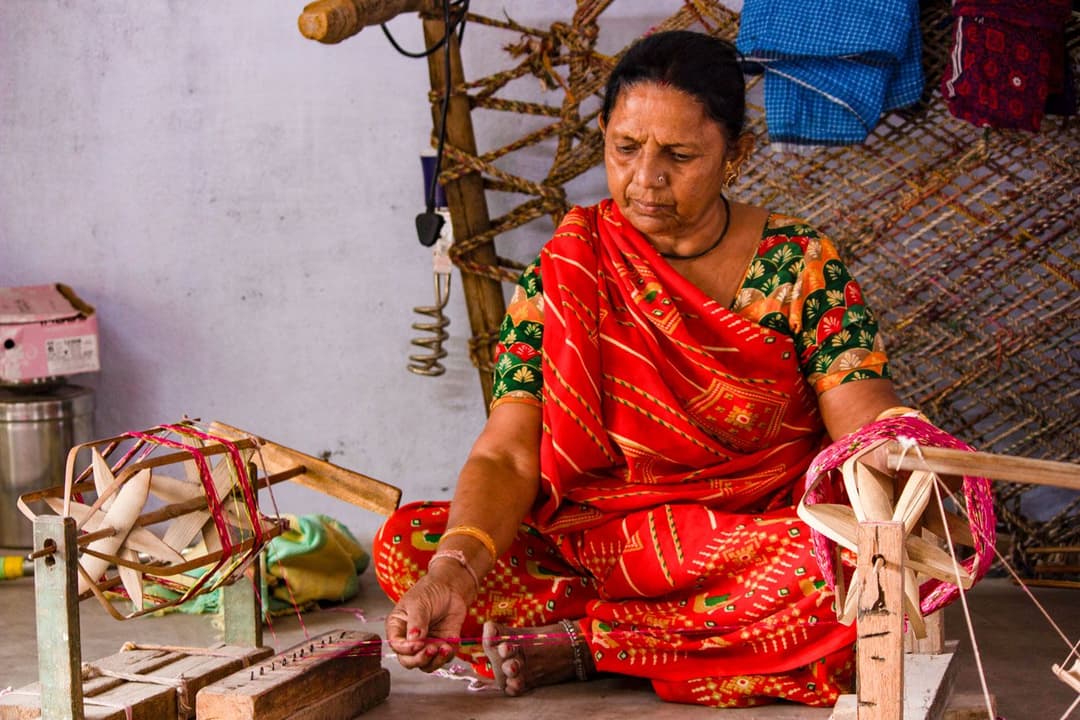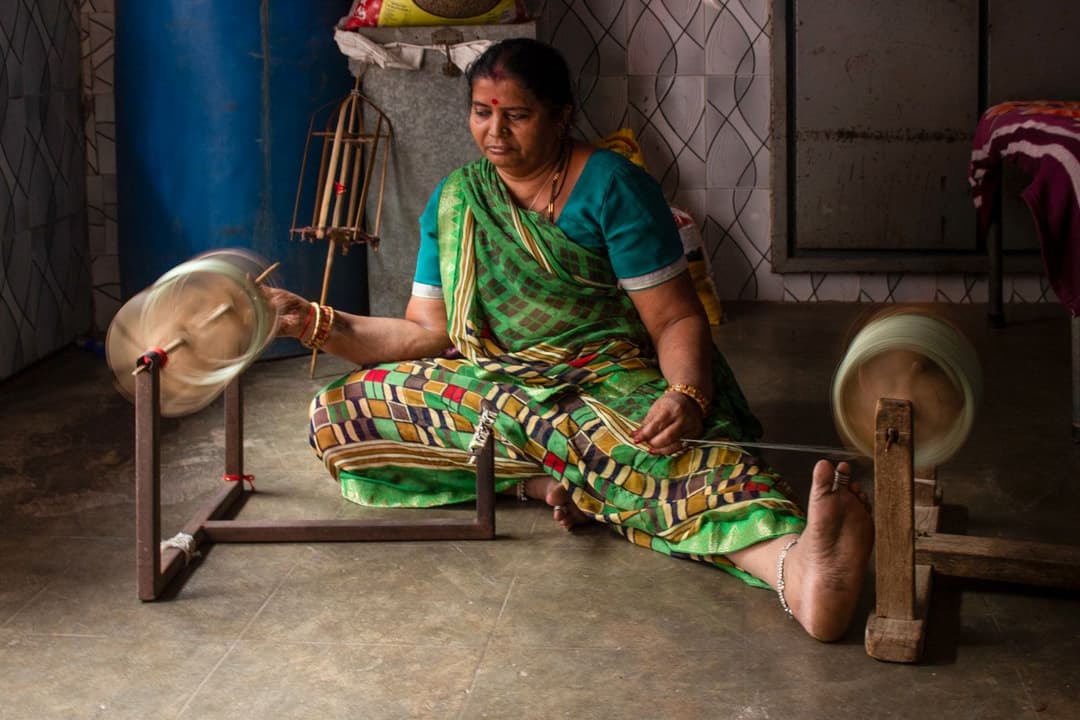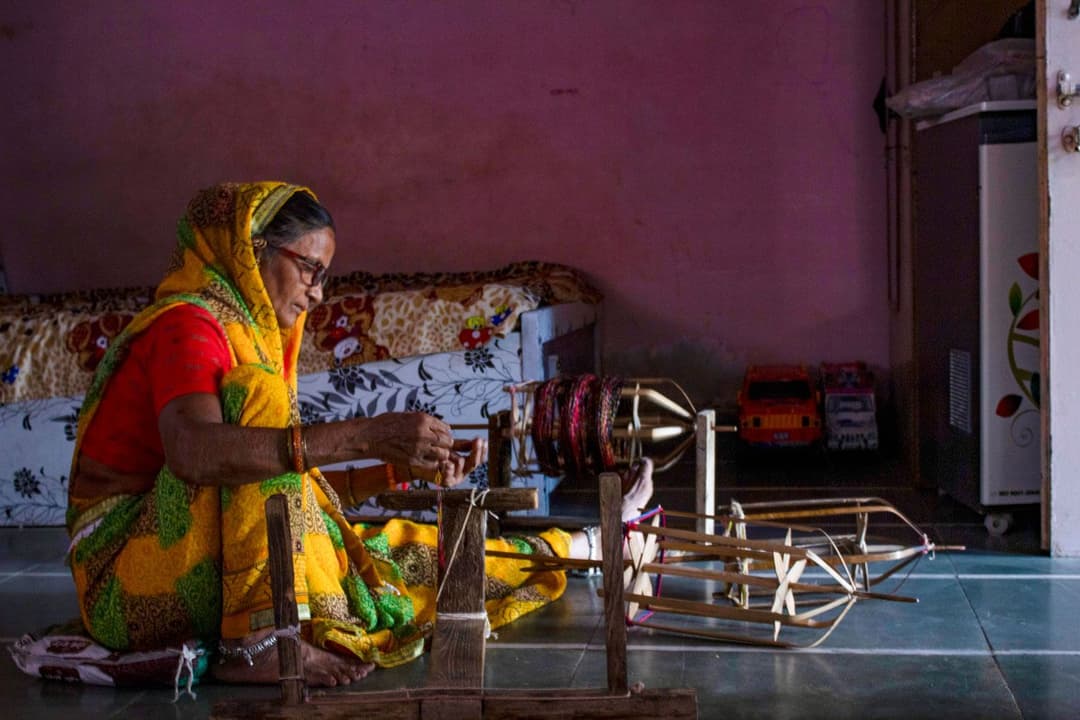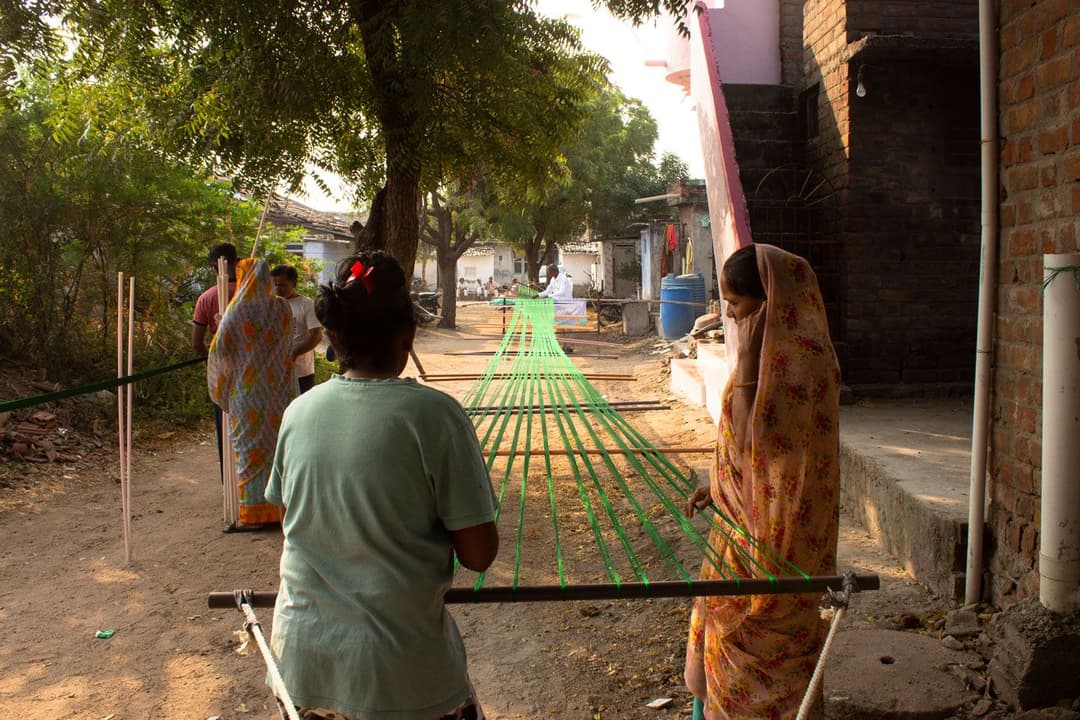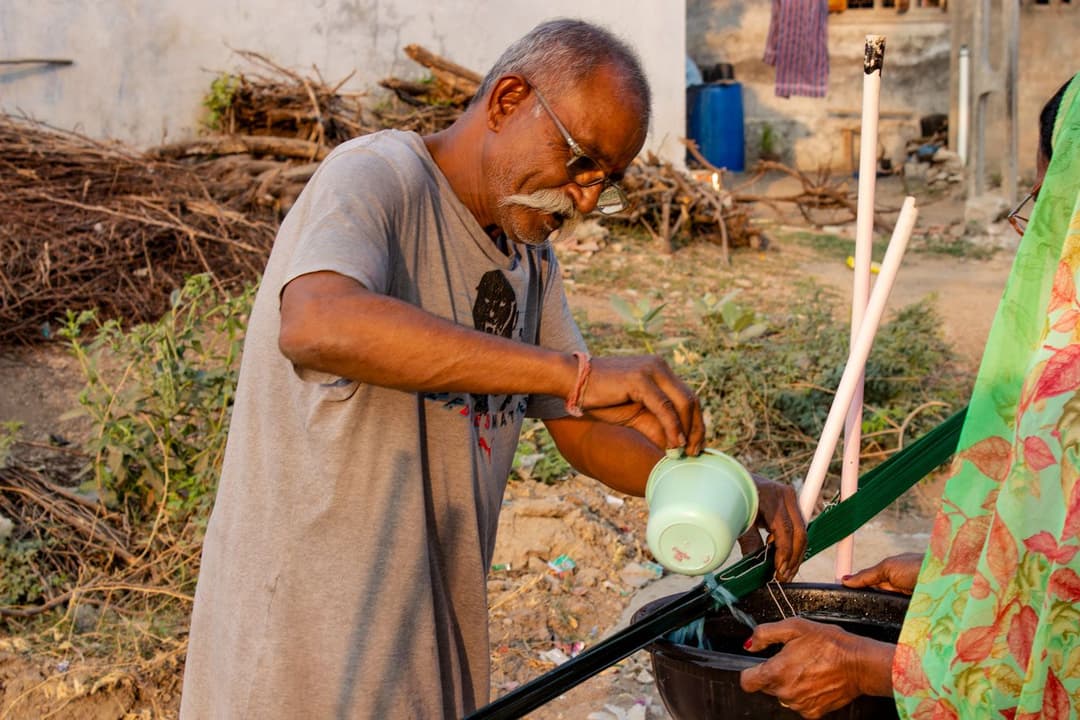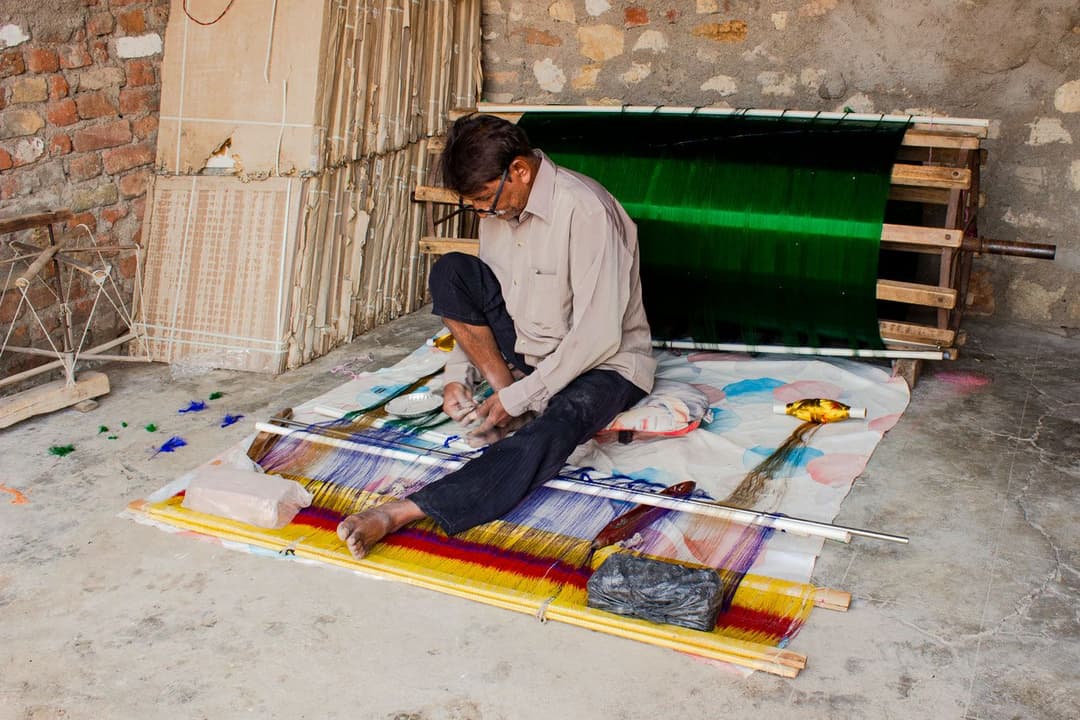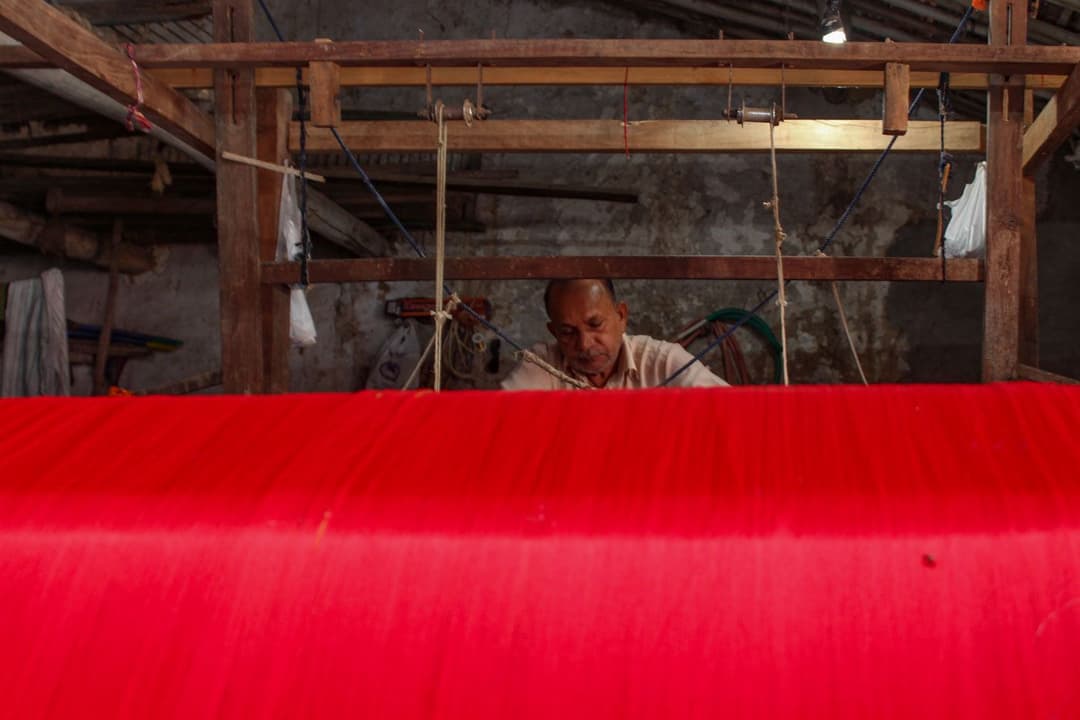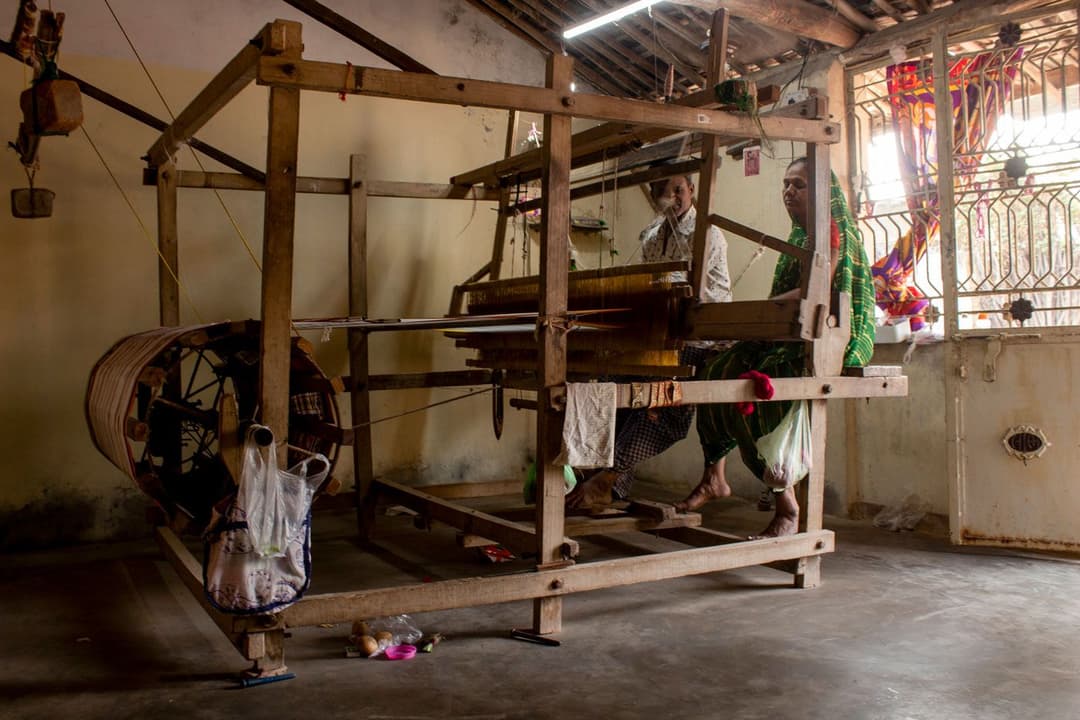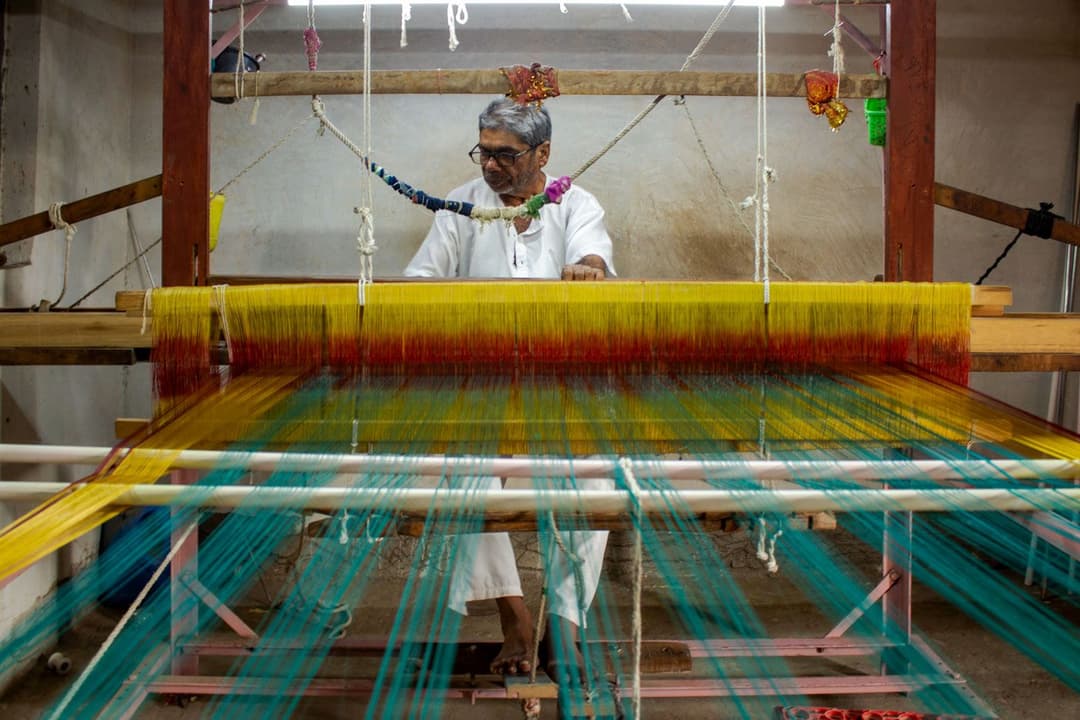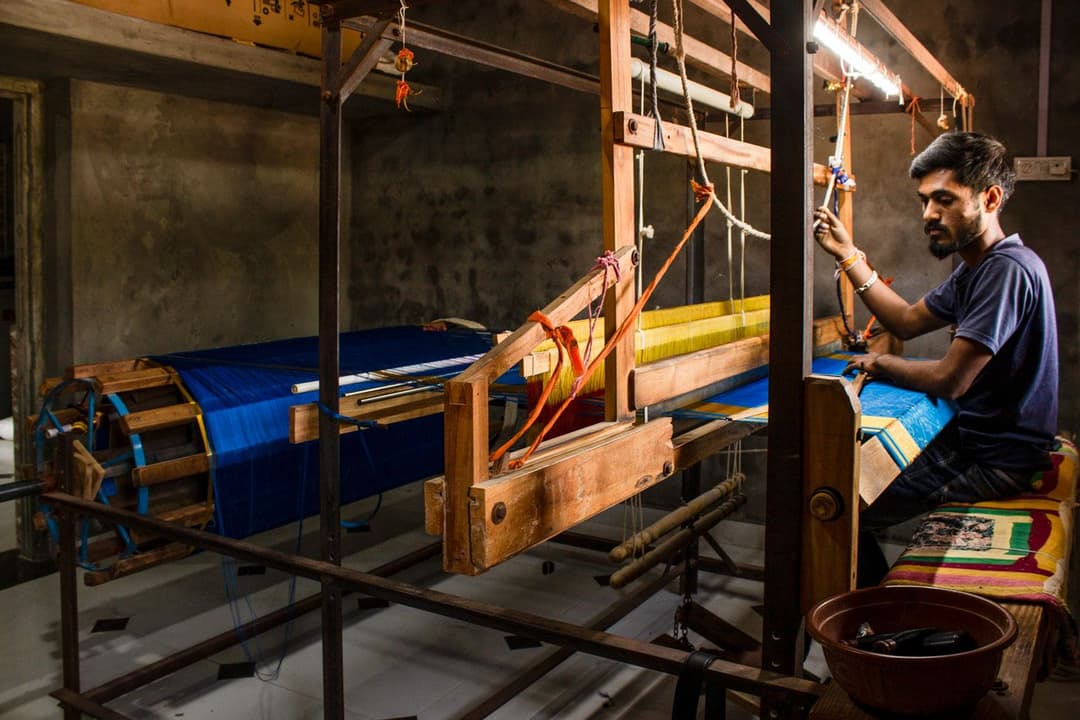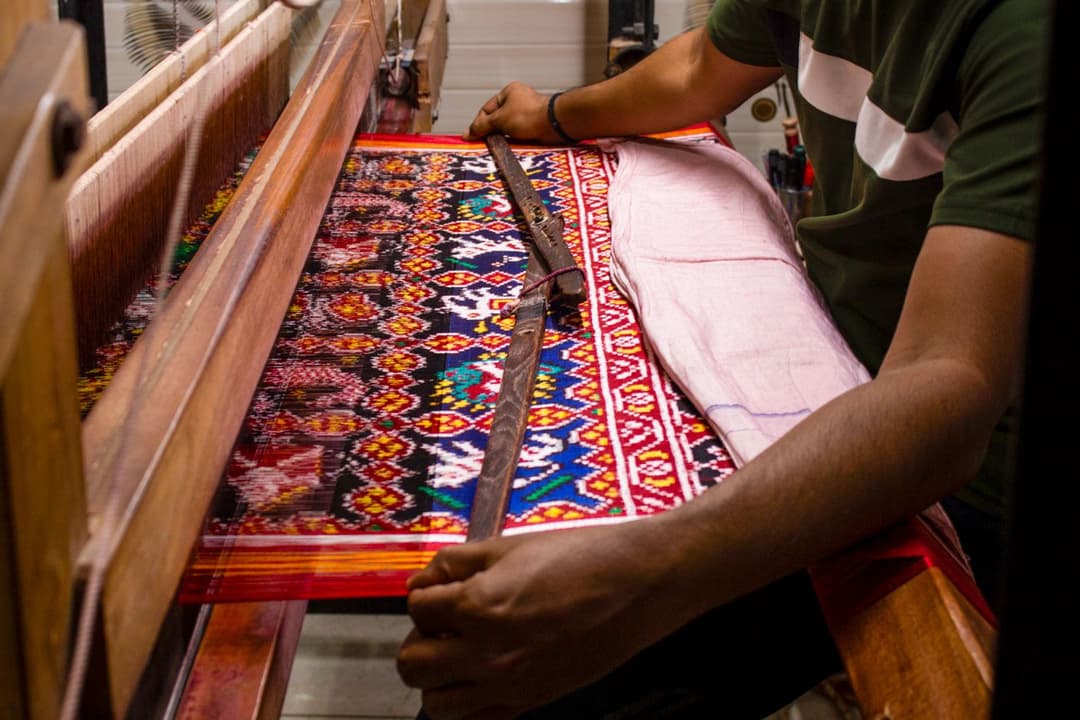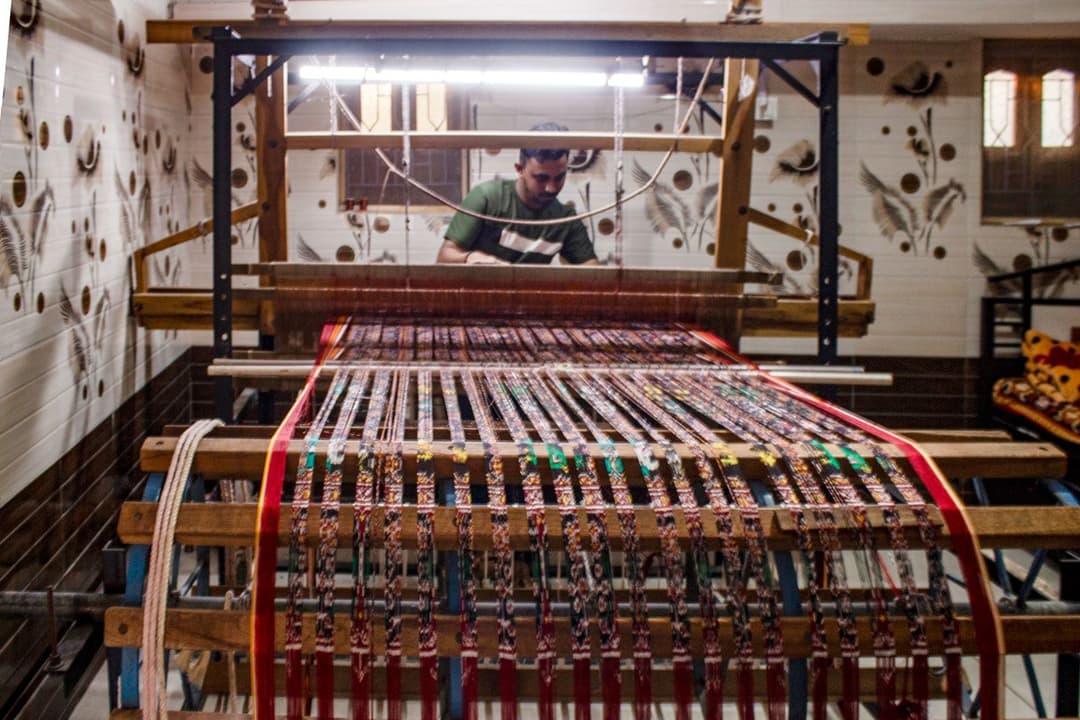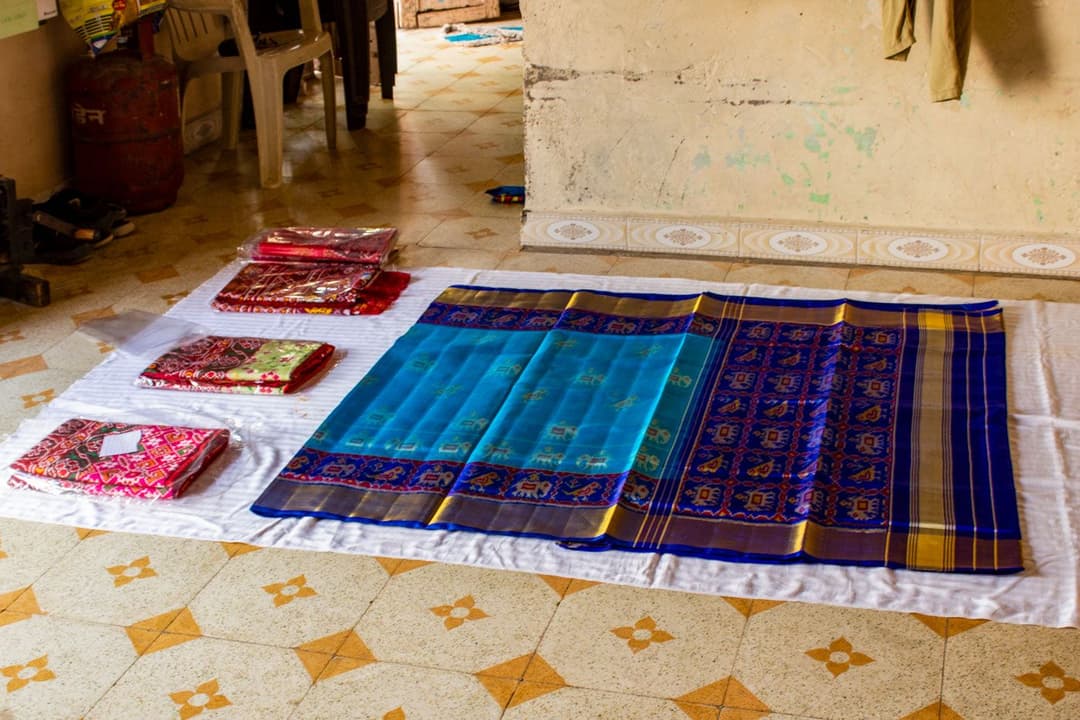

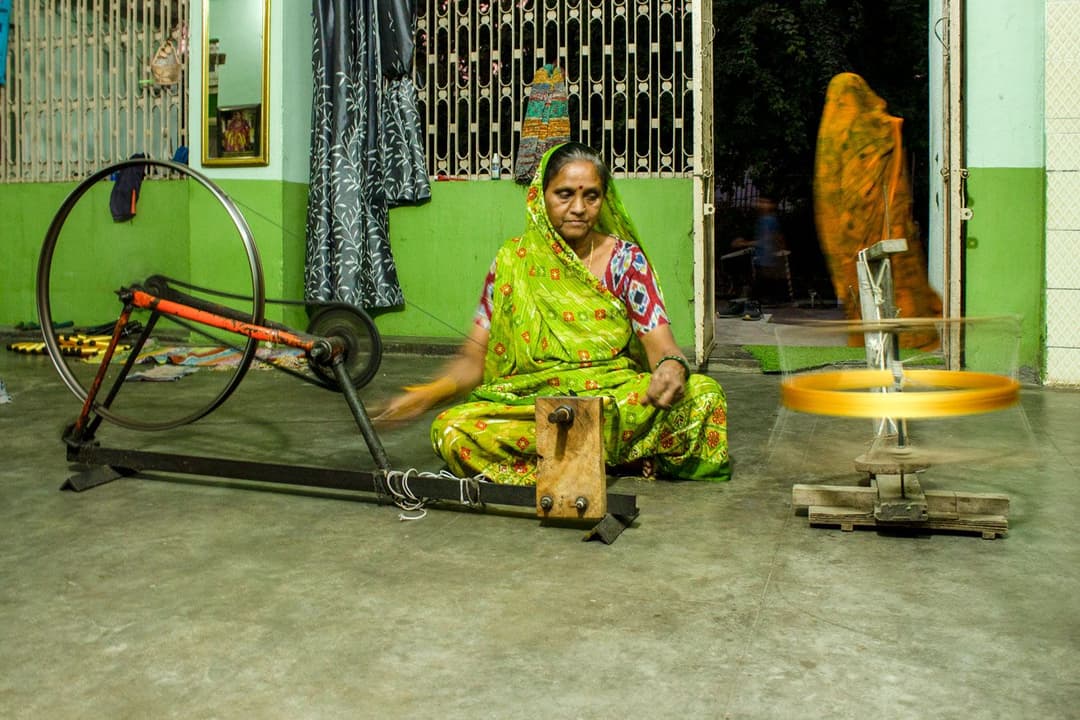
“It all begins with a single thread and ends with a single thread,” says Rekha Ben Vaghela with a faint smile. She is sitting at her handloom weaving a single ikat patolu in her house in Mota Timbla village of Gujarat. “In the beginning we wind the bobbin with a single thread and in the end, we transfer the now dyed thread onto the bobbin,” Rekha Ben explains the many processes of patola making that come before the bobbins for the weft thread are ready, and the warp thread is set on the loom.
Many in the Vankarvas in this village in Surendranagar district where she lives are engaged in one or the other task related to making the famous silk sarees known as patolu. But Rekha Ben, in her 40s today, is the only Dalit woman patola maker in Limbdi taluka, weaving single and double ikat patola. (Read: The warp and the weft of Rekha Ben’s life).
The patola from Surendranagar are known as ‘zalawadi’ patola, often cheaper than those made in Patan. Originally known for its single ikat patola, vankars (weavers) in Zalawad now also weave double ikat ones. “In single ikat, the design is only on the weft. In double ikat, both the warp and the weft have a design,” says Rekha Ben, explaining the difference between the two kinds of patola.
It is the design that complicates the process. Rekha Ben is trying to explain it one more time. “A single ikat patolu has 3,500 warp threads and 13,750 weft threads. While a double ikat one has 2,220 warp threads and 9,870 weft threads,” she says sliding the bobbin with the weft thread into the shuttle.