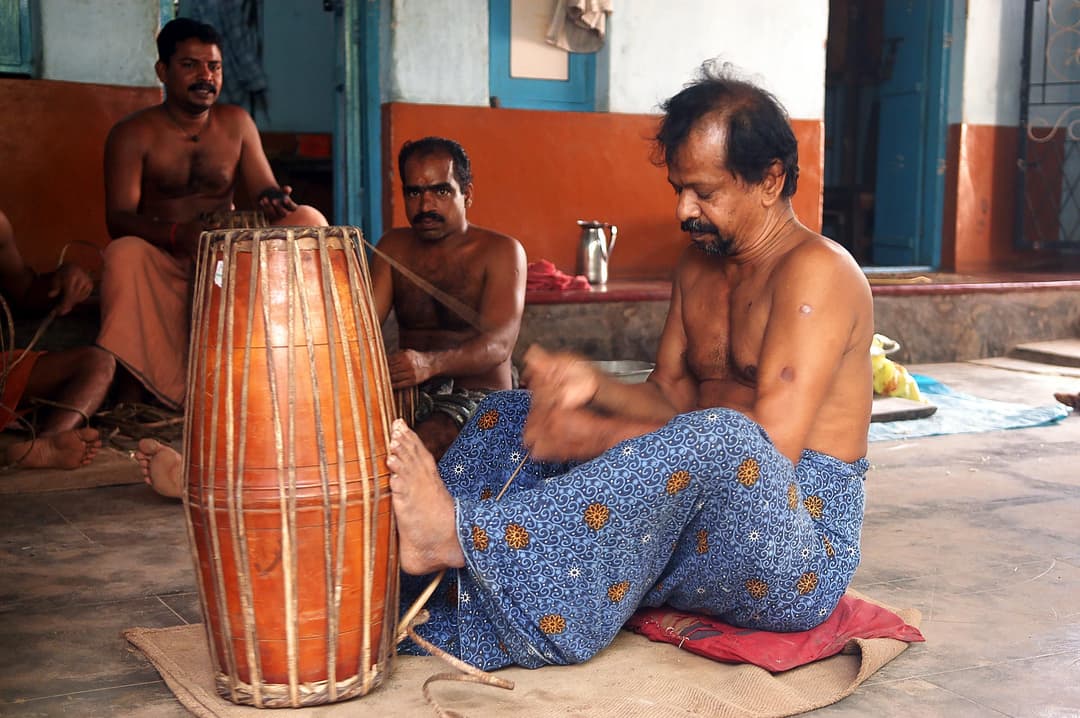


At first sight, Peruvemba looks like a tannery. The skins of animals like cow, buffalo and goat, drying in the courtyards of the village, suggest leather is being processed for sale. But, beyond the yards and inside the homes, the rawhides are transformed into high-quality percussion instruments by craftspeople of the Kadachi Kollan community.
Percussionists from all over south India covet the leather-based instruments produced in Peruvemba, 14 kilometres from Palakkad city in Kerala. “We are not musicians who can play the instruments, but we know the srutis [microtonal units] to make good-quality instruments,” says K. Manikandan, 44, a Kadachi Kollan mridangam-maker. “We make an instrument only after receiving an order. We customise it to the customer’s need. We don’t sell to shops or commercial retailers.”
The Kadachi Kollans of Peruvemba design and manufacture mridangam, maddalam, chenda, tabla, dhol, ganjira and other drums that are mostly used in temple music and Carnatic music. The community has been making percussion instruments for more than 200 years. Before that, they were metalsmiths who made agricultural tools, says Manikandan. Palakkad’s status as a centre of Carnatic music encouraged the Kadachi Kollans in Peruvemba village, which comes under Palakkad district's Peruvemba gram panchayat now, to switch to musical instruments for a better income.
Later, Peruvemba’s fame spread to the Carnatic music circles outside Kerala, after the mridangam maestro Palghat T. S. Mani Iyer (1912-1981) championed the instruments produced there. He invited musicians from Madras (now Chennai) to visit the village, turning many into permanent customers of the Kadachi Kollan craftsmen. Iyer's own mridangams were made in Peruvemba by Krishnan Maruthalaparambu, Manikandan’s father, with whom the musician shared a close friendship.