
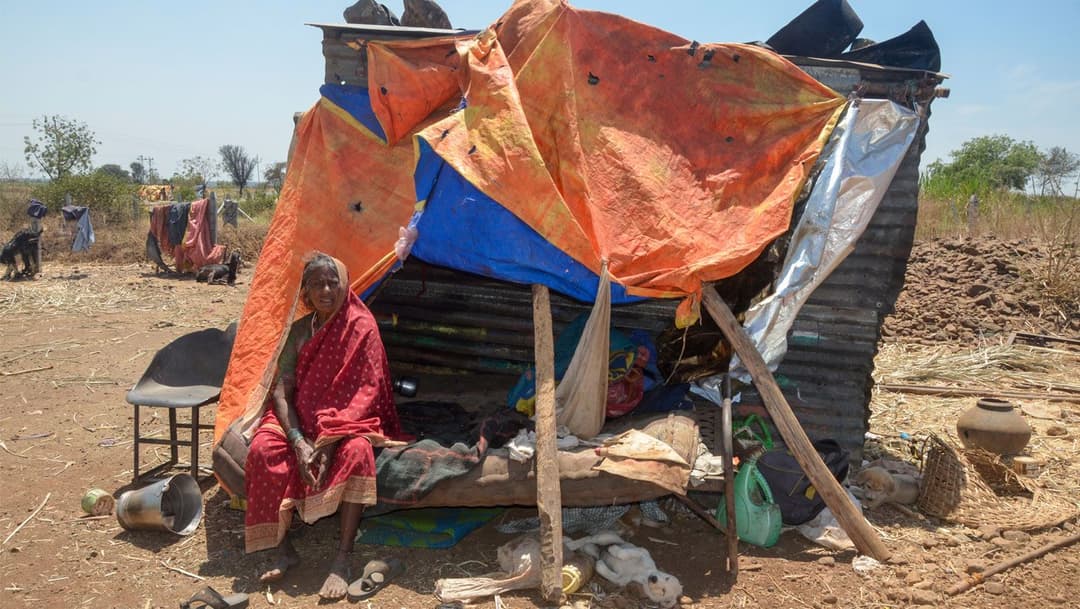
“Villagers are just shouting at us not to approach their doorstep. They say some bimari [disease] has come. Nobody tells us what that bimari is. I do not have any disease. Why are they stopping me?”
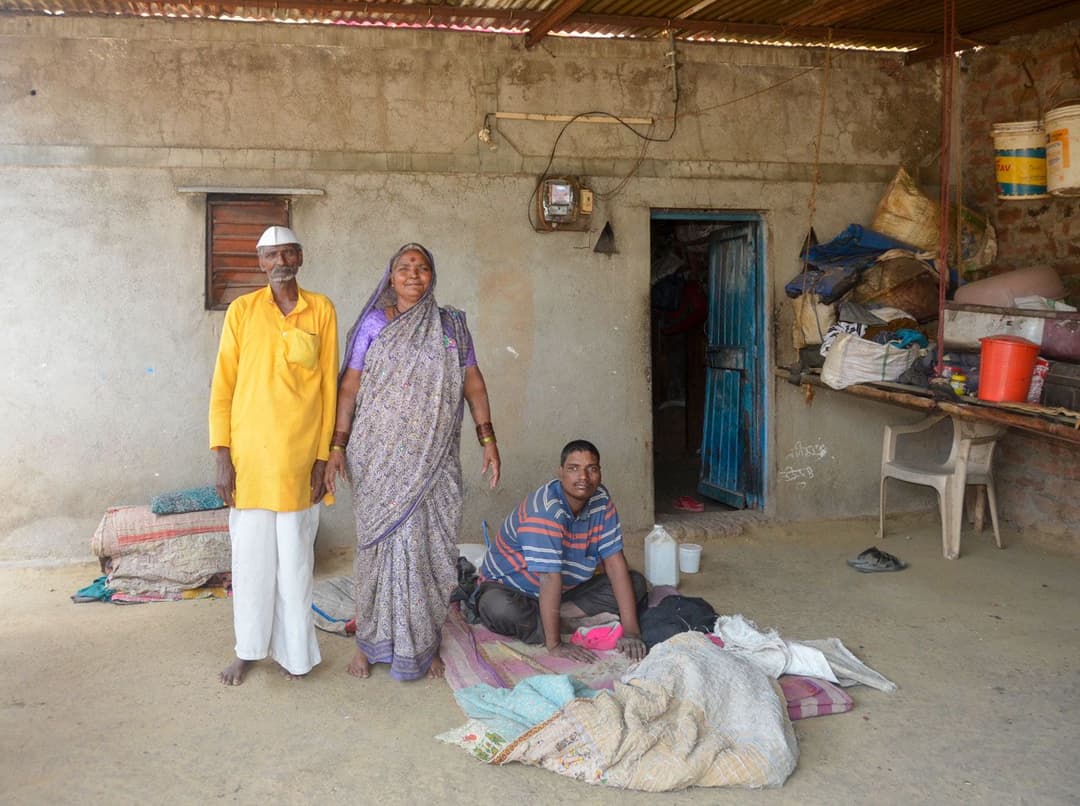
It’s a week since Geetabai Kale, a Phanse Pardhi Adivasi, has got any food. Because the only way the hungry 78-year-old gets any, even in normal times, is by begging. A source that has dried up in the lockdown. She hasn’t a clue what Covid-19 is about, but she and other Pardhis are experiencing its fallout daily – in empty stomachs.
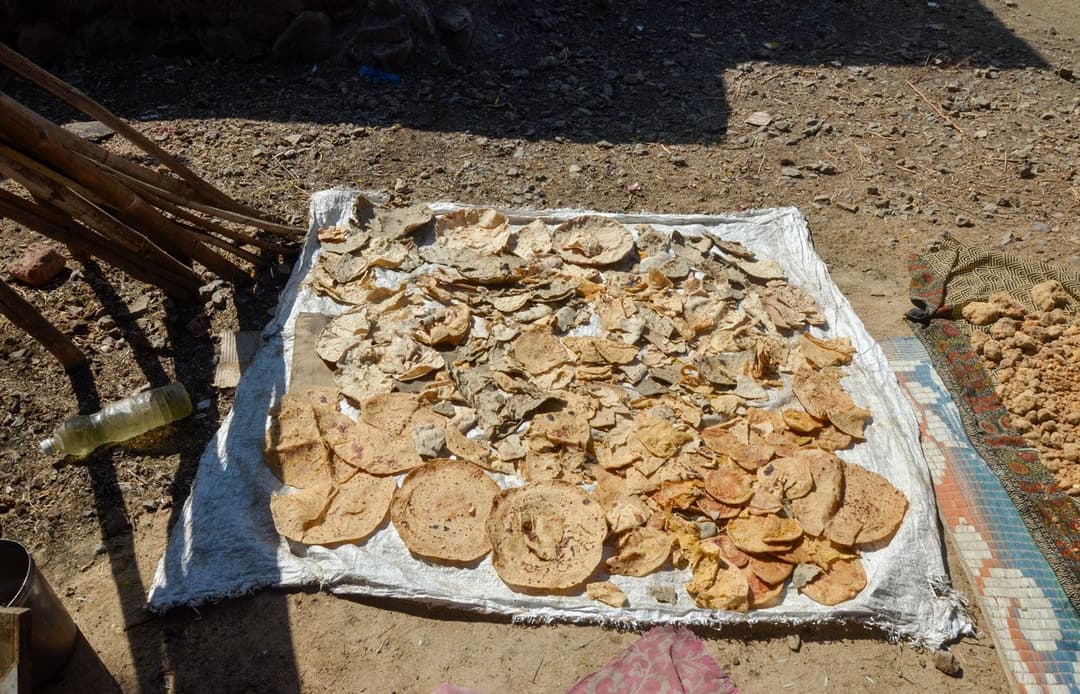
The last meal she remembers given to her was stale bajra bhakri on March 25. “Some boys – unknown to me – had come on itwar [Sunday, March 22] and gave me four bhakris. I ate them over four days.” She has been suppressing her hunger since. “Nobody came here after that and the villagers are not allowing me to enter as well.”
Geetabai stays alone in a tin shed near the main road in Shirur, in Maharashtra's Pune district, and goes to beg at Chavhanwadi village, two kilometres away. “We used to eat whatever leftover food people gave us,” she says. “I have heard someone saying the government is giving out free foodgrains – but only to those who have ration cards. I don’t have one.”
The Phanse Pardhis, listed as a Scheduled Tribe, are the worst-off among the anyway poor and deprived Pardhi Adivasi groups. The Pardhis continue to bear the burden and legacy of barbaric colonial legislation – more than 70 years after Independence. In 1871, to punish and quell many Adivasi and pastoral nomadic groups who rebelled and challenged their suzerainty, the British enforced the Criminal Tribes Act, declaring nearly 200 communities ‘criminal’ – by birth. The consequences for these groups were devastating, and also isolated them from the rest of society.
Independent India repealed the Act in 1952, and the list of ‘criminal tribes’ was ‘denotified.’ But the stigma, prejudices and torment by the rest of society strongly endures. It is impossible for many of these communities to enter the main village or draw water from its wells. They mostly live 2-3 kilometres away from it. They do not find jobs, their educational levels are abysmal, many are jailed, charged with petty offences. And several have no option but to beg for a living.