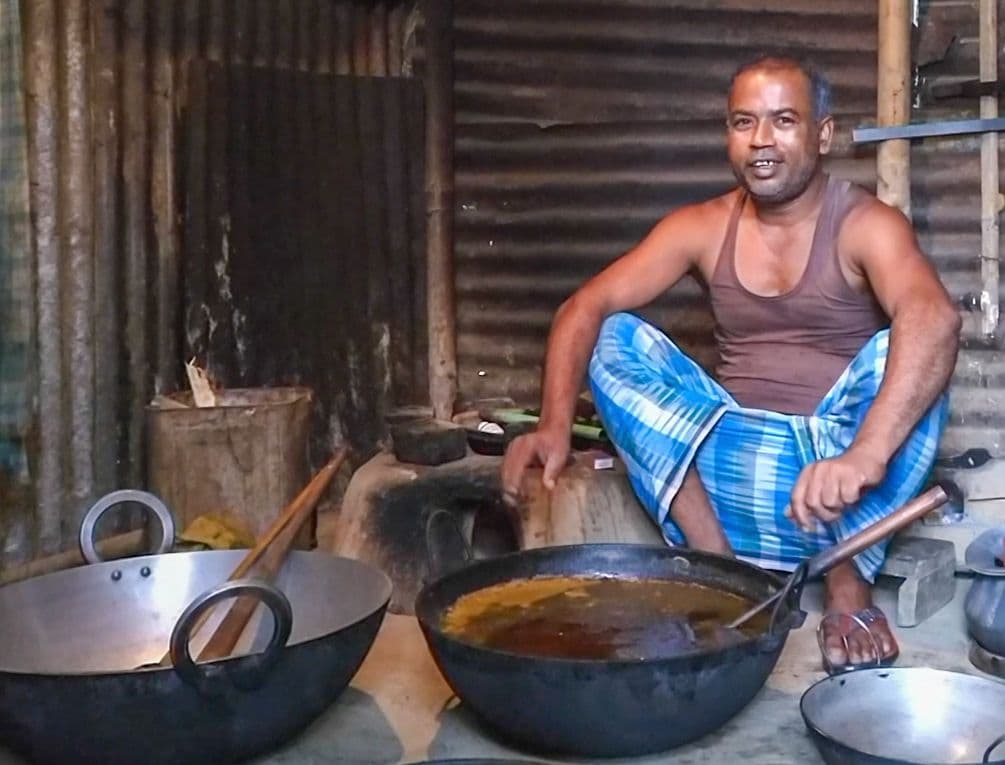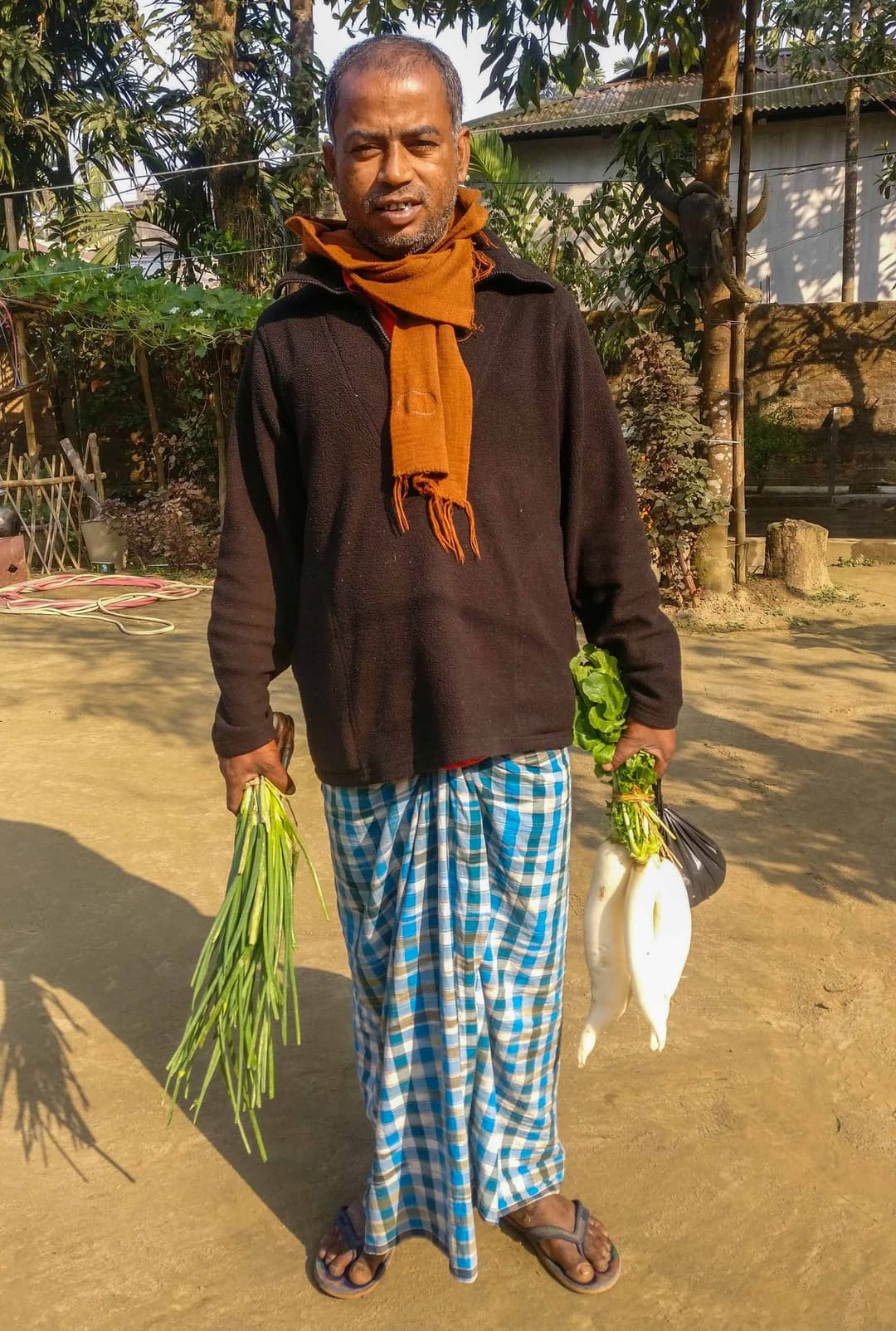

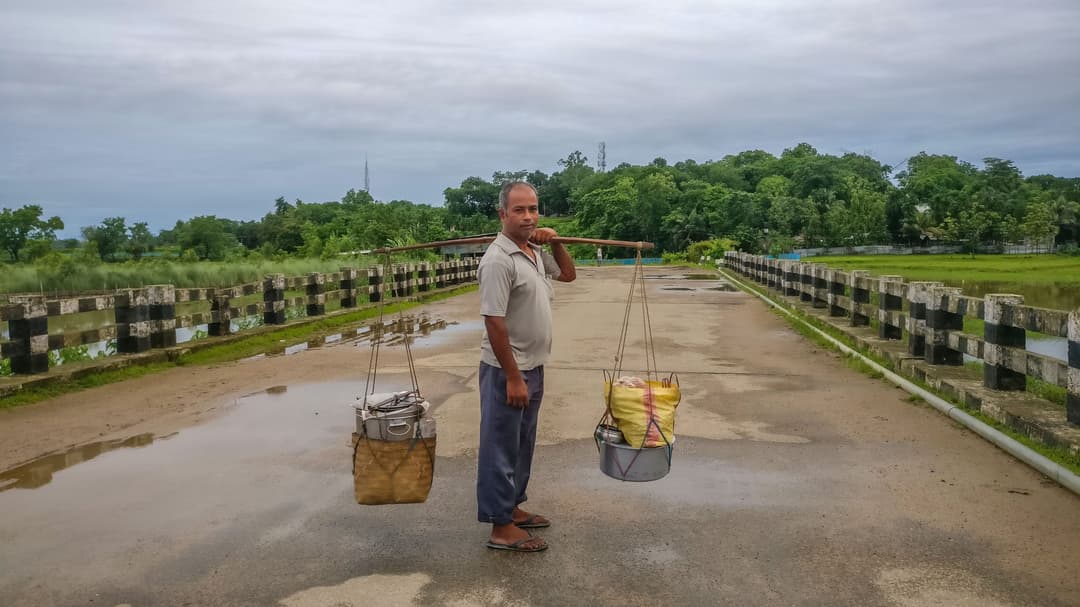
Nosumuddin was crying. He was going far away for the first time – 10-12 kilometres from his own home, leaving behind his parents. At the age of seven this was really hard. “I felt very bad and cried. Leaving home and my family brought me to tears,” he recalls.
He was being sent away to work as a rakhal (cattle caretaker). “My family was very poor, my parents had no other option,” says Nosumuddin Sheikh, now 41 years old. “There was not enough food to feed us. We ate one meal most days, whatever grows freely in the field. Only few people in our village could afford two meals in those days.” An education was beyond his imagination: “I couldn’t think of going to school at that time. The condition of my family was so bad, how could we afford schooling?”
So he left his modest thatched hut in Urarbhui village in Assam’s (then) Dhubri district and went to Manullapara village by bus, travelling on Rs. 3 ticket to an employer who owned 7 cows and 12 bighas of land (around 4 acres). “Life as rakhal was very hard. I had to work for long hours at that age. Sometimes I was not given enough food or only stale food. I cried due to hunger,” Nosumuddin recalls. “Initially, I was not paid anything, given only meals and a space to sleep. My employer used to get 100-120 mon of rice every year. After four years, they began giving me two mon” – around 80 kilos, at the end of the agricultural season from March to November.
Sending young boys in the family to work as rakhals used to be the practice until some decades ago in rural areas bordering Assam and Meghalaya. Children from poor families would be ‘given away’ by their parents to rich farmers to be ‘employed’ as cattle caretakers. The system was locally called petbhatti (literally, ‘feeding the stomach with rice’).