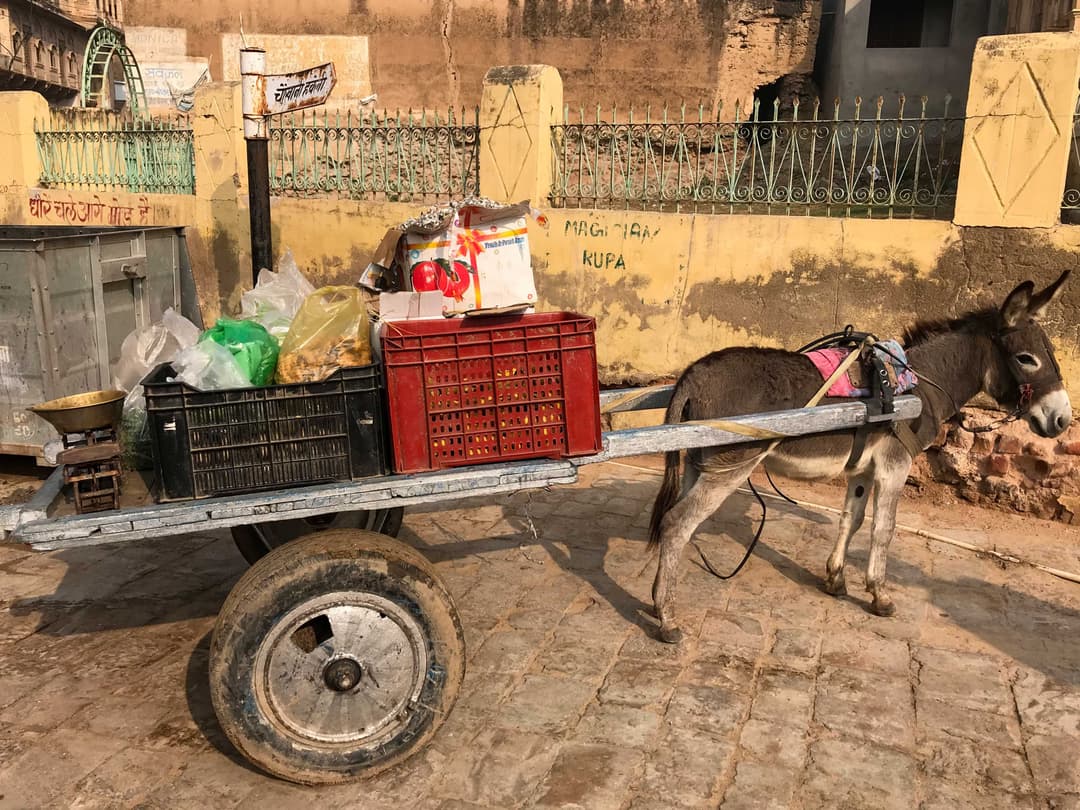

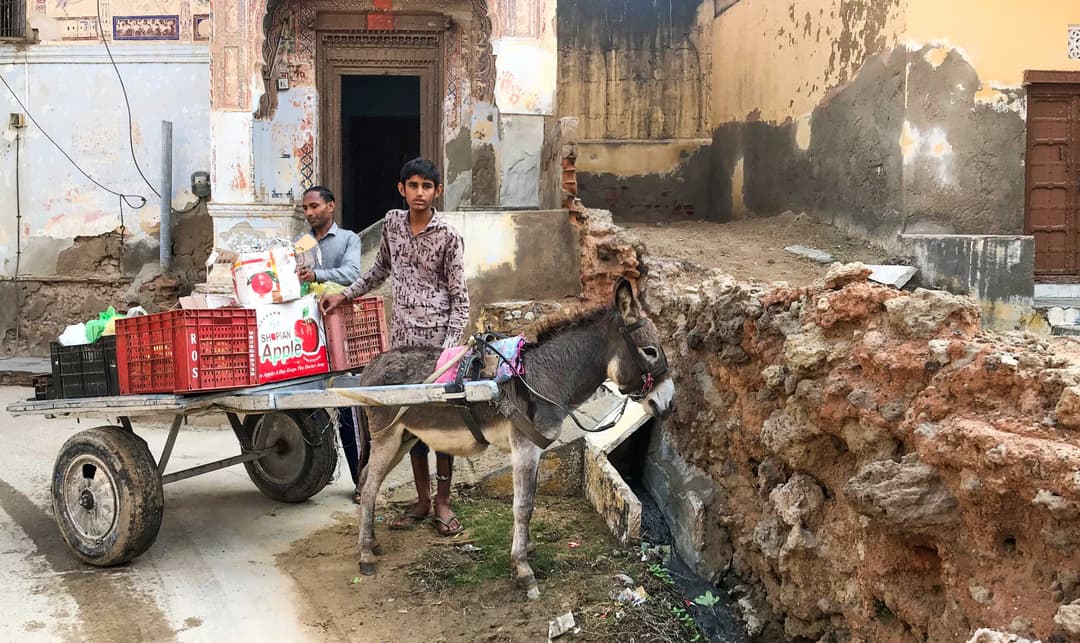
Every morning, Arif (on the left) and Sheru (the donkey) wander around the bylanes of Mandawa selling vegetables and fruits. Sheru pulls along the cart laden with cabbage, cauliflower, bhendi, brinjal, bananas and more, while 40-year-old Arif Mohammed, a former construction worker, and his helper (who refused to give his name), strike bargains with regular customers and new ones in this town in Rajasthan’s Jhunjhunun district. After around eight hours of occasional sales, man and animal stop by 5 p.m., having earned, Arif says, Rs. 300-400 for the day. He hurries on, reluctant to say more, it’s peak sales time and Sheru is impatient too.
There were once many Sherus in Rajasthan, particularly in Barmer, Bikaner, Churu and Jaisalmer districts. Even today, a fifth of India’s total donkey population is in this state. But the species, the 20th Livestock Census (2019) tells us, is declining fast. Across India, their numbers have fallen from 330,000 in the 2012 Livestock Census to 120,000 in 2019, a decline of around 62 per cent. In Rajasthan that fall was close to 72 per cent – from 81,000 to 23,000.