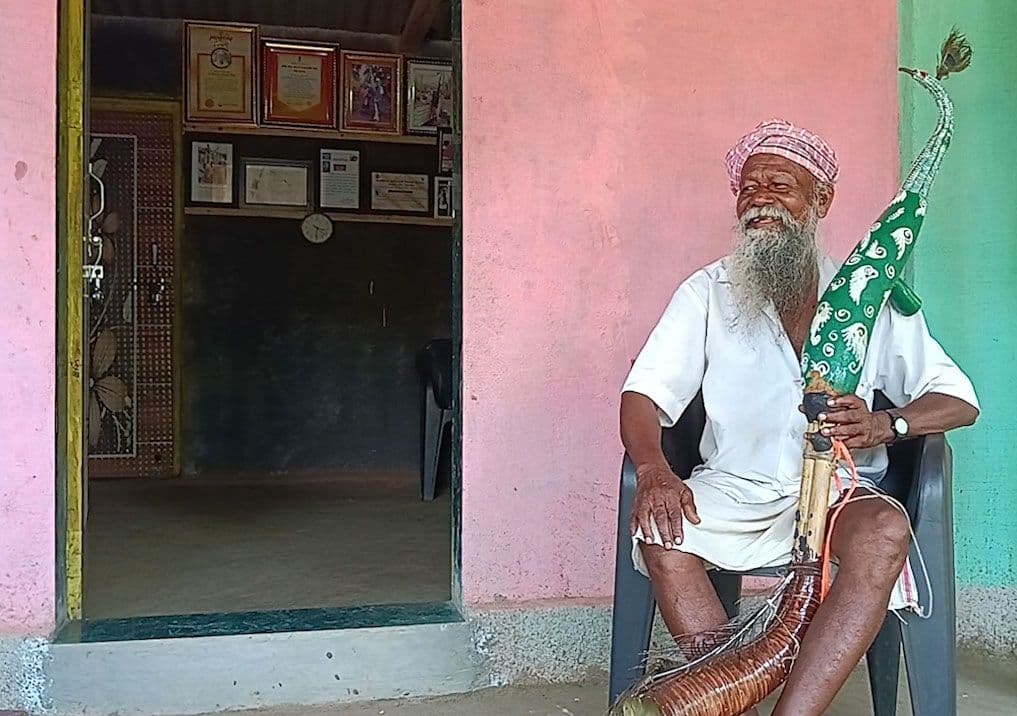
It was British rule. We had not attained freedom. In our village, Walwande, there was only one school for children of ‘big’ [upper caste] people. No school for the poor. I was 10-12 years old at the time. I tended the cattle. My parents thought ‘gayimage gela tar roti milal. Shalet gela tar upashi rahal [if I tended the cattle I would get to eat. If I went to school, I would go hungry].’ My mother had seven children to care for.
My father would say, ‘You have nothing to do when cattle are grazing. Why don’t you play tarpa? It helps your body [and health] and it also entertains you.’ Because of the sound no insects will come near the cattle.
I started playing it when I was in the forests and grazing grounds. People would complain, ‘for the entire day, Dhindya’s son was making noise – kyav kyav.’ My father said one day, ‘Till I am alive, I will make the tarpa for you. Once I am gone, who will?’ So, I learnt the art.
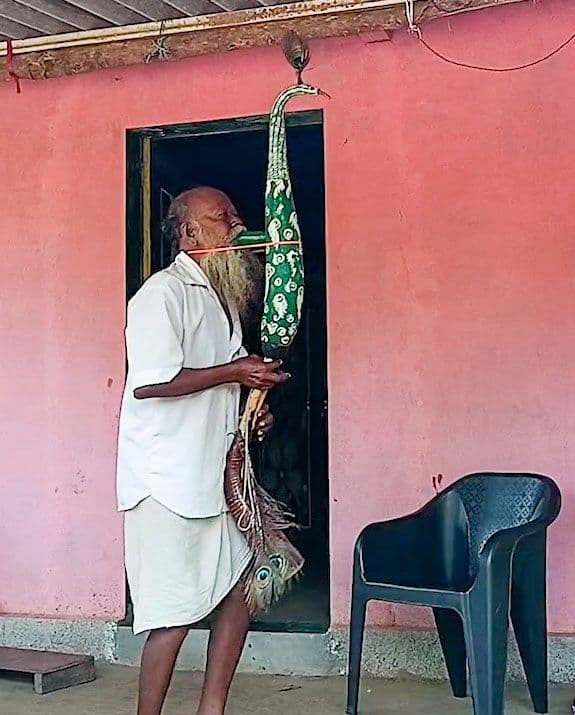
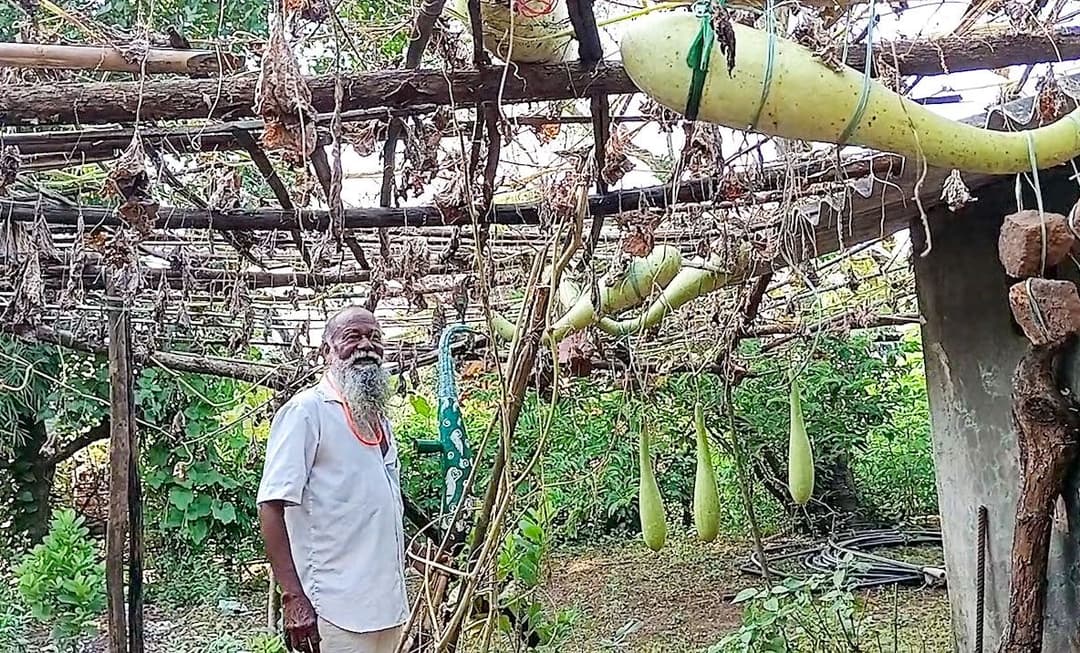
You need three things to make a tarpa. Leaves of the maad [palm toddy] tree to make the ‘sound’ [resonant horn chamber]. Two pieces of bamboo [cane], one for the female and one for male. The male has another small piece to tap and keep rhythm. The third thing that you need is dudhi [bottle gourd] for wind chest. When I blow into the blow hole the male and female unite and create the most attractive sound.
Tarpa is just like a family. There is a male and a female. When I blow some air, they unite and the sound that you get is magical. Like a stone, it is lifeless. But with my breath it comes alive and produces a sound, a musical note. It requires a chest full of air. One has to blow in the instrument and also make sure that your body has enough air to breathe.
It is the wisdom from god that we can make such an instrument. It belongs to the god.