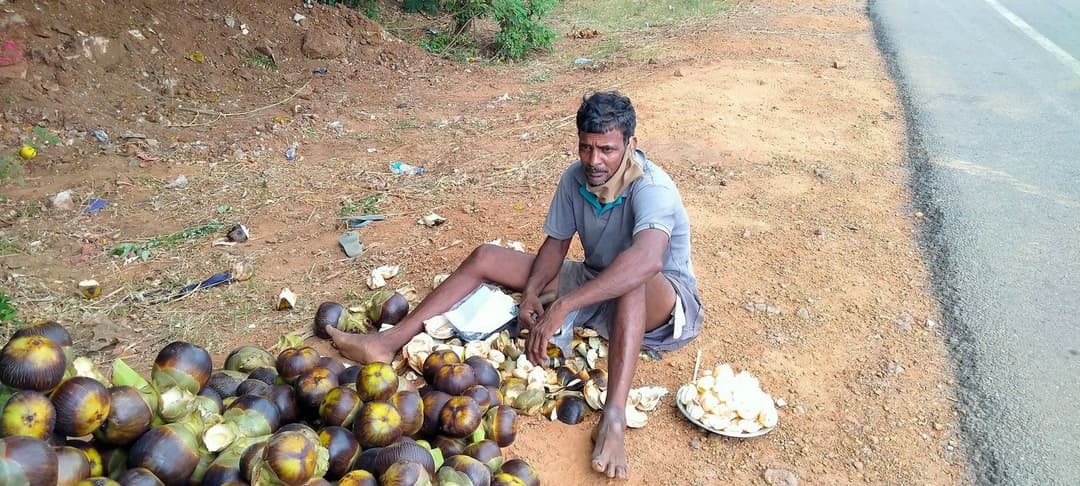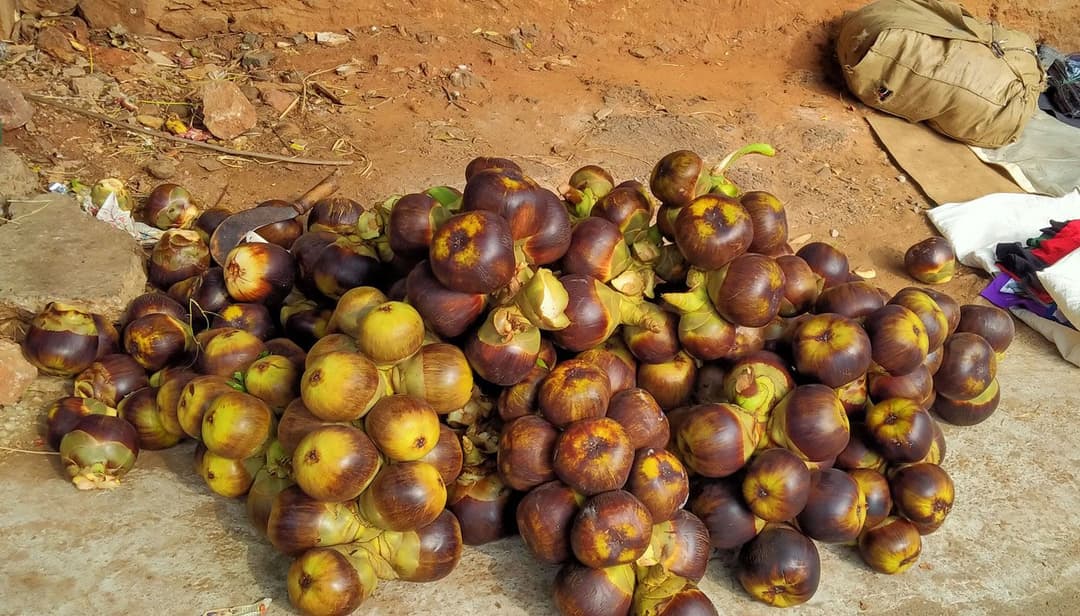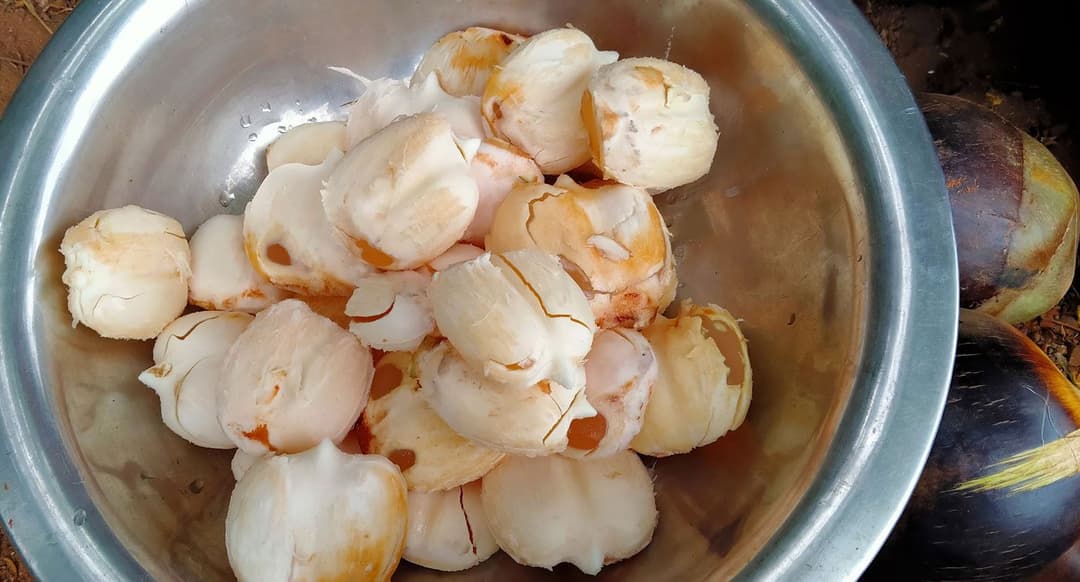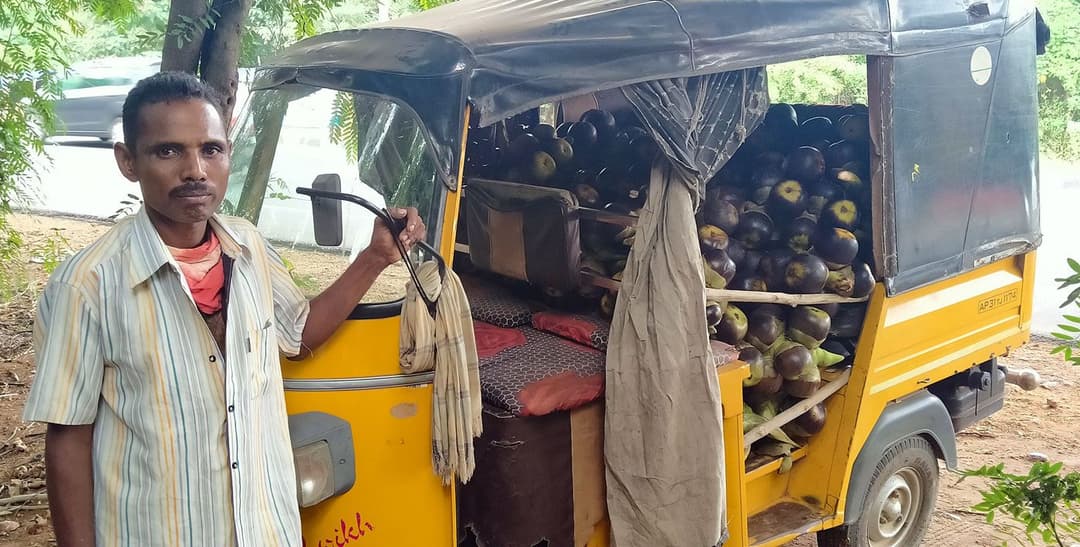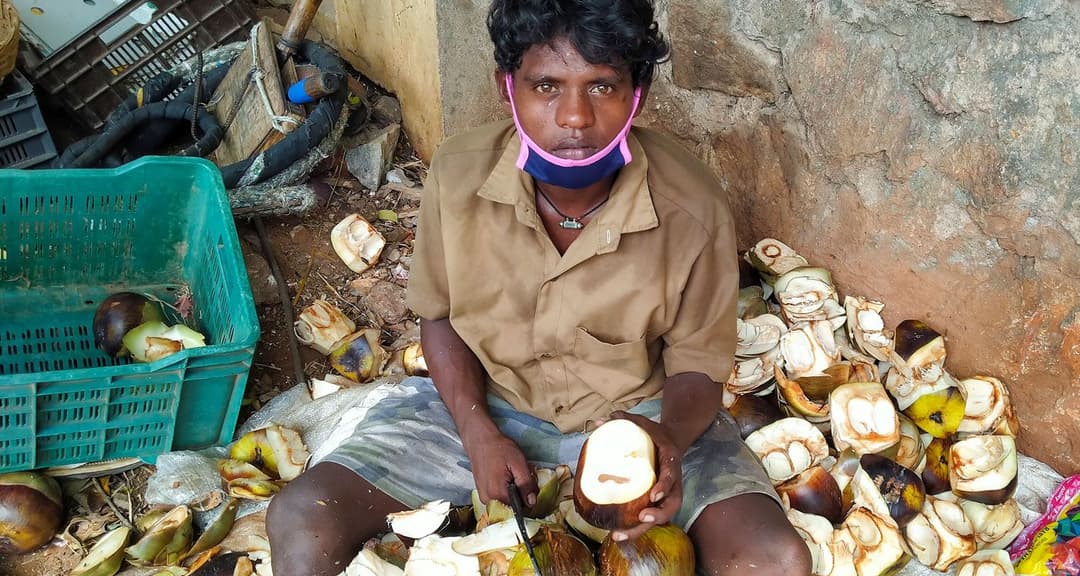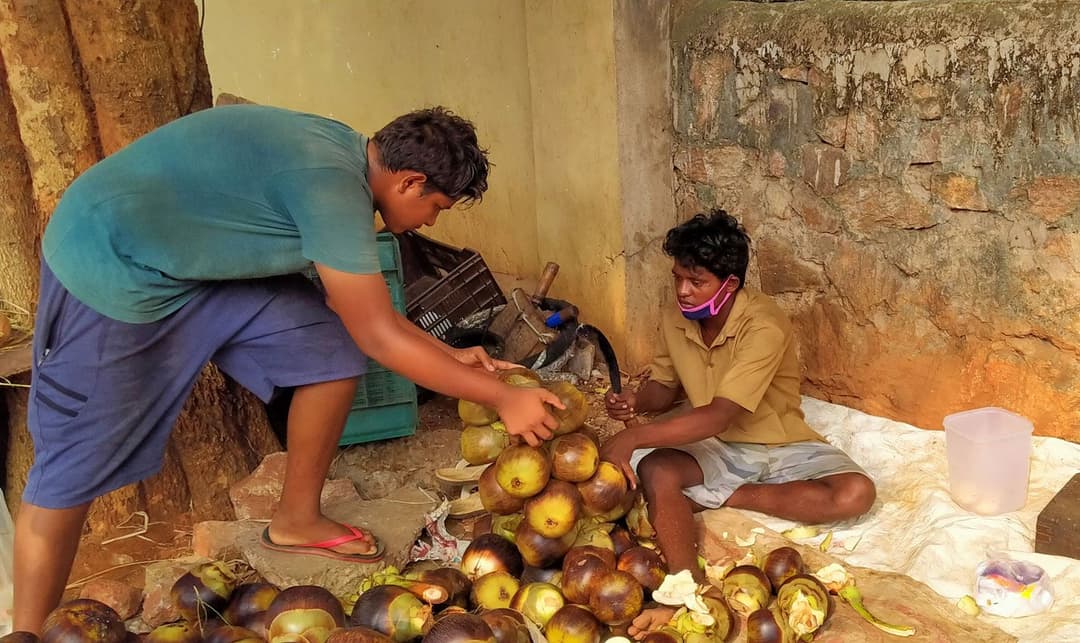

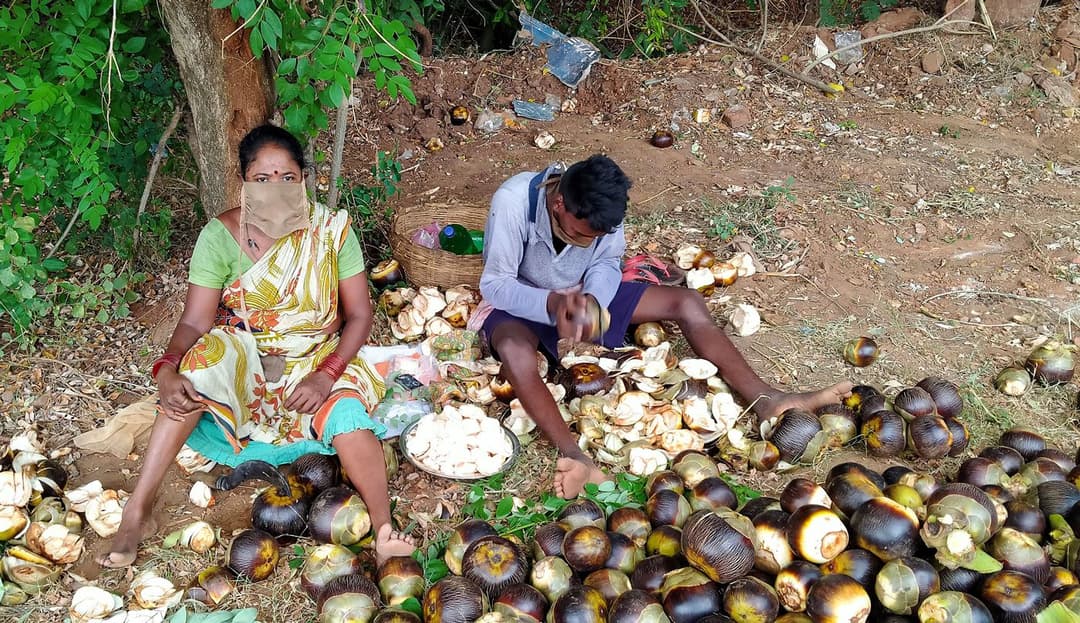
“I find it funny that people bargain,” said Kuppa Pappala Rao, a vendor of thaati munjalu, or palm fruit, in Visakhapatnam district of Andhra Pradesh. “Many come in big cars, wearing neat masks, requesting me to reduce the price of a dozen munjalu from Rs. 50 to Rs. 30-40,” he said, with a smile.
Pappala Rao wondered what people did with the Rs. 20 or so that they saved on the purchase. “I wonder if they realise that I need that money more then they ever will. Under normal circumstances, that would cover my bus ticket home.”
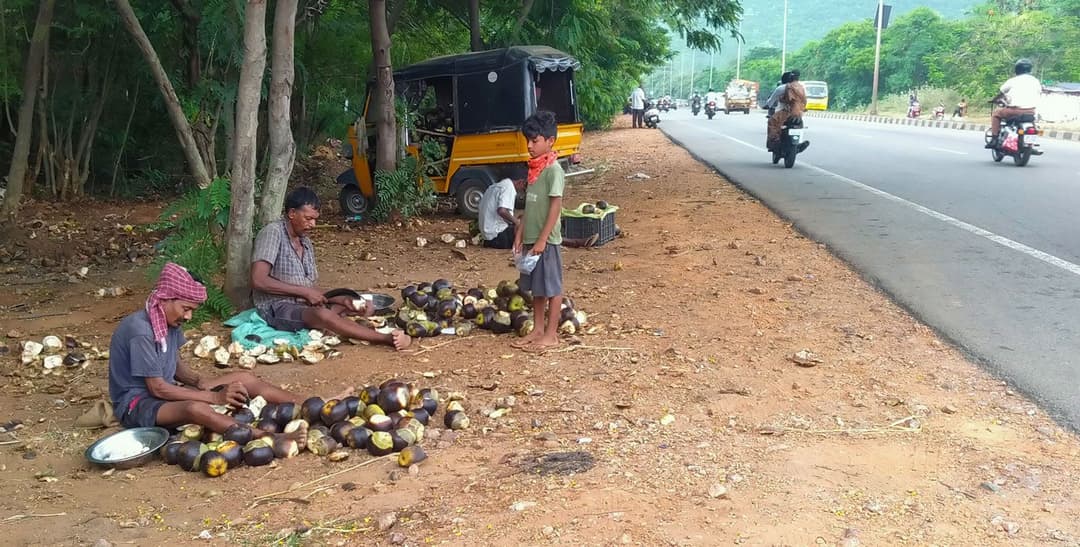
Like many other munjalu vendors, 48-year-old Pappala Rao – ‘protected’ by only a worn-out khaki-coloured cloth mask – was plying his trade along National Highway 16, near the Indira Gandhi Zoological Park in Visakhapatnam city on May 29. He has sold palm fruits for the past 21 years in the months of April and May. “Last year, we earned around Rs. 700-800 per day – munjalu has never disappointed us,” he said.
This year, however, munjalu vendors lost those critical weeks due to the Covid-19 lockdown. They began selling the fruit only in the last week of May. “We could neither sell the fruit nor work anywhere else,” said 37-year-old Kuppa Rama, Pappala Rao’s wife, as she packed a dozen palm fruits for a customer. Rama and Pappala Rao travel together from their home in Anandapuram mandal of Visakhapatnam district to sell the munjalu in the city, 20 kilometres away.
“The sales haven’t been great this year. We can sell only 30-35 dozen munjalu in a day,” Rama explained. “At the end of the day, after the transportation and food expenses, we are left with Rs. 200-300," said Pappala Rao, remembering a time last year when he sold 46 dozen fruits in a day. This year, he and Rama could sell munjalu for only about 12 days, until June 16. With the season nearing an end, their sales dropped to roughly 20 dozen palm fruits a day in June.