
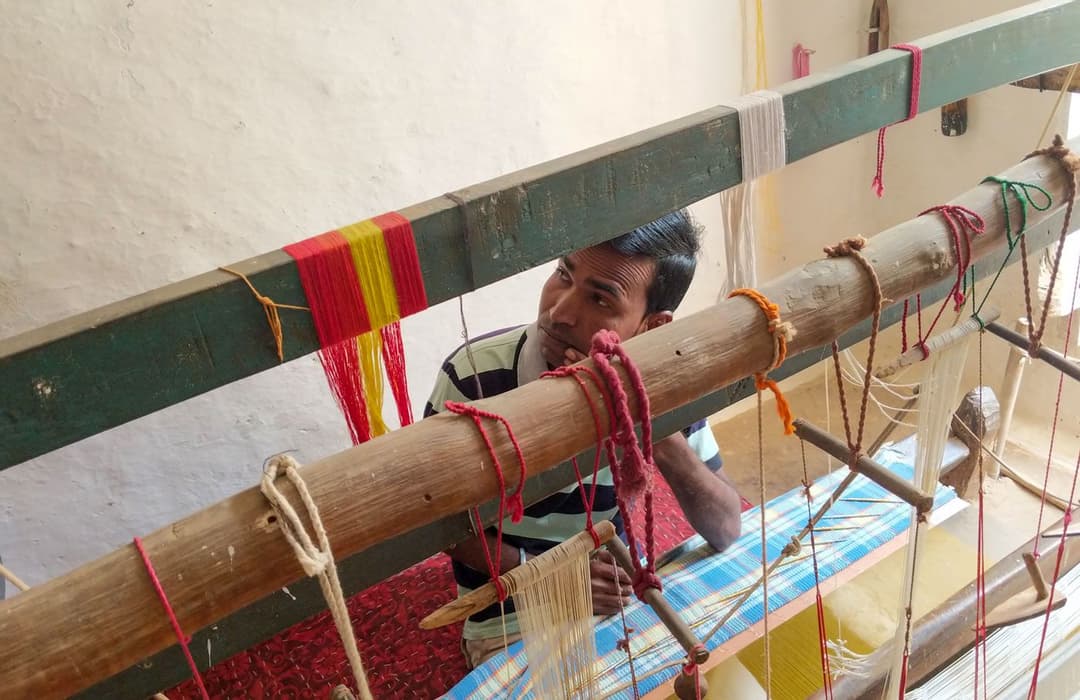
“I have run out of thread. I am running out of cash. But I can’t give the [ready] sarees to the seth because of the lockdown,” says Suresh Koli, a weaver of Chanderi fabrics in Burhwar village.
Barely a week into the Covid-19 lockdown, the last spools of yarn that 31-year-old Suresh was left with had been woven. Three completed sarees were waiting be handed over to the seth, Anandi Lal, a trader of Chanderi textiles from Pranpur village.
The weaver’s village is in Lalitpur district of Uttar Pradesh, near the Rajghat dam on Betwa river. Across the river, in Madhya Pradesh’s Ashoknagar district, is Chanderi town – the centre of handloom textiles by the same name. The seth’s village, Pranpur, is close to this town.
Police barricades have been guarding the UP-MP border between Burhwar and Chanderi, 32 kilometres apart by road, isolating Suresh from Anandi Lal in the lockdown. “I don’t understand what is happening. Those who were returning home from Delhi were taken away by the police,” says Suresh. “How can our village ever get the bimari [disease]? But the government has locked down our district and our lives have turned upside down.”
Suresh had asked Anandi Lal for Rs. 5,000 as payment for the three completed sarees. “He arranged to send only Rs. 500, saying there will be no full payments until the markets open up,” he says.
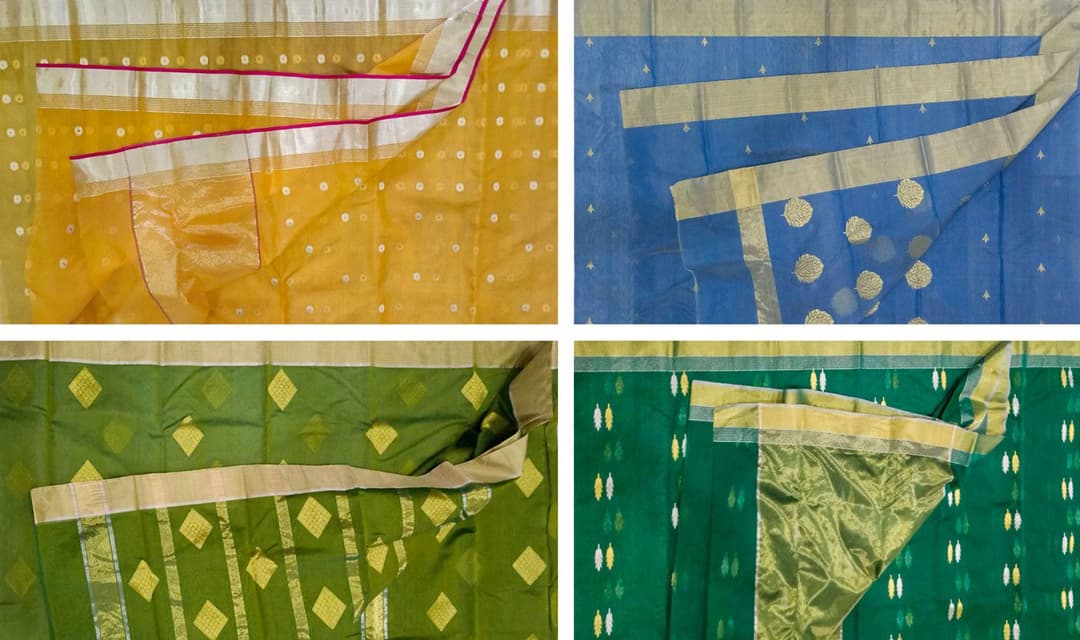
Before the lockdown, the seth would give Suresh the raw materials – cotton and silk yarns, and zari threads – and commission him to weave sarees, dupattas, stoles, soft furnishings or just fabric. He would also give him the designs. Rates were fixed per order and payment was made at the time of delivery, always in cash.