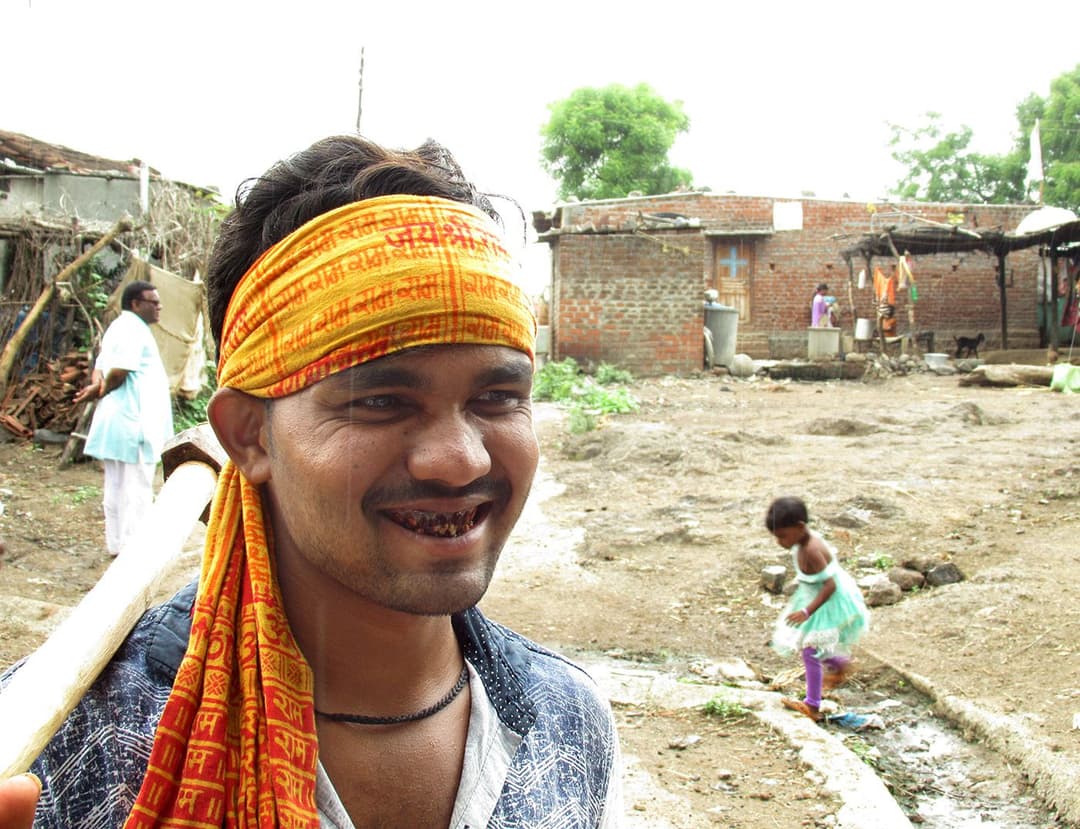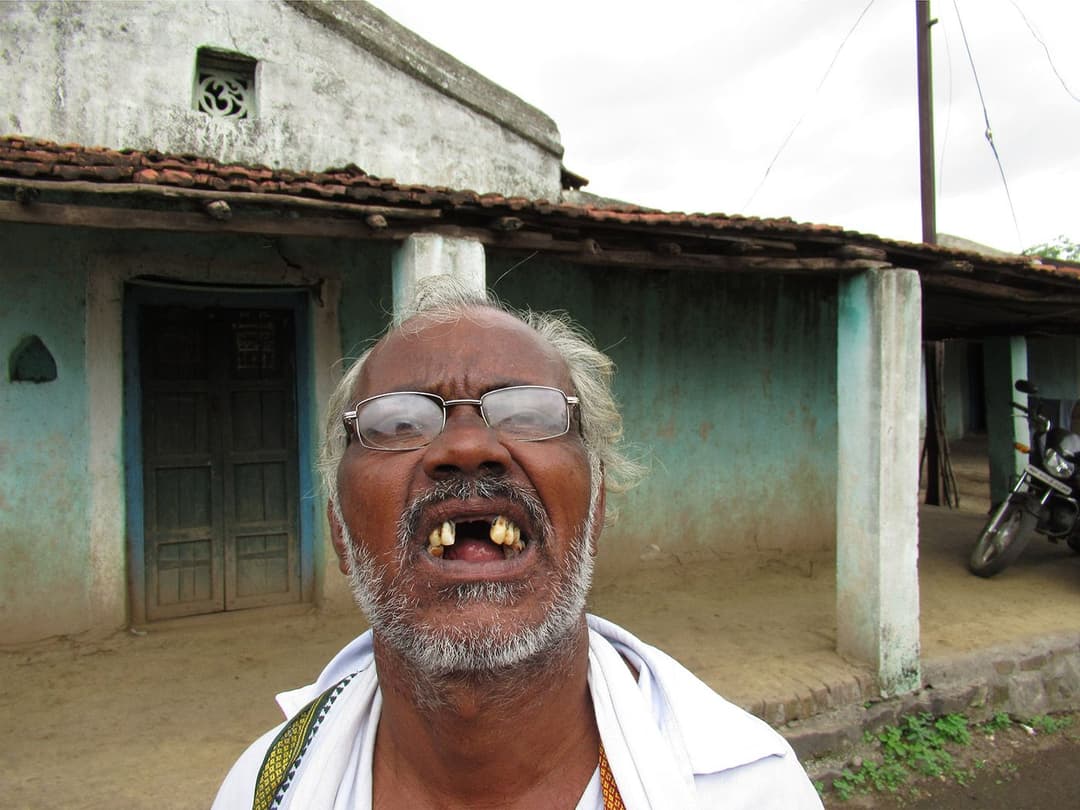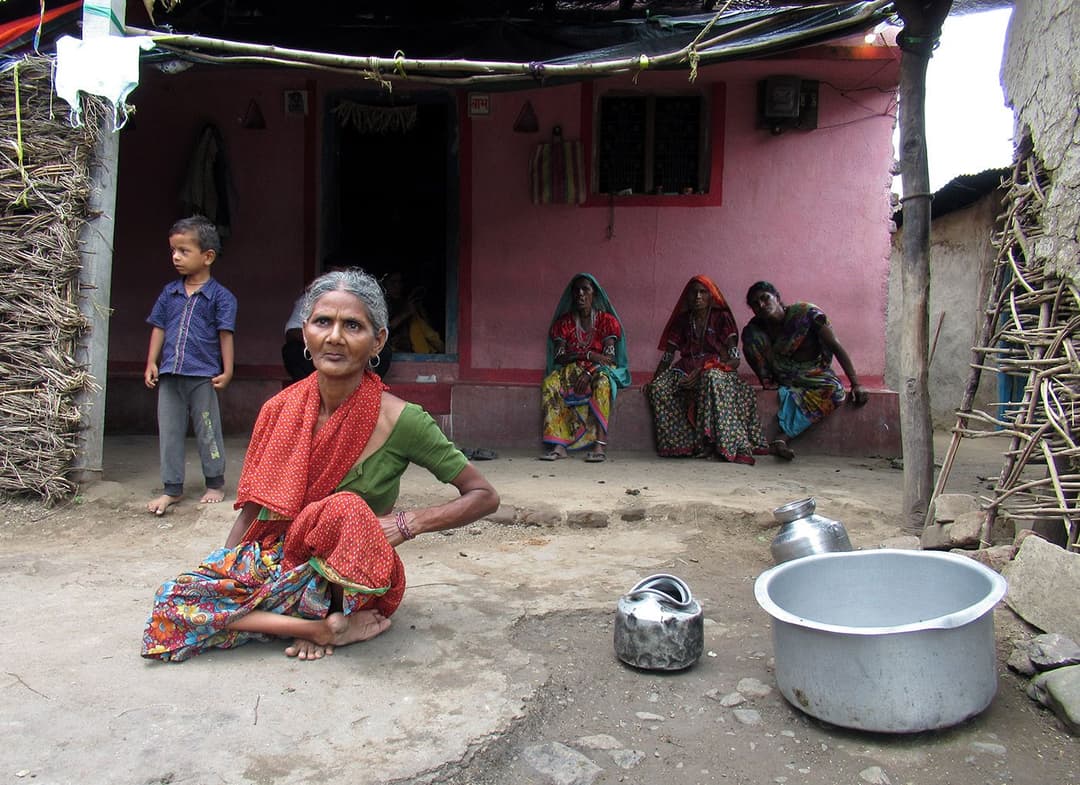
Not many in Sawarkhed village of Nanded’s Mahoor taluka smile or laugh unreservedly. When interacting with a stranger, they are mindful of their mouths. “It is embarrassing,” says Rameshwar Jadhav. As he speaks, you can see that all his teeth are rotten and misshapen, their colours ranging from yellow ochre to dark brown.
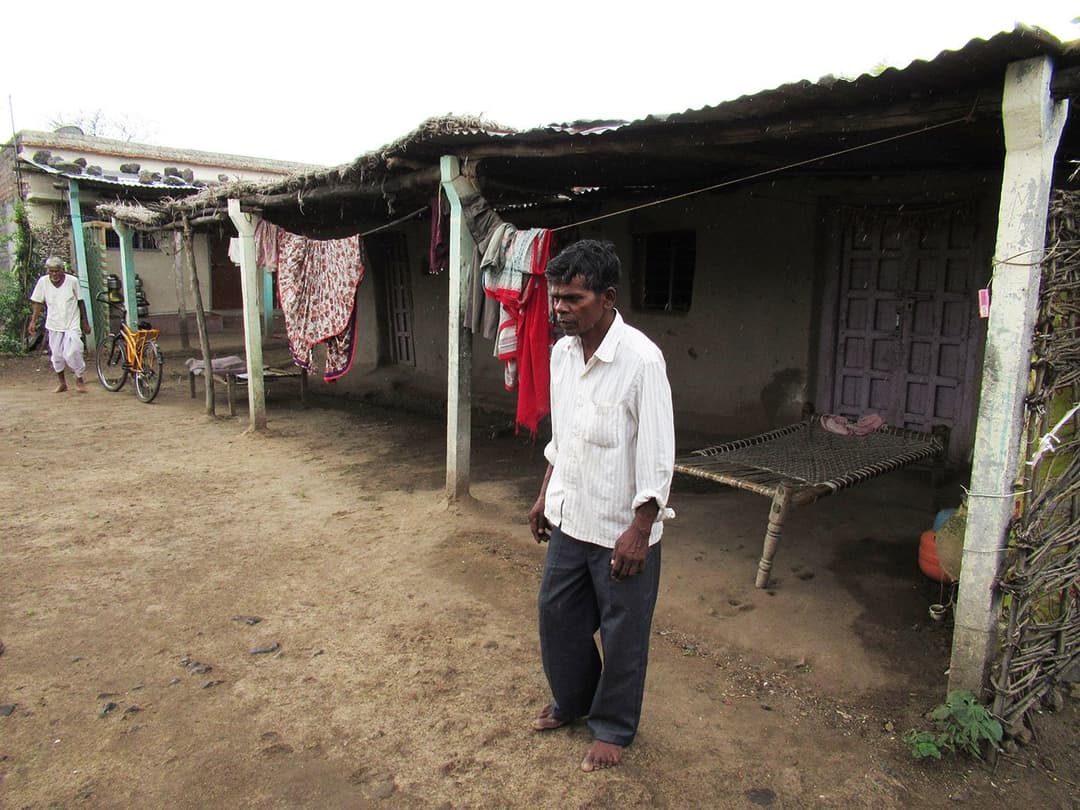
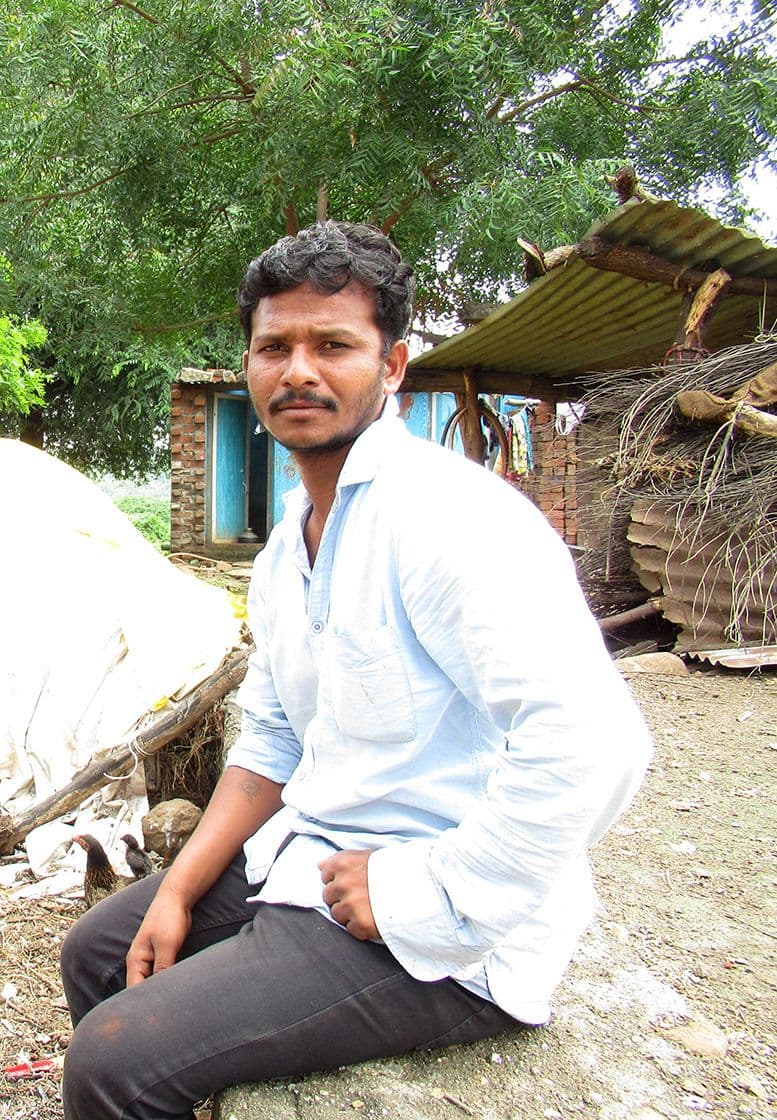
Ramaeshwar, 22, an agricultural labourer, is not the only one with this problem in Sawarkhed, a village of around 500 people. Almost every adult’s teeth here have deteriorated in varying degrees. Many also have a limp or are permanently hunched over as they slowly make their way through the narrow alleys and green fields. Those who can walk, need frequent breaks. The entire village appears to move in slow motion in a different era.
This tableau has been created by what’s inside the earth, beneath the feet of the villagers: the groundwater here contains fluoride. This is a chemical that is naturally present in soil, rocks and groundwater. But in concentrated form, it can be extremely harmful. According to the World Health Organisation, more than 1.5 mg of fluoride per litre of water is dangerous for consumption. In Sawarkhed, it was 9.5 mg when the Groundwater Surveys and Development Agency (GSDA) checked the fluoride level around 2012-13.
“The formation of flourosis depends on the extent of flouride in water, and therefore its progression varies," says Dr. Ashish Ardhapurkar, a physician based in Nanded town. Once the deterioration sets in, he says, it cannot be reversed. "But children are protected from it. They become vulnerable to dental flourosis only after they develop wisdom teeth, and to skeletal flourosis after their bone growth, which mostly happens after the age of six."