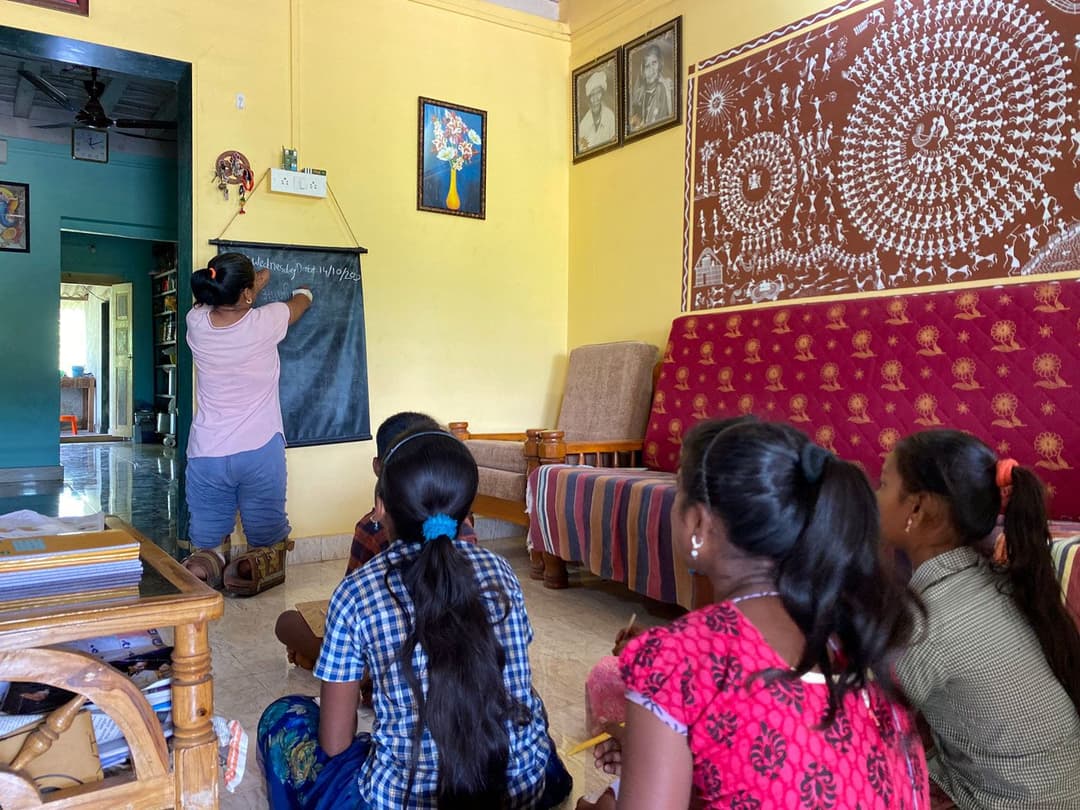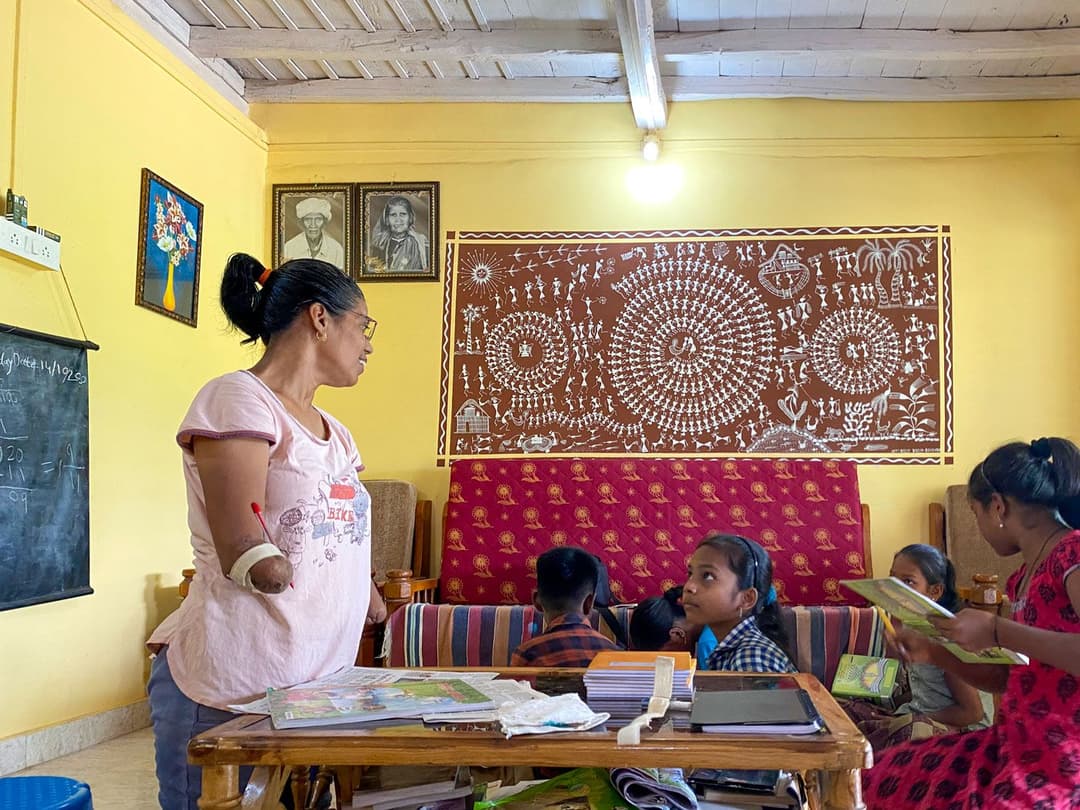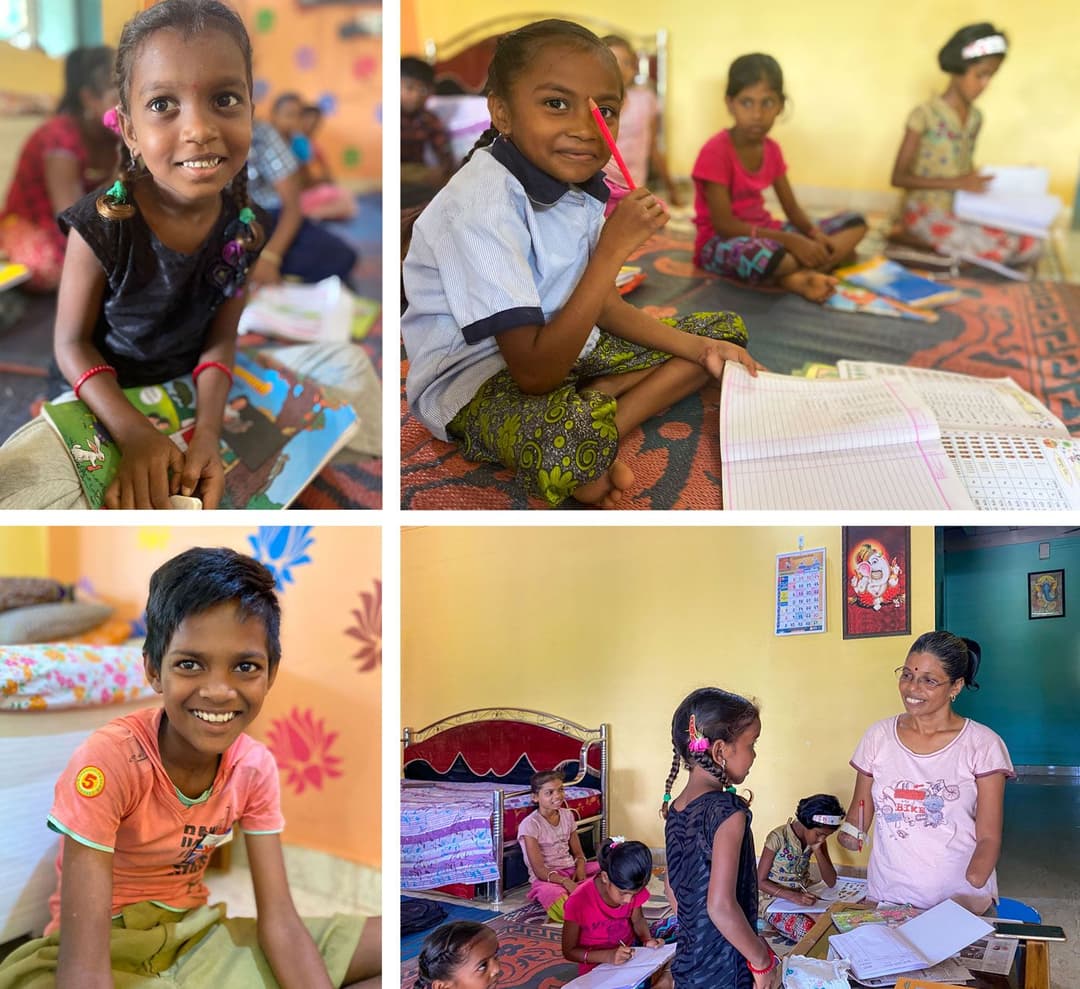
“Teen aani don kitti? [How much is three plus two?],” asks Pratibha Hilim. Sitting before her on the ground is a group of around 10 kids, ages ranging from 7 to 9. They don’t respond. She writes on a chalkboard, looks back at the children and signals to them with her arms and a tilt of her head to repeat, “Panch [five].”
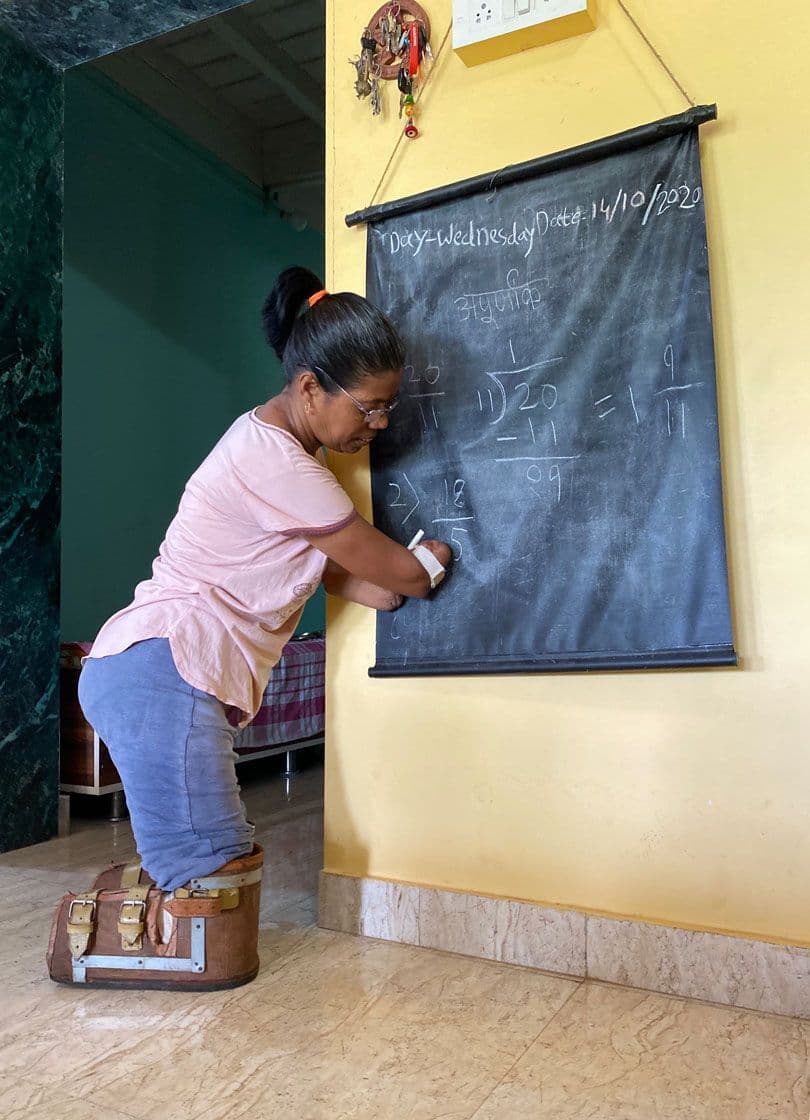
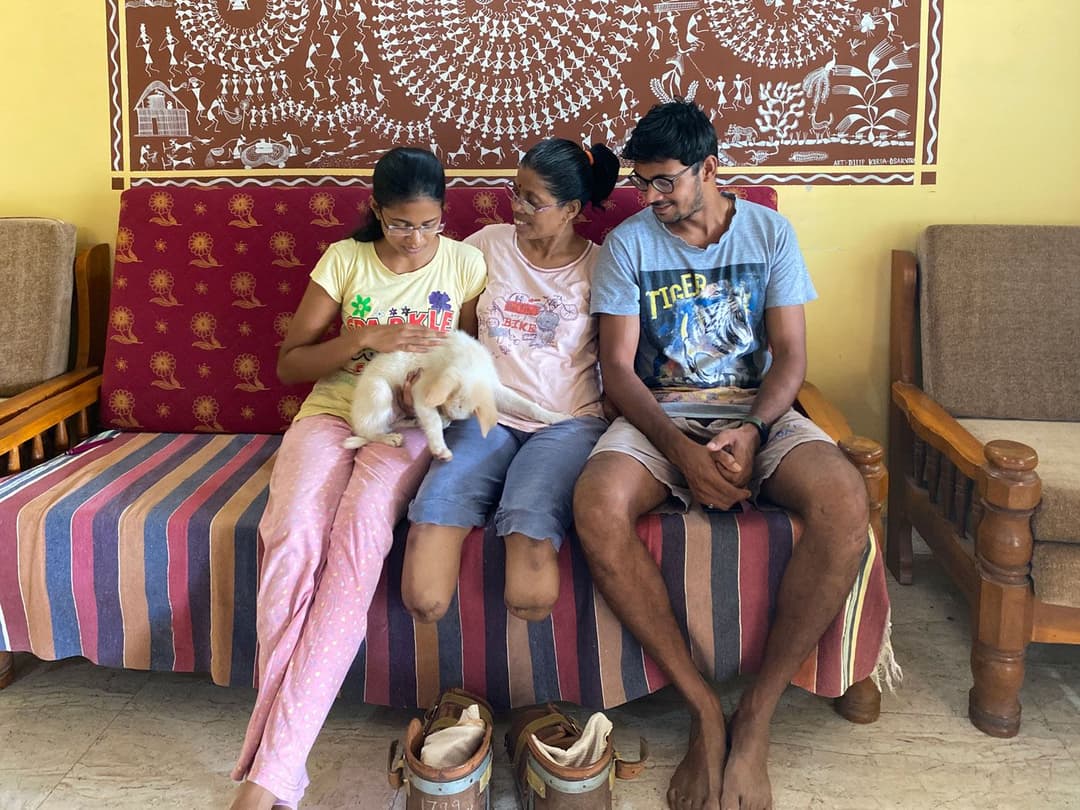
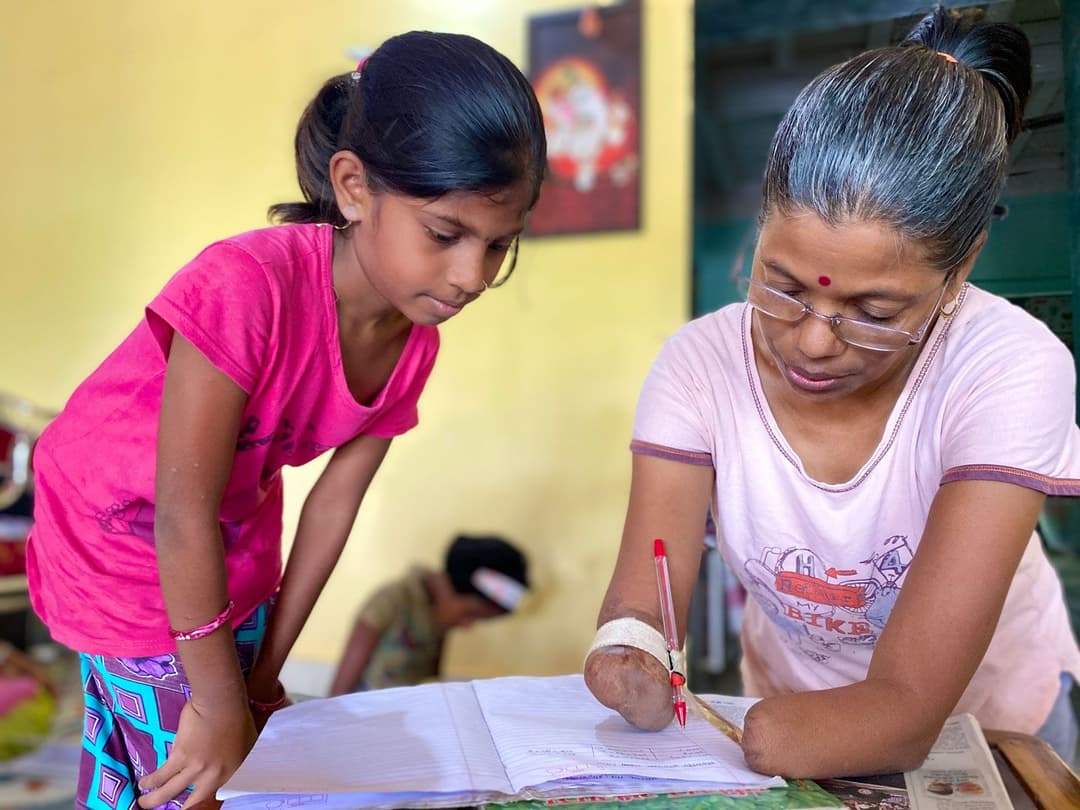
Pratibha is standing with the support of leather-and-steel stump protectors with rubber soles, which are attached to both her knees. A piece of white chalk is strapped near her elbow.
‘School’ is in process, and it’s in the Hilim family’s three-room cement house in Karhe village of Palghar district. Here, since July 20 this year, Pratibha has been teaching English, History, Marathi and Maths to around 30 Adivasi children of this village in Vikramgad taluka of Maharashtra’s Palghar district. The kids come in batches from 10 a.m. to 1 p.m., carrying textbooks provided by the two zilla parishad schools in this village of 1,378 people.
“Since the operation, every small task takes longer to complete. Even writing with this is difficult,” says Pratibha, while a student helps fix a chalk on her upper arm using a velcro strap.
Until last year, Pratiba Hilim, who belongs to the Warli Adivasi community, had been teaching for 28 years in local zilla parishad (ZP) schools. After getting married at the age of 20, she shifted to Bhiwandi city, around 100 kilometres from Karhe, where her husband worked – Pandurang Hilim, 50, is now a senior clerk in a state irrigation office. When he was transferred to Kalwa town in nearby Thane district in 2015, she commuted from there to Bhiwandi to continue teaching.
In June 2019, soon after she had started working in a new ZP school in Bhiwandi, she visited – as she usually did once a month – the Hilim family home in Karhe. That’s when her troubles started. That month, 50-year-old Pratibha was diagnosed with gangrene, a condition that occurs when body tissues die. This is usually a result of a loss of blood supply due to an underlying illness, injury or infection.
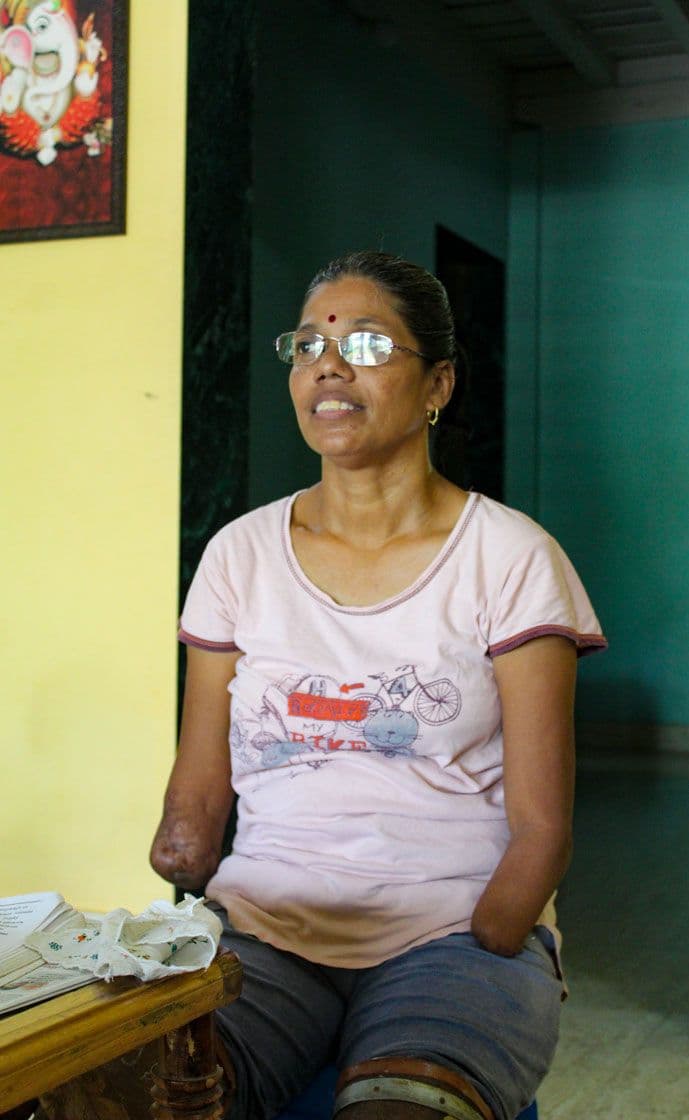
Soon after, both her arms below the elbows, and both her legs below the knees, had to be amputated.