

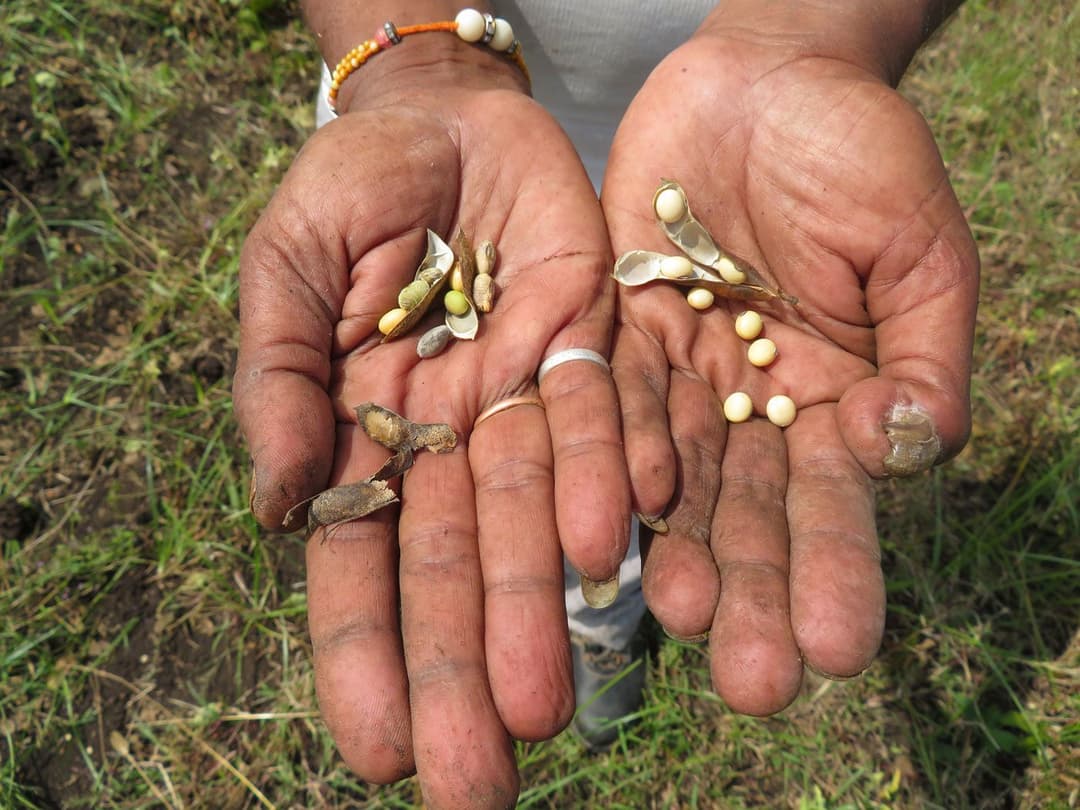
“See these clean white beans?” asks Ashok Gatkal, holding them in a palm. “The market rate for these is 3,000 to 3,500 rupees per quintal. But this time most of the beans have black spots and fungus,” he adds, holding the damaged soybeans in the other palm. “There is no market for such beans. I am not going to earn anything from this.”
Gatkal was clearing his damaged crop with a sickle when I visited his farm in Rathgalli village on November 11. He was working alone. “How can I afford to pay wages [to agricultural labourers]?” he asked, wiping off the sweat dripping from his forehead and nose.
The crops on Gatkal’s three acres were completely submerged for close to two weeks in October. With the heavy rain last month, almost 90 per cent of his soybean crop rotted. In Nashik district – where his village is located, in Dindori taluka – it rained around 173.2 mm between 1 October to 12 November. The normal rainfall during this period is roughly 71 mm (notes the India Meteorological Department).
The low rainfall in Rathgalli in June, at the beginning of the monsoon, had picked up by the end of the season in September, giving 51-year-old Ashok some hope of a decent yield. But the unexpected October rain has hit him hard. Towards the end of October, he informed the talathi’s office about his crop loss, but no one had arrived for an inspection even two weeks later.


