
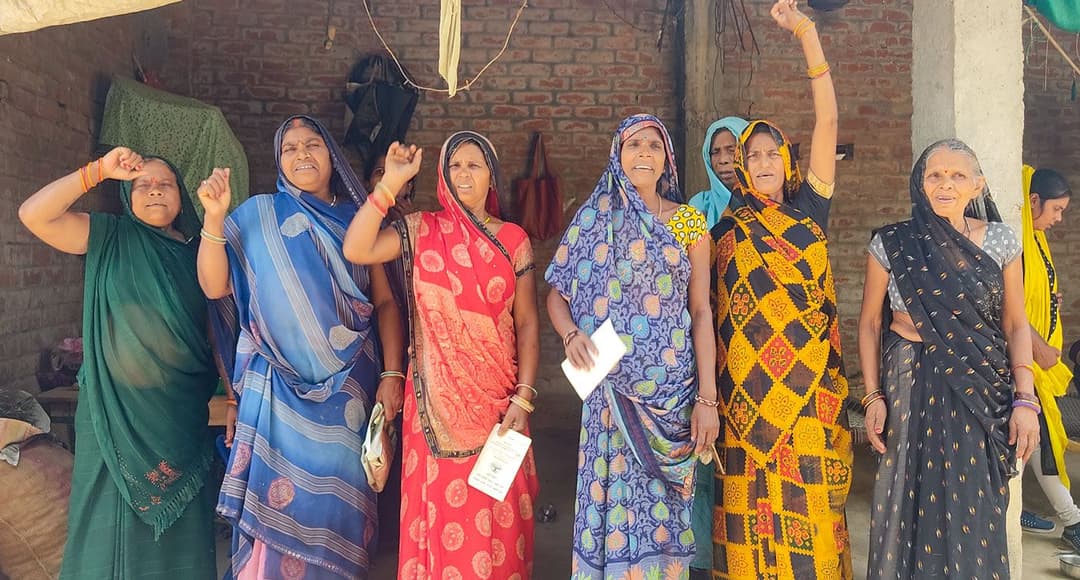
The last time Parvati got work under MNREGA was a year ago, in May 2023. It was for just five days.
Parvati (she uses just this name) spent the time levelling a road in her village of Gaur Madhukar Shahpur. The 100 days a year, assured by the state under MNREGA (Mahatma Gandhi National Rural Employment Guarantee Act) was never on offer to this 45-year-old daily wage labourer who belongs to the Jatav (Scheduled Caste) community. “We are managing to survive by filling half our stomachs,” she says.
The state failed her again when the couple’s application for a house under the Pradhan Mantri Awas Yojana was rejected in 2020. Unable to wait anymore, Parvati and her husband Chotey Lal took a loan of Rs. 90,000 from relatives for construction of a two-room pucca house.
“If someone comes asking for a vote, I want to know how my name was missing in the list of beneficiaries for a house, but appears in the voters' list?” she adds, miffed. Parvati’s husband, who was also employed under MNREGA, couldn’t work after he suffered a paralytic attack five years ago. Today he occasionally goes to a labour mandi in Varanasi city where daily wages are Rs. 400 - Rs. 500.
MNREGA guarantees employment of 100 days to rural unskilled labour. But a common complaint across villages here in Varanasi district is that only 20-25 days’ work is available annually since “the last two pradhani”, referring to the last two terms of the sarpanch, or roughly 10 years.
Parvati is now saddled with a debt she should never have had in the first place. With no help from the state, she relies on wage work in the fields of the Thakur community who give her 10 kilograms of foodgrains for the roughly 15 days of work during the harvest and sowing seasons.


