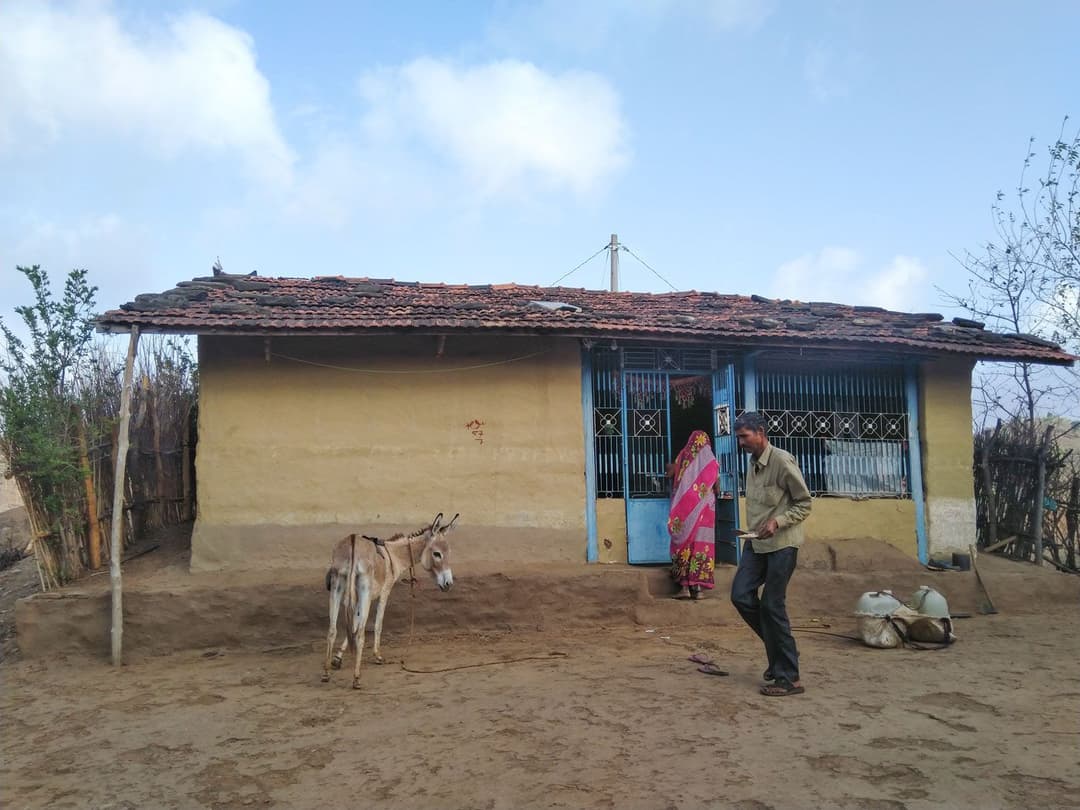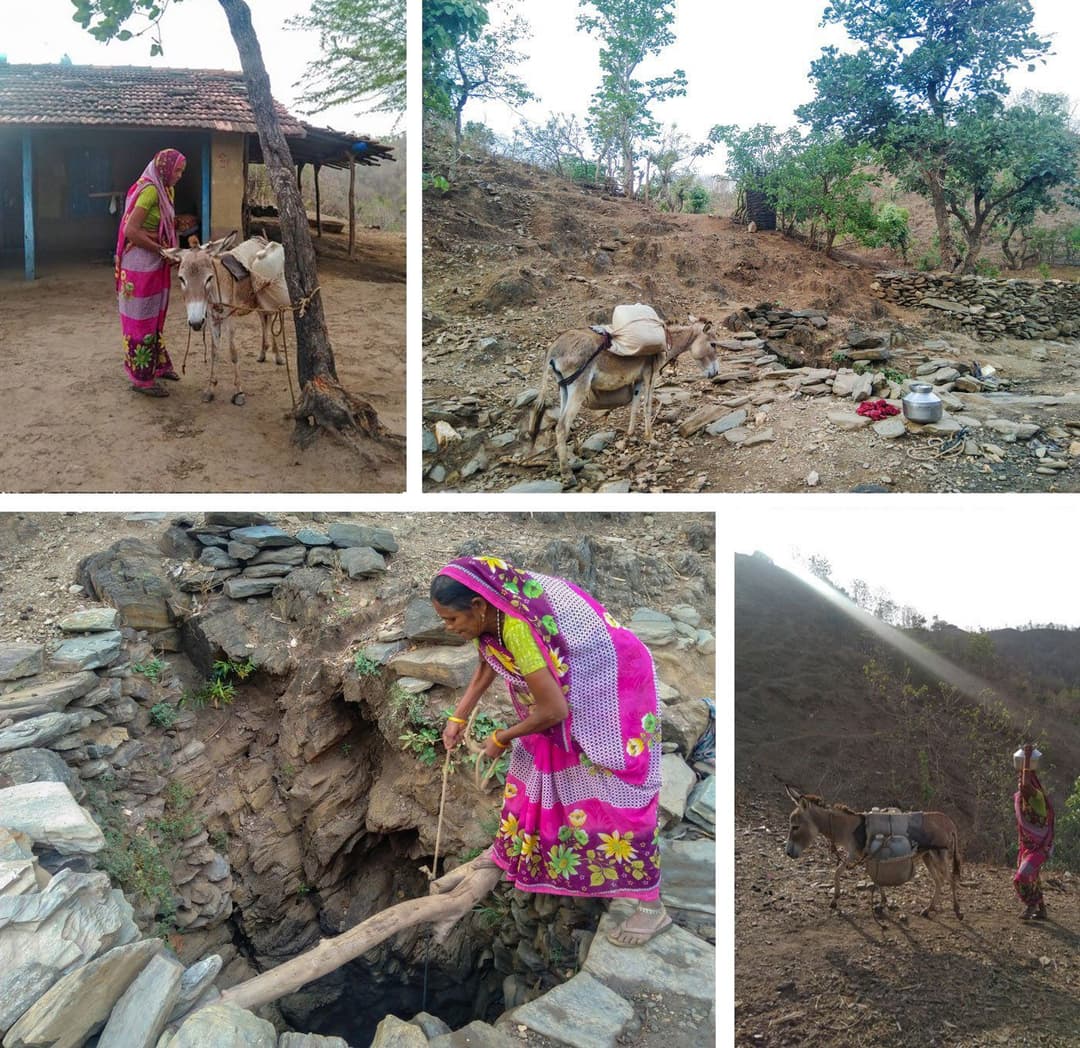

"This is the third time in the morning that my gadha is carrying water uphill," sighed Dali Bada. "He gets tired and we do not have enough food for him.”
When I reached 53-year-old Dali Bada’s house, she was feeding the donkey leftover urad dal and grass. Her husband, Badaji, was looking to the sky – it was mid-June. "It will rain, I think," he said, speaking in the Bagri Rajasthani language. "During the monsoon, the water gets very dirty and my wife has to walk with our donkey in the rain to fetch that dirty water."
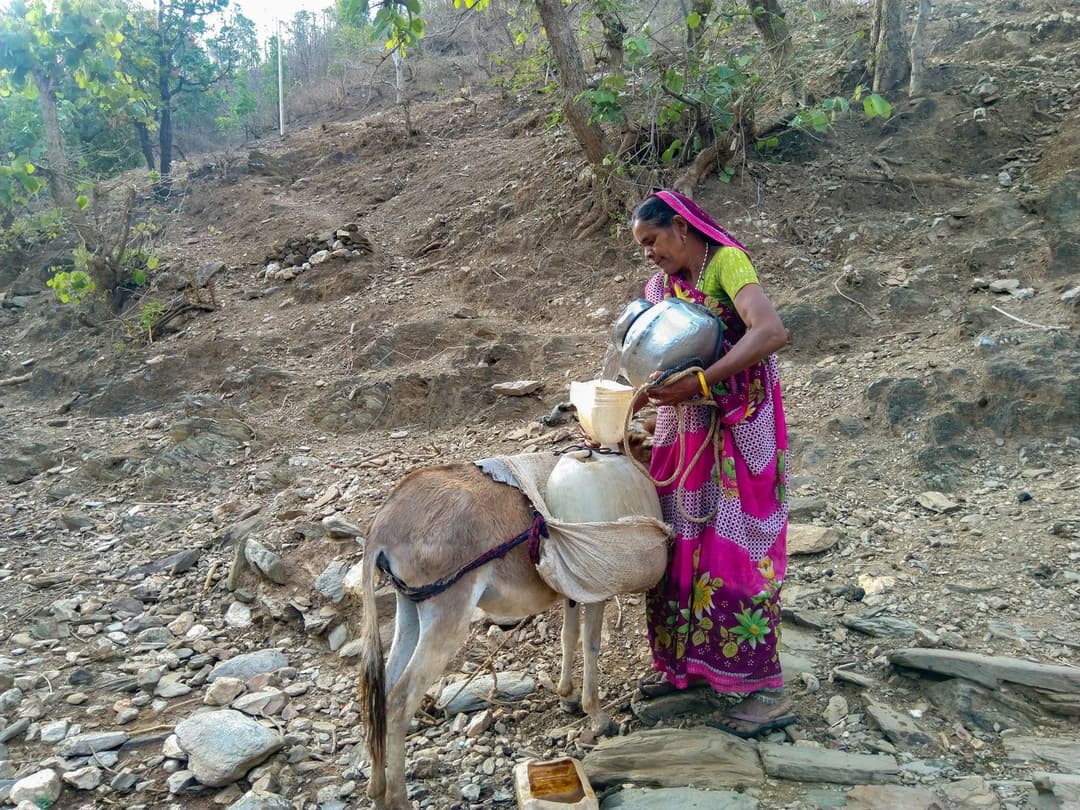
In Pacha Padla, a village of around 1,000 people in Rishabdeo tehsil of Rajasthan’s Udaipur district, roughly 70 kilometres from Udaipur city, humans and animals drink water from the same rain-fed stream. When that dries up, the people dig pits in the ground to draw out water. When it rains and these large holes get filled with waste material, the people of Padla dig some more in the hope of coming across clean water. And many families use pet donkeys to carry drinking water uphill – Padla is referred to by people from other villages as the place where gadhas are used to carry water.
The water the donkeys carry is also used for other household purposes, though most of the time the women try to carry utensils and clothes to wash at the stream or pits. The people here say the donkey is an investment that gives returns all through the year by tirelessly carrying water uphill in all months.