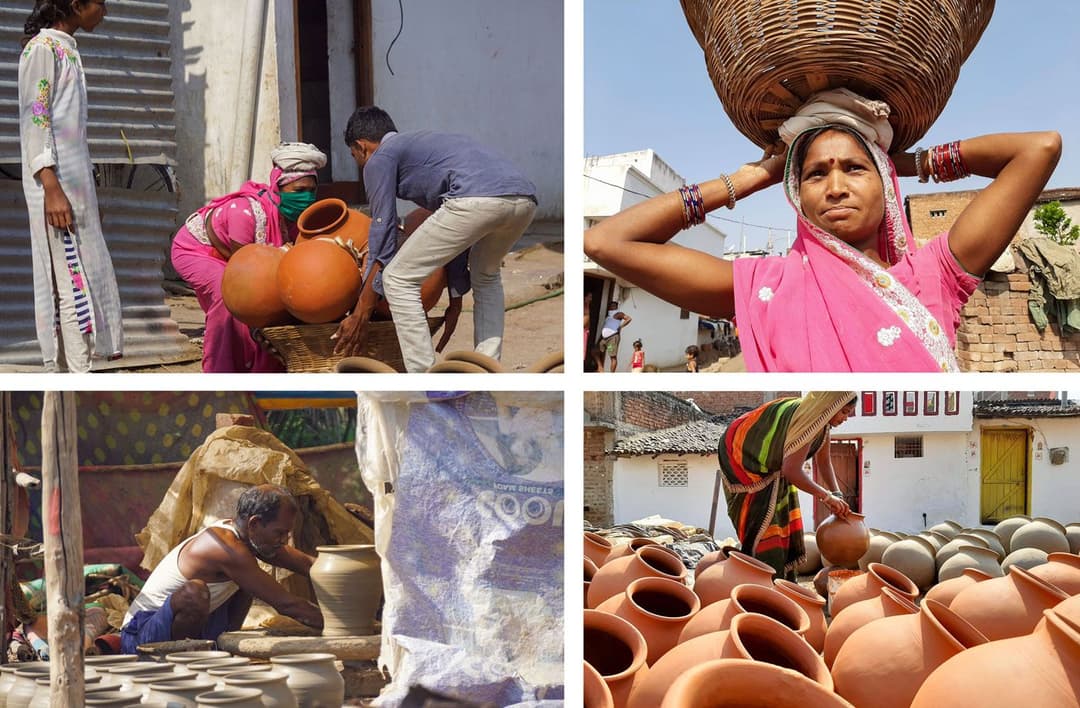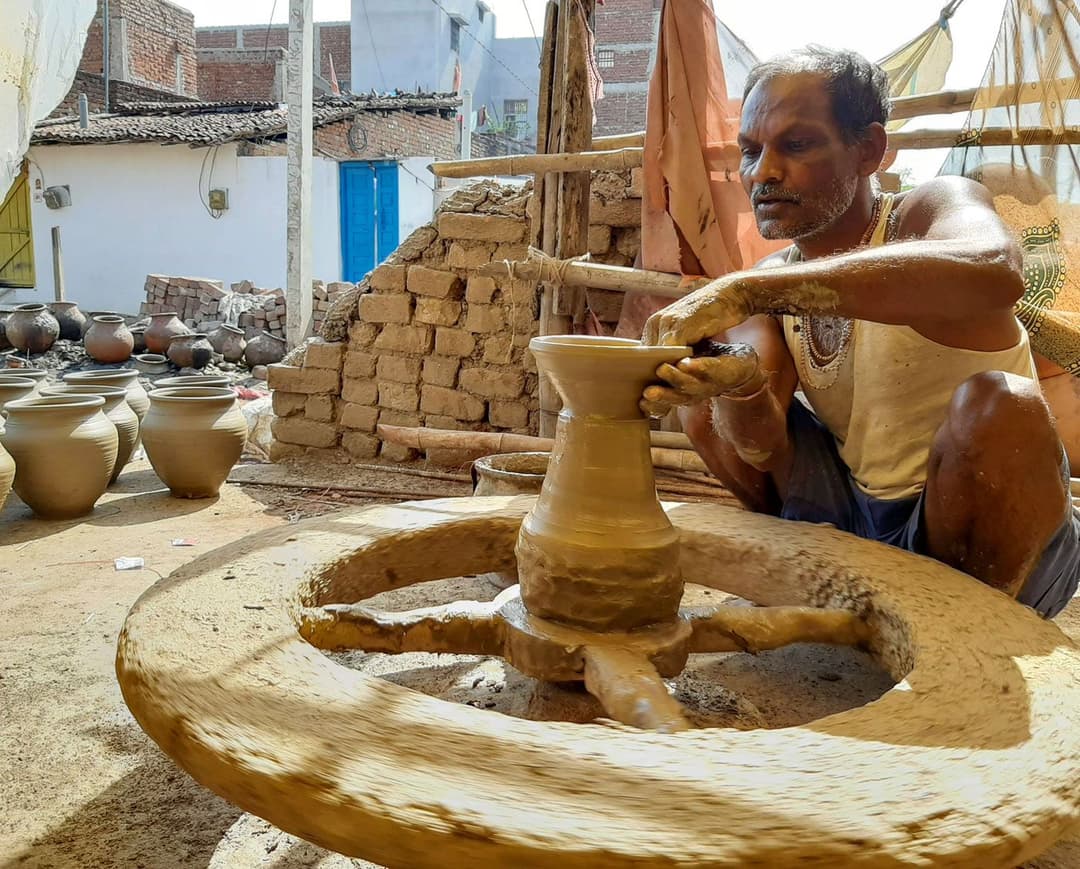
“We are losing the summer! This is the season to sell the [most] clay pots, but we have not been able to sell much,” said Rekha Kumbhkar, while painting a pot before baking it in an oven fire outside her house. During the lockdown, she was making pots inside her house, only sometimes moving the work outside.
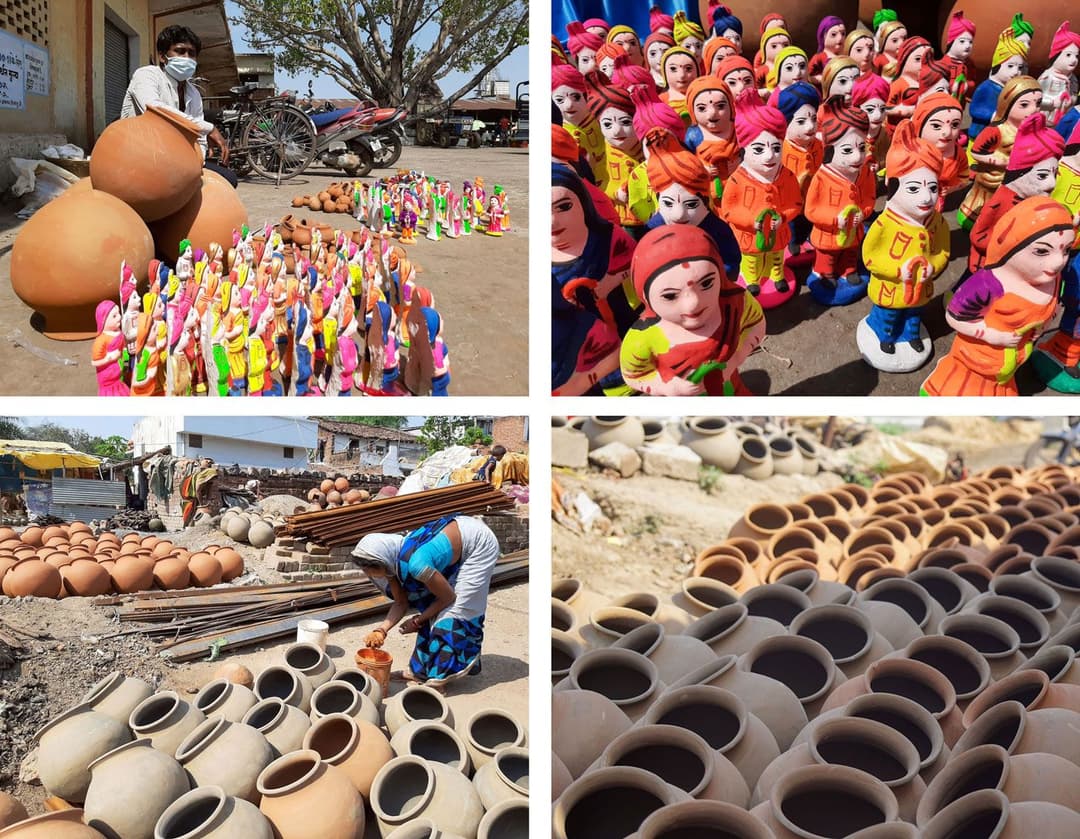
Red clay pots that would normally have been sold in the market from March to May were spread out everywhere outside the houses in Kumharpara, the potter’s colony in Dhamtari town of Chhattisgarh. “Like the vegetable vendors in the market are allowed to sell between 7 a.m. to 12 p.m., we should also be allowed to sell the pots, otherwise we will be in trouble,” Rekha had said.
Just then, Bhubaneswari Kumbhkar had returned to Kumharpara with an empty bamboo basket on her head. She said, “I have been to various colonies in town to sell clay pots since early morning. Sold eight and going back to the streets with another eight. But I have to return soon because the lockdown will resume at noon. Since we are not allowed to go to the market, we are unable to sell much. How can a family survive with only rice provided by the government and Rs. 500?”
The potters of Kumharpara – all the families here belong to the Kumhar OBC communityC – sell the bigger pots for Rs. 50-70 each. Each family makes between 200 to 700 pots during the peak sales months of March to May, when people buy the pots to store water and keep it cool. The number of pots made depends on how many family members help in the process. In the other seasons, the potters make small idols for festivals, diyas during Diwali, small pots for wedding rituals and a few other items.
Their work stops during the monsoon, from mid-June to the end of September, when the damp clay does not dry and work outside the house is not possible. During these months, some of the potters (none of the families own any farmland) look for agricultural labour at Rs. 150-200 a day.