“At all three stages of the sterilisation procedure, including making the incision, closing it and working on the fallopian tubes with laparoscopic equipment, proper lighting is essential,” Goswami said. The bright afternoon light had given way to a weak sun inching towards dusk. The light in the room seemed inadequate, but no one switched on the standing emergency lights.
In less than five minutes, one procedure was completed and the doctor moved to the next table. “Ho gaya, done!” he said, a cue to the attendant and ASHA worker to help the woman down from the table and get the next group ready.
In an adjoining room, mattresses were laid out. The yellow walls had stains from damp and algae. A dank smell emanated from the toilet next door. Once the procedure was completed, Neha was brought in to lie down and recover before an ambulance dropped her and the others home. She was disoriented even when she climbed on to the ambulance a half-hour later. Partly because it was all done so quickly, and partly because she had not been completely anaesthetised.
When she reached home, flanked by her mother-in-law, Akash was waiting for them. “Men expect their mother, their wife, their children, their dog to be waiting at home when they arrive, not the other way around,” the mother-in-law remarked. And moved straight to a tiny corner of the house that was the kitchen to make some tea for Neha.
“It was paining, even after the injection,” she said, holding on to her stomach where a square piece of bandage covered the incision.
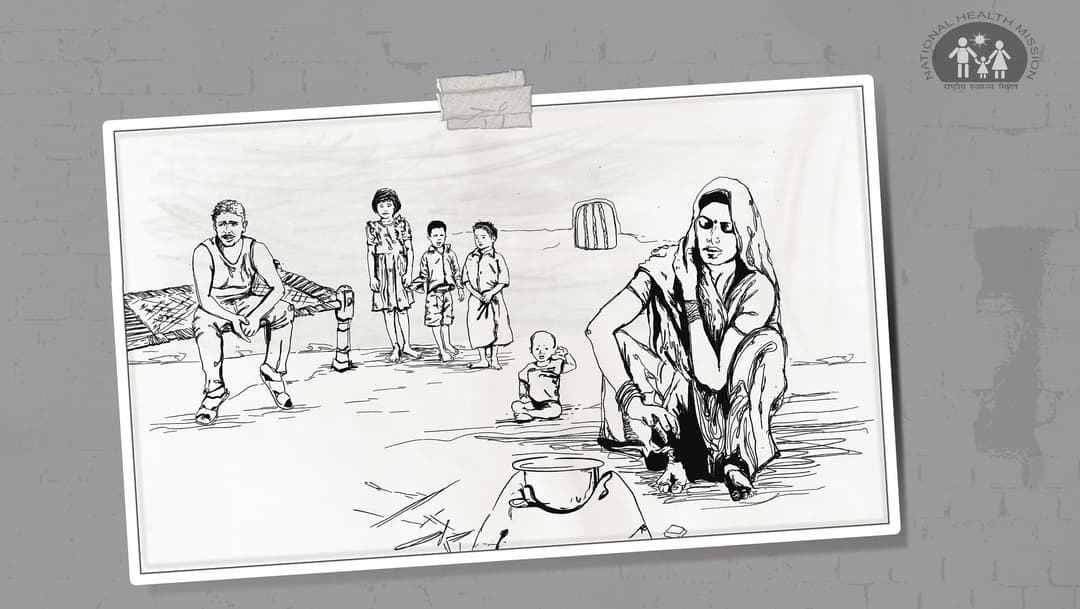
Two days later, Neha was back in the kitchen, sitting on her haunches and cooking. The bandage was still there, the discomfort clear on her face, and the stitches were yet to heal. “Par jhanjhat khatam [the problem is solved],” she said.
PARI and CounterMedia Trust's nationwide reporting project on adolescent girls and young women in rural India is part of a Population Foundation of India-supported initiative to explore the situation of these vital yet marginalised groups, through the voices and lived experience of ordinary people.
Want to republish this article? Please write to [email protected] with a cc to [email protected]