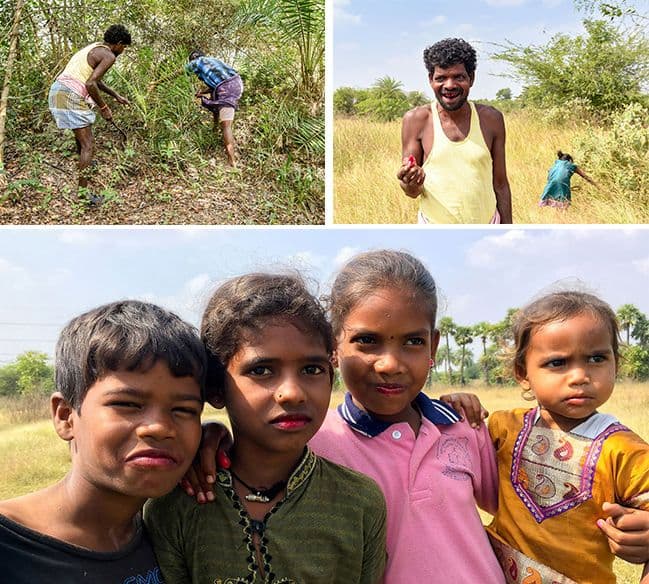

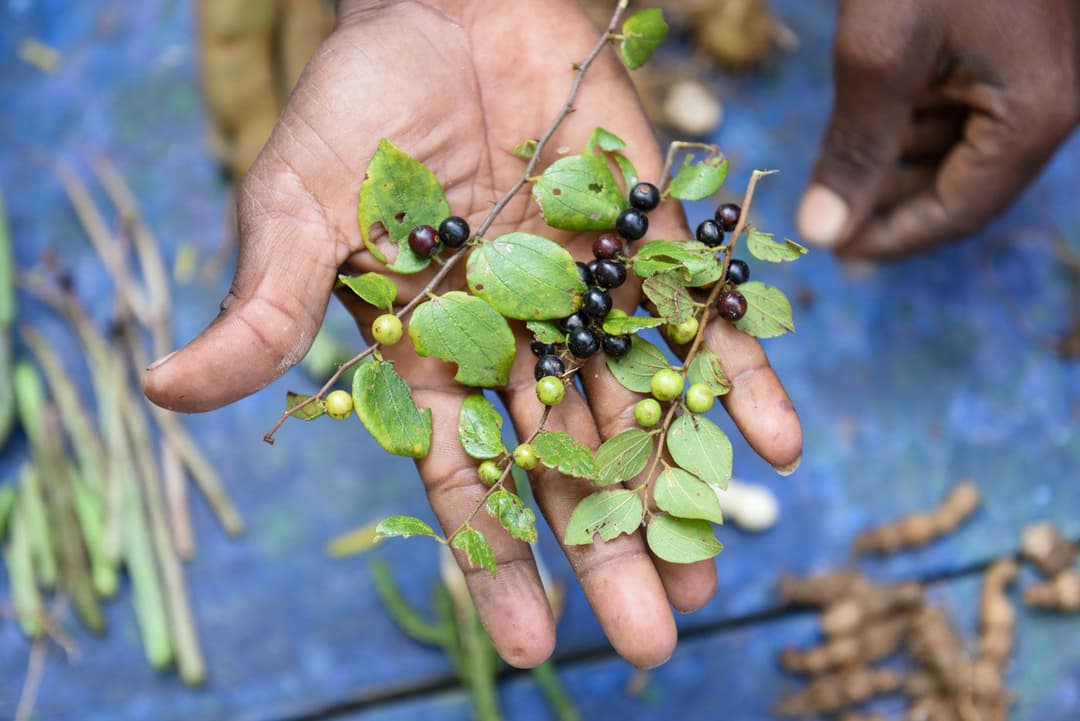
There is much excitement when Krishnan chances upon the sweet fruit with soft white skin. He opens it, revealing its bright pink-red insides. And when 12-year-old R. Rajakumar eagerly takes a bite, his lips turn bright red too – so he and the other kids have named the thappaattikalli the ‘lipstick fruit’. The other children follow, chomping into the fruit, their mouths turning red. A visit like this to the forest is always exciting for them.
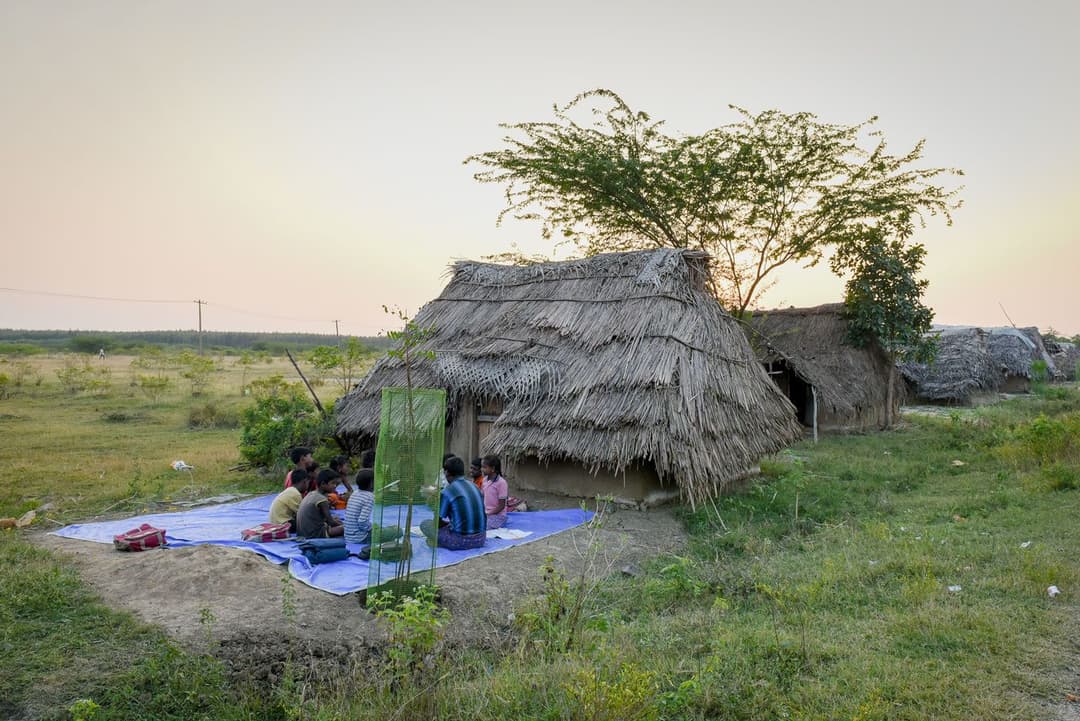
Guiding them that late December morning are G. Manigandan, 35, and K. Krishnan, 50. They lead the way deeper into the scrub forests near Cherukkanur village, clearing the vines and creepers, and using a crowbar to dig out the root climbers. The five children – ranging in age from a 1.5 year old toddler to a 12-year-old – as well as their guides, are all Irulas.
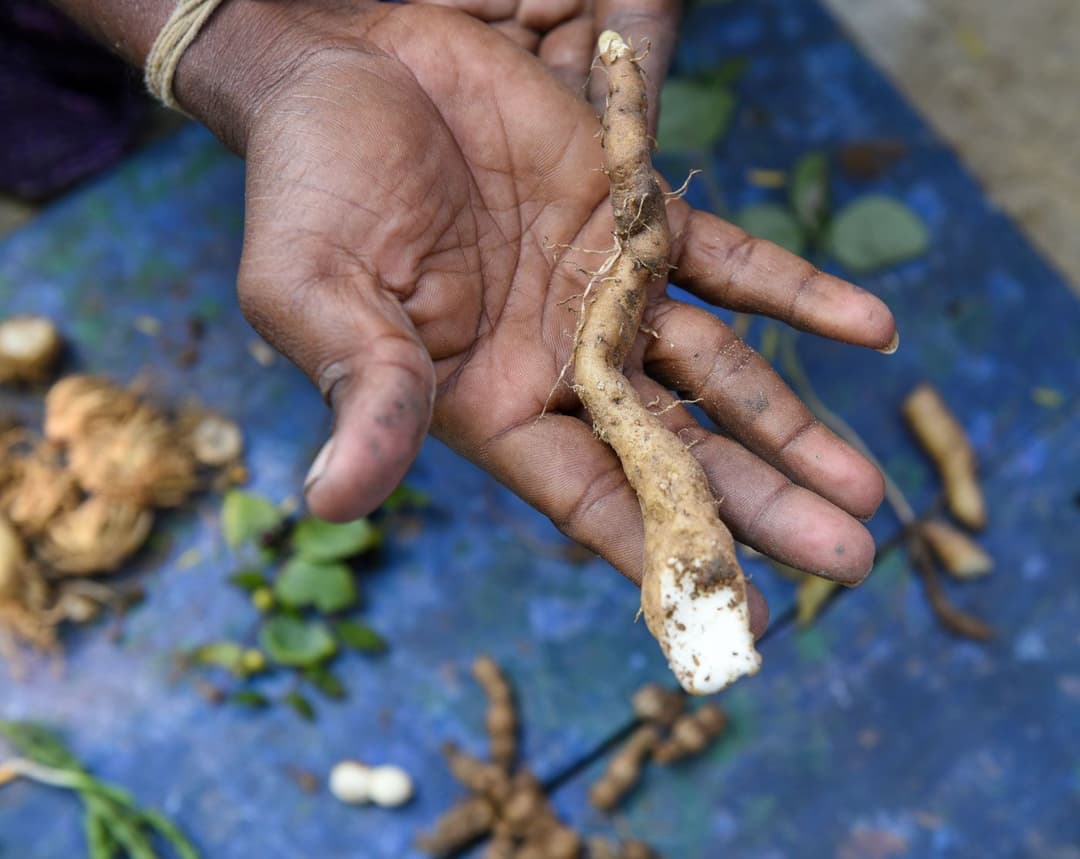
That Sunday morning, they are looking for kaattu vellikizhangu, a tuber-climber. “You can eat it only in specific months [in December-January]. It has to be tender, otherwise it will itch when you eat it,” Manigandan explains. “We have to first identify the stem from the rest of the bushes. The thickness of the stem will tell us how big a tuber to expect and how much deeper to dig to get it out whole.” It’s while looking for this tuber that they come across the lipstick fruit (locally also called nadhelli pazham).
Then, after a few minutes of looking around, they find a suitable kaattu vellikizhangu climber and dig out a tender root. The kids, following and observing all along, eagerly peel its skin and munch on it.
By noon the group, who had set out at nine in the morning, returns to Bangalamedu, the Irula settlement of Cherukkanur, located around three kilometres from the village in Tiruttani taluk of Thiruvallur district in Tamil Nadu.