
"The boys aren't that good at dollu kunitha,” says 15-year-old Vijayalakshmi, frankly. “We are better.”
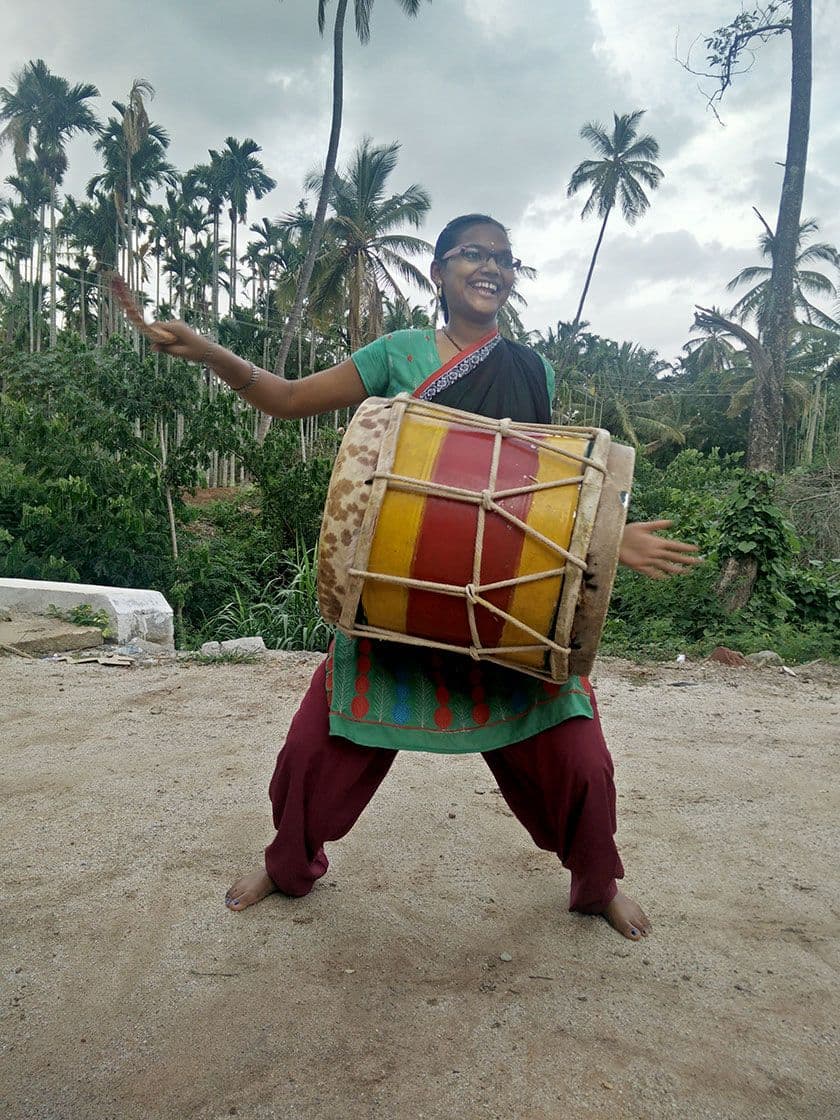
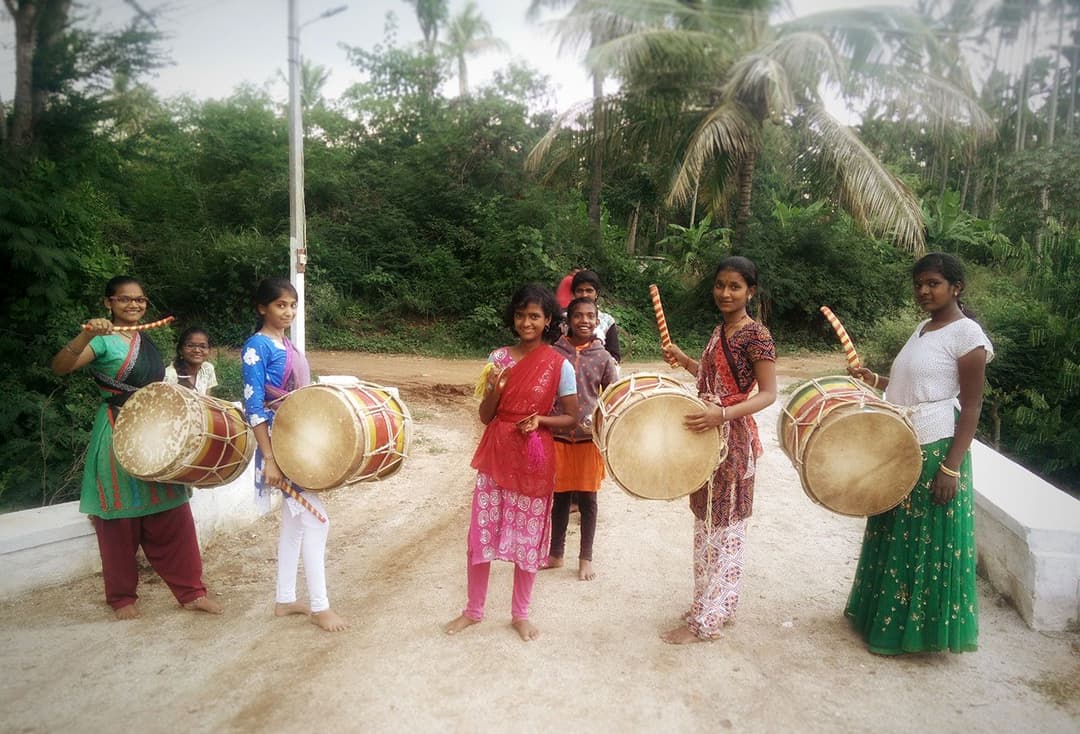
They do seem to be. Lightly-built girls, heavy drums tied around their slim waists, whirling around with the precision of seasoned dancers, the agility of acrobats. At all times in perfect, pulsating rhythm and sync.
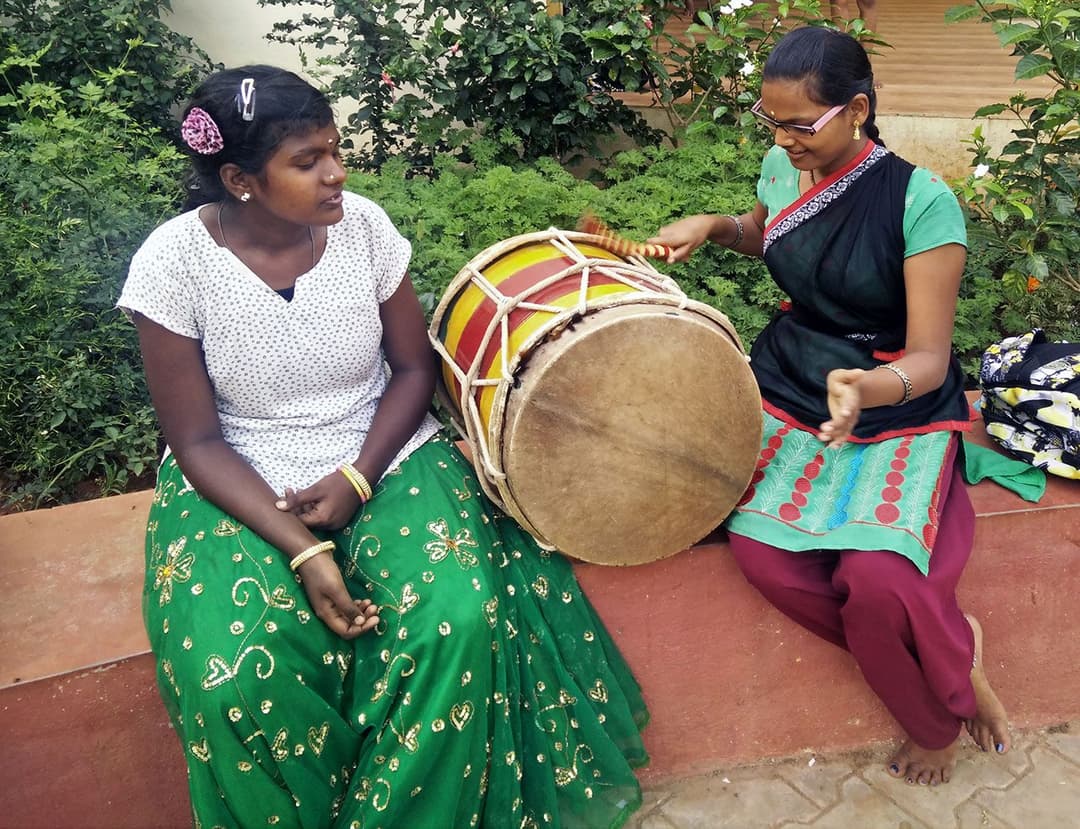
They’re young girls. The oldest amongst them aren’t adults yet. But the energy and ease with which they pull off one the most physically demanding drum and dance forms is stunning. Dollu kunitha is a popular folk dance in Karnataka. Dollu refers to drums, while kunitha means dancing in Kannada. It’s also called gandu kale – “men’s skill” or “men’s art.” Burly men strap a drum as heavy as 10 kilograms around their waist and dance in swift and sprightly movements. Conventional wisdom holds that the dance requires the performers to be well-built men, high on strength and stamina.
Well, that is until some young women started to upend this tradition. Right here in Hesaraghatta, a place full of paddy fields and gangly coconut trees out on Bengaluru’s edges, some 30 kilometres from the city centre. And tucked away in this green pocket is this group of girls who are changing a cultural norm. Challenging the idea that dollu kunitha of this kind isn’t for women. They have ignored the hoary myth, and embraced the heavy drum.