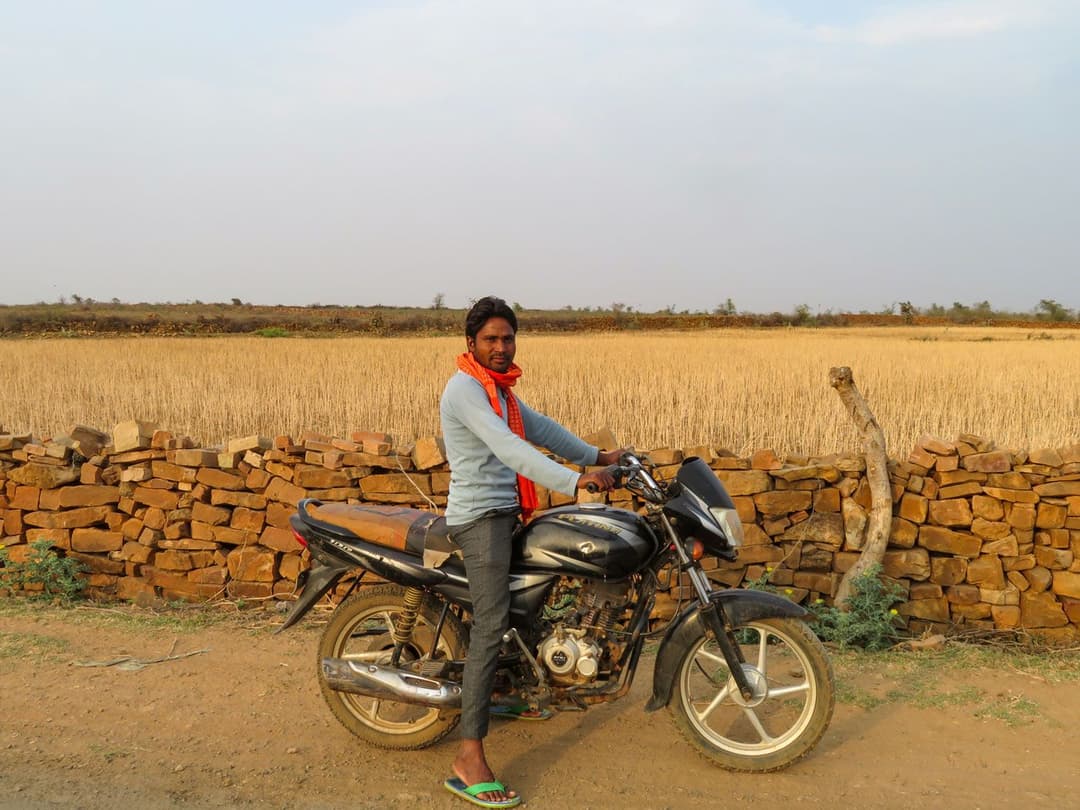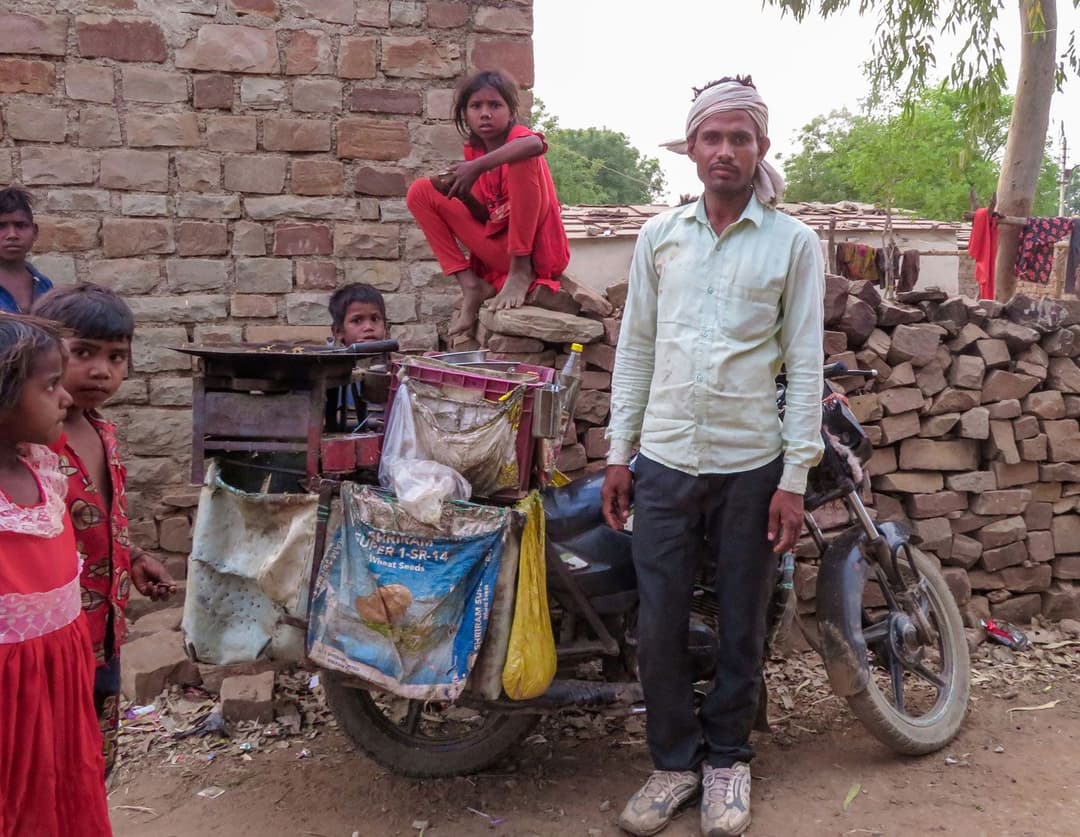
As Ram Avatar Kushwaha enters Aharwani, he slows down to manoeuvre the mud roads on his motorcycle. He reaches the rough centre of the hamlet and switches off the engine of his 150cc bike.
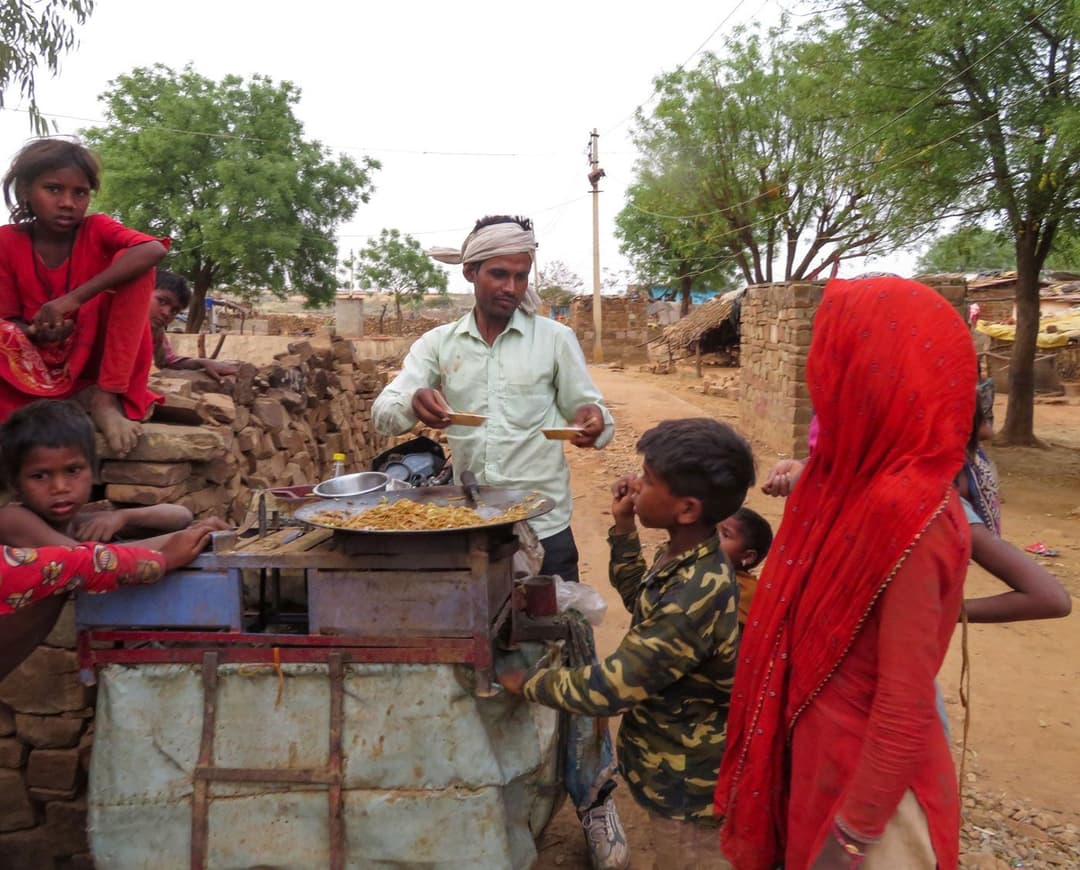
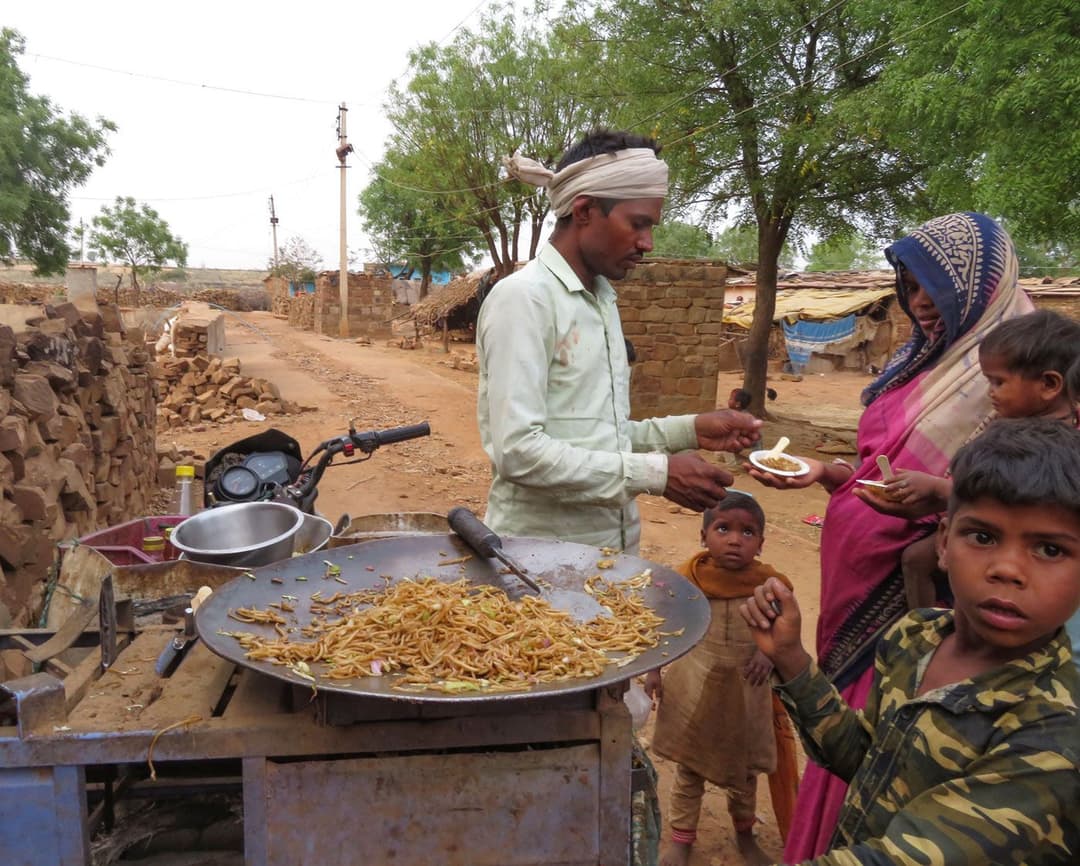
In about five minutes, toddlers, mid-schoolers and teenagers start congregating around him. The bunch of Sahariya Adivasi kids wait patiently, chatting among themselves, holding coins and clutching notes of 10 rupees in their hands. They are waiting to buy a plate of chow mein, a dish made of stir-fried noodles and vegetables.
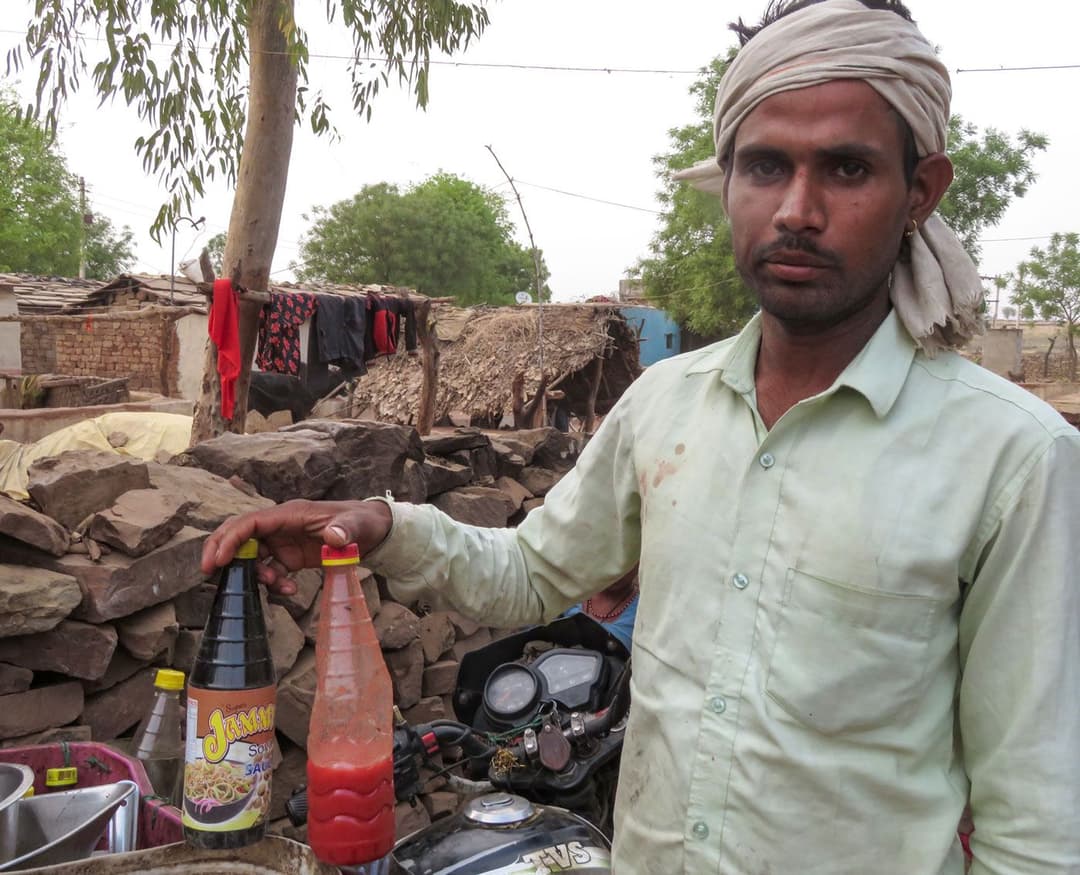
Aware that this well-mannered hungry clientele will soon get restive, the motorbike vendor is quick to unpack. There isn’t much – he pulls out two plastic bottles, “one is a red sauce [chilly] and one is a black one [soya sauce],” he explains. Other goodies include a cabbage, peeled onion, green capsicum and boiled noodles. “I buy my supplies in Vijaypur [town].”
It’s nearly 6 p.m. and this is the fourth village that Ram Avatar has visited today. He reels off the names of other hamlets and villages he routinely visits – Ladar, Pandri, Khajuri Kalan, Silpara, Parond – all within a 30 kilometre radius of his home in Suttaypura, a hamlet attached to Gopalpura village in Vijaypur tehsil. The only other ready snacks available in these hamlets and small villages are packaged chips and biscuits.
He comes here to Aharwani, an Adivasi-dominated hamlet of around 500 people at least 2-3 times a week. Aharwani is a recent settlement – its residents are those who were displaced from the Kuno National Park in 1999 to make it an inviolate second home for lions. Read: In Kuno: Cheetahs in, Adivasis out. No lions have come, but cheetahs from Africa were moved into the park in September 2022.