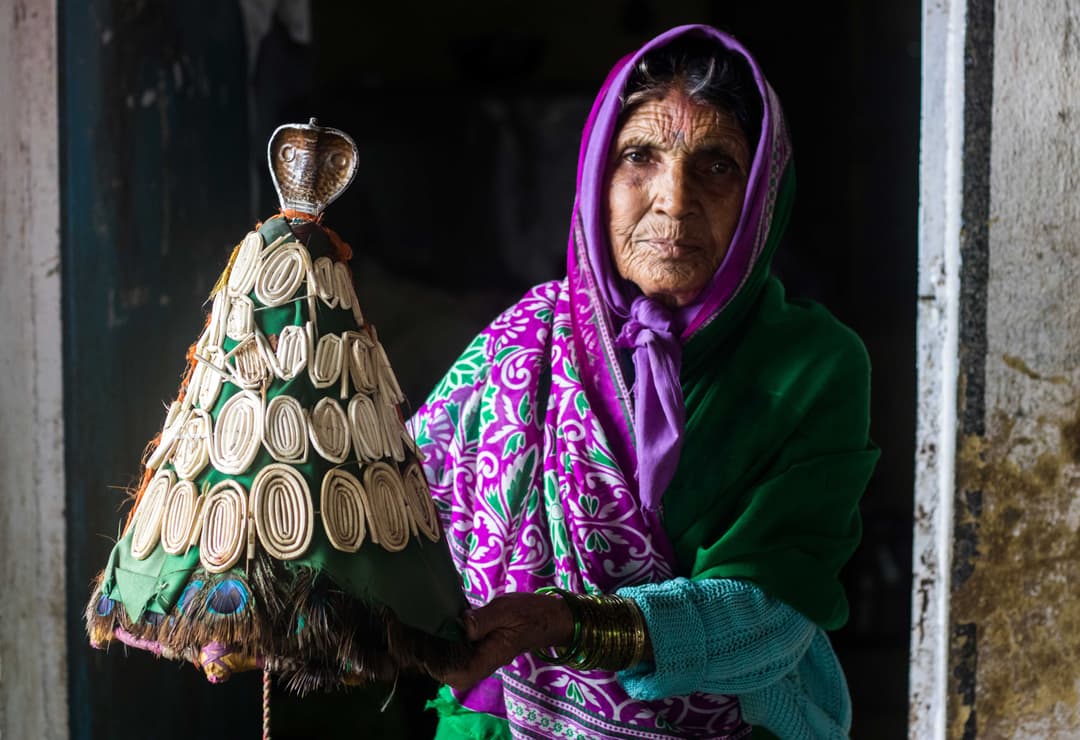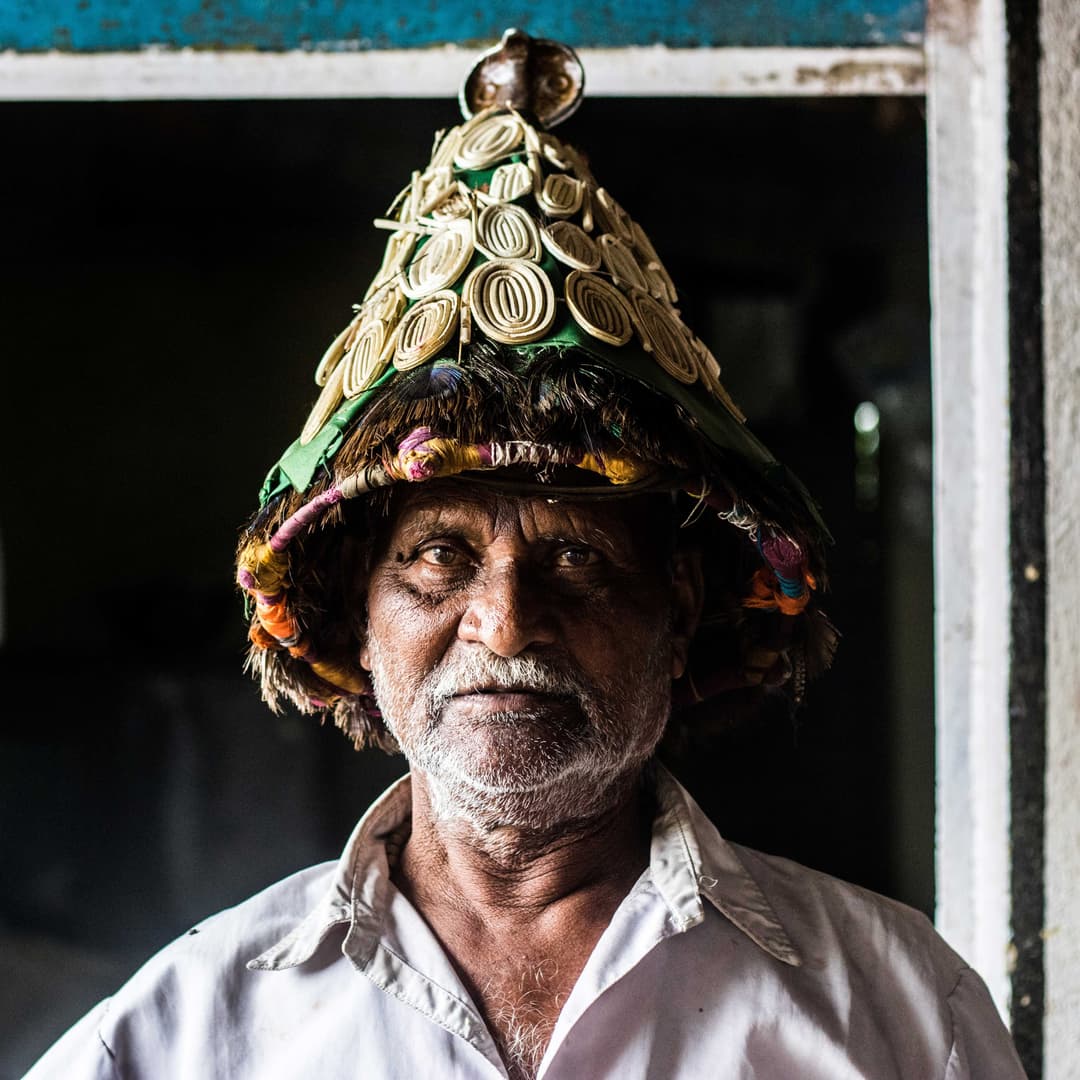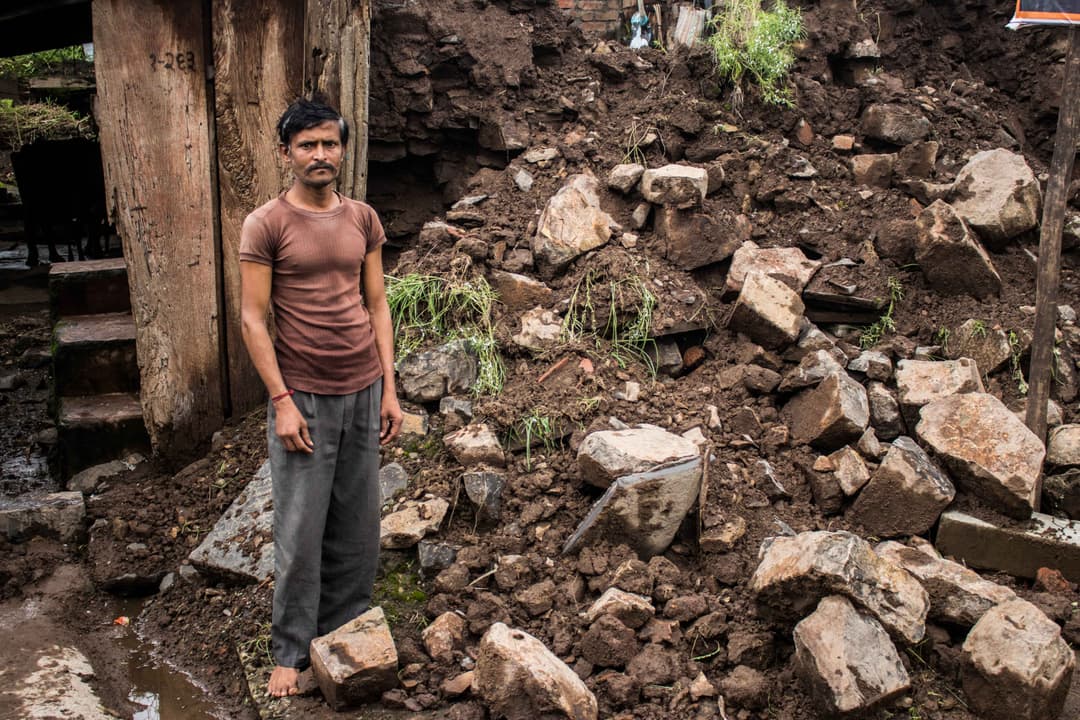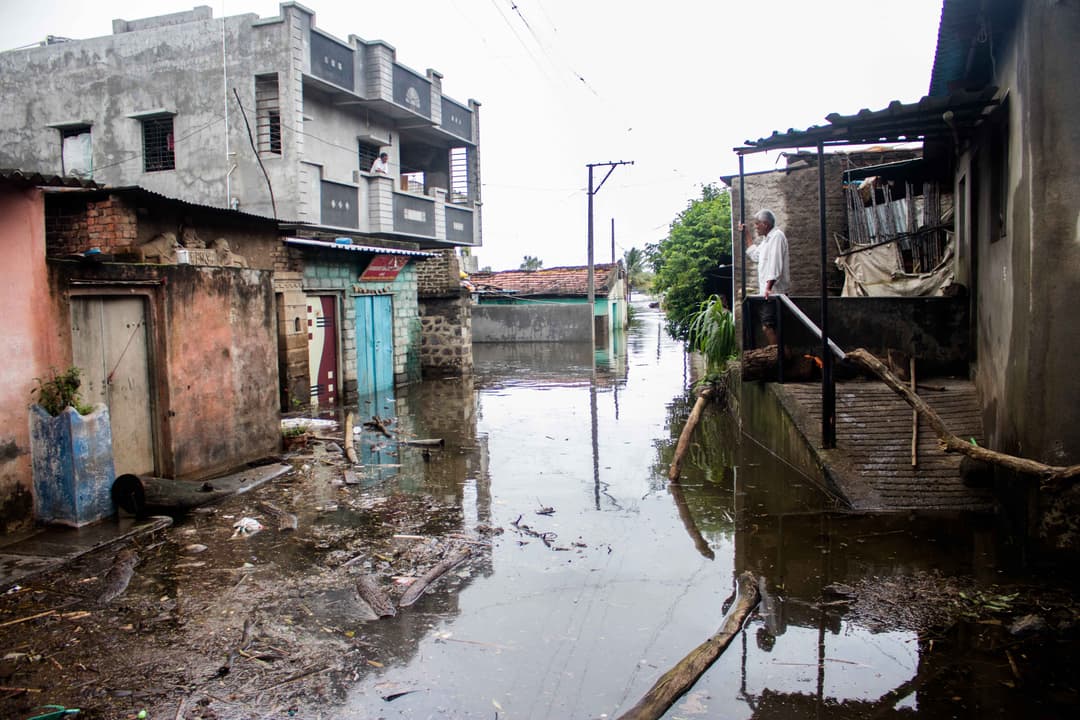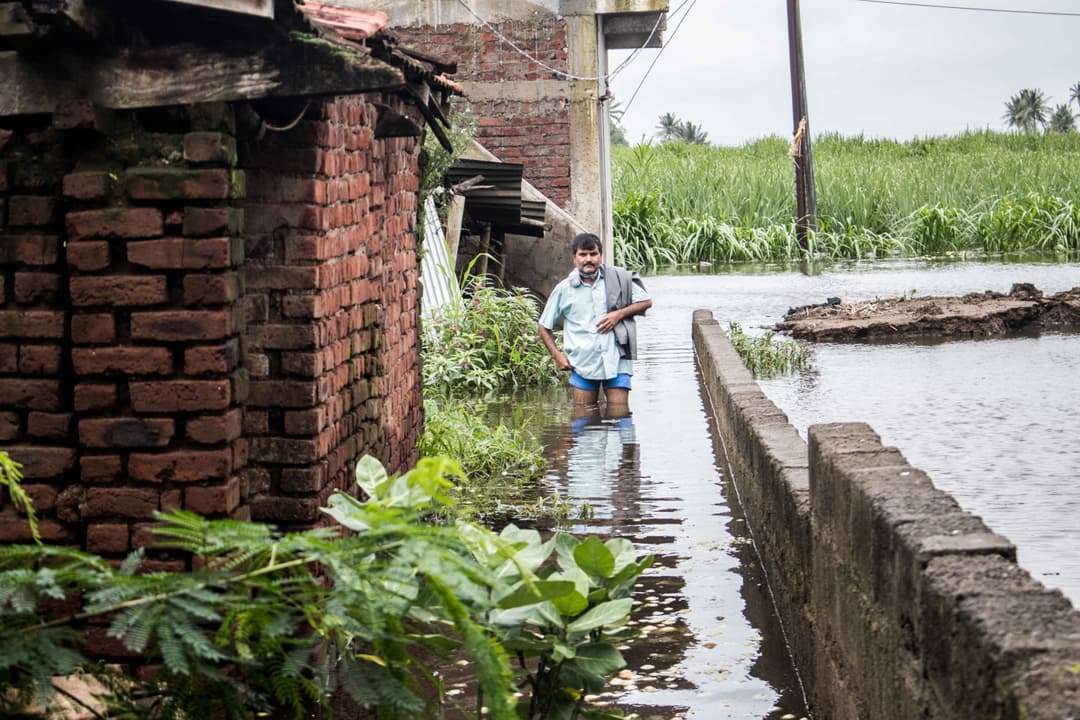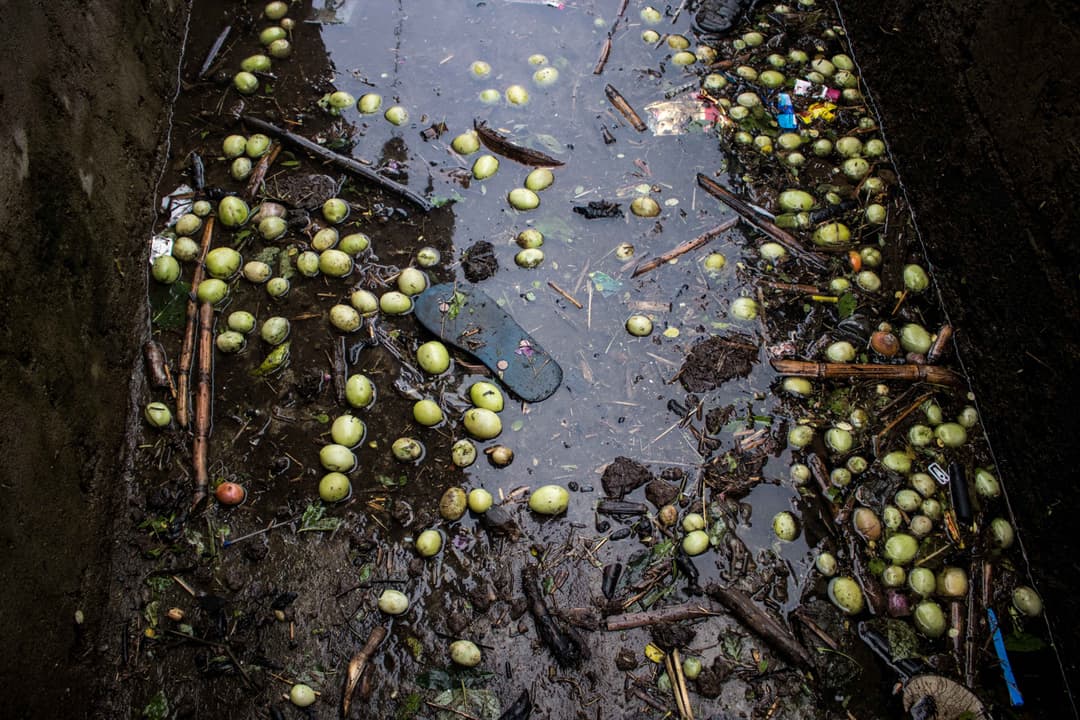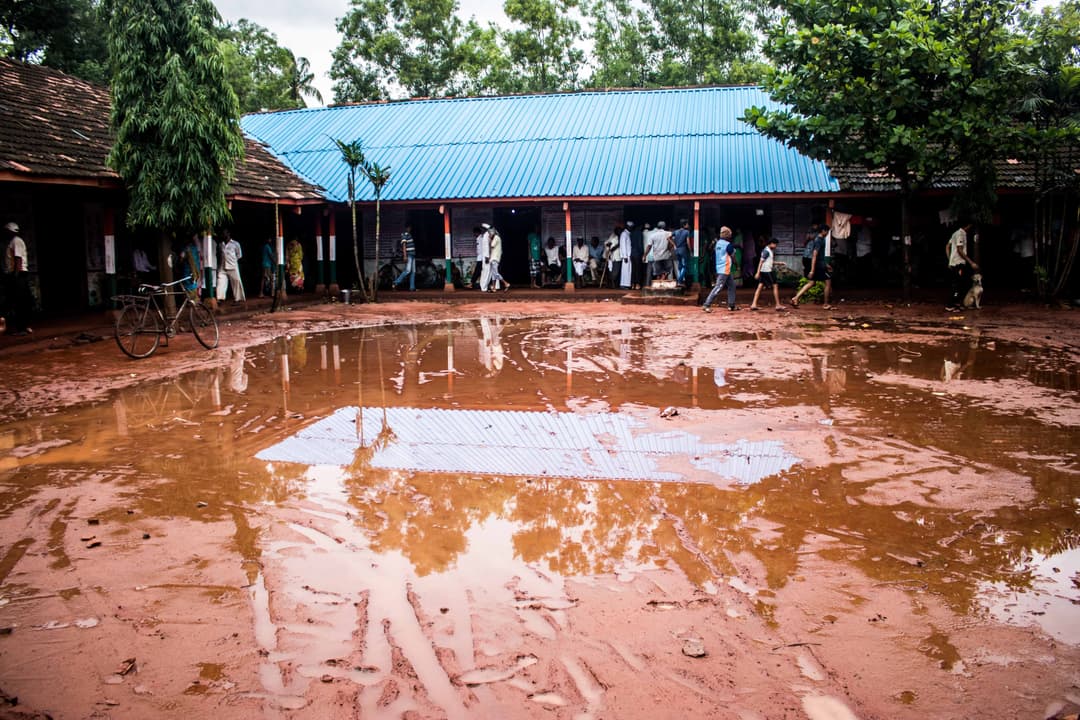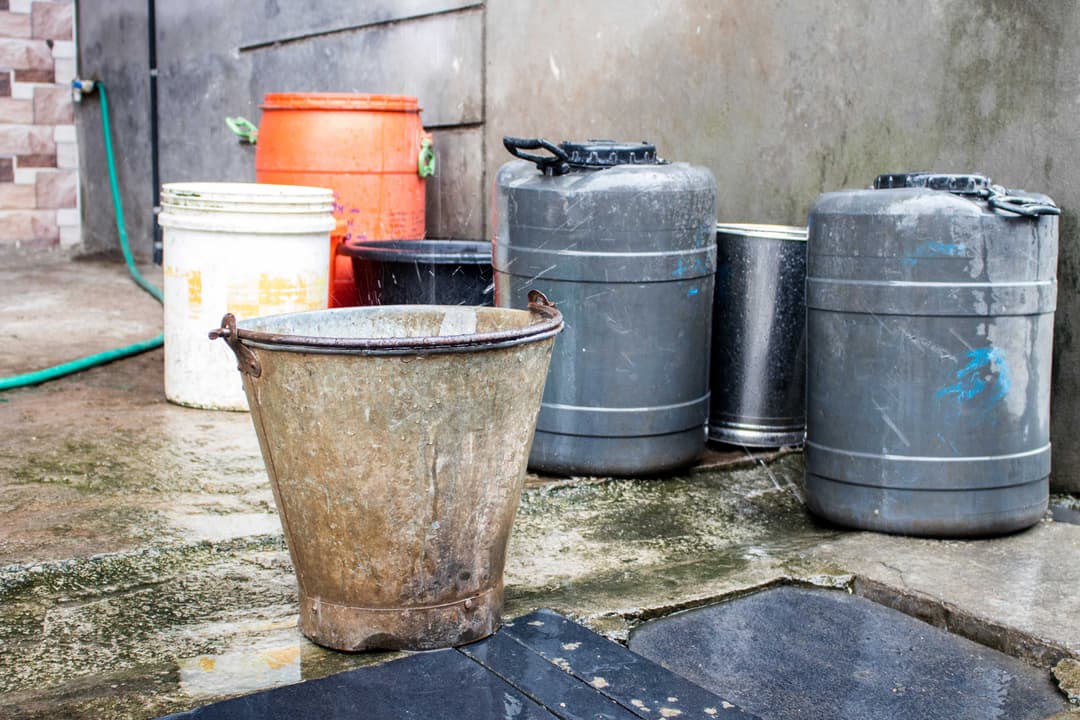

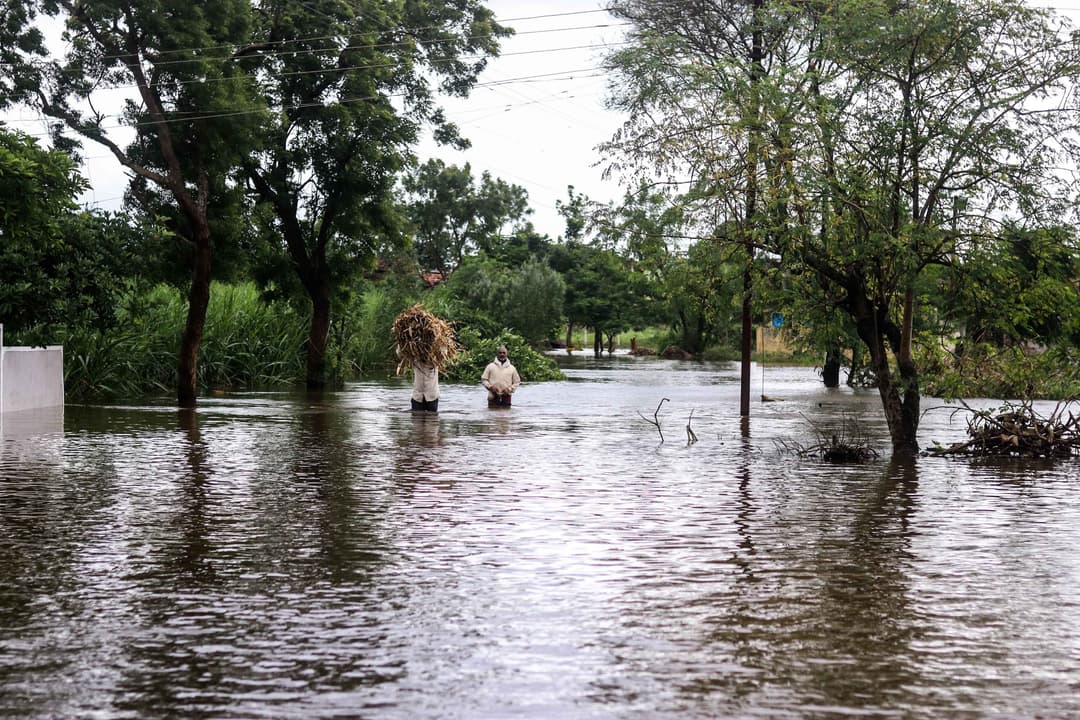
When the flood water began to rise, Parvati Vasudeo took along her husband’s ceremonial cap while leaving their house. “We only brought this and the chipli [a musical instrument]. No matter what, we can never leave this cap,” she said. The headgear is adorned with peacock feathers and her husband Gopal Vasudeo wears it while singing devotional songs.
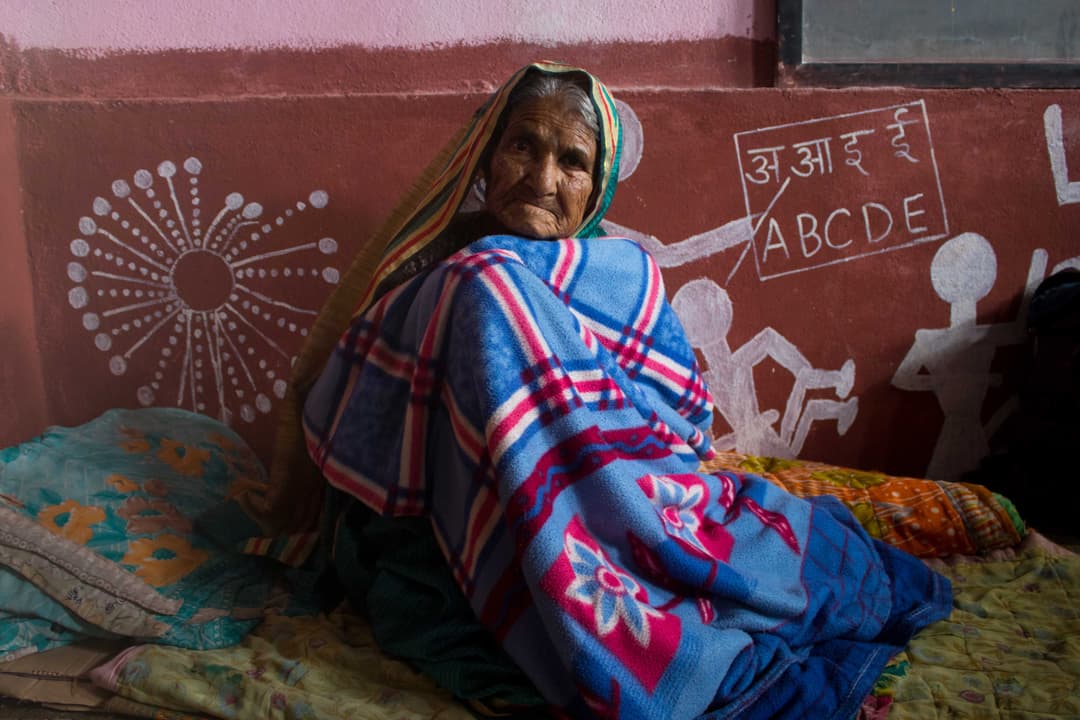
On August 9 though, Gopal, who is in his late 70s, was sitting in a corner in a school room, clearly in despair. “Three of my goats have died and one that we rescued will also die because it is ill,” he said. Gopal belongs to the Vasudeo caste, a community of worshippers of Lord Krishna, who go door to door singing devotional songs to collect alms. In the monsoon months, he works as an agricultural labourer in his village, Bhendavade, in Hatkanangle taluka of Kolhapur district. “For a month, there was no work in the fields because of heavy rains and now the floods have come again,” he said, nearly in tears.
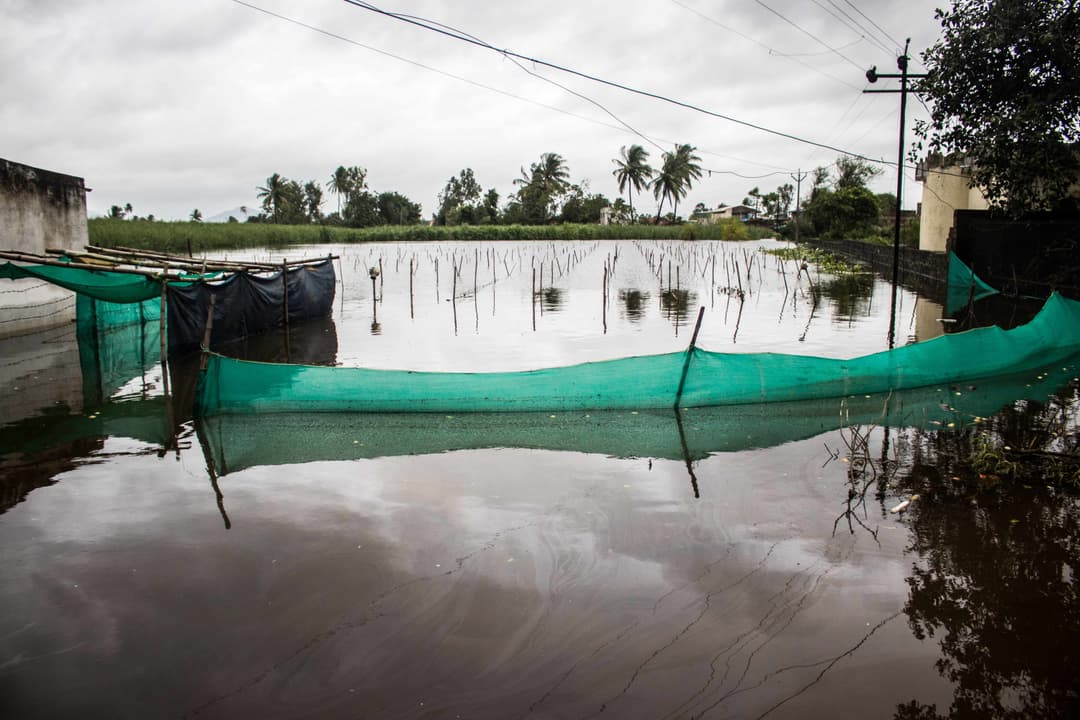
Farmers in Bhendavade had pushed their kharif sowing to July this year because the rain was delayed – the first showers here usually come by early June. But when it did pour, it took just a month for water to drown the soyabean, groundnut and sugarcane crops.