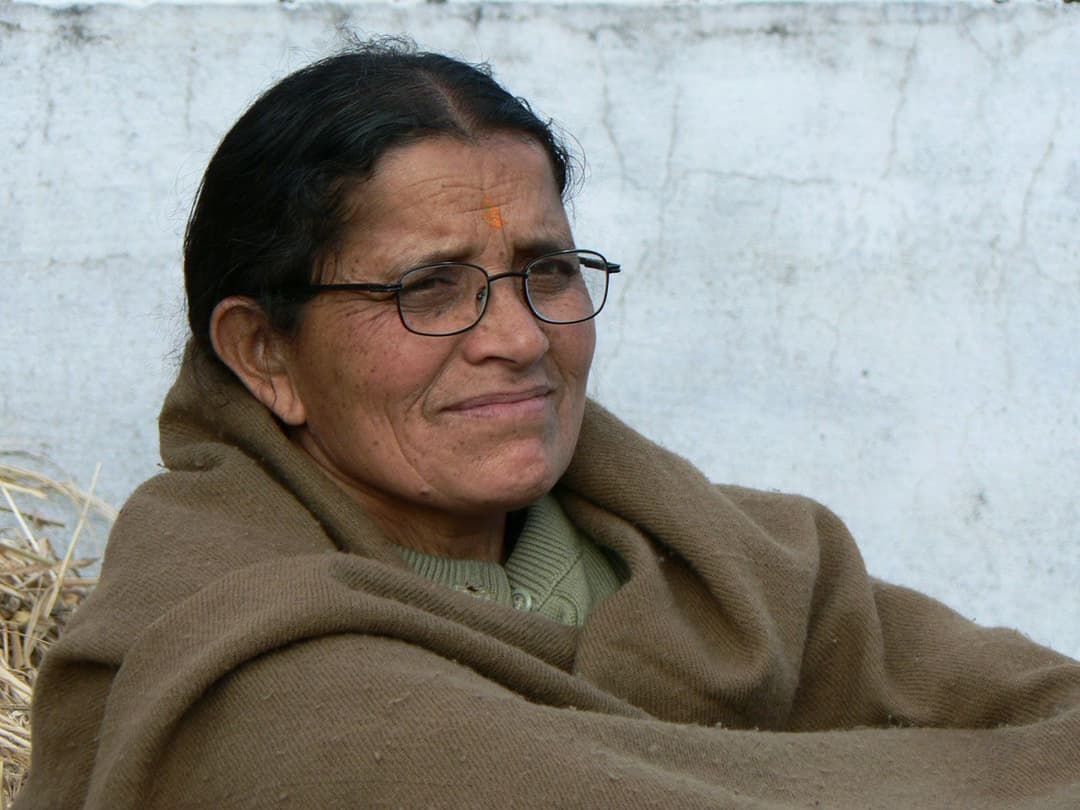

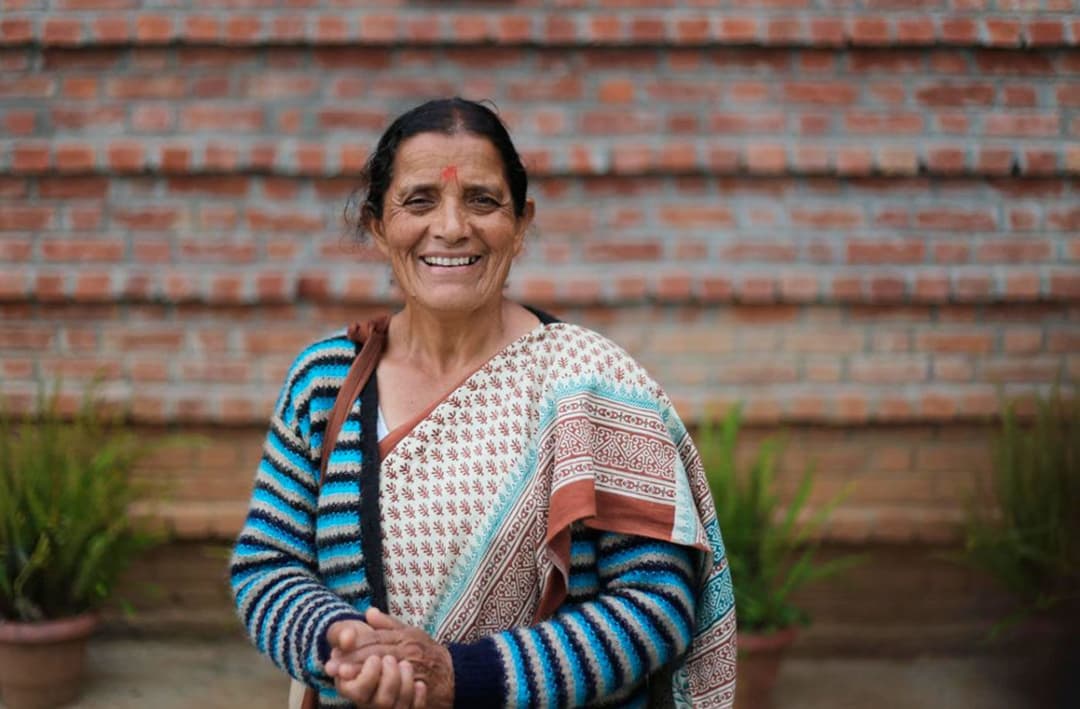
Her hair is worked hard upon – neatly oiled and plaited. Abundant wrinkles crisscross her face. She is wearing hawai chappals and a khadi saree that falls slightly above her ankles. She looks ready for a day of work, but is here to take us across the Pinnath range to the Rudradhari waterfall – the source of the Kosi river in the Kumaon region.
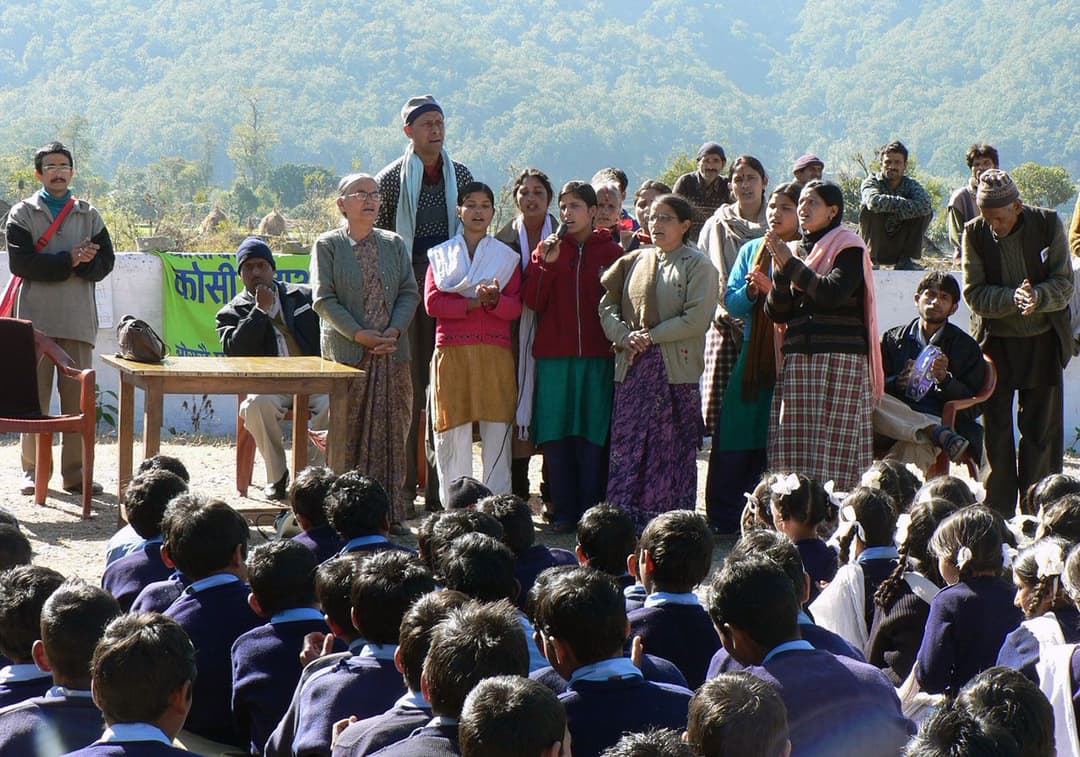
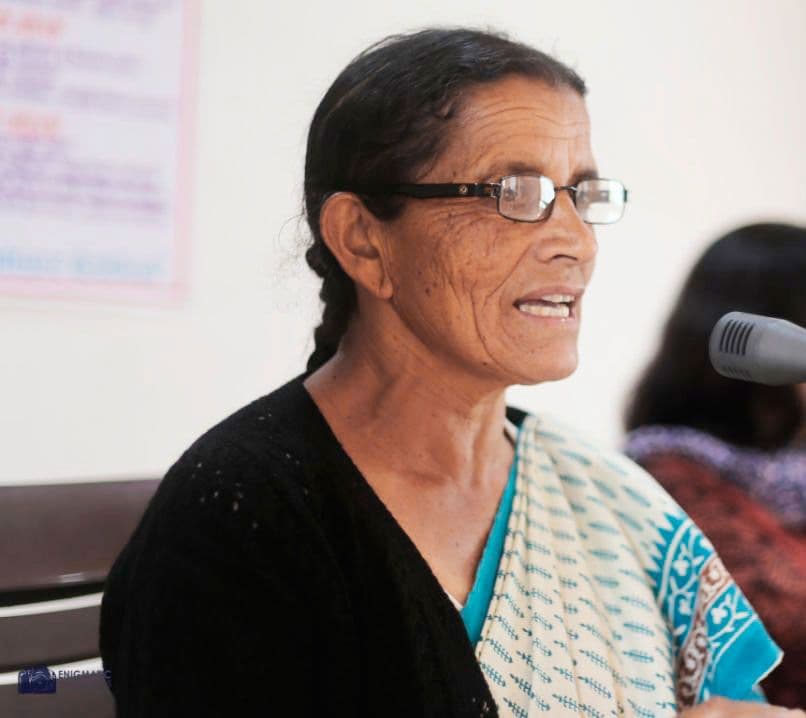
We are participants at an annual March-April community festival in Kausani, a village of around 2,400 people on the border of Bageshwar and Almora districts of Uttarakhand. Basanti Samant, 60, or Basanti behen, as she is widely addressed, is a speaker at the event. She is not randomly picked to lead our pack.
Some years ago, she led a movement – forming 200 groups, each with 15-20 women – in and around Kausani , to save the Kosi. By 2002, the river’s summer flow had dwindled to around 80 litres a second from 800 litres in 1992, and since then Samant and the women of Kausani have worked hard for its conservation.
Back in 2002, Samant inspired women to stop cutting live wood and start planting more native broadleaf trees such as the banj oak. The women pledged to use water judiciously, and to put out and prevent forest fires. Samant ushered them into a sisterhood that conserves the environment, but over the years, the women have stayed together, deriving strength from each other for battles also fought within their homes.
But, at first, Samant had to fight her own battle.
“My life was like the mountain – difficult and uphill,” she says. When she was around 12 and had completed Class 5, Basanti was married. She moved to her husband’s home in Tharkot village of Pithoragarh district. By the time she turned 15, her husband, a school teacher, died. “My mother-in-law would tell me that I ate him,” she says.