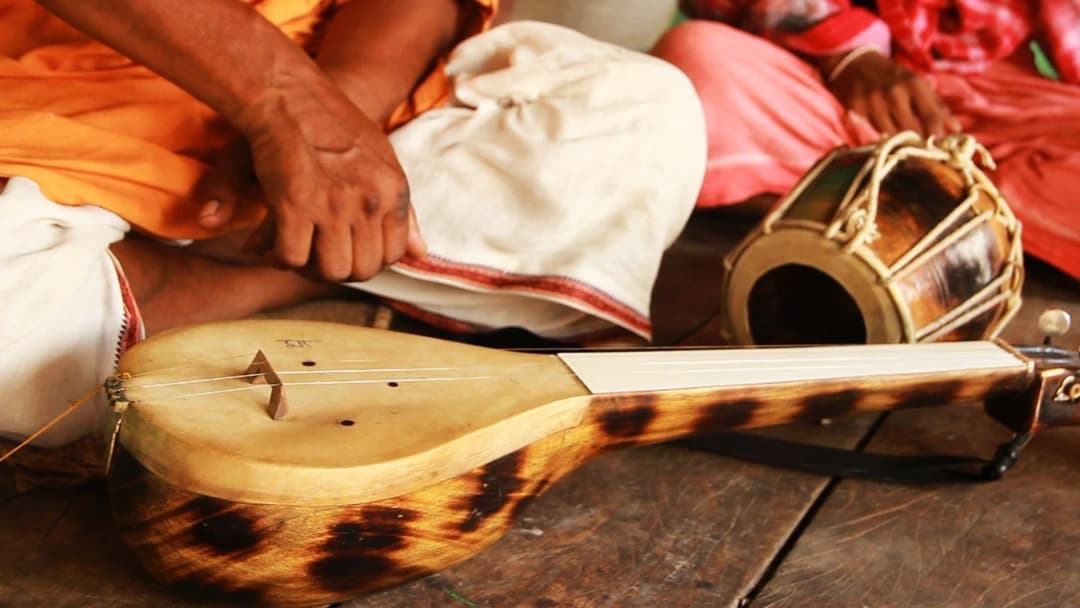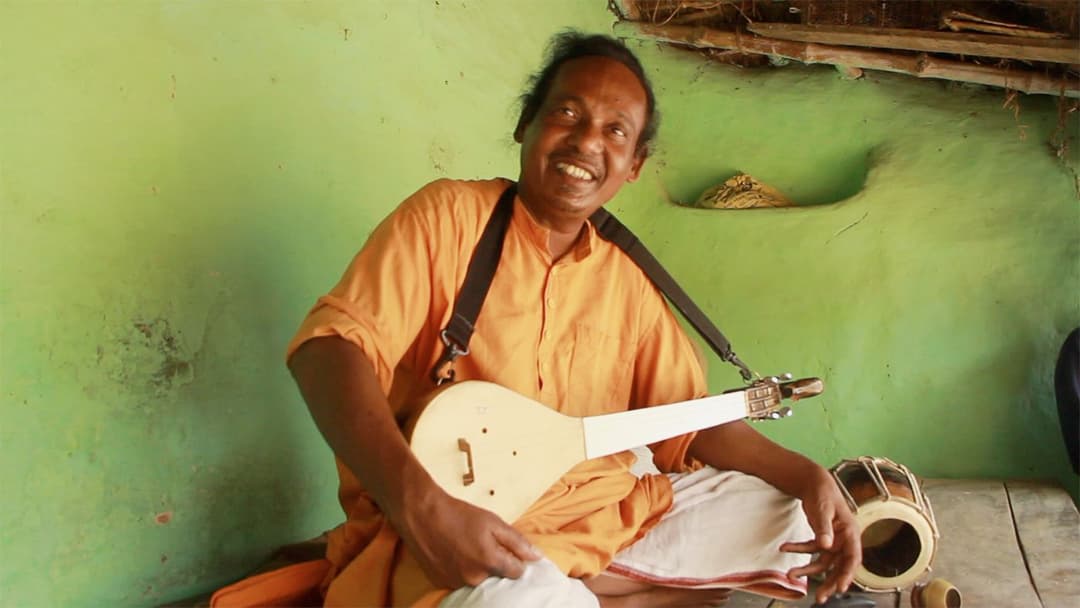

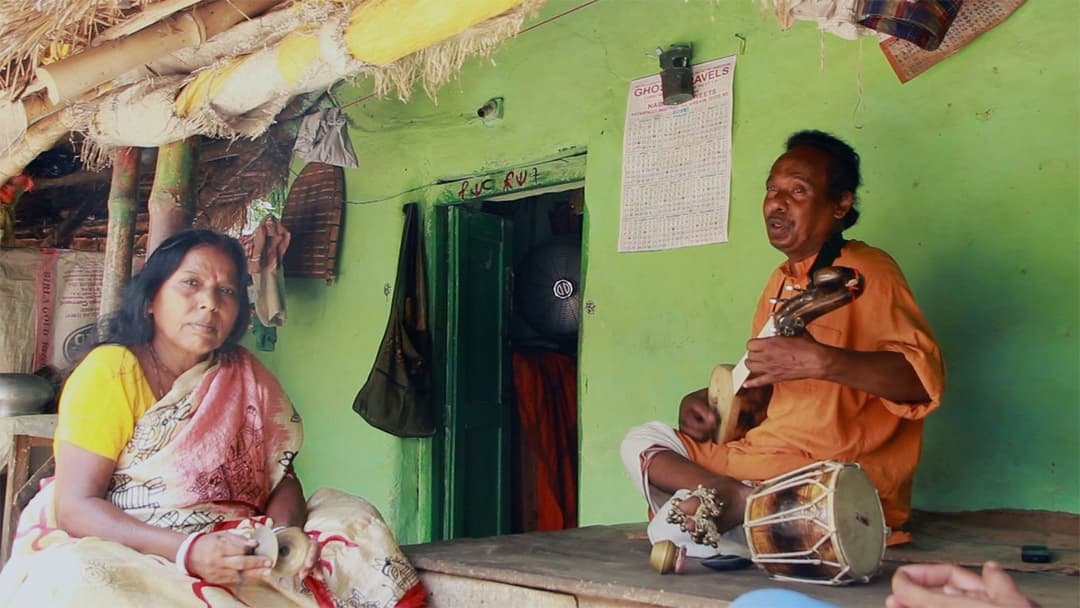
The word 'baul ’ is derived from the Sanskrit 'vatula', which means insane, disordered or possessed. ‘Baul’ also refers to a culture of music that originated in Bengal.
The Baul community is usually nomadic. Bauls have a syncretic religion that draws from Islam, Hinduism and Buddhism, and they live co-mingling with various people. Refusing the traditional norms of the society, they uphold music as the unifying power. Their songs speak of a clear philosophy of life. Bauls are not born into the community. They choose this way of life, and are initiated into it by a guru.
Bauls – both men and women – are distinctive, with uncut, coiled hair or dreadlocks, saffron robes or sarees, rudraksha necklaces, and carrying a single-stringed ektara . Orally inherited music remains, till today, their only source of sustenance, and they survive on alms received in return for singing their songs. Depending on the popularity of the singer, a Baul can earn between Rs. 200-1,000 when they perform