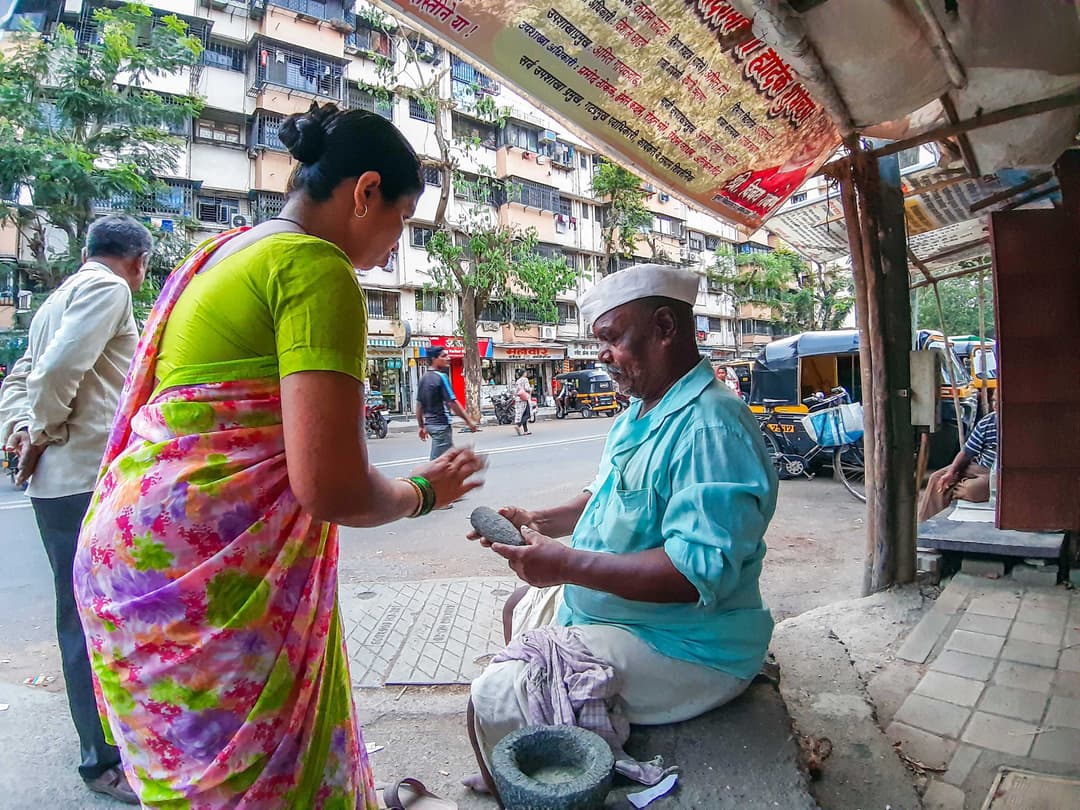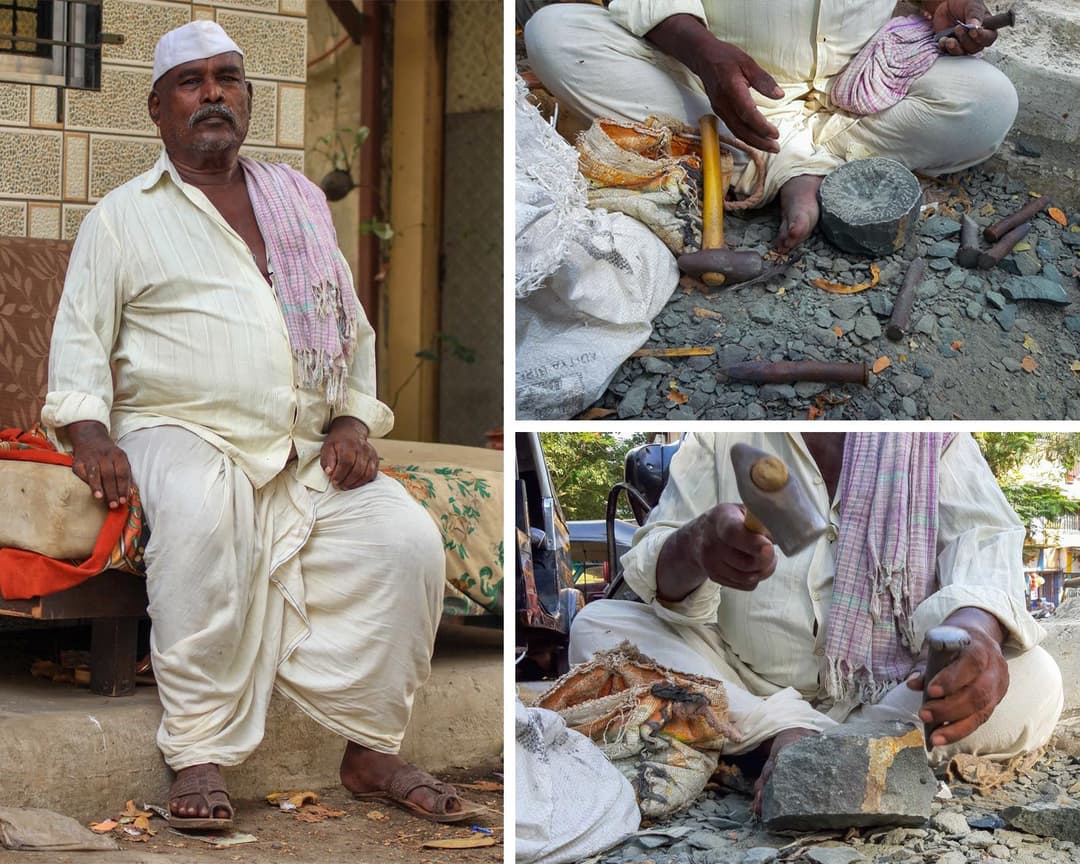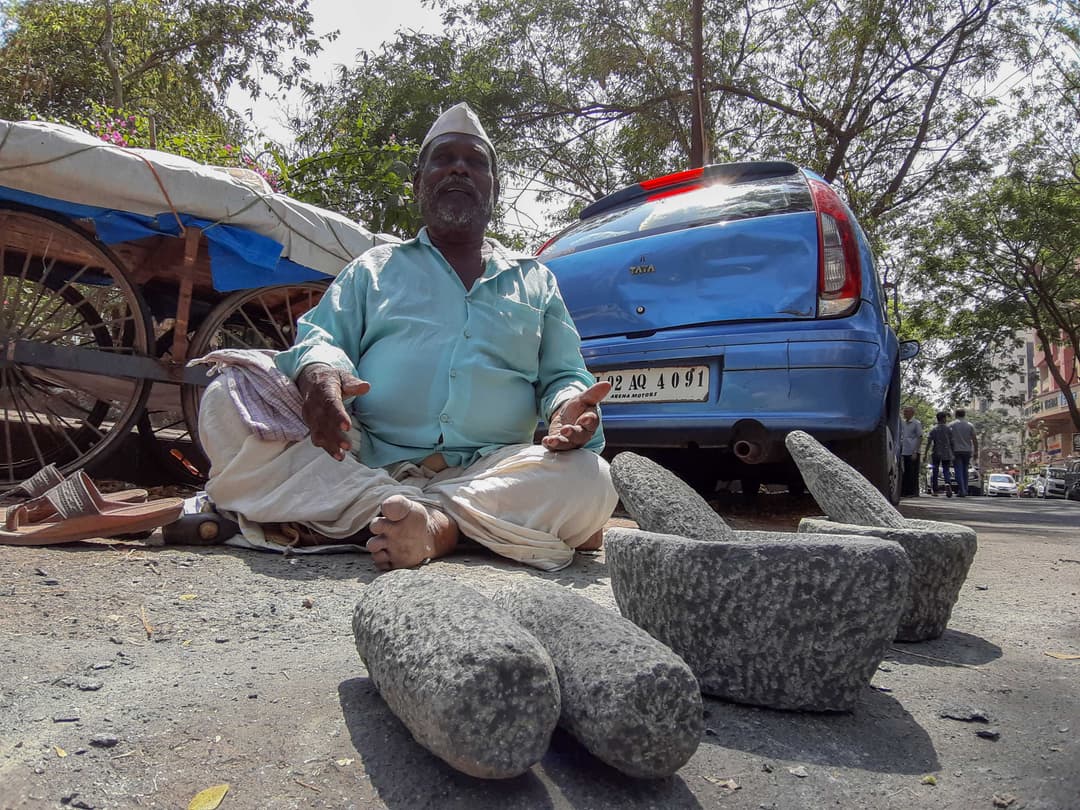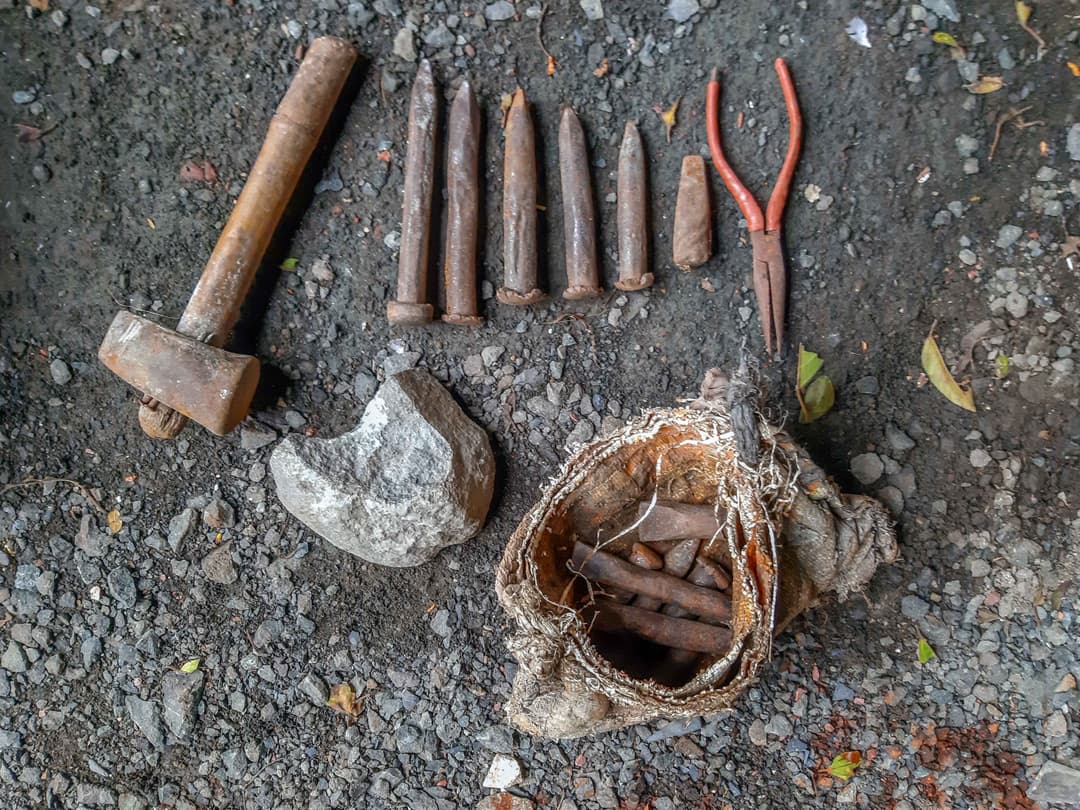


A loud thuk-thuk sound emanates from a corner of a road still quiet at 8 in the morning. Balappa Chandar Dhotre is sitting on the pavement surrounded by big stones, hammering away. The owners of the rickshaws and scooters parked behind his temporary ‘workshop’ will soon be on their way to work. Dhotre too will start moving from here in a few hours – carrying the stone grinders he’s made sitting on that pavement in Kandivali East, a suburb of north Mumbai.
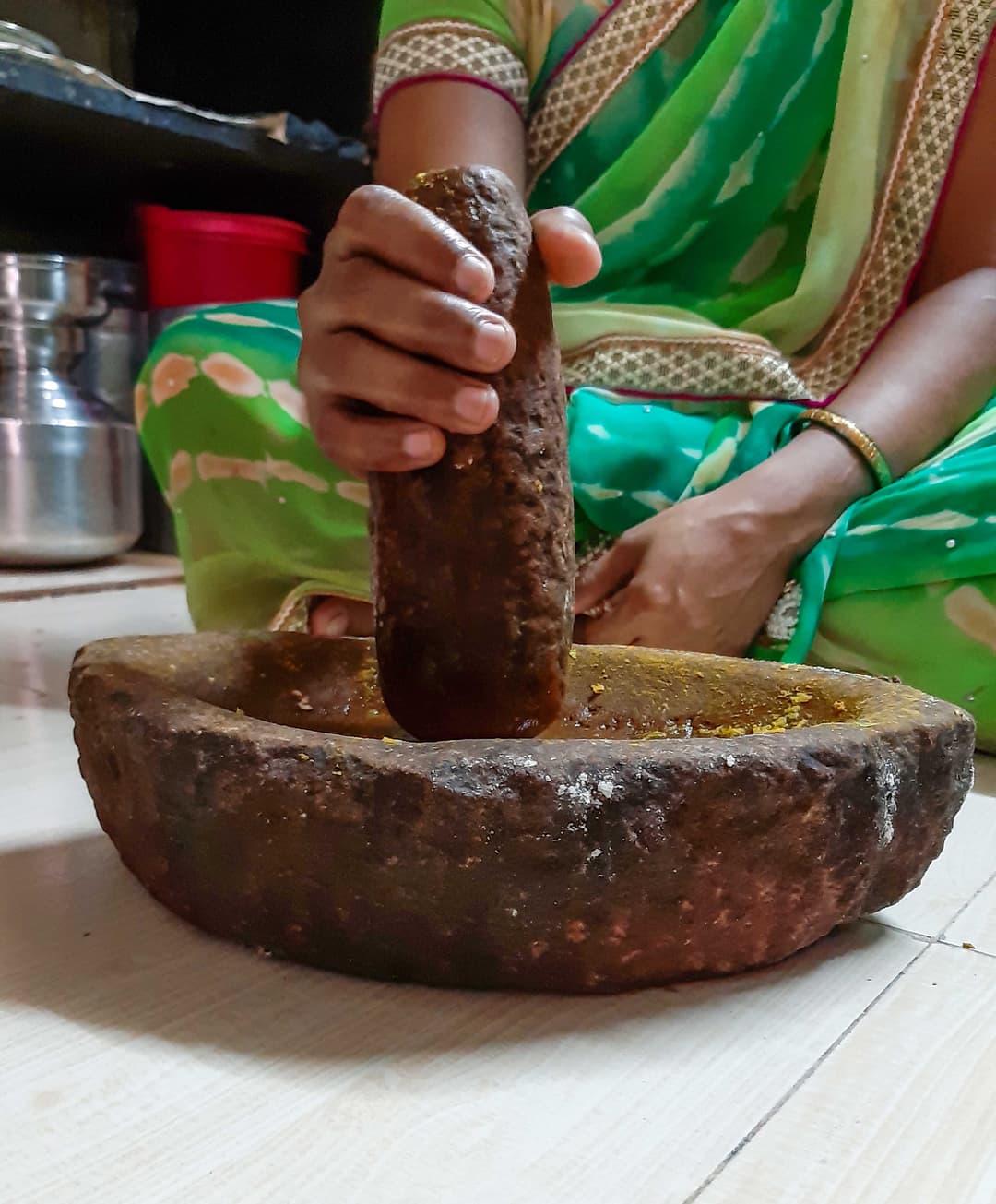
It takes him around an hour to chisel one grinder – or mortar and pestle – used to crush chutneys and masalas. He calls it kallu rubbu, roughly, stone grinder in Kannada, or a khalbatta in Marathi. Once he is done, he puts them in a sturdy rexine bag – usually, 2 to 3 grinders, each weighing between 1 and 4 kilos – and starts walking from his pavement ‘workshop’ to nearby localities. There, at the corners of busy roads, he sets up ‘shop’. He sometimes keeps some kaala patthar (black stone) handy. In case more customers come along asking for grinders, he chisels the patthar on the spot.
“They call me pattharwala only,” says Dhotre.
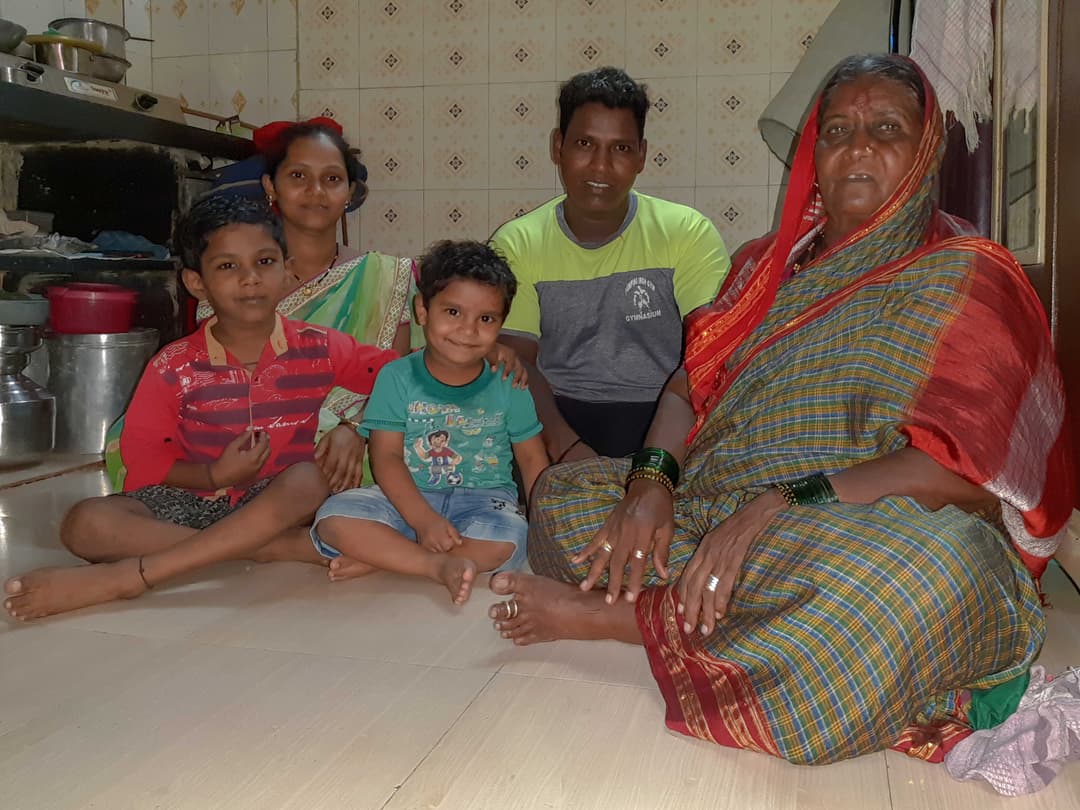
He sells the smaller stone grinders for Rs. 200 and the bigger ones for Rs. 350-400. “Some weeks I earn up to Rs. 1,000-1,200. Sometimes I don’t earn anything,” he says. The buyers are mainly people who cannot afford an electric grinder, or want to showcase the item in their living rooms, or, like Balappa’s wife Nagubai, prefer using a stone grinder. "I don't like the mixi [electric mixer],” she says, “There is no taste. This [kallu] give food a good taste, it’s fresh."