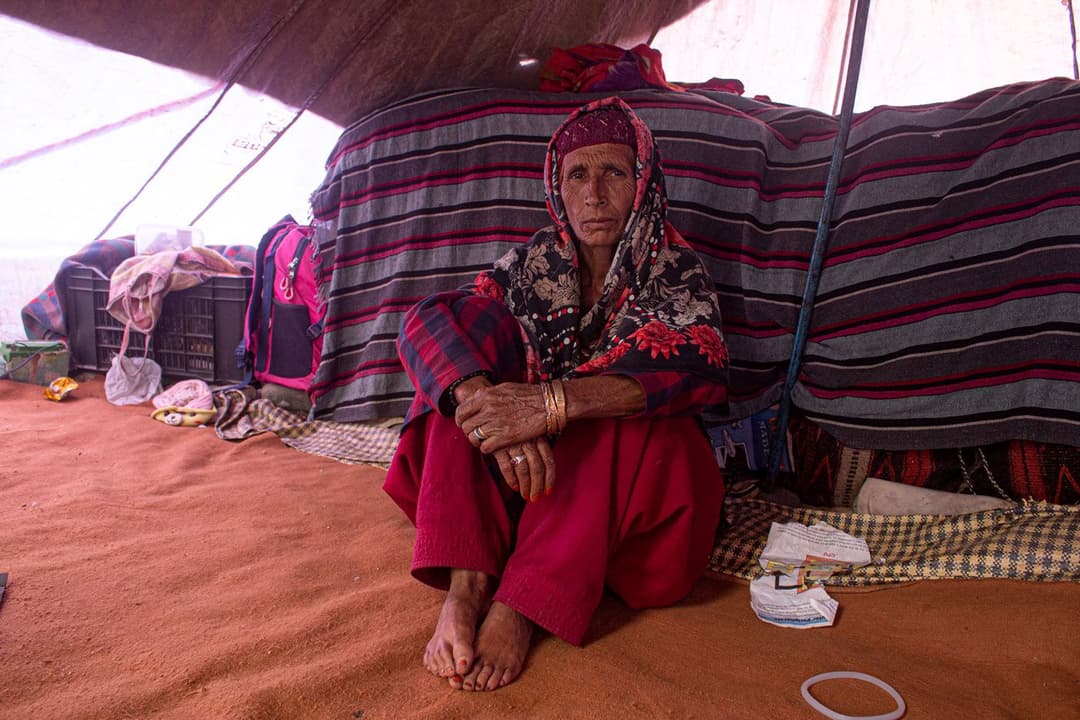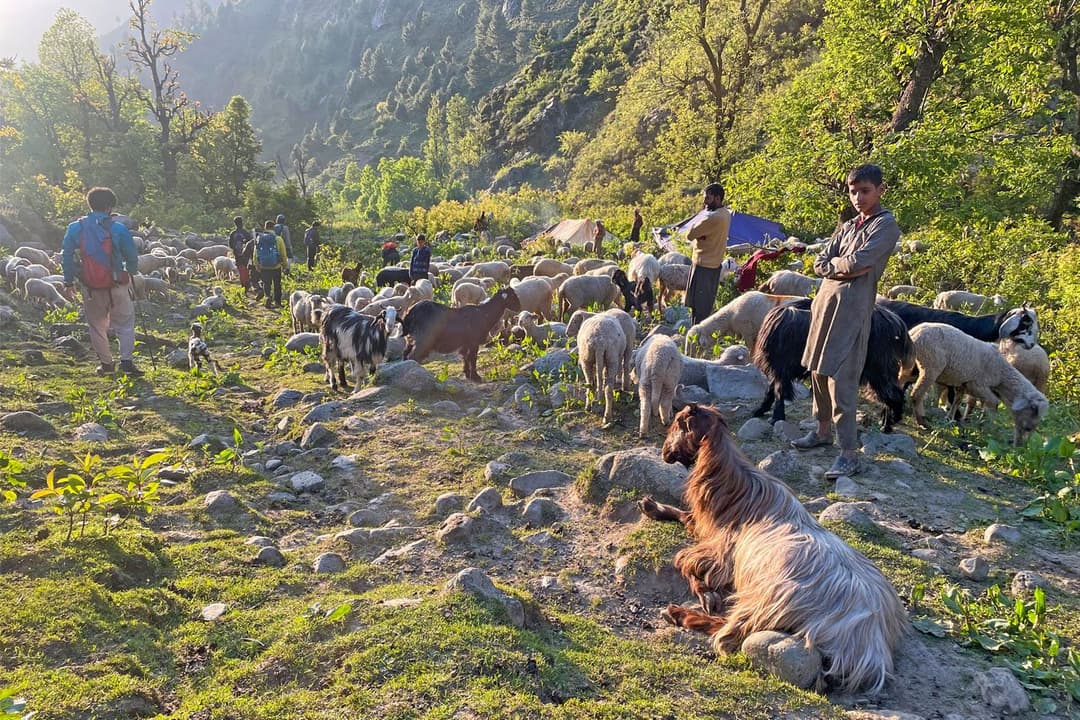


Abdul Latief Bajran left Peri, a village in Rajouri district, in early May with his 150 animals – sheep, goats, horses and a dog – in search of grazing grounds high up in the mountains of Kashmir. He took his son, Tariq and a few others. “I sent my family [wife and daughter-in-law] along with the weak animals, food, shelter and other necessary items in a mini truck,” says the 65-year-old herder from Jammu.
But two weeks later, “I was shocked to see them [in Wayil],” he says. He had expected them to have reached their destination in Minimarg (on the India-Pakistan border) and set up a summer camp.
Instead, they were 15 days away from that location. He says they had stopped because of the weather – they were waiting for the snow to melt on the Zojila Pass which they must cross to reach Minimarg.
Every year as summer approaches in the Jammu region, and grass becomes scarce, pastoral nomadic communities like Bakarwals migrate to the Kashmir valley in hope of better grazing grounds. They come back only in October when the weather starts to get cold there.
But when grazing grounds high up are still covered in snow, pastoralists like Abdul are caught – they can neither descend back to their village as there is no grazing, and neither can they move up to the meadows.