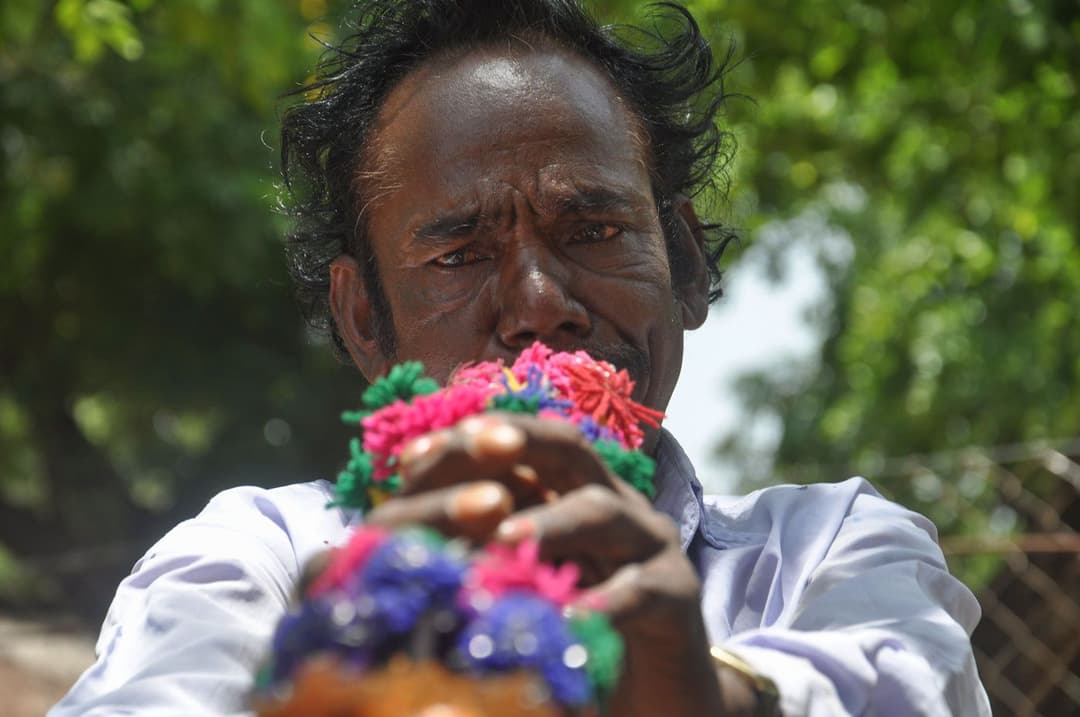
“Our elders have been singing this baans geet for a very long time,” said Panchram Yadav, when I came across him at an annual fair for folk musicians in Bhilai, a city in central Chhattisgarh.
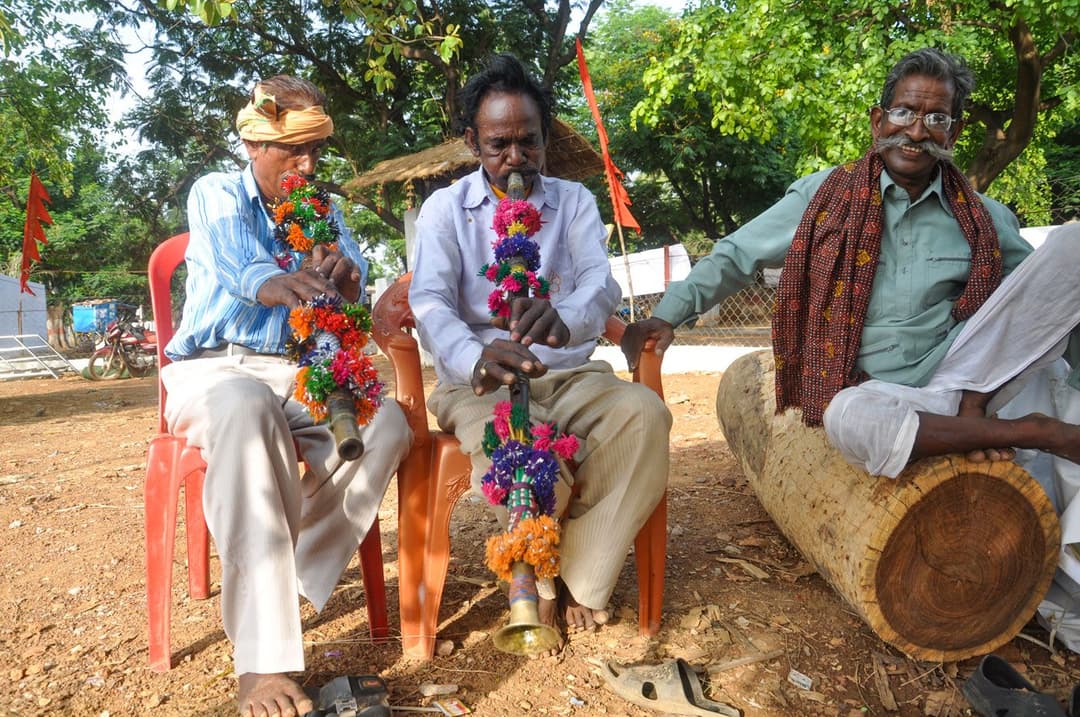
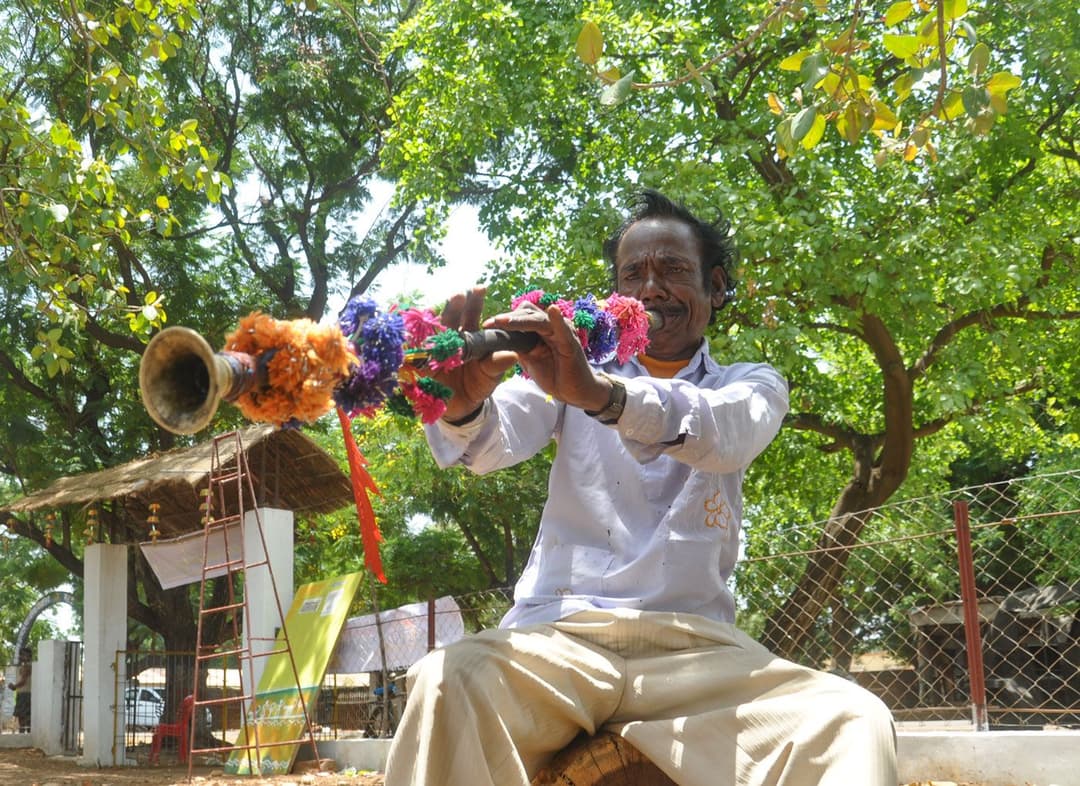
While strolling at the fair ground in the month of May some years ago, I’d been drawn to the deep reverberating sounds of the geet. Three men were playing the baans baja, a long, brightly decorated cylindrical woodwind instrument. It’s played by Raut men, an OBC subgroup of the Yadava caste, mainly in the districts of Durg (where Bhilai city is located), Balod, Dhamtari, Gariaband, Kanker and Mahasamund in Chhattisgarh.
While the three musicians, all in their late 50s and 60s, played the instrument, a few accompanying singers narrated and sang songs of Lord Krishna and other legendary herdsmen in equally resonant voices.
The 4 to 5 feet long baans baja has traditionally been the cowherd’s instrument. The artists (only men in the community play this instrument) usually make the baja themselves, at times with help from local carpenters – from choosing the correct bamboo to getting it ready, then making four holes, and decorating the instrument with woollen flowers and colourful pieces of cloth.