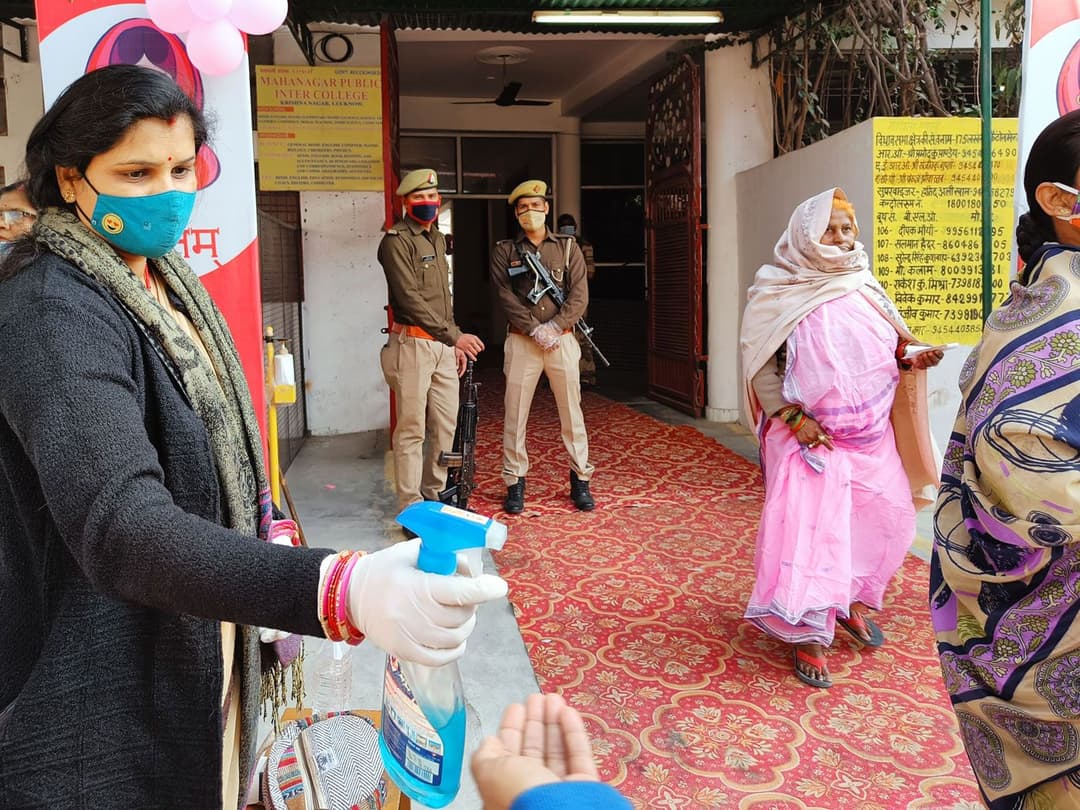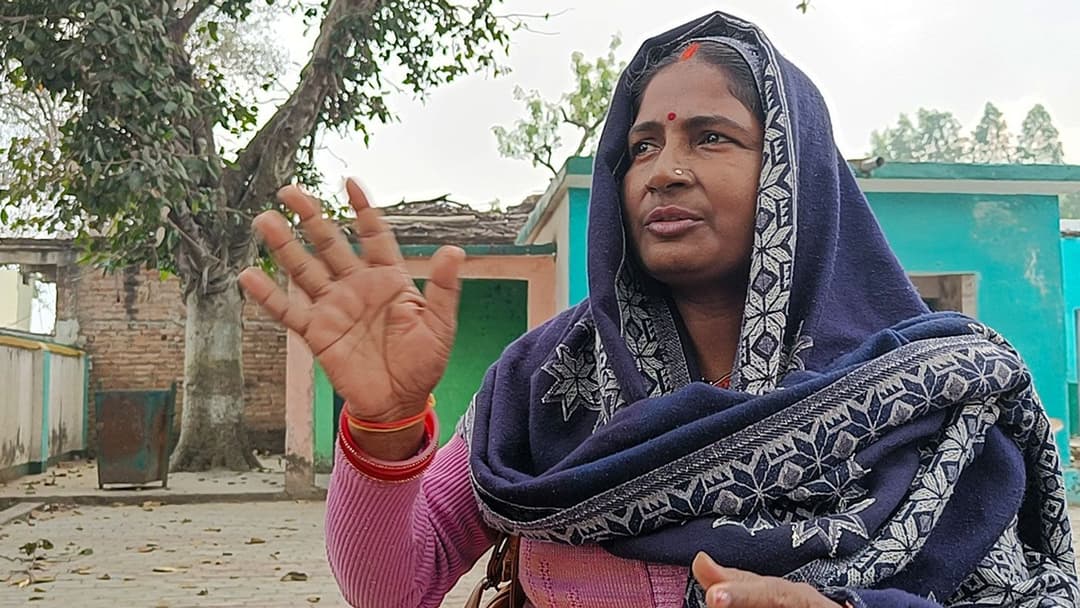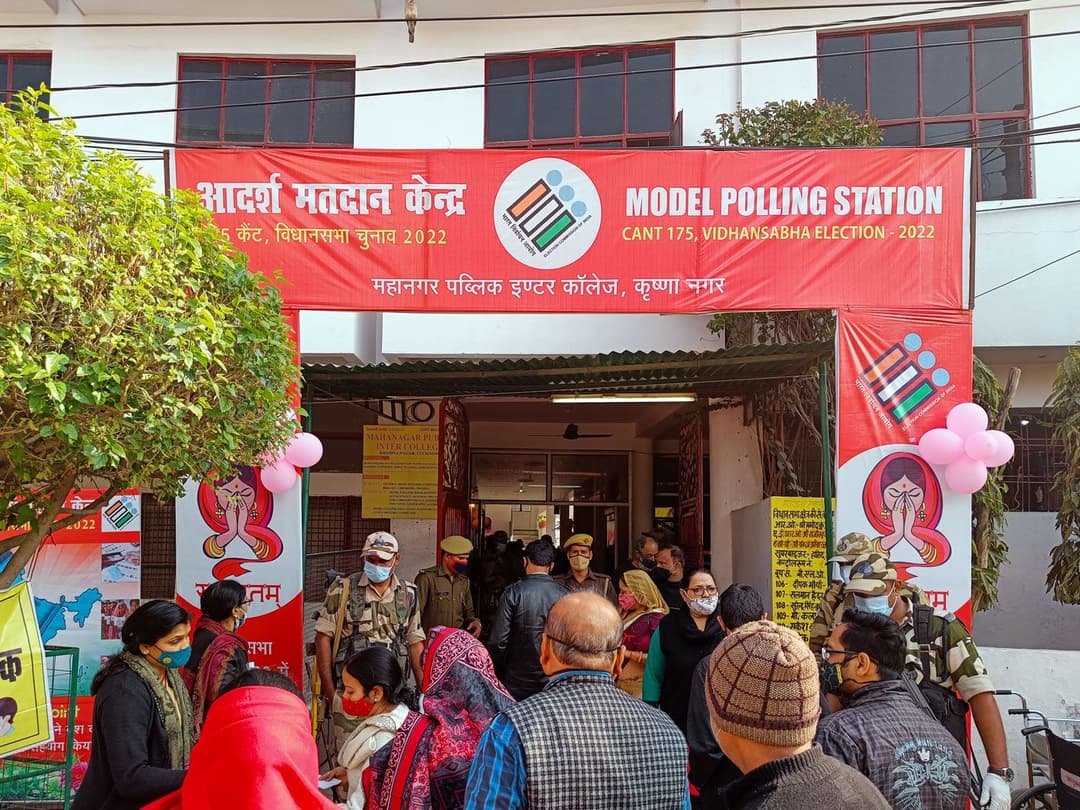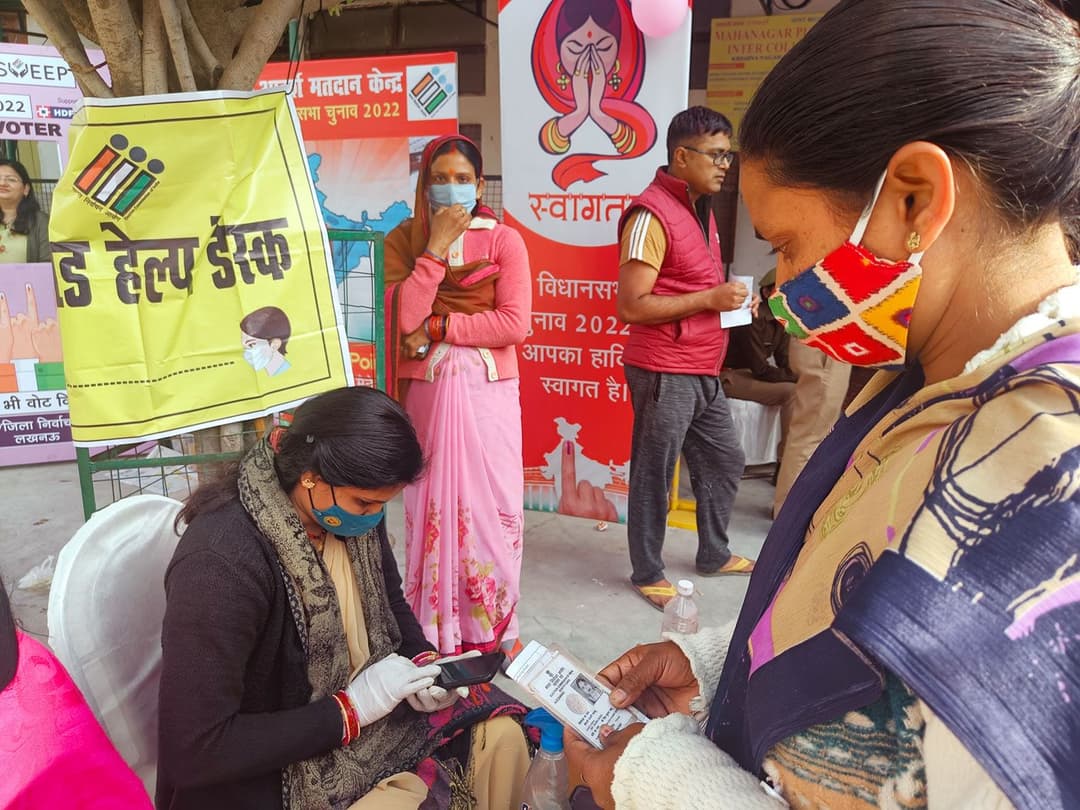

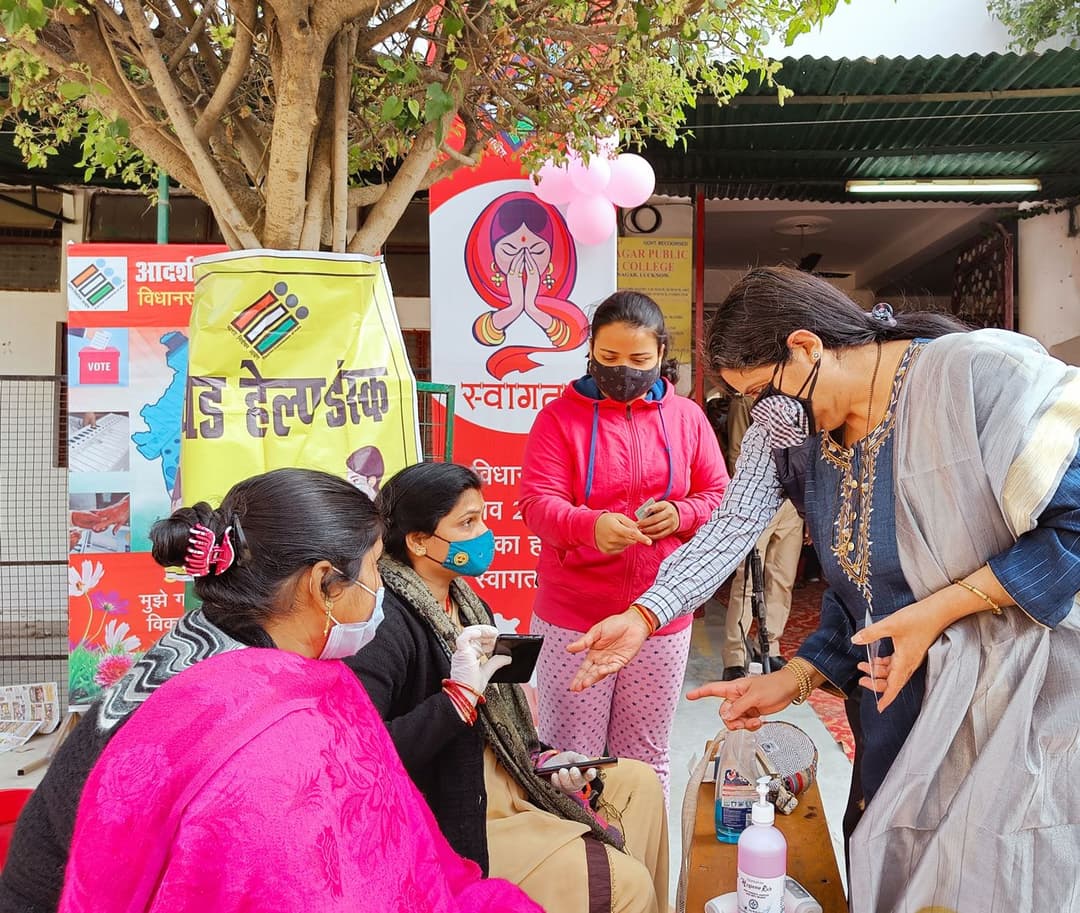
“Ek minute bhi late nahi ho sakte warna humari class lag jayegi [I cannot be late, not even a minute or I am screwed],” said Reeta Bajpai as she took hasty strides towards the Mahanagar Public Inter College in Lucknow Cantonment assembly constituency. That was the polling station where she’d been assigned duty – though not the one where she votes herself. The college is about a kilometre away from her home.
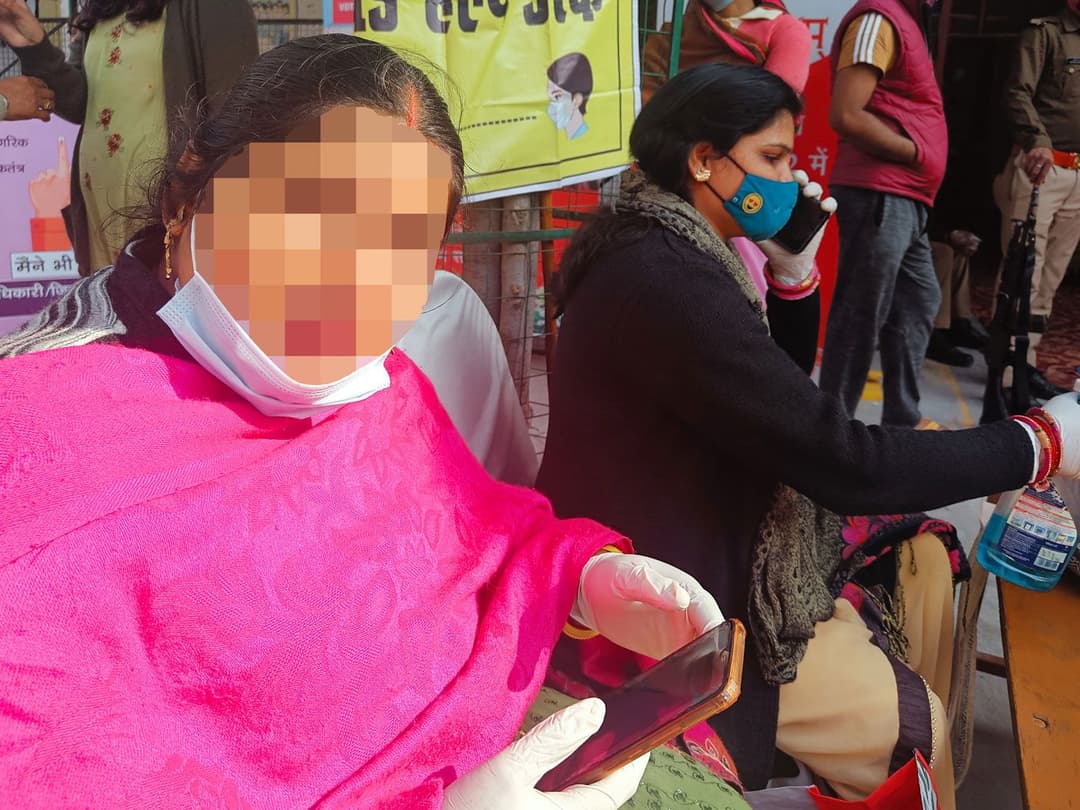
She was walking that distance at 5:30 a.m. carrying a big bag containing a digital thermometer, sanitiser bottles, and several pairs of disposable gloves and masks to be distributed at the venue. With Lucknow voting in the fourth phase of the Legistlative Assembly elections along with 58 other constituencies in nine districts on February 23, it was to be a particularly busy day for her.
The elections in Uttar Pradesh are over – and the results are out. But for one very large group of women there are results that might yet come in – which they know could be very distressing, possibly life-threatening. Results arising from risks they were forced to undertake in the conduct of the assembly polls in India’s most populous state.
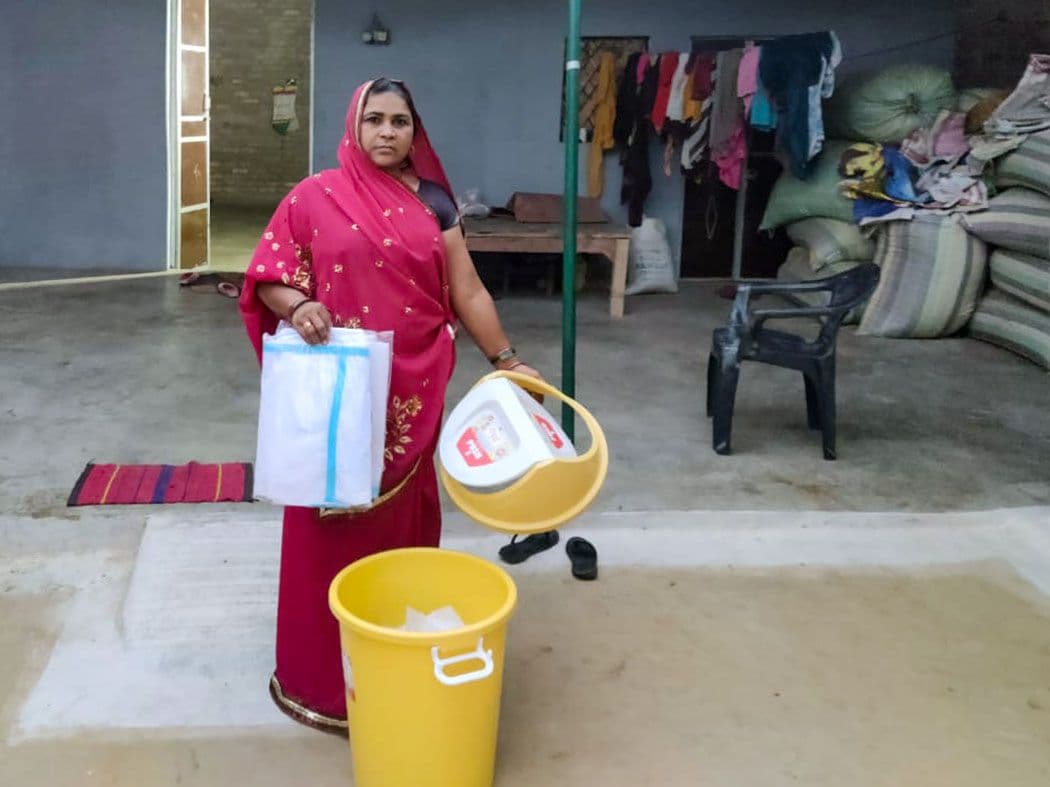
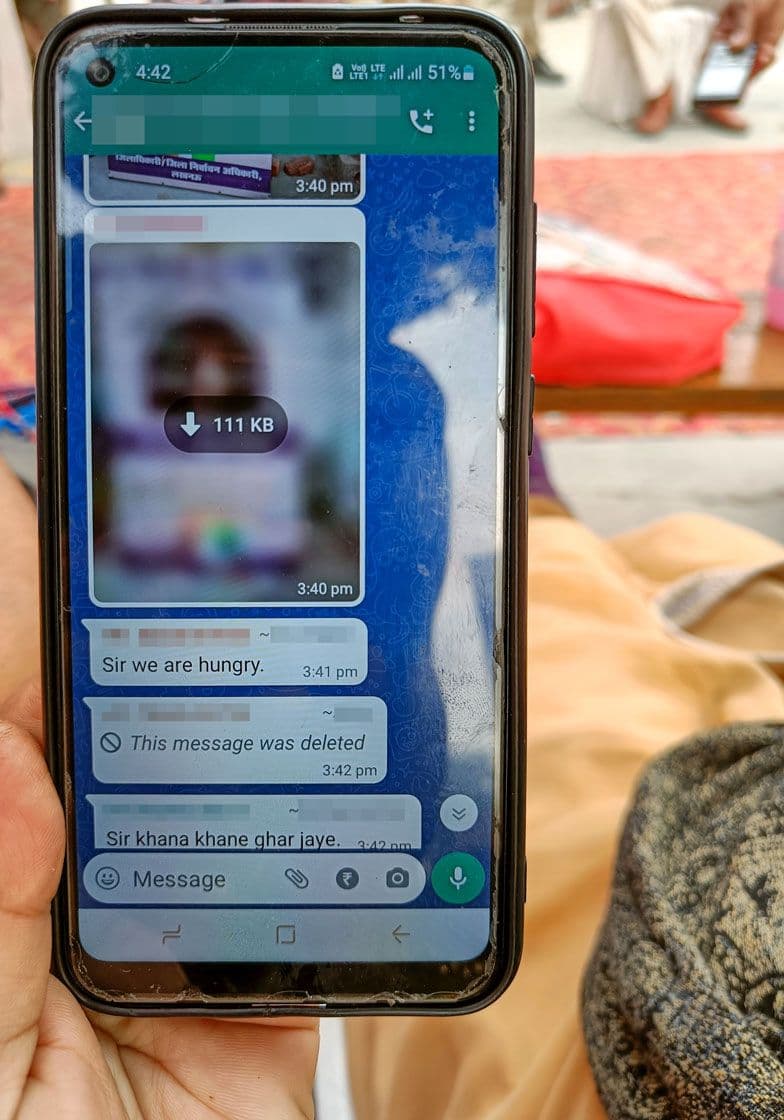
They are the 163,407 ASHAs (Accredited Social Health Activists) who were compelled to work at the polling booths – without any formal written orders. And ironically – since their task was to maintain hygiene and sanitation at the polling centres – with scant personal protection for themselves. That, in a state which saw the Covid-19 related deaths of close to 2,000 schoolteachers in April-May 2021. The teachers had been ordered to work, against their will, as polling officials in the panchayat polls of April that year, at the height of the pandemic.