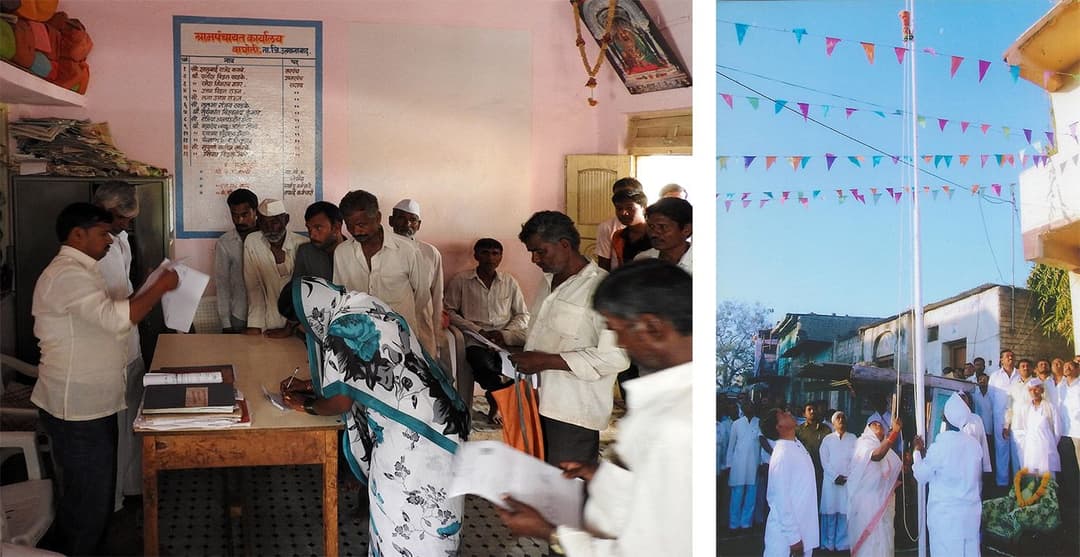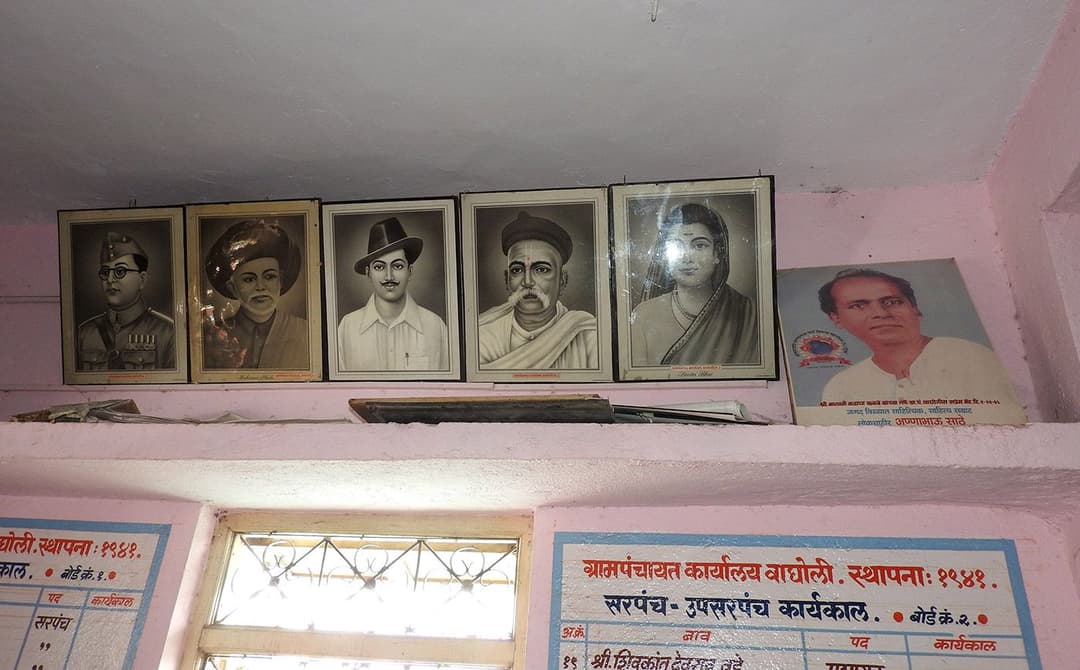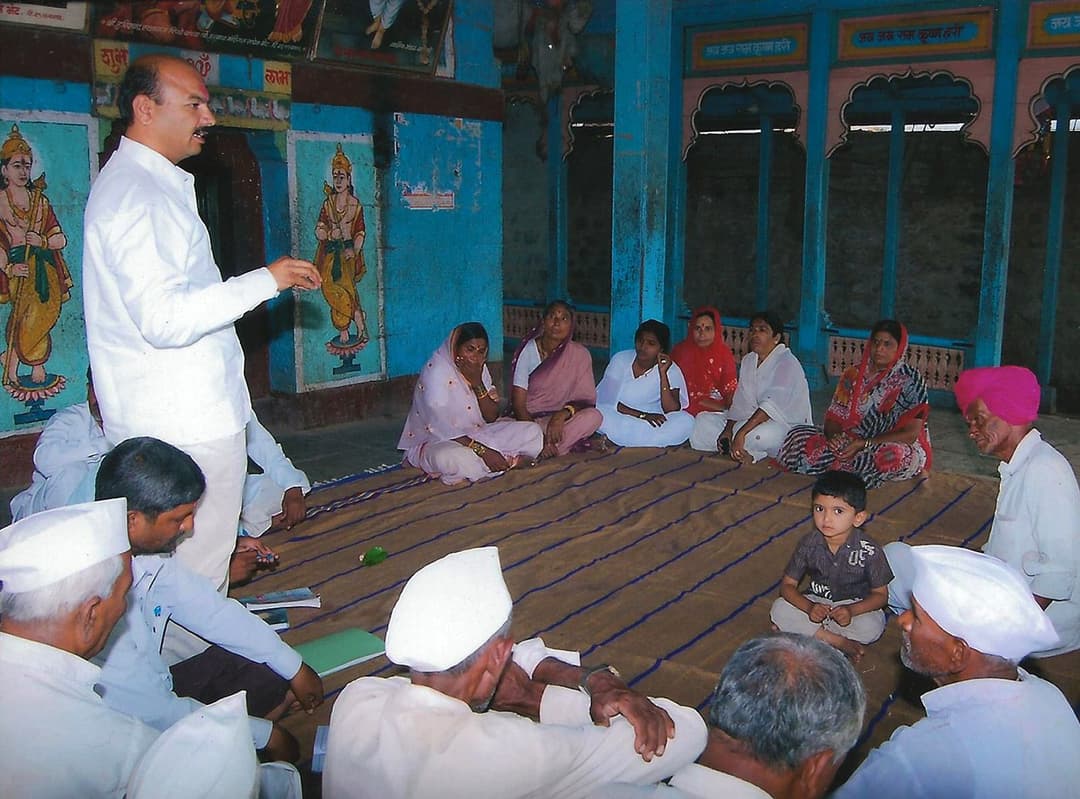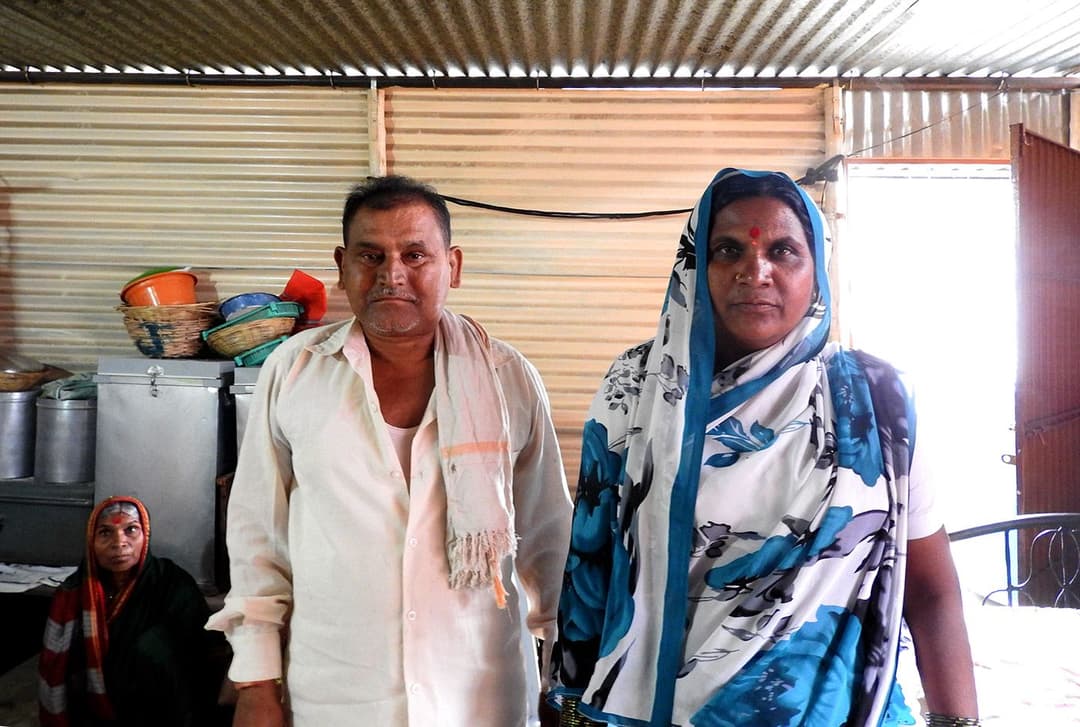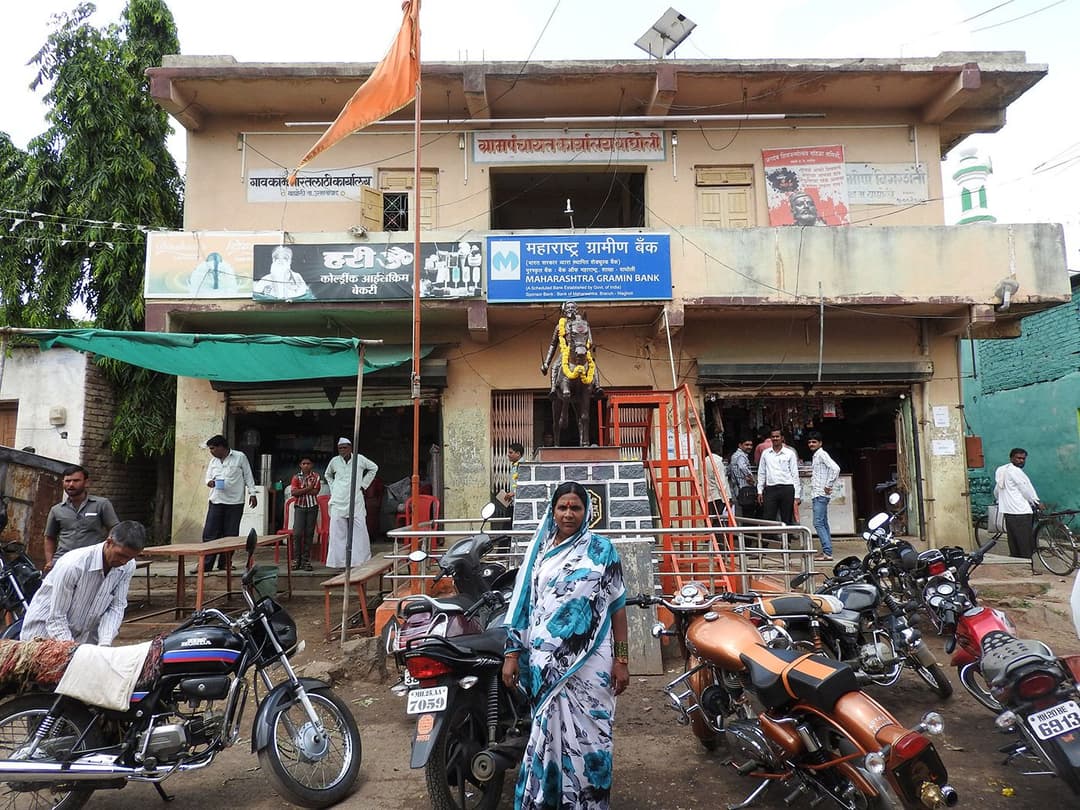

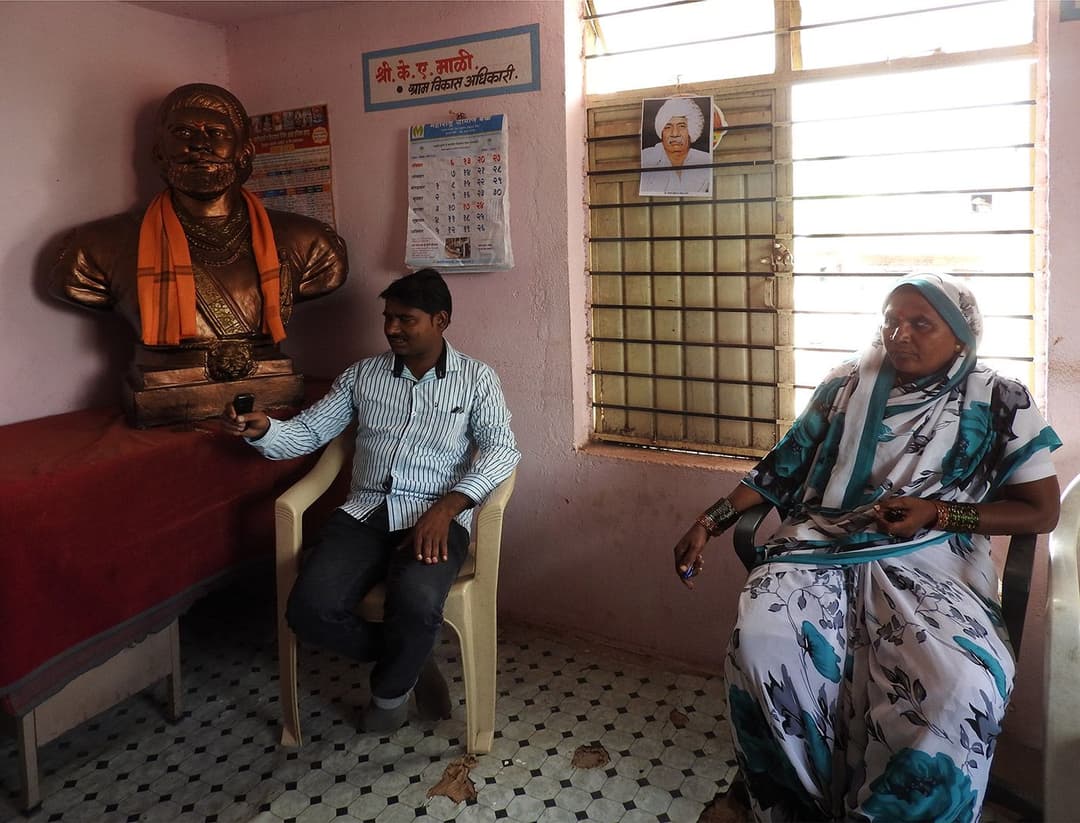
The table was meant for the sarpanch. But just a few weeks after Shalubai Kasbe, then 44, was elected to the five-year post in 2011, the young men of Wagholi village lugged a huge bust of Chhatrapati Shivaji into the panchayat office. This, they decided, could only be placed on that very table.
And so the elected sarpanch of this village in Osmanabad district, a Dalit woman, sat on a chair without a table for all five years of her tenure. To sign official panchayat papers – the only symbol of authority conceded to her by the dominant castes – she sat where any other villager would. Across the table from the clerk handling the office registers.
When Satish Khadke, the man who would be her ‘deputy’, asked Shalubai to contest the sarpanch post in 2010, her husband and two sons demurred. They knew she would have no say in running the panchayat, but only the symbolic power of signing papers, including contracts for development work. In the real world, Khadke himself would hold the reins, put those papers up for clearance. It did not help that Shalubai was illiterate, and had only just learned to sign her name.