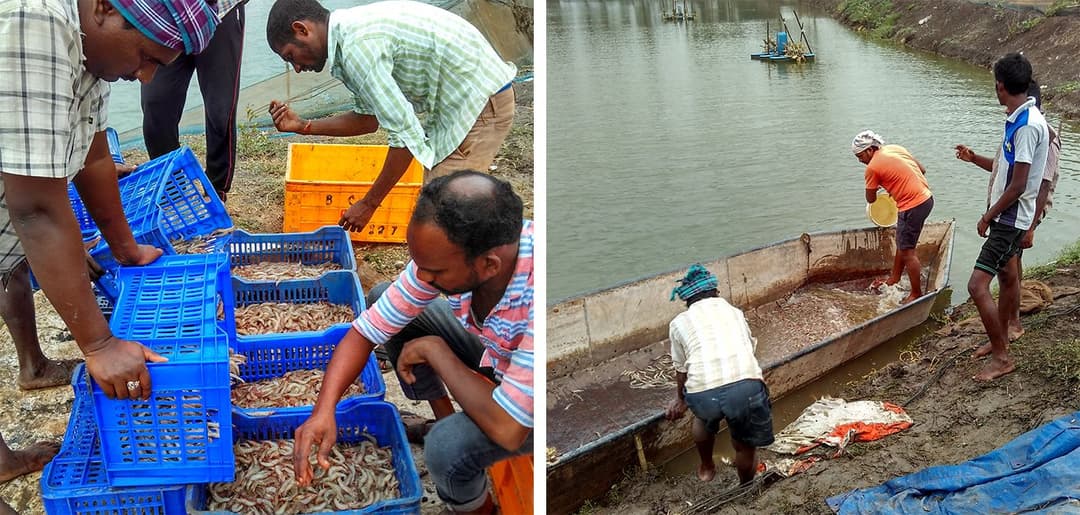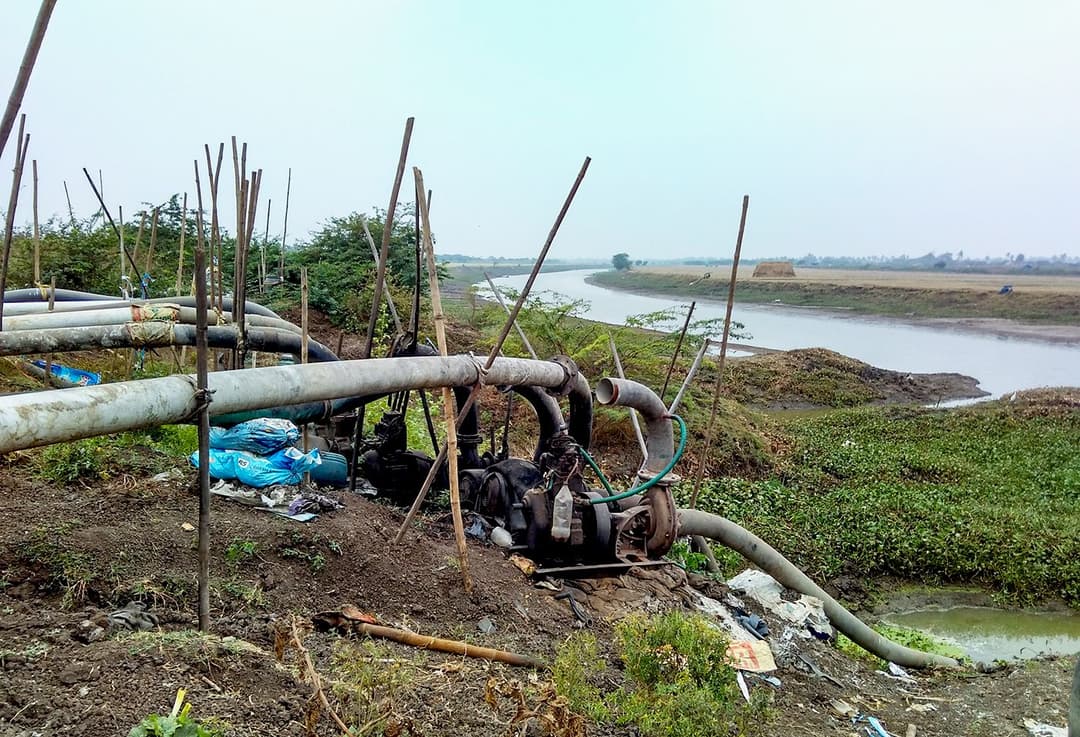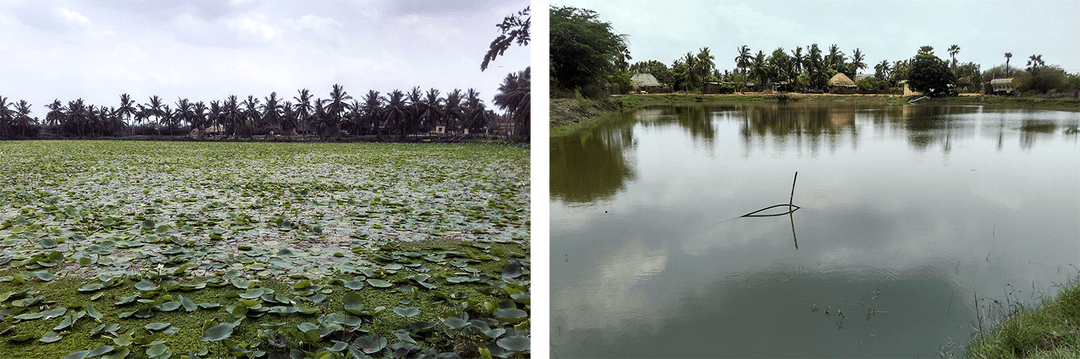

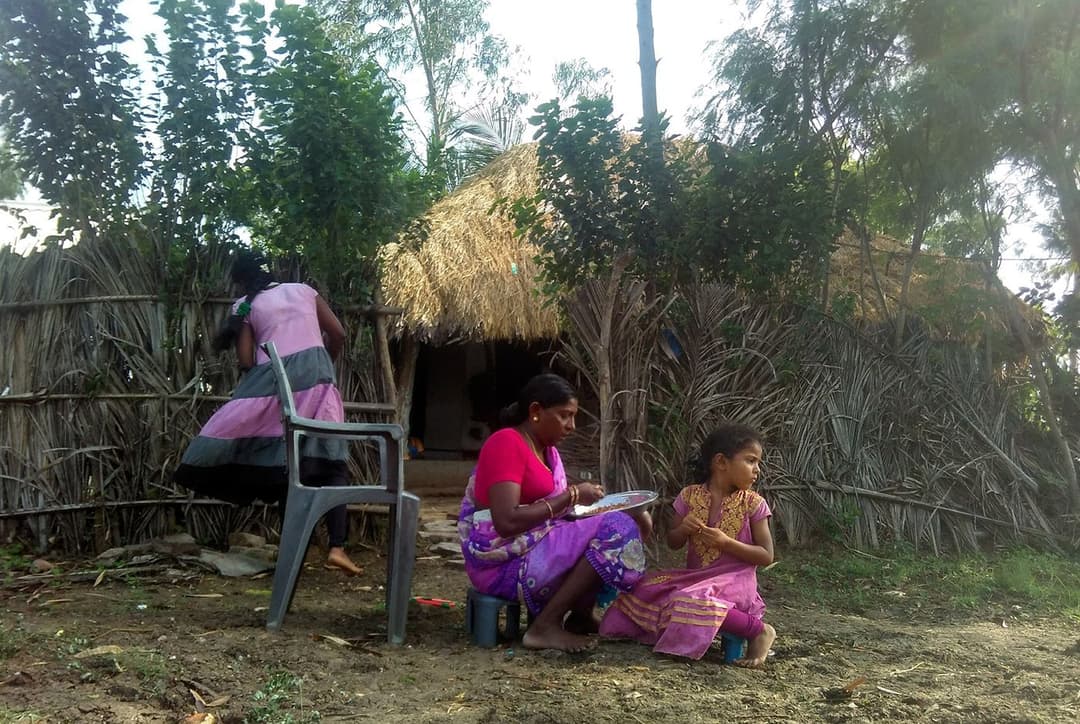
“There is hardly any work in our village or in the surrounding villages,” says Jangam Dhanalakshmi. “All the agricultural lands have been converted into fish tanks.”
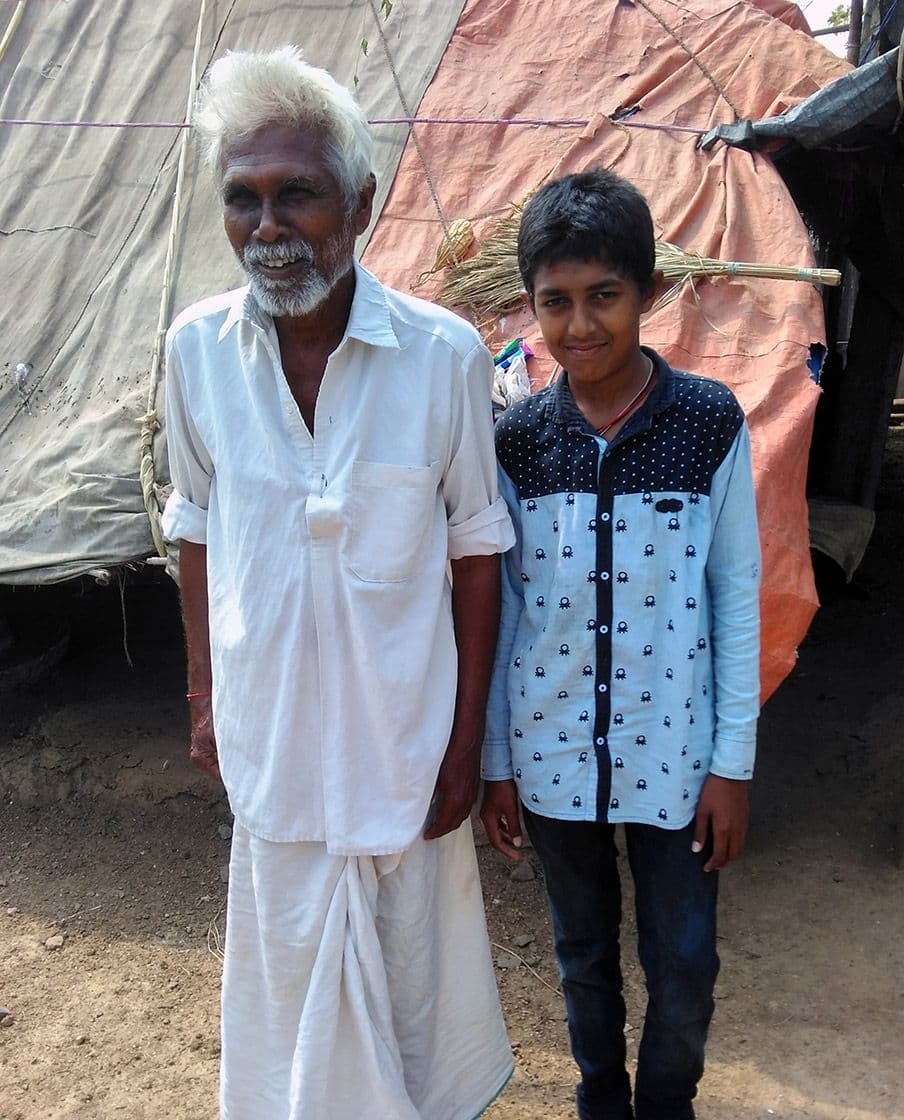
Dhanalakshmi, 40, (in the cover image above), lives in Ankennagudem, a Dalit hamlet of around 450 people at Tamirisa village in Krishna district, Andhra Pradesh. She spends a fourth of her daily wage of Rs. 200 on an autorickshaw to travel around 60 kilometres a day to agricultural work sites.
“Even after travelling so much, we only get work for around 30 days a year – 10 days in April, 10 days in August and another 10 days in December during the peak agricultural seasons,” says Ganta Saroja, Dhanalakshmi’s 60-year-old neighbour. Since the people of the hamlet can only earn Rs. 5,000-6,000 annually from agricultural work, many have migrated. “Around 10 years ago, there were 150 families in this village. Now, there are hardly 60 families,” Saroja estimates. “Some have migrated to Gudivada, Vijayawada and Hyderabad, others have gone to their in-laws’ villages in search of work.”
Ankennagudem is in Nandivada mandal , which has a population of around 36,000. Nandivada has the second largest per capita income in Andhra Pradesh (after Atchuthapuram mandal in Visakhapatnam district) due to the high returns from the fish tanks. The fish here are used in aqua processing units and then mainly exported to East Asian and European countries. In 2014-15, according to data of the state’s Capital Region Development Authority, the annual per capita income in Nandivada was Rs. 308,371 – the income for Krishna district as a whole the same year was Rs. 140,628.