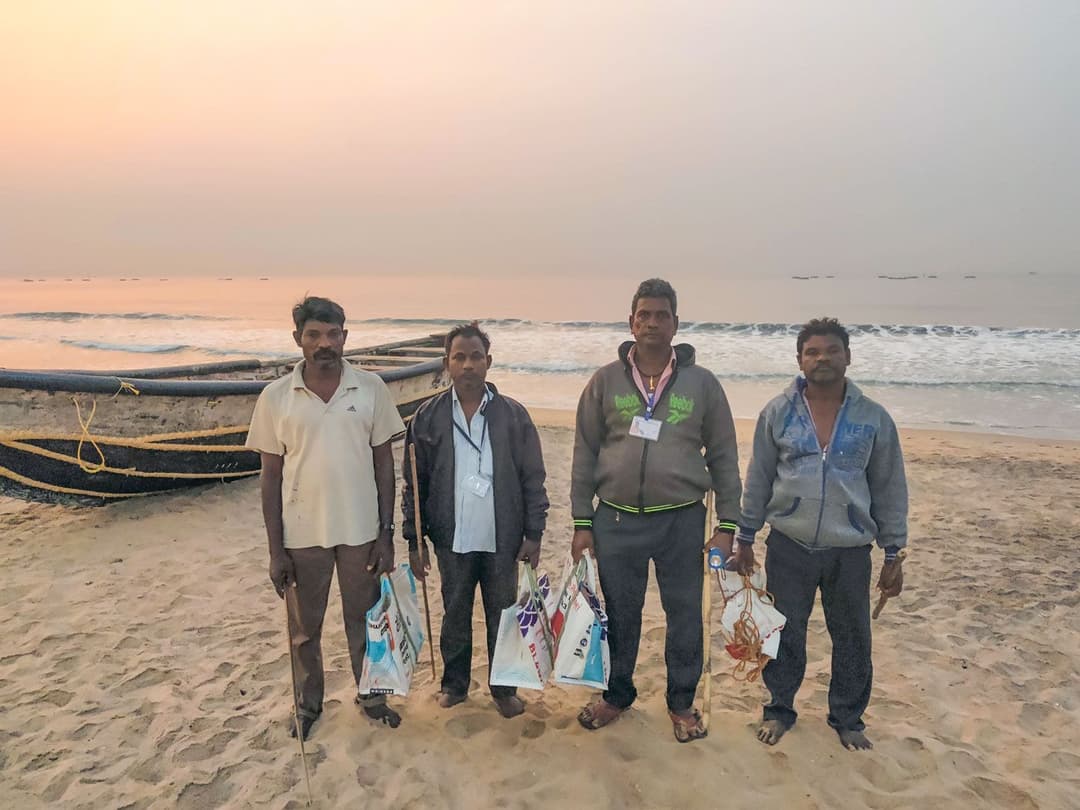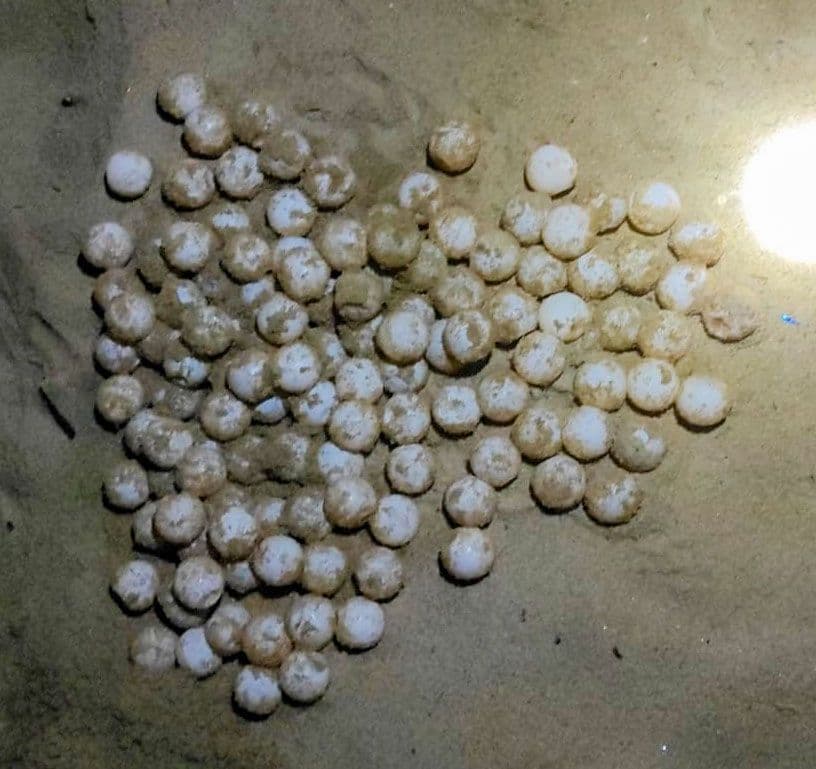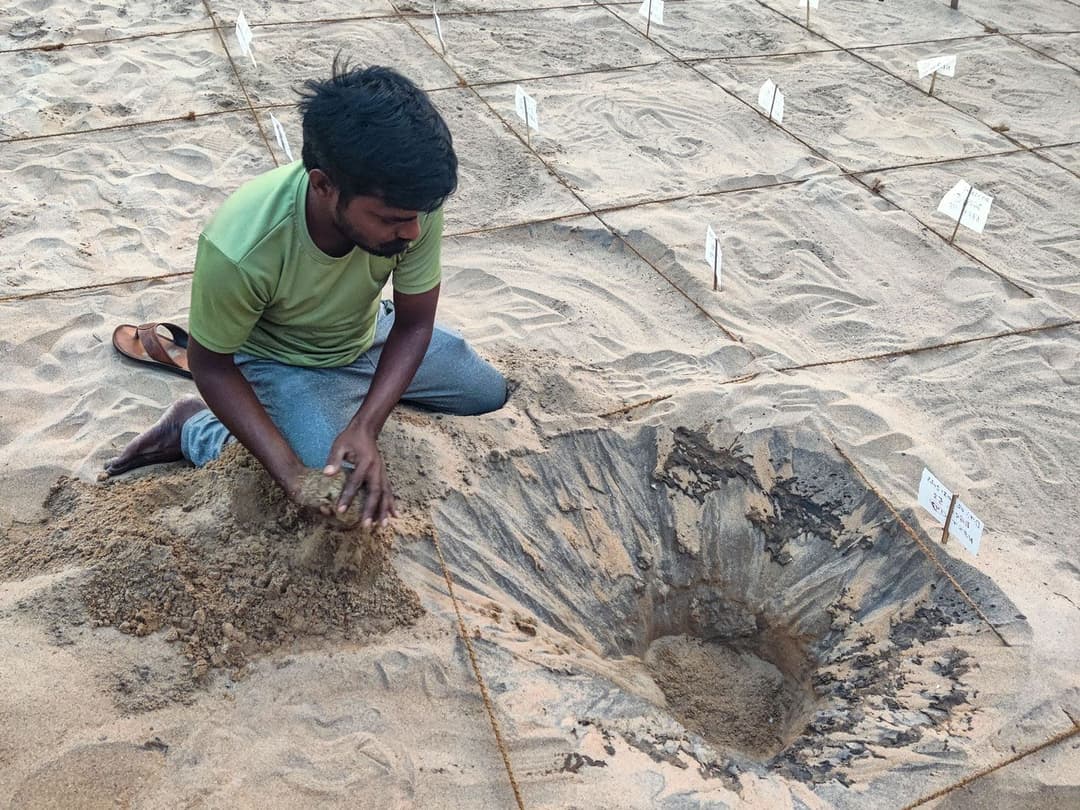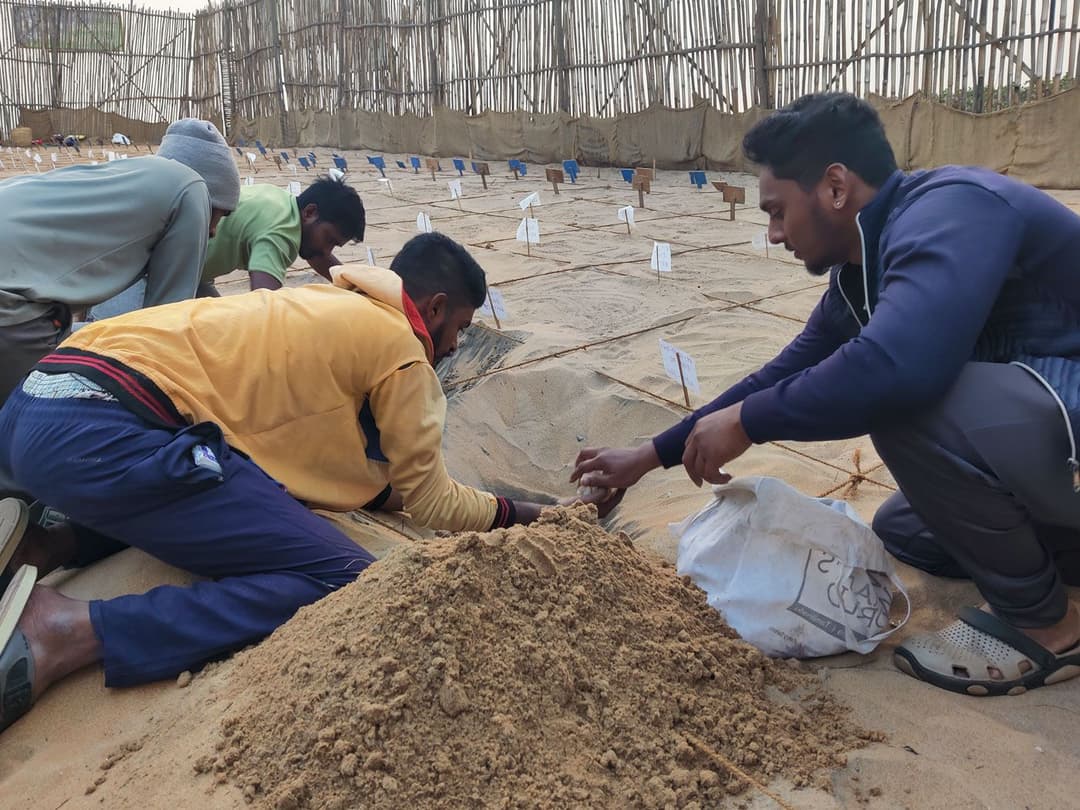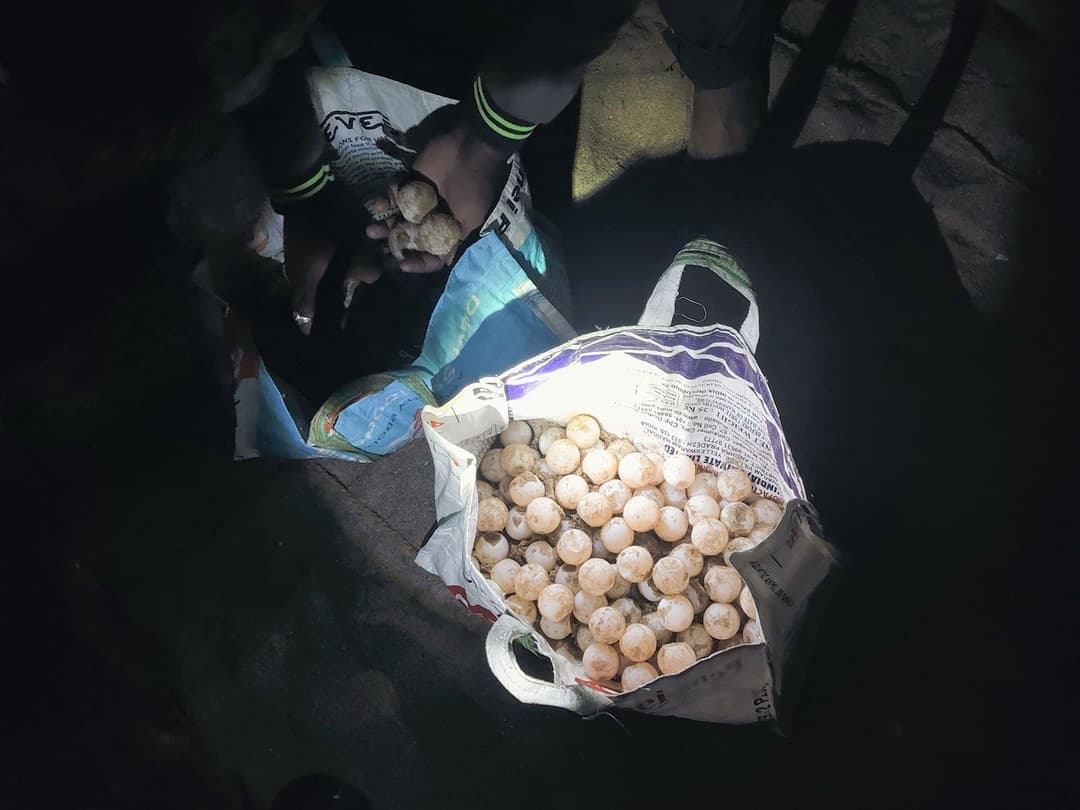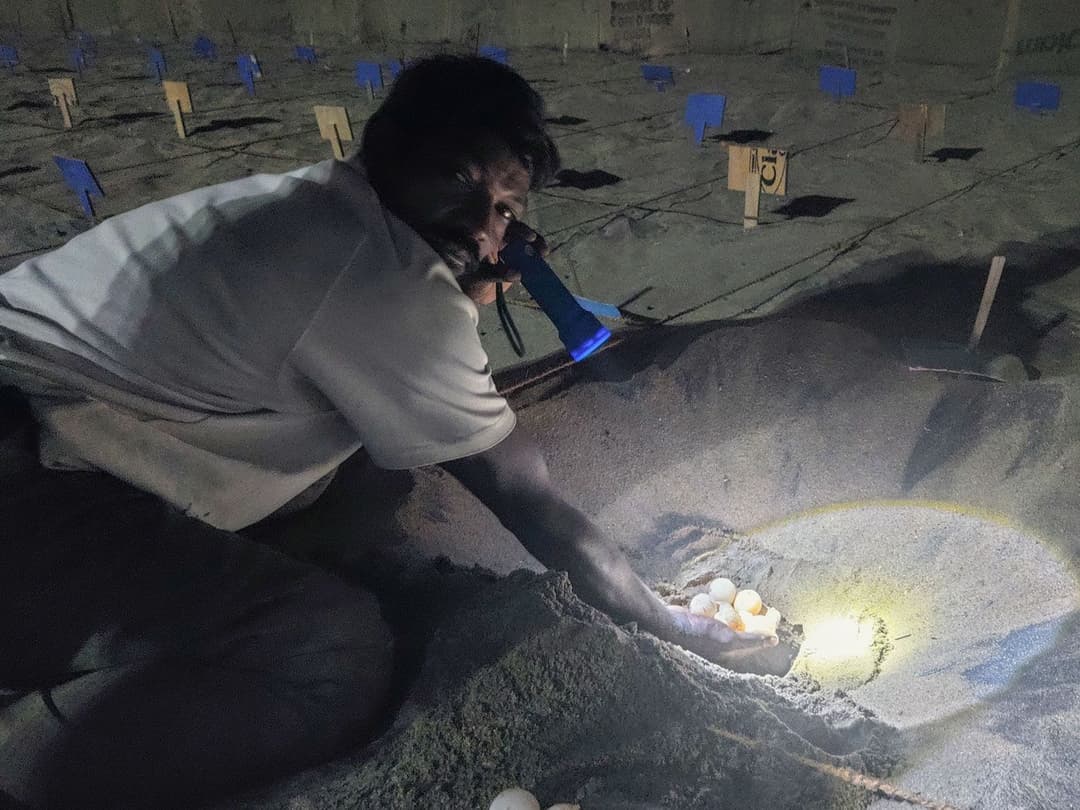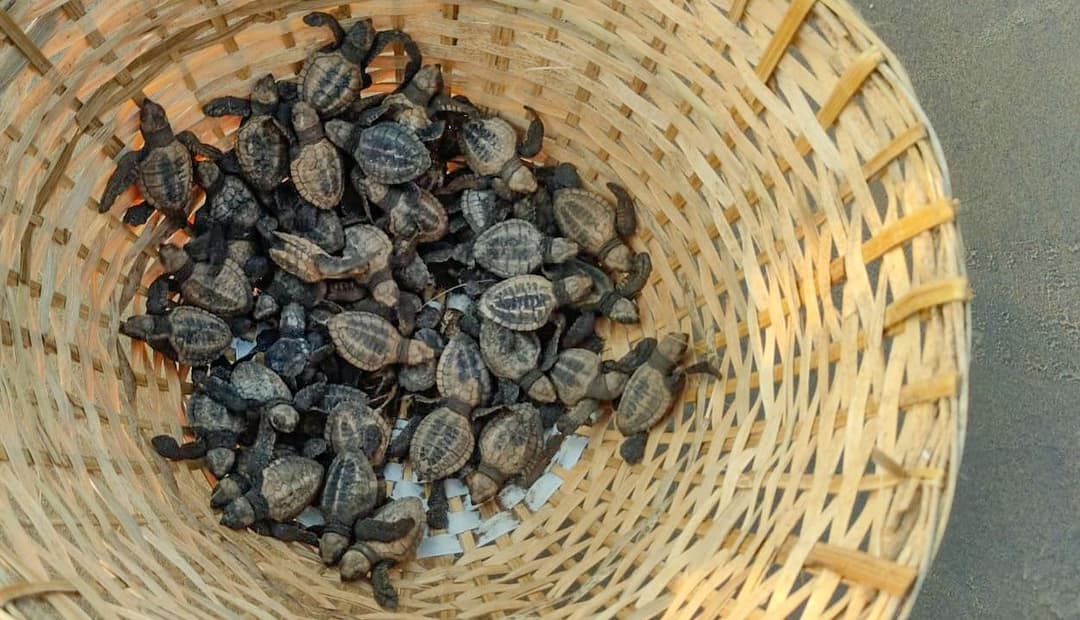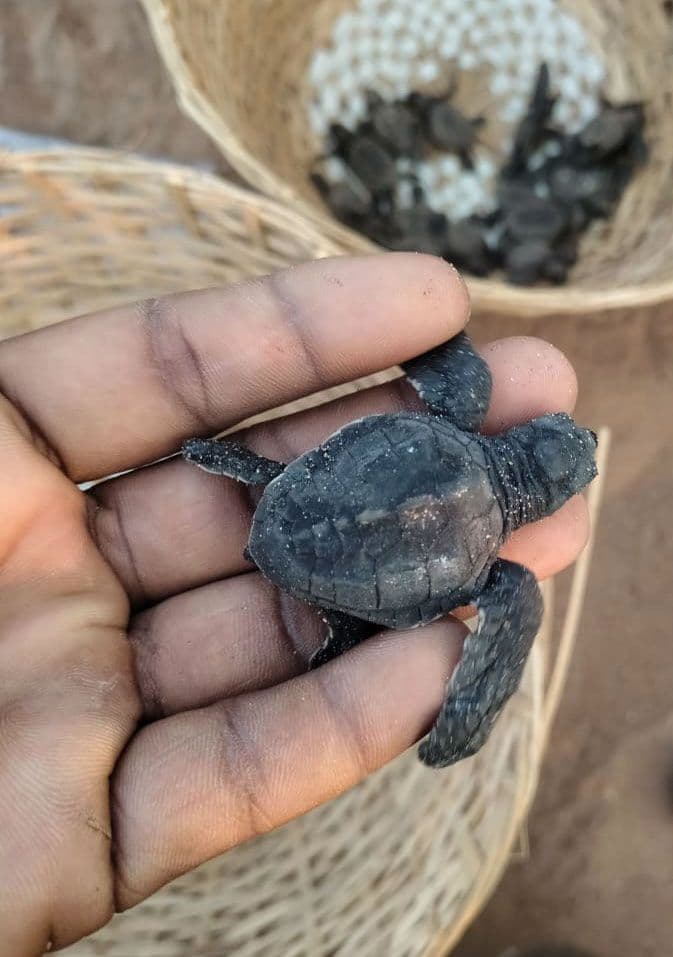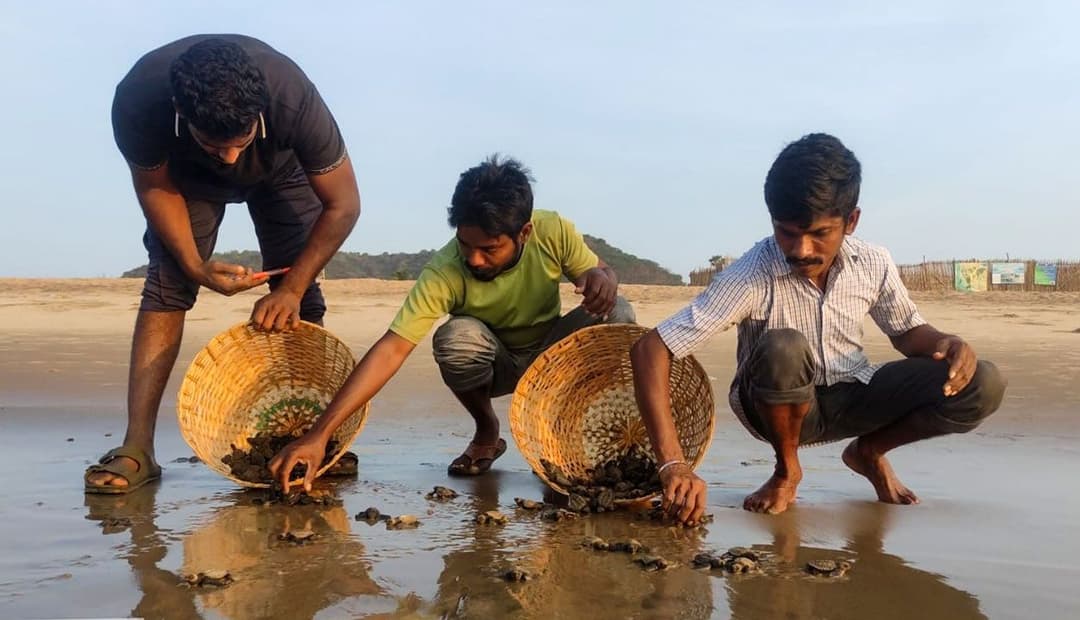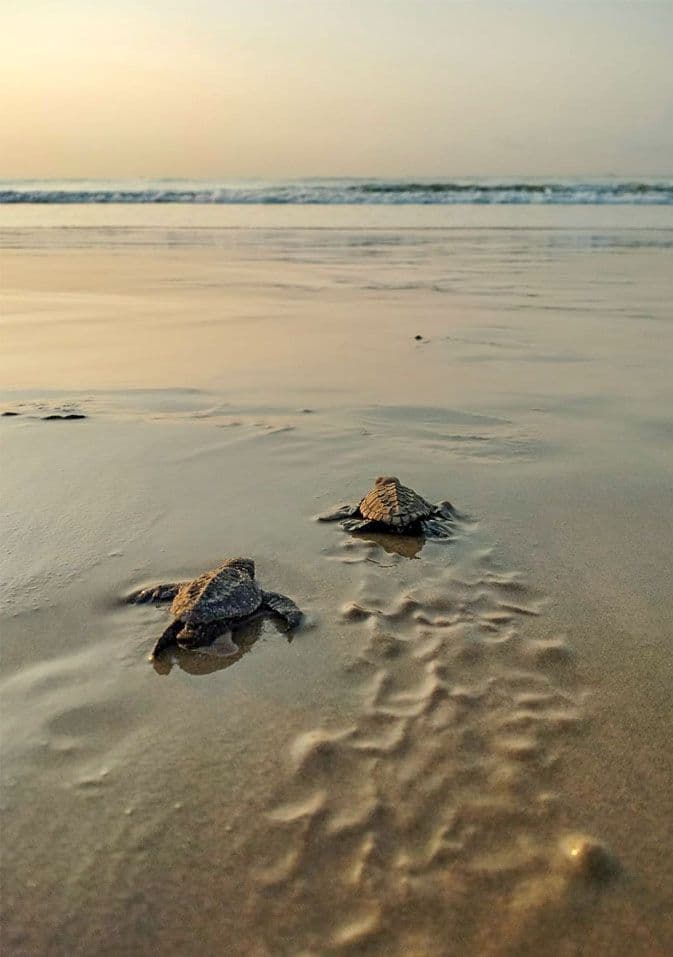

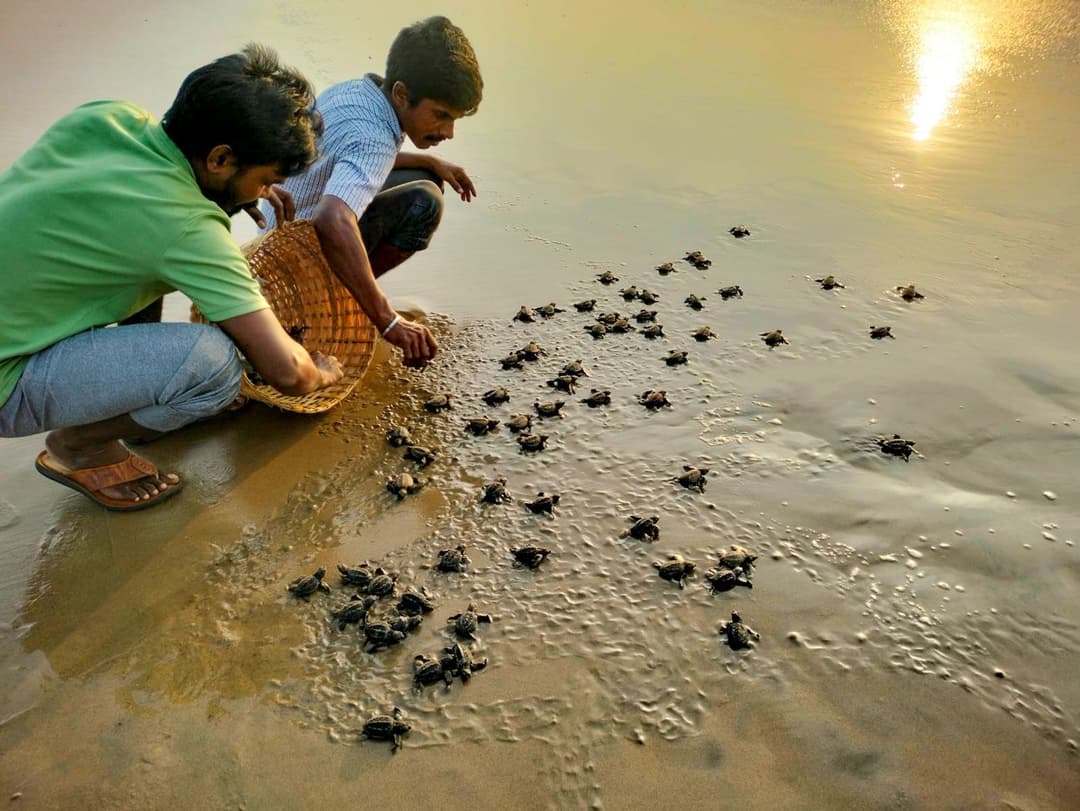
It is 3 a.m. on a beach in eastern India. Ramolu Lakshmayya is using a flashlight to look for Olive Ridley turtle eggs. Armed with a long wooden stick and a bucket, as he slowly traverses the short, sandy path between his home in Jalaripeta and RK beach.
Female Olive Ridley turtles come ashore to lay their eggs and Visakhapatnam's sandy beaches with sloping shores make it an ideal nesting place; they have been spotted here since the early 1980s. However, a few kilometres north, the Odisha coast has the largest mass nesting sites in the country. The female turtles release 100-150 eggs at a time, burying them deep in sand pits.
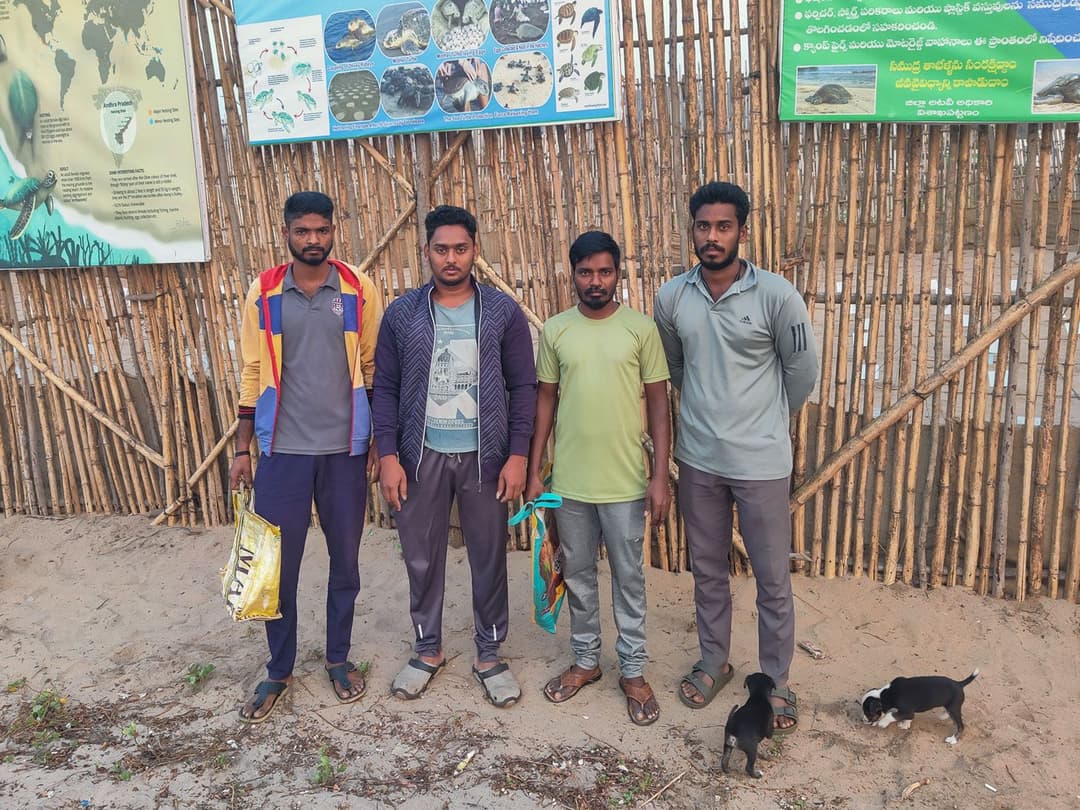
“When the sand feels loose, it suggests that the mother turtle has laid her eggs here,” explains Lakshmayya, carefully probing the damp sand with the stick. Accompanying Lakshmayya are Karri Jallibabu, Puttiyapana Yerranna, and Pulla Polarao, fishermen from the Jalari community (listed as Other Backward Class in Andhra Pradesh). In 2023 they took up part-time work as guards with the Andhra Pradesh Forest Department (APFD) as part of an effort to conserve Olive Ridley turtle eggs under the Marine Turtle Conservation Project.
Olive Ridley turtles (Lepidochelys olivacea) have been categorised as a ‘Vulnerable Species’ on the International Union for Conservation of Nature’s (IUCN) Red List. And protected under the Schedule-I of the Indian Wildlife (Protection) Act, 1972 (amended 1991).
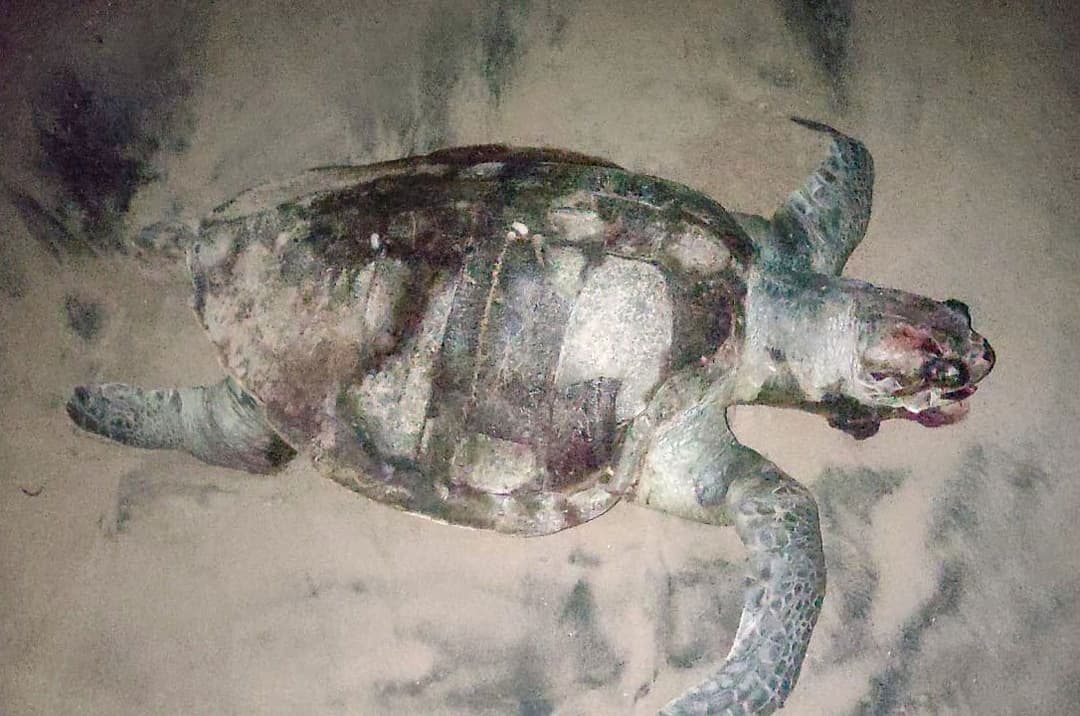
Turtles are at risk because of several factors like coastal destruction, “specifically at the nesting habitats in the name of development as well as loss of marine habitats due to climate change,” says Yagnapathy Adari, a Project Scientist at Kambalakonda Wildlife Sanctuary in Visakhapatnam. Sea turtles are also hunted for their meat and eggs.