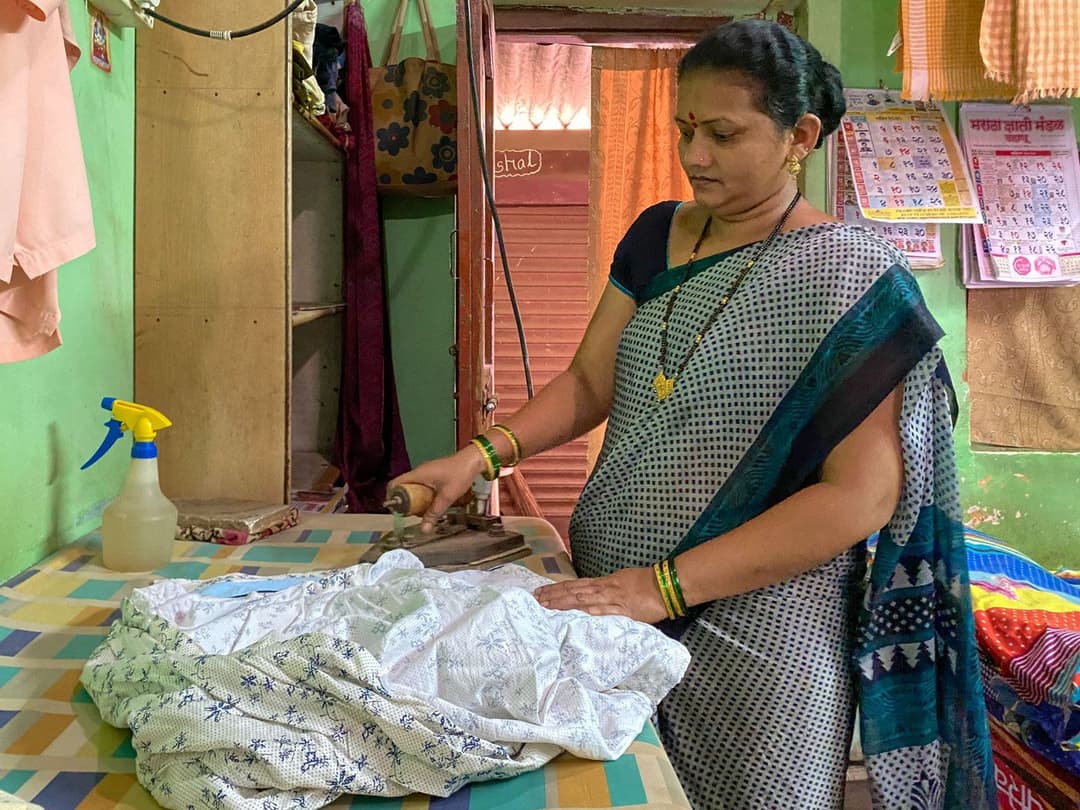

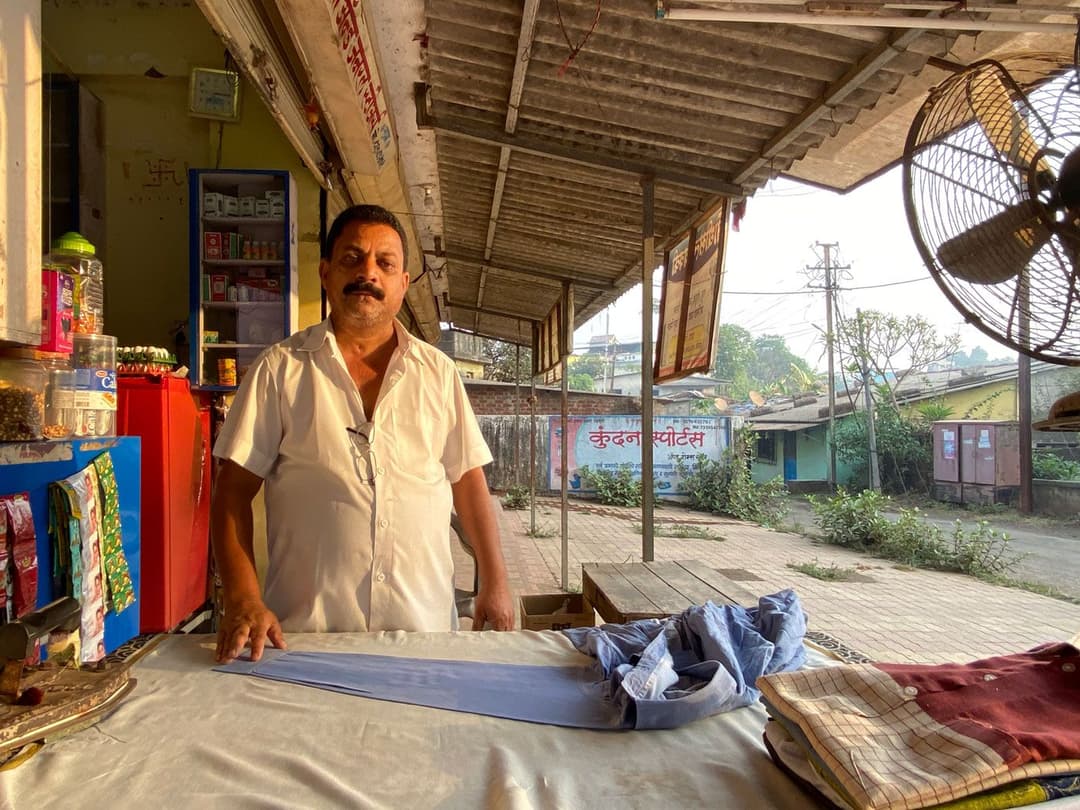
Bundles of clothes no longer move back and forth from Samita’s chawl to the apartments nearby. Until two months ago, every morning, she used to collect assorted garments from families living in the Ashokvan complex of Vada town. Carrying the bundles in her hand and on her head, she would walk back two kilometres to her home in Bhanushali chawl in the same town. There, she ironed and neatly folded the clothes, and delivered them back to the families the same evening.
“Since the lockdown began, I have mostly stopped getting orders,” says 32-year-old Samita More, referring to the to-be-ironed garments. From at least four ‘orders’ a day till the lockdown was announced on March 24, Samita now manages only one or two a week. And her daily earnings of Rs. 150-200 – she charges Rs. 5 for ironing each shirt or trouser, and Rs. 30 for a saree – dropped to barely Rs. 100 a week in April. “How will I survive on only this much money?” she asks.
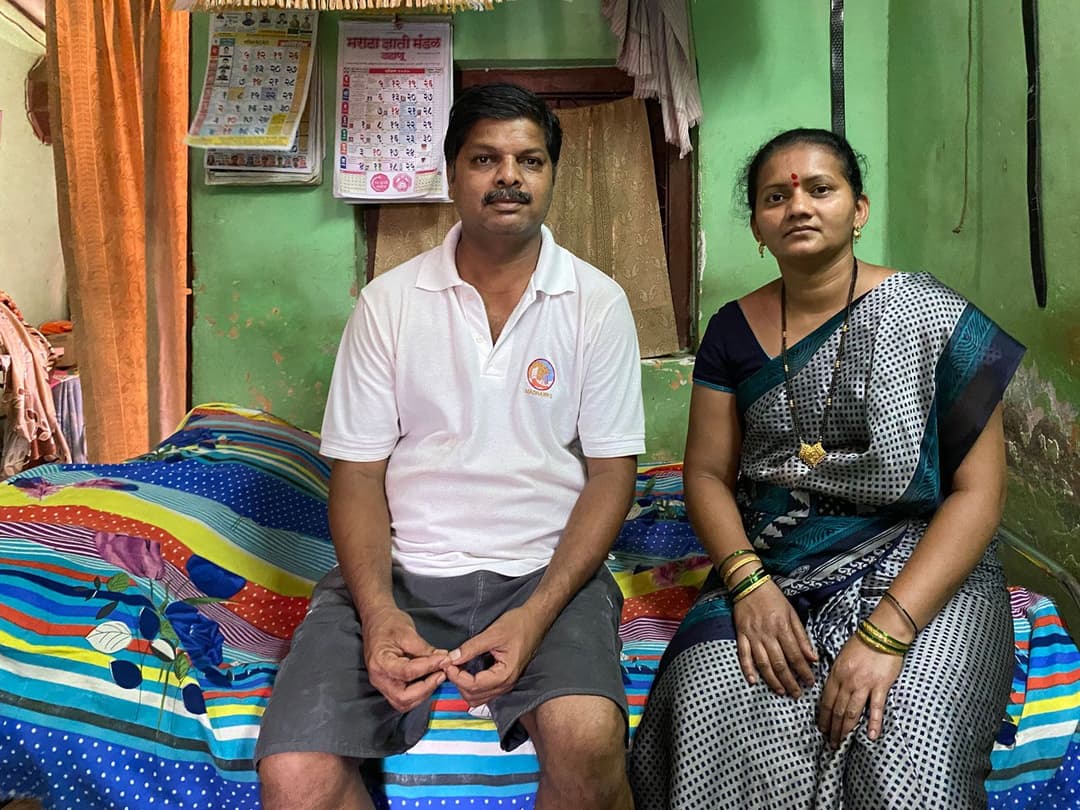
Samita’s husband, Santosh, 48, worked as an autorickshaw driver, but lost sight in one eye in 2005, when someone threw a stone at a tempo he was travelling in near Vada. “I help my wife iron clothes as there’s no other job I can do,” he says. “My legs hurt from standing four hours for ironing every day.”
Santosh and Samita have been ironing clothes for 15 years. “After his accident we needed money to eat and send our two sons to school, so I started this work,” Samita says. “But this lockdown has been really bad for us.” The family has used up their modest savings in the last few weeks and borrowed Rs. 4,000 from relatives to be able to buy groceries and pay their monthly electricity bill of around Rs. 900.