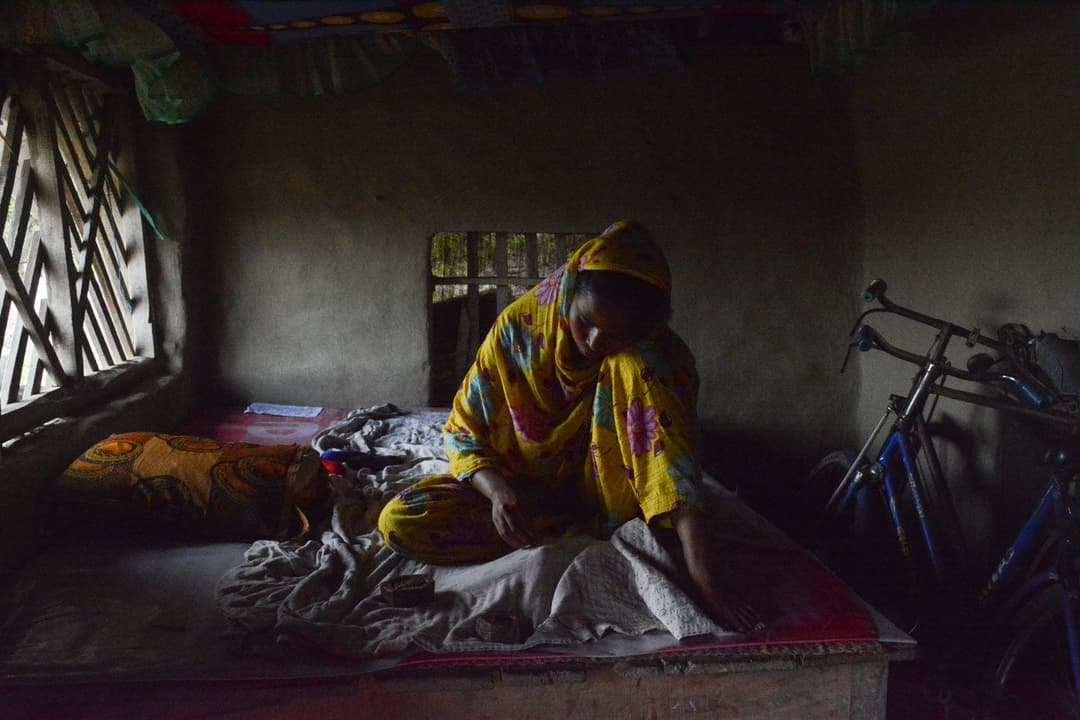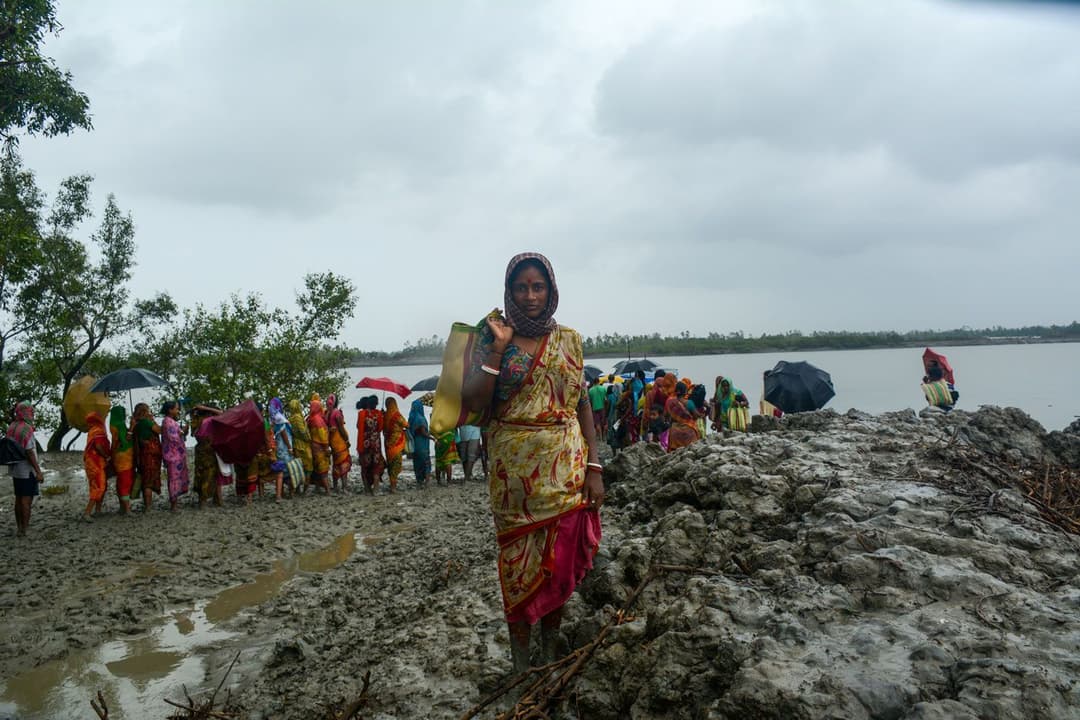
“Now that the storm is over, we have been asked to go,” Amina Bibi, a resident of Kalidaspur village, had told me at the end of May. “But where should we go?”
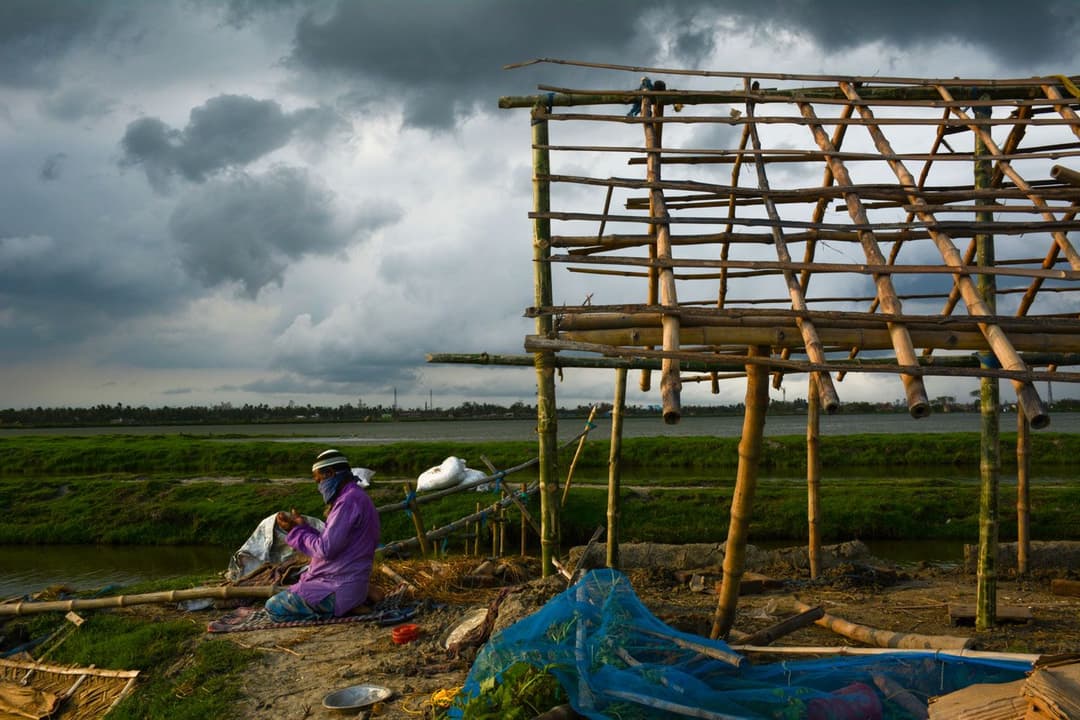
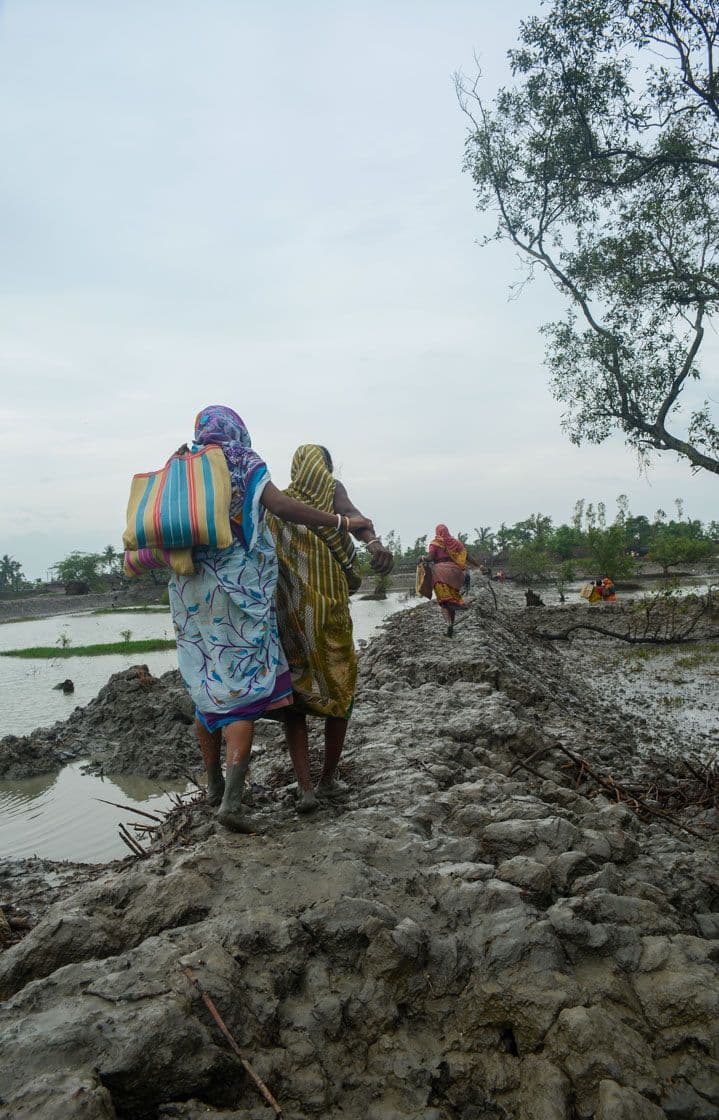
A day before that storm, Cyclone Amphan, made landfall around 150 kilometres from Amina’s village in South 24 Parganas district of West Bengal, local authorities had evacuated families in several villages and housed them in relief camps. Amina and her family were moved to makeshift rooms in a neighbouring village on May 19 this year.
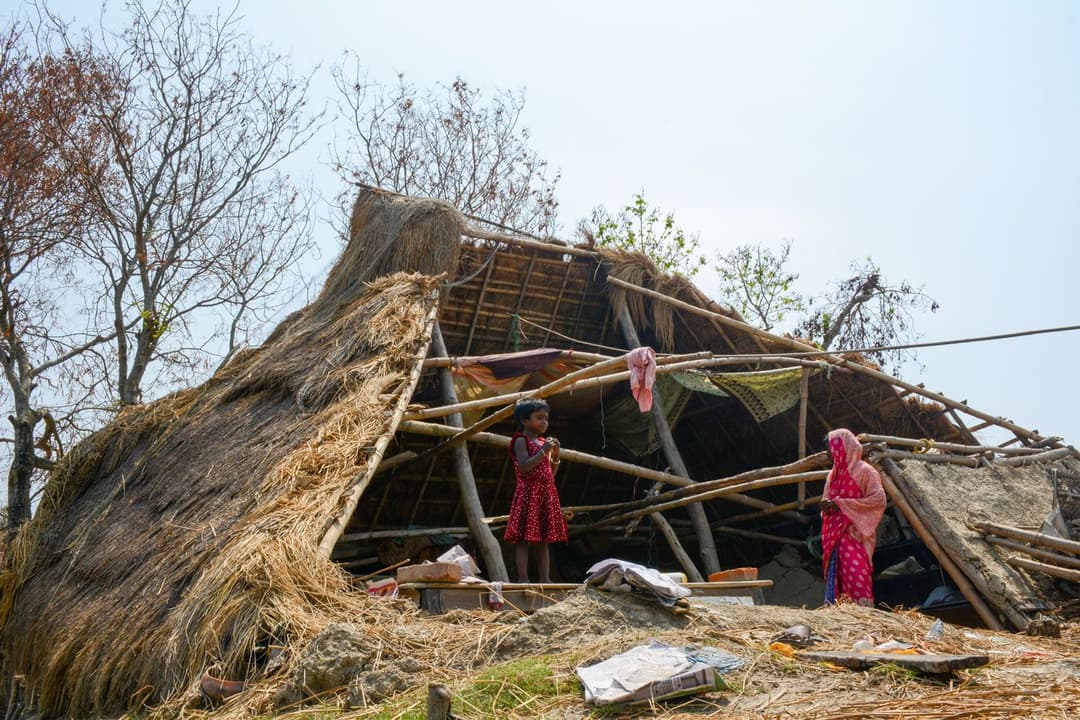
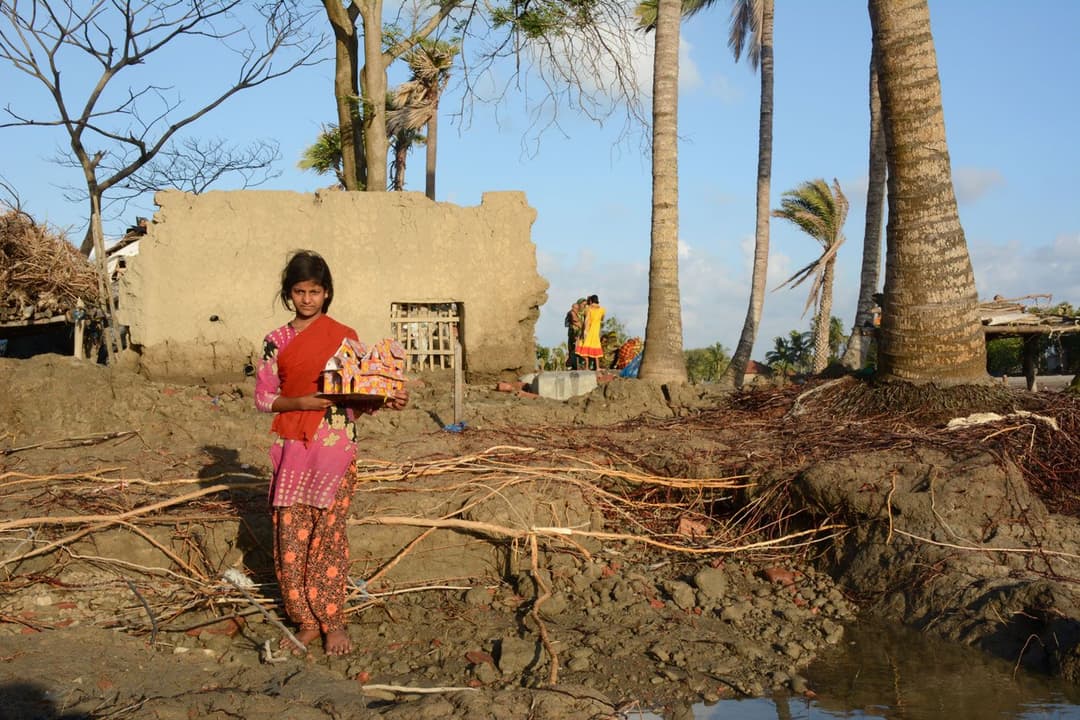
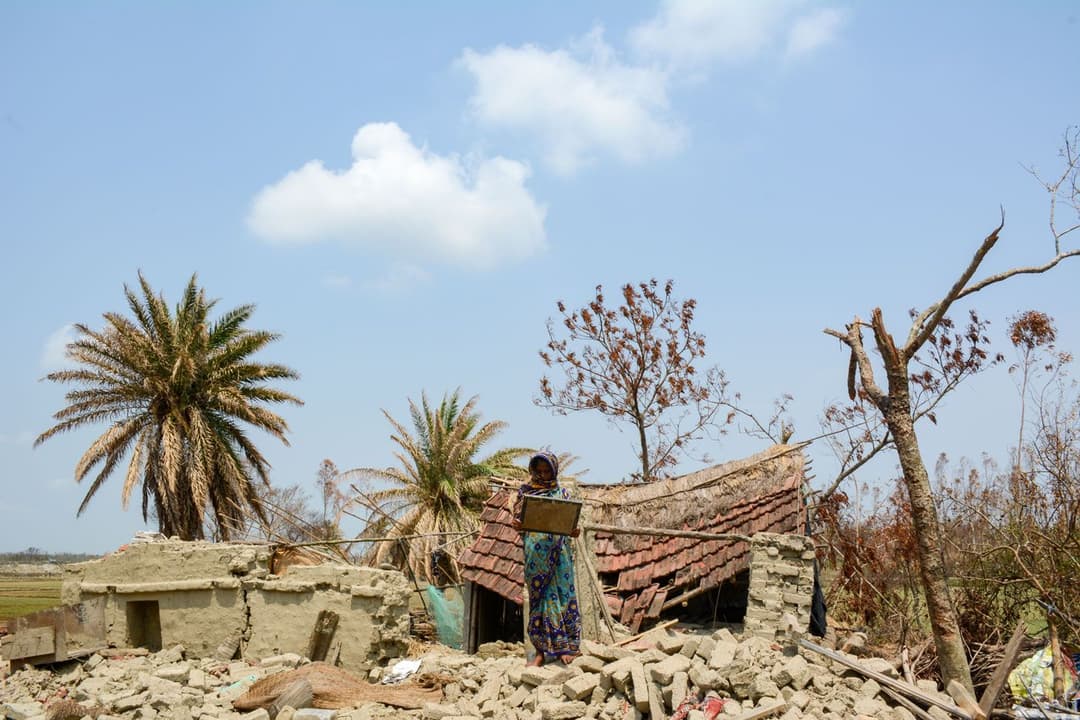
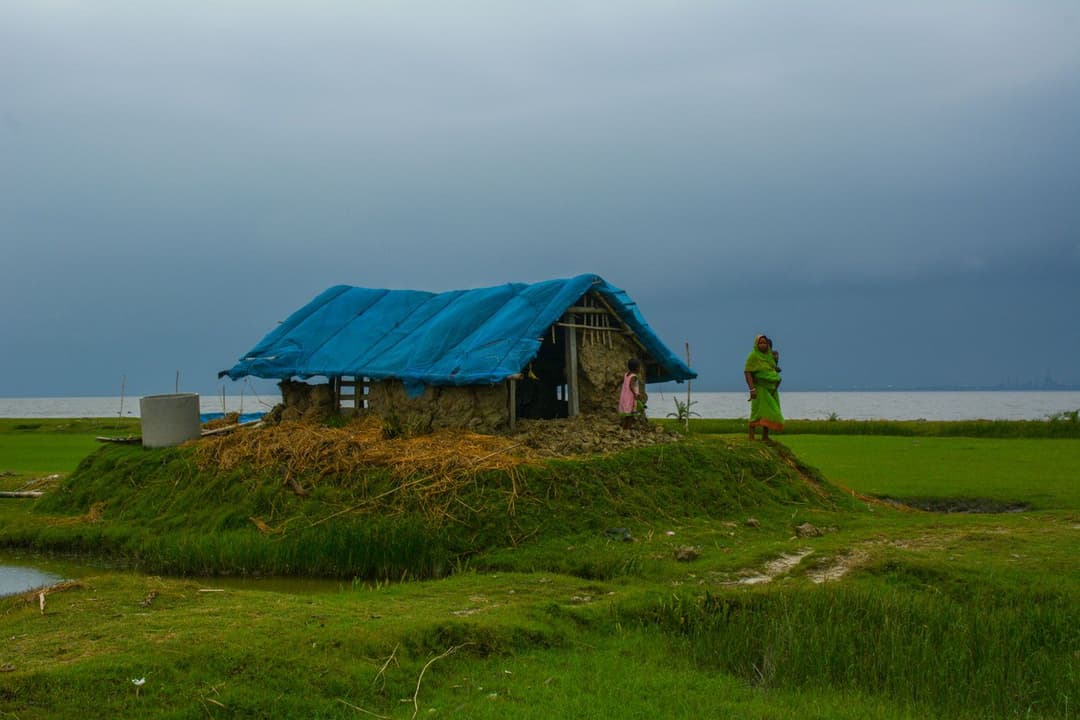
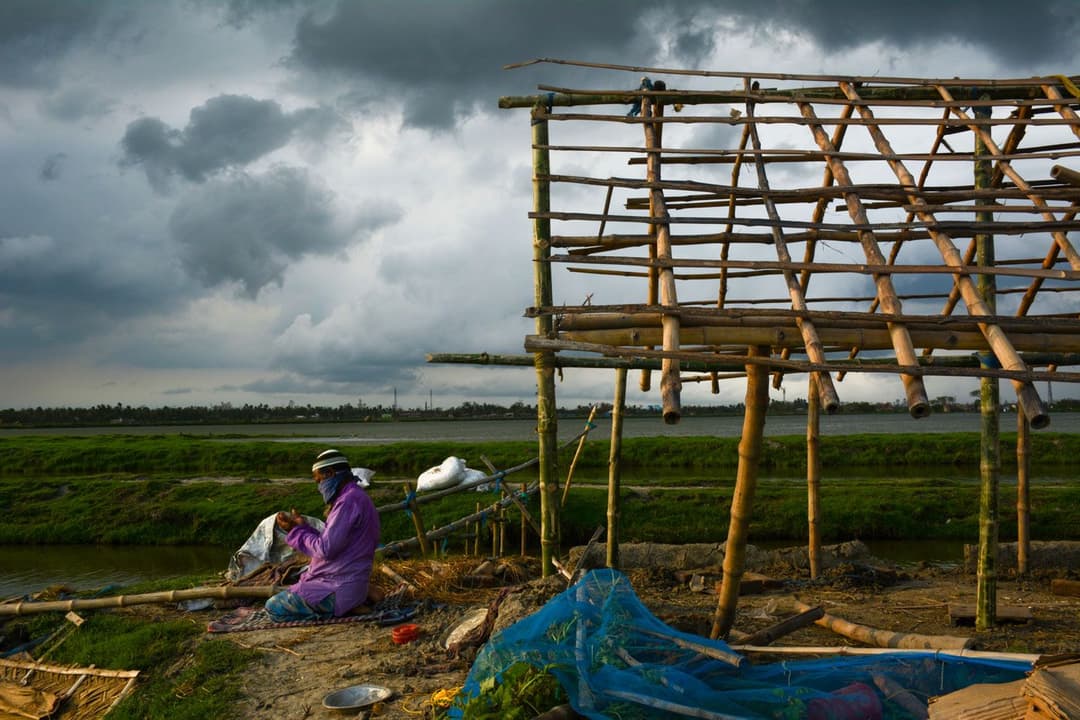
The cyclone swept away Amina’s mud house in her village of around 5,800 people in Gosaba block, located in the Sundarbans. All her belongings were swept away too. Amina, 48, her husband Mohammad Ramzan Molla, 56, and their six children, ages ranging from 2 to 16, managed to stay safe.
Mohammad Molla had returned to the village just two weeks before the cyclone struck. The 56-year-old worked as a cleaner at a mall in Pune, Maharashtra, earning Rs. 10,000 a month. This time, he had planned to stay back and open a tea stall in the nearby Molla Khali bazaar.
Amina used to add to the family income by setting out to catch crabs and fishes in the nearby Gomor river, after finishing her house work. She would sell her modest catch in the bazaar. “But I didn’t even earn Rs. 100 a day for that,” she had told me.
Raquib Ali, their oldest child, dropped out of school in 2018 when he was 14. “We cannot survive on the money abba sends home,” he said. “That is why I left to work.” Raquib earned Rs. 5,000 a month as a helper in a tailoring shop in Kolkata. He was back home when Amphan struck during the Covid-19 lockdown.
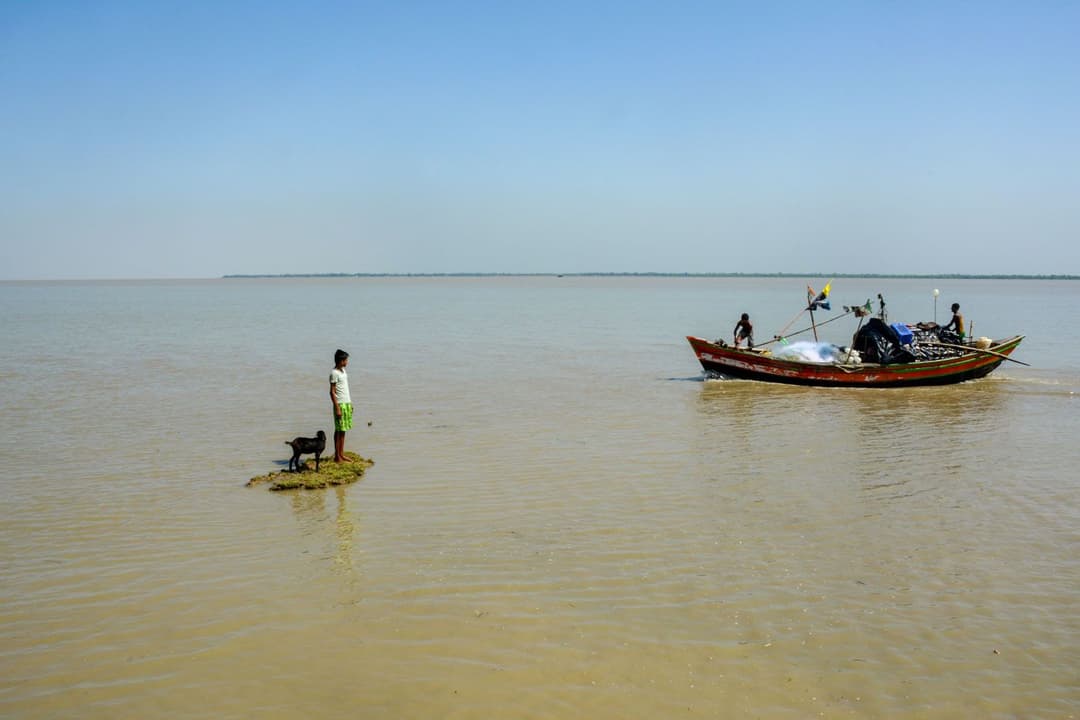
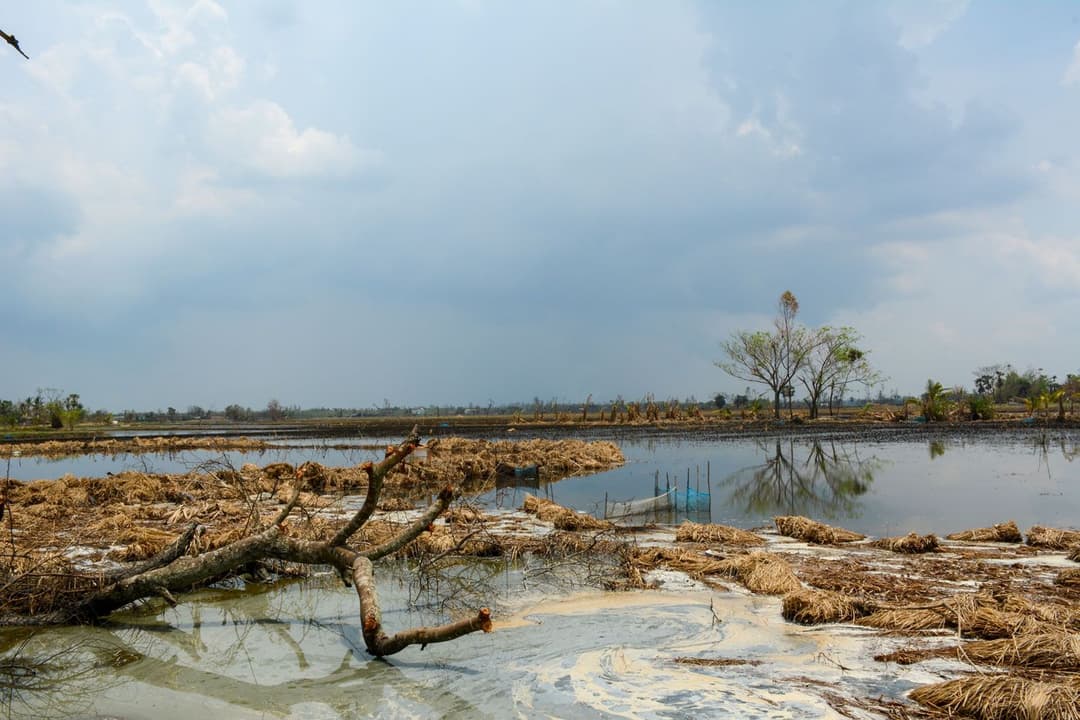
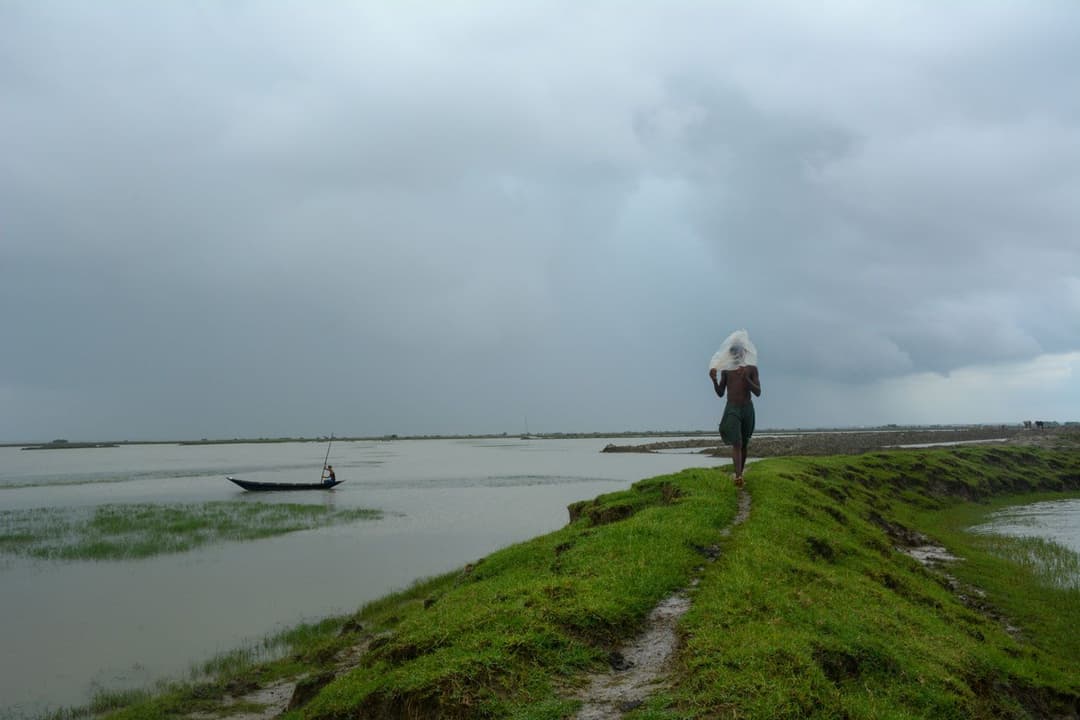
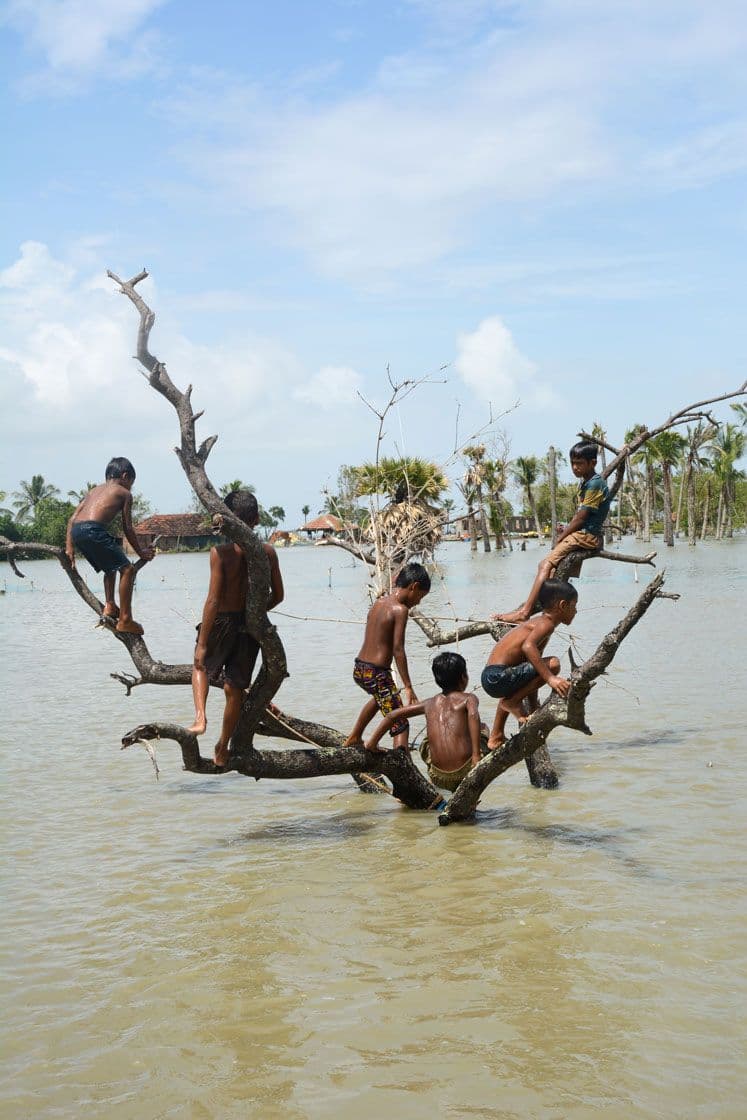
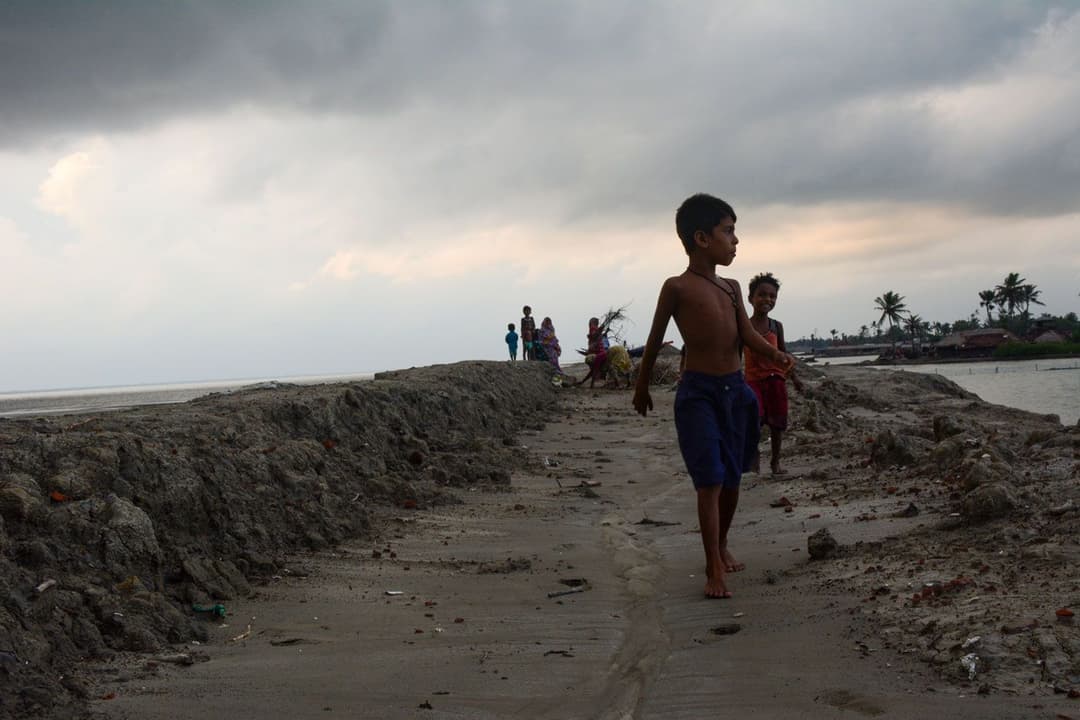
The family’s mud house with a thatched roof stood on the banks of the river Gomor. With each cyclone that hit them – Sidr (2007), Aila (2009) and Bulbul (2019), the river inched closer to their home and slowly submerged their entire three bigha (one acre) land, where they cultivated paddy once a year, along with a few vegetables. By the time Amphan came, they did not have any land left.