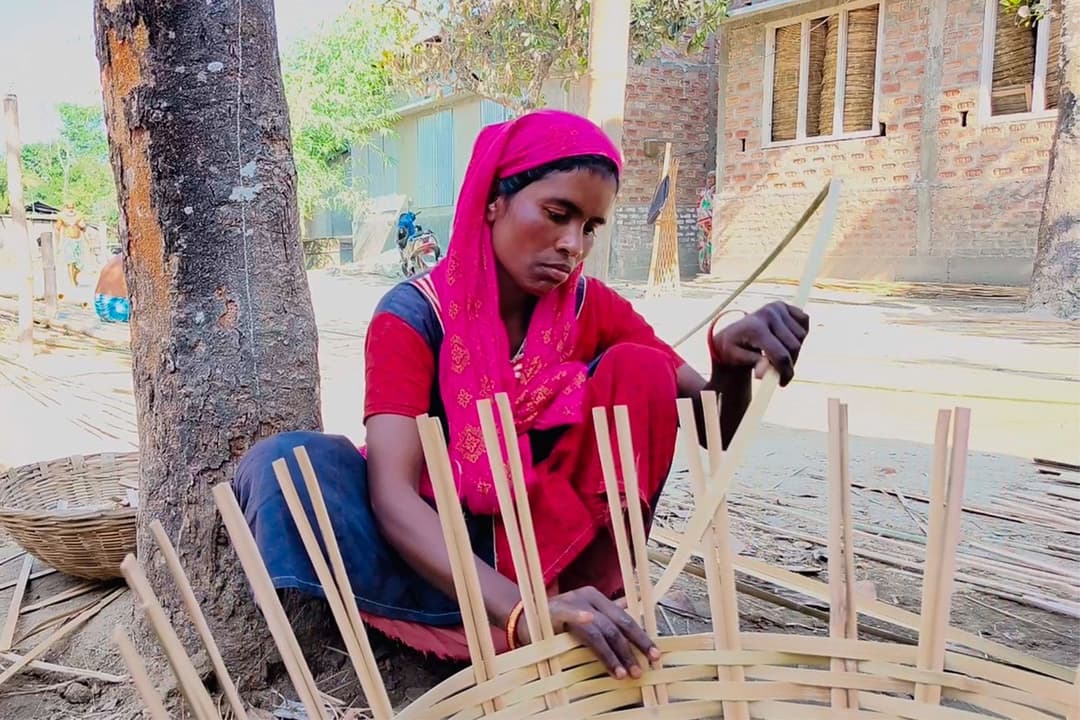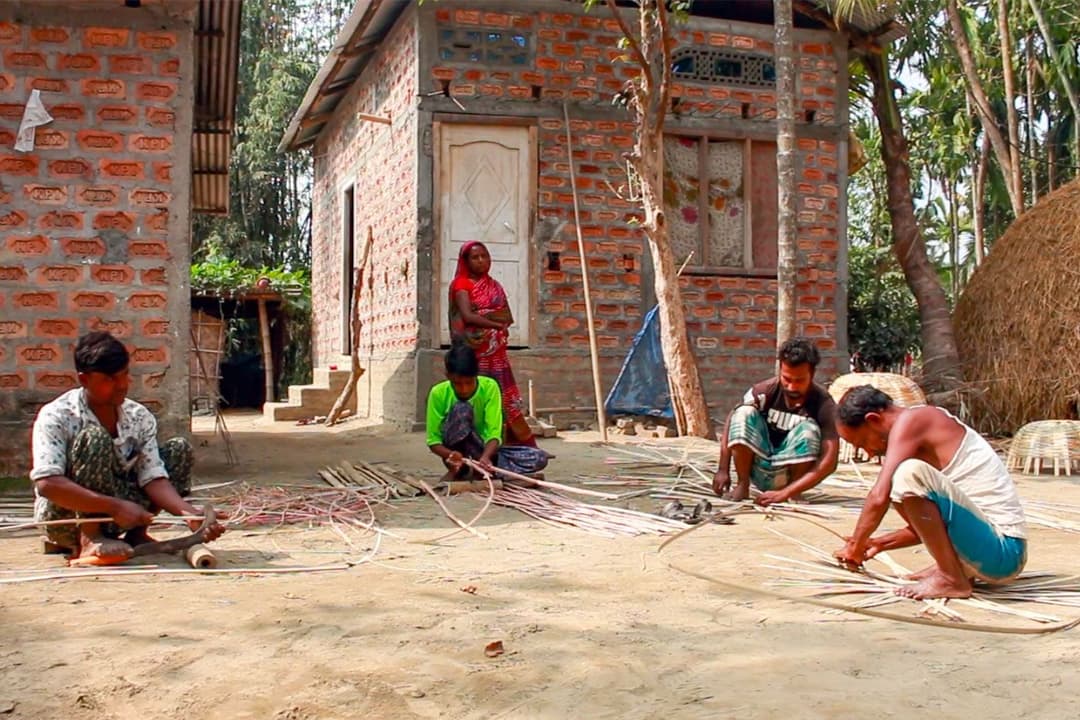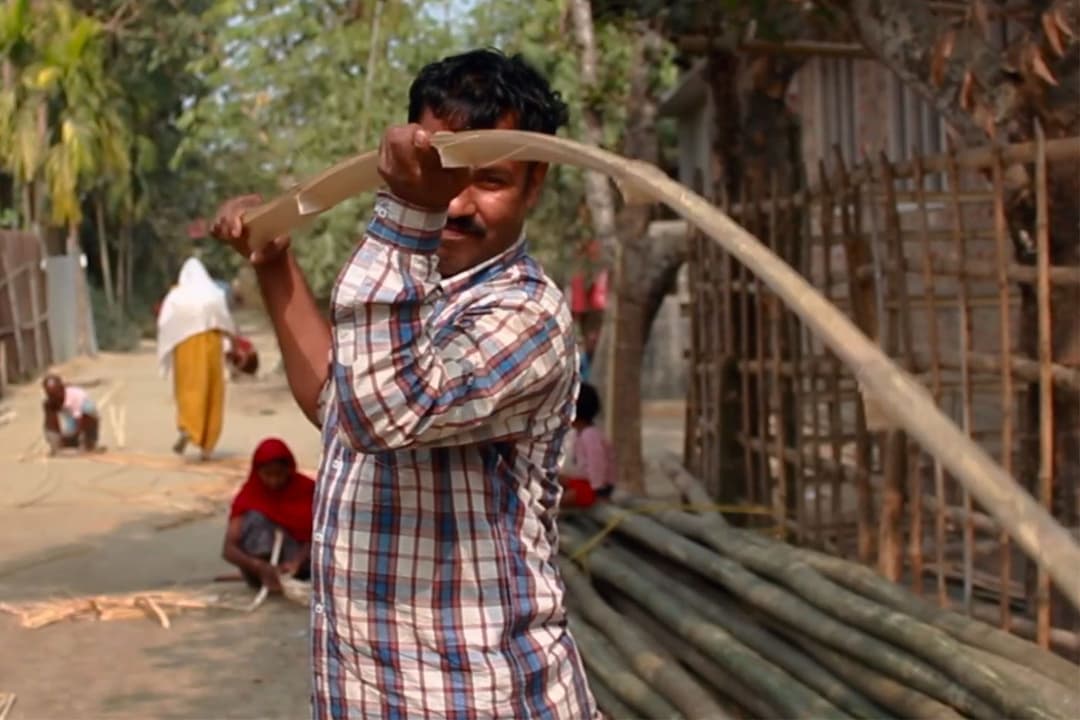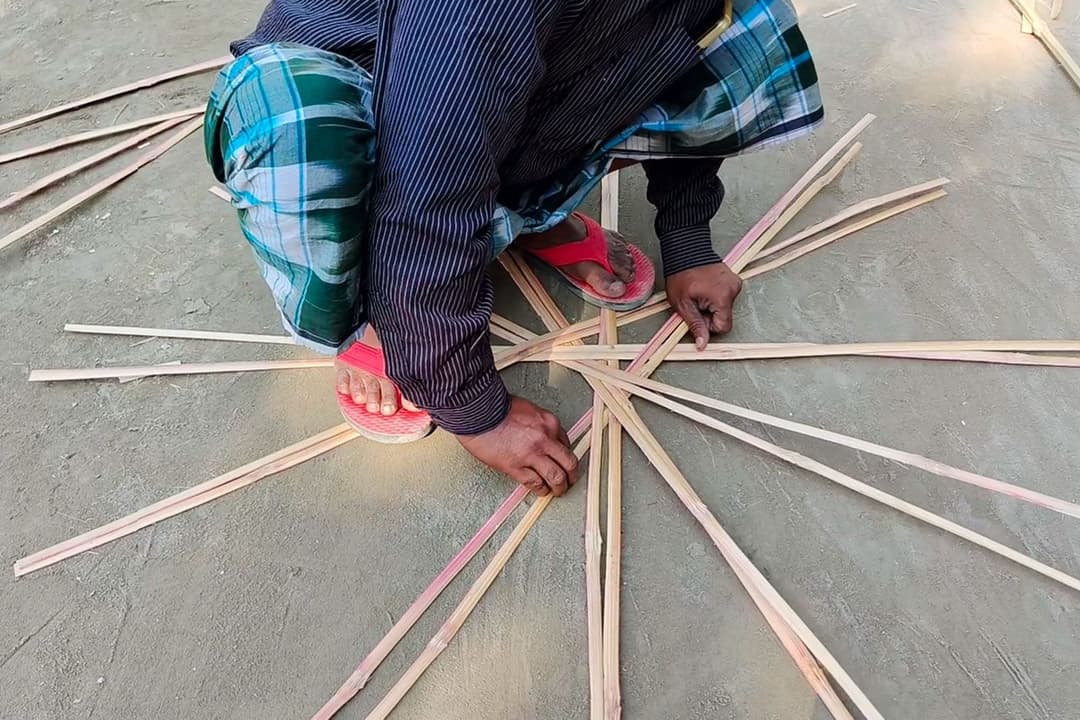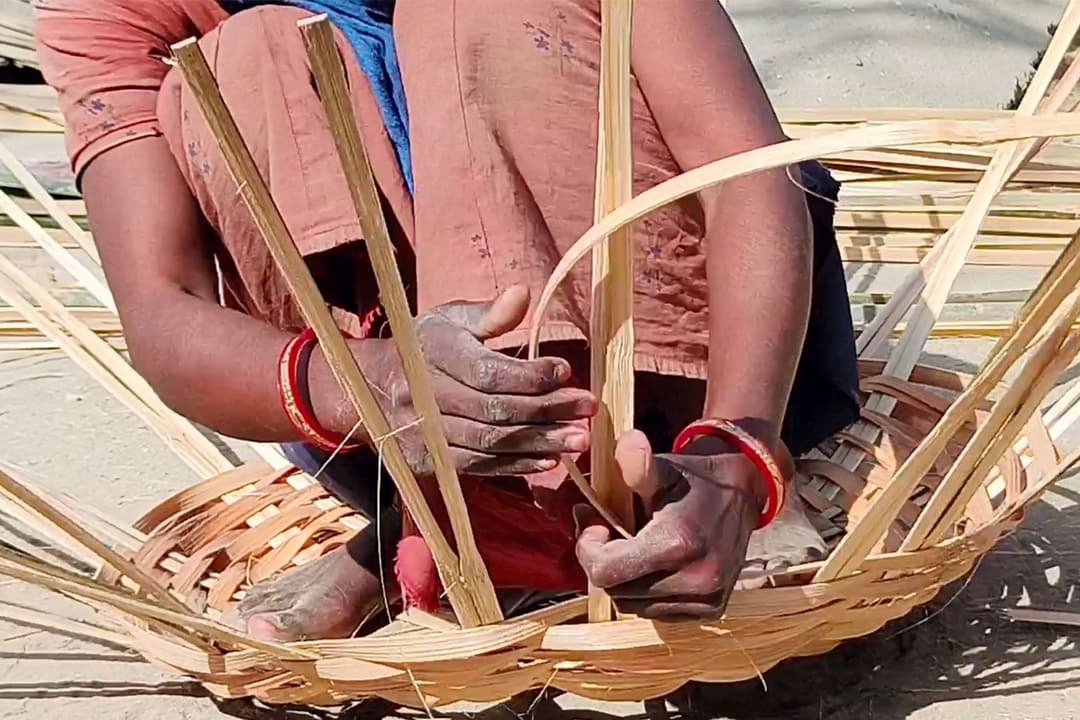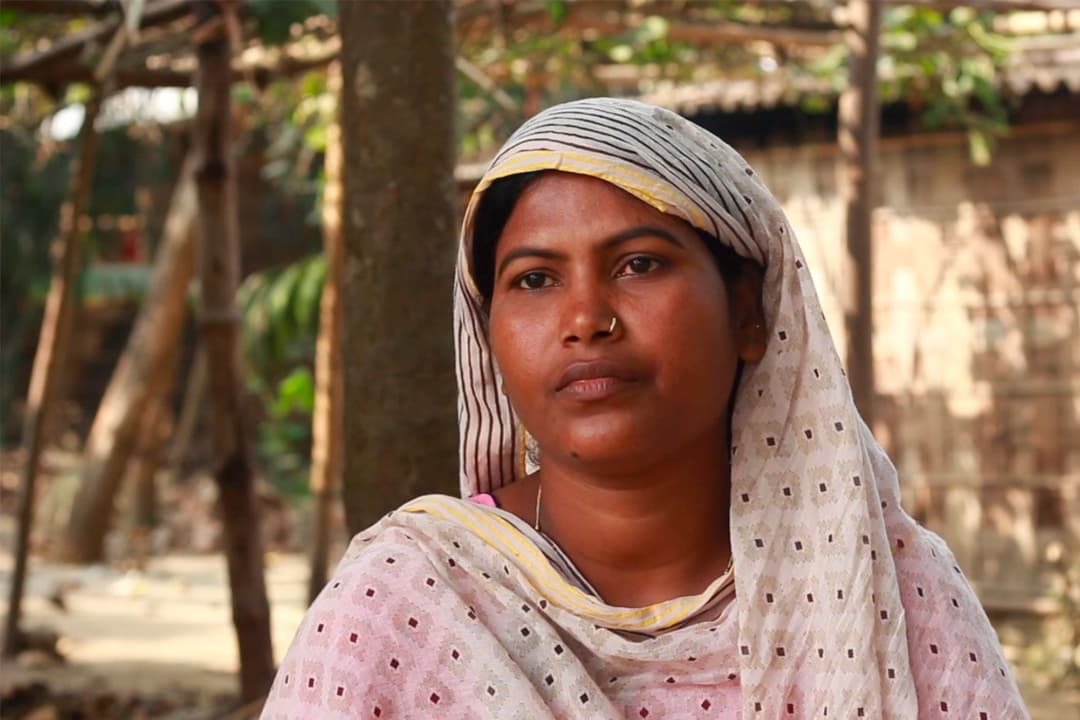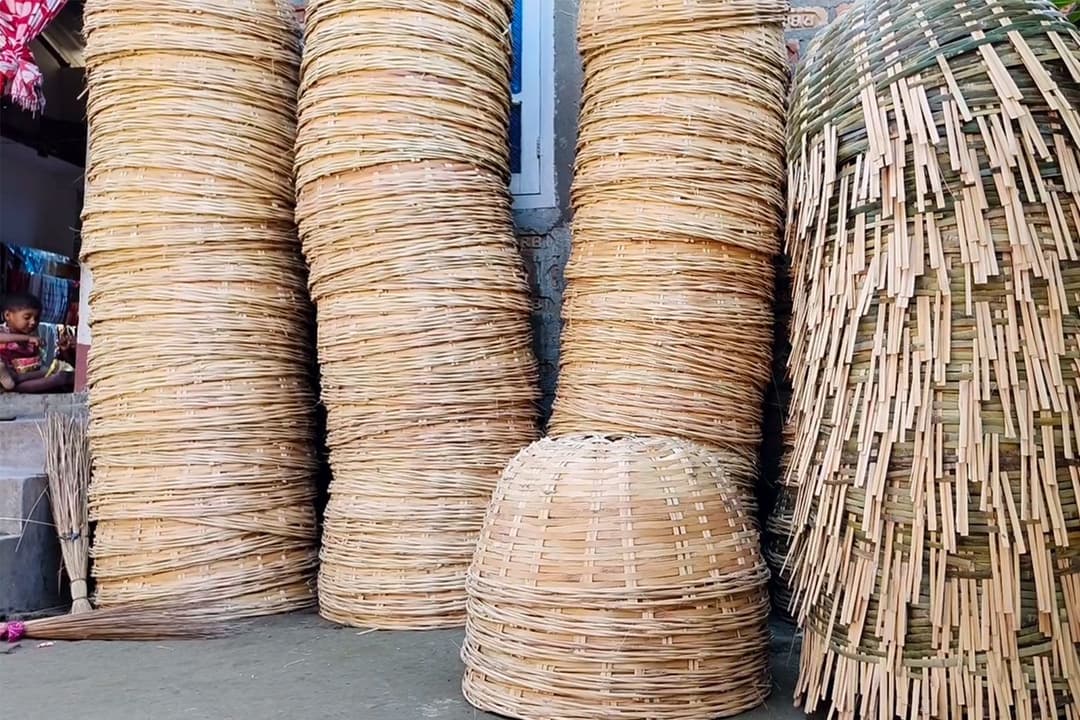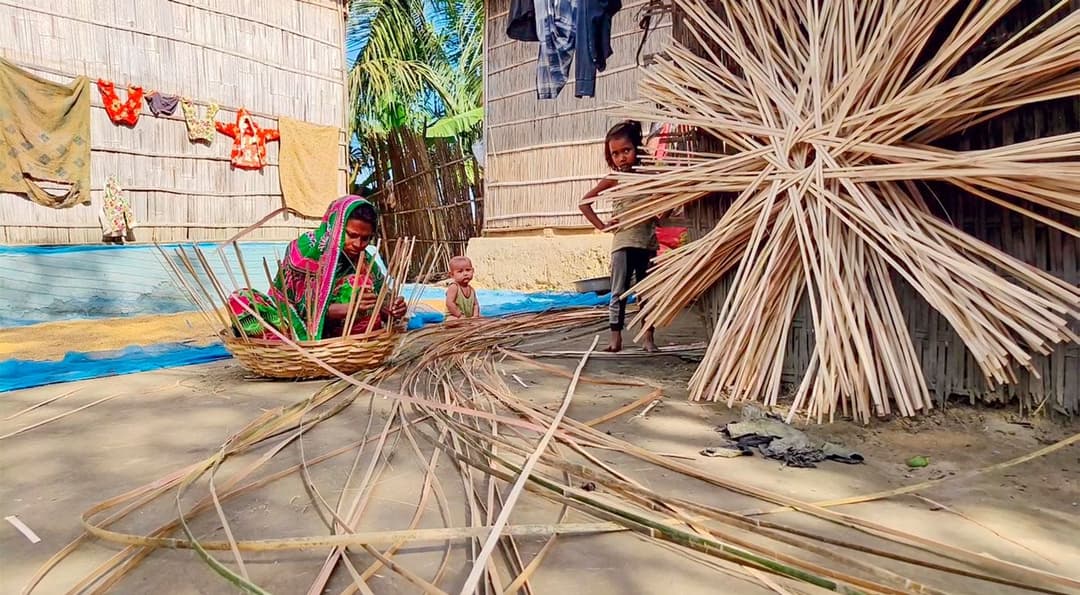
“If this profession vanishes, I will have no option but to go to another state,” rues Majeda Begum, a bamboo basket maker from Na-mati village in Assam’s Darrang district, as she spins thin strips of bamboo around the base of the basket.
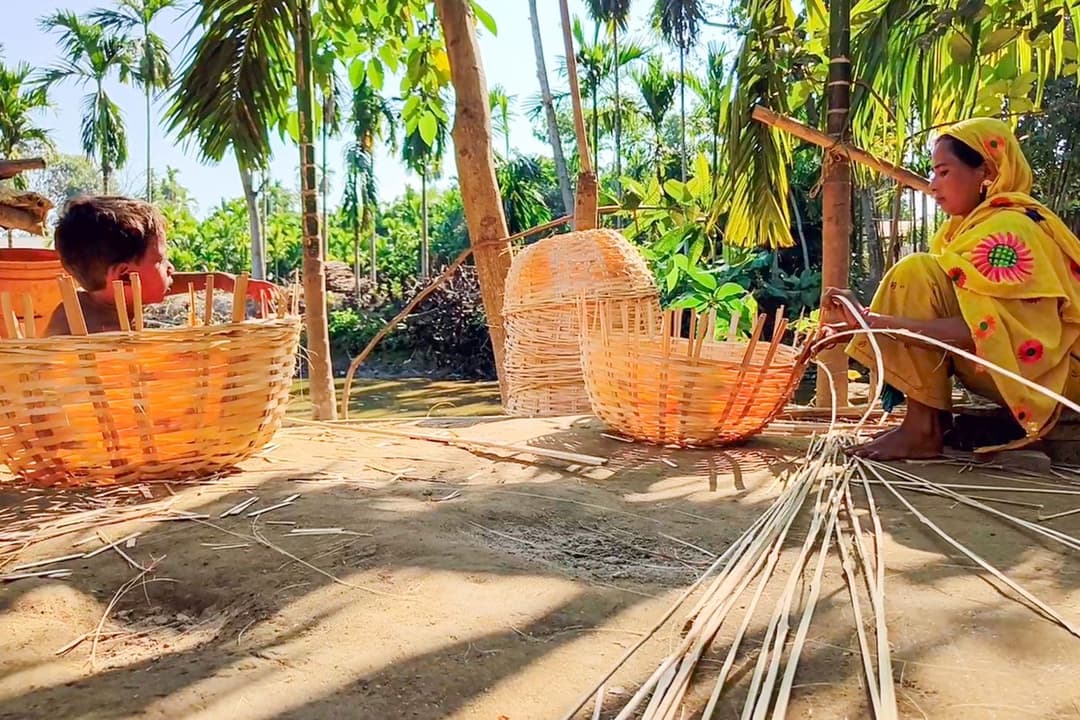
The 25-year-old craftswoman is a daily wage worker and single mother, supporting her 10-year-old son and ailing mother. “I can make up to 40 khasas [baskets] in a day, but now I only weave 20,” she says in the local Miya dialect. With the fall in demand, Majeda earns Rs. 160 for every 20 baskets she weaves which is well below the state’s minimum wage of Rs. 241.92 for scheduled employment (Report on Minimum Wages Act, 1948 for the year 2016).
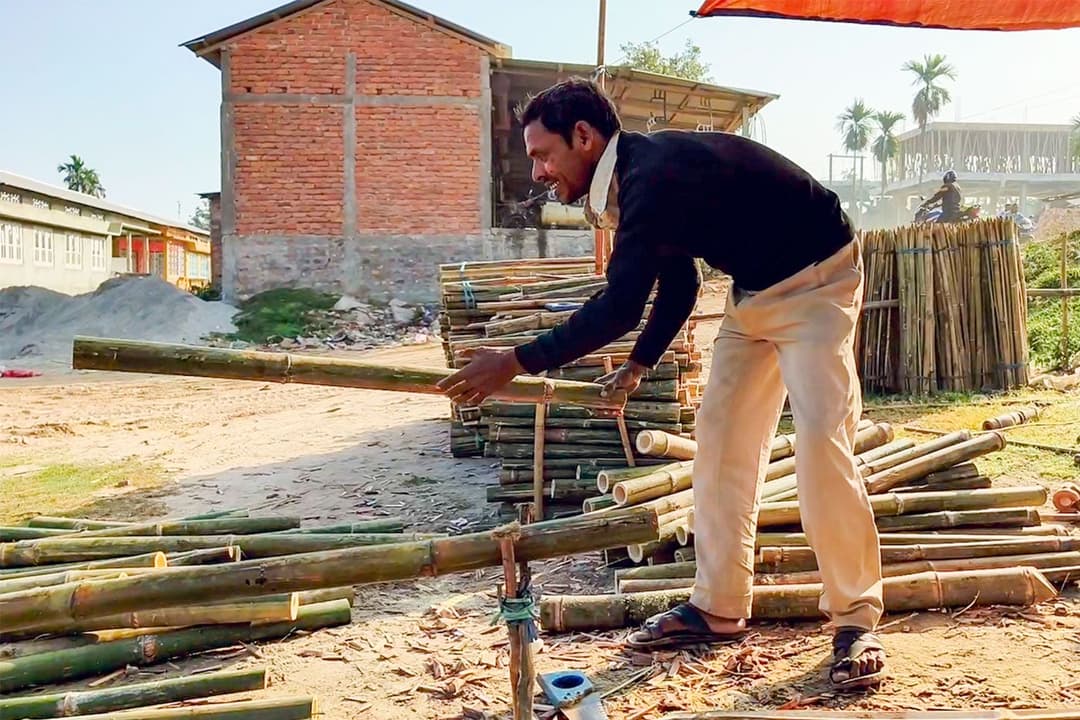
The returns from selling bamboo baskets have been affected by both the rising price of bamboo and falling demand for the baskets in the vegetable mandis here. Darrang hosts two of Assam’s biggest mandis: Bechimari and Balugaon from where agricultural produce is supplied all across the northeast and as far as Delhi.
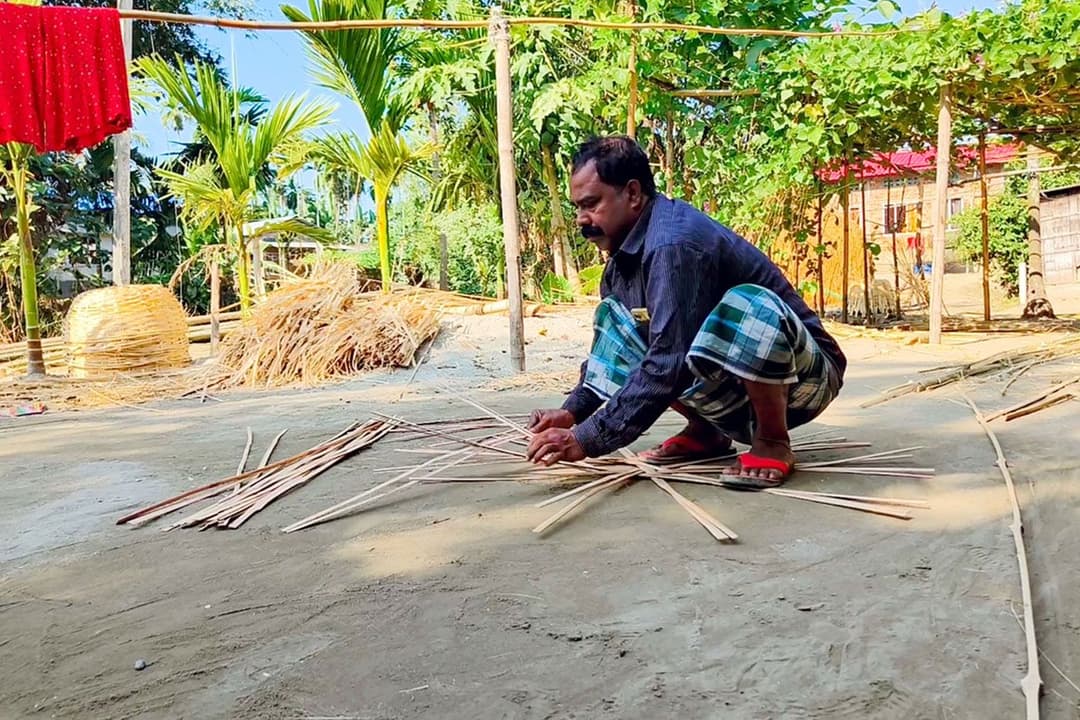
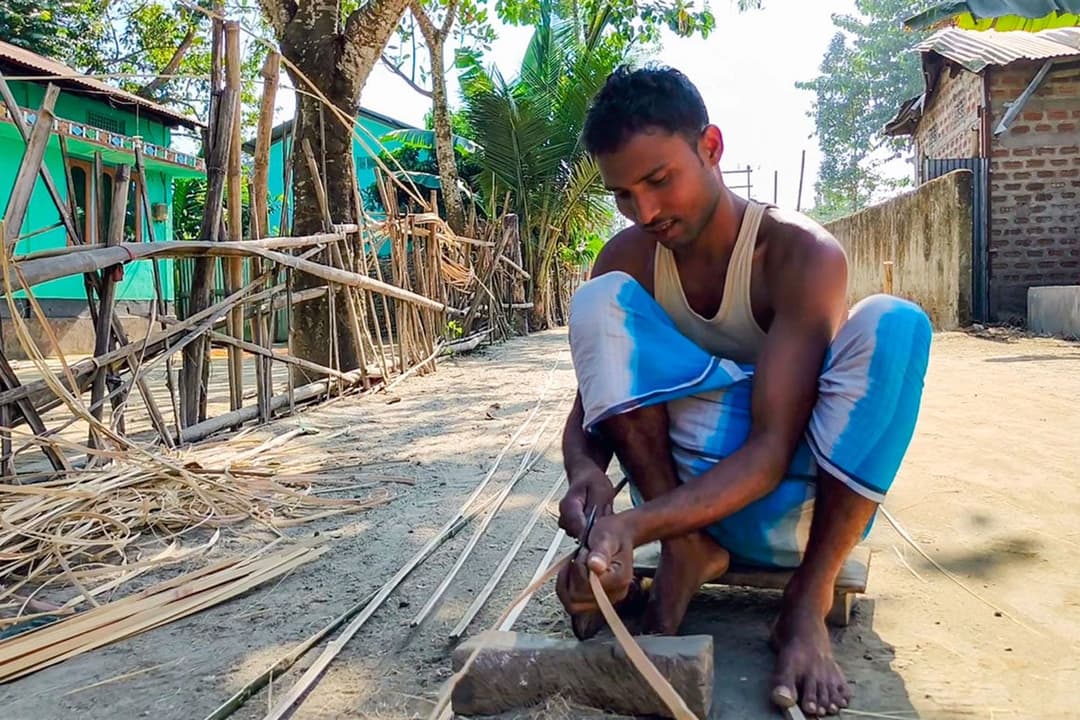
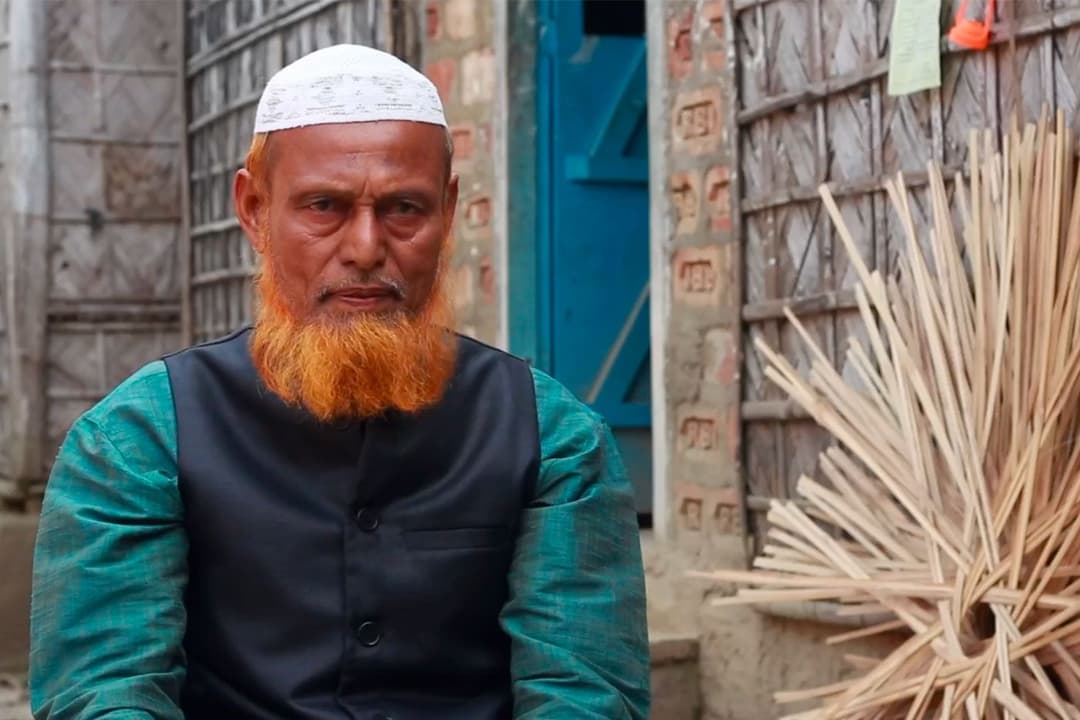
Majeda’s fears of forced migration are real: Around 80 to 100 families have left already in search of “better work”, says 39-year-old Hanif Ali, as he shows us around Ward A, located near the local madrasa. Roughly 150 families were once involved in bamboo craft, but now, many homes lie vacant as the craftspeople have migrated to other states like Kerala and Karnataka to work in coffee plantations.